Yes, you can feed your rabbit blueberries, but treat them like an occasional snack, not a daily food. Blueberries have a little vitamin C, K, and fiber, plus antioxidants, yet they’re also sugary and acidic. Serve raw, fresh, plain berries only, washed well, and cut big ones. Use tiny portions—about 1–2 small berries for under 3 lb—and offer just 1–2 times per week, never consecutive days, watching stools for 12–24 hours; keep going to learn more.
Swift Summary
- Rabbits can eat blueberries as an occasional, small treat, not as part of their daily diet.
- Feed fresh, ripe, raw blueberries; avoid cooked, sweetened, or heavily processed berries.
- Use tiny portions based on body weight, typically a couple small berries or a few teaspoons.
- Offer blueberries 1–2 times weekly, with at least one full day between treat days.
- Introduce gradually after routine hay and greens are stable, and monitor stools for 12–24 hours.
Can Rabbits Eat Blueberries Safely? Yes: Here’s How
Yes, you can feed rabbits blueberries safely, if you treat them like an occasional snack, not part of their daily diet****.
So, can rabbits eat blueberries? Yes—just occasionally treat rabbits with tiny portions.
For an average adult, offer 1–2 blueberries, once or twice per week, after they’ve eaten plenty of grass hay.
Aim for fruit to stay under about 5–10% of their total diet.
Choose fresh, ripe berries, wash them well, skip anything cooked or sweetened.
Start small, half a berry, then watch droppings and behavior for 24 hours.
Avoid blueberries for rabbits under 6–7 months, or with tummy troubles.
Nutrition and Benefits of Blueberries for Rabbits
Blueberries can give your rabbit a little nutritional “bonus,” as long as you treat them like an occasional snack. They add small amounts of vitamin C and K, plus manganese.
Vitamin C helps tissue repair and immune support. Vitamin K supports blood clotting and bone health.
You also get fiber from the skins and pulp, which supports gut movement and cecum fermentation, though hay and leafy greens do the main work.
Blueberries bring antioxidants, like anthocyanins, which help protect cells from oxidative stress.
They’re also mostly water, so they’re hydrating. Keep portions tiny, and rotate.
What’s the Safe Blueberry Serving Size by Weight?
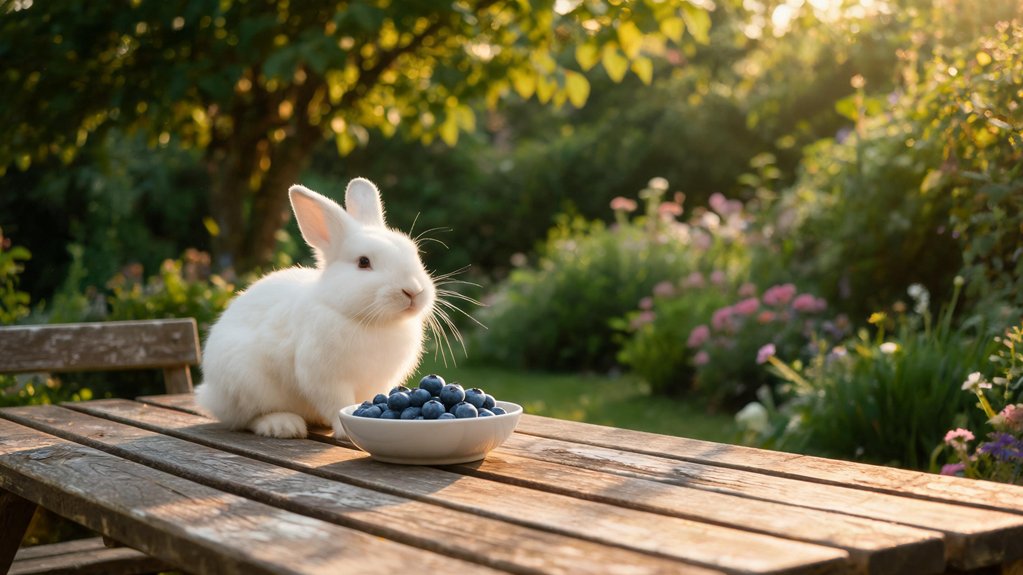
Figure out the serving first, because blueberries are a treat, not a daily food.
Keep it small, based on body weight, then offer it once in a while.
For under 3 lb rabbits, give about 1–2 small blueberries, or 1–1.5 teaspoons total.
For 3–5 lb, use 2–3 medium blueberries, around 1.5–2.5 teaspoons.
For 5–8 lb, give 3–4 medium berries, or 2.5–4 teaspoons.
For 8–12 lb, aim for 4–6 medium berries, about 4–6 teaspoons.
Serve up to 1–2 tablespoons of fruit per 5 lb max. Blueberries are safe in appropriate amounts, but they still contain sugar that requires strict portion control.
How Often Can You Feed Blueberries and Avoid Diarrhea?
When it comes to blueberry treats, timing matters just as much as portion size. You’ll do best offering blueberries only 1–2 times per week for a healthy adult rabbit.
Never give them on consecutive days. Space treat days at least one full day apart, like Monday and Wednesday, so your rabbit’s gut (the digestive system) can settle.
Avoid consecutive days—space blueberry treats at least a full day apart to let your rabbit’s gut settle.
Aim for feeding blueberries after plenty of hay, not between meals, and keep treats to one small session, not many.
After each treat, watch stools for 12–24 hours. If you see soft stools, cut back to once weekly or every other week.
How to Introduce Blueberries, Spot Problems, and Serve Them Safe
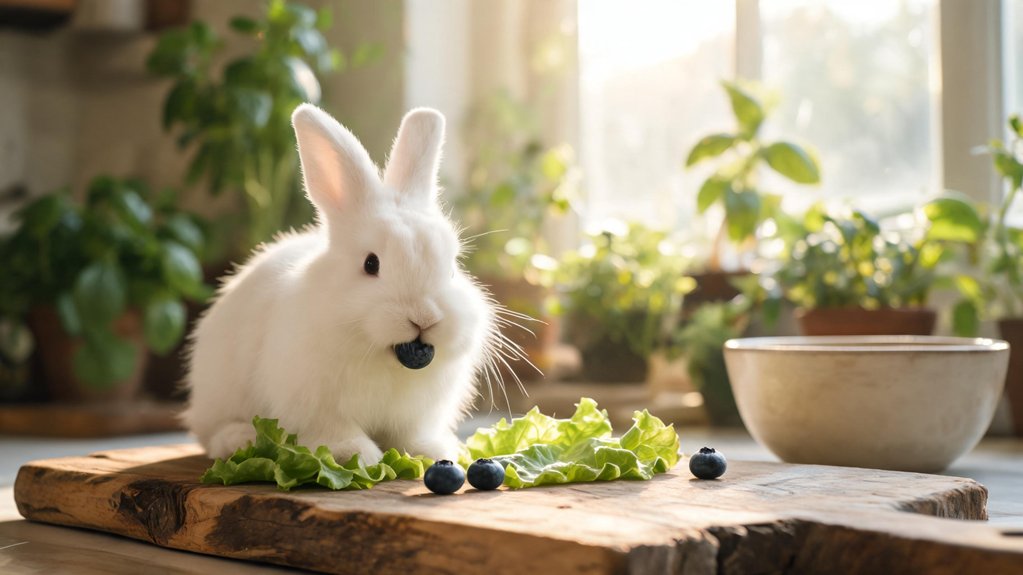
Before you offer blueberries, you want to set your rabbit up for success, because their tummy is picky and treats can tip the balance fast.
Start around 7 months old, after hay and daily leafy greens stay steady, with a small pellet amount.
Do a quick baseline check: look for firm, round droppings and strong hay intake.
Only use a ripe, fresh berry, washed well.
Begin with half to one blueberry, on a day your routine stays the same.
Wait about 24 hours.
If stools get soft, or appetite drops, pause and call your vet if it lasts beyond a day.
Serve raw, plain, and cut larger berries in half.
Frequently Asked Questions
Can Baby Rabbits Have Blueberries, or Only Adults?
You should only offer blueberries to adult or older juvenile rabbits; avoid them for baby rabbits under 12–14 weeks because immature digestion can get upset. Stick to mother’s milk, unlimited grass hay, and age-appropriate leafy greens until then.
Are Frozen Blueberries Safe, and Should I Thaw Them First?
Yes, frozen blueberries can be safe, but only if you fully thaw them first—serve soft, room-temperature berries in tiny occasional portions. Don’t offer hard, straight-from-freezer fruit; it can choke and upset their digestion.
Should I Remove the Skins and Mash Blueberries to Prevent Choking?
You shouldn’t remove the skins; they’re usually safe. Instead, mash or squash blueberries flat into small pieces, and skip whole hard or frozen berries. Offer just a tiny treat, then watch your rabbit chew.
What Other Fruits Can I Rotate With Blueberries as Treats?
Rotate blueberries with raspberries, blackberries, strawberries, and small apple or pear cubes. Offer only tiny portions 1–2 times weekly. Skip pits and seeds, wash berries well, and keep fruit as an occasional treat beside hay, greens, and limited pellets.
What Should I Do if My Rabbit Gets Diarrhea After Blueberries?
Quickly cut blueberries, offer unlimited grass hay and fresh water, and keep your rabbit calm. Monitor poop, appetite, and belly. Call an experienced rabbit vet right away—diarrhea can turn dangerous fast.