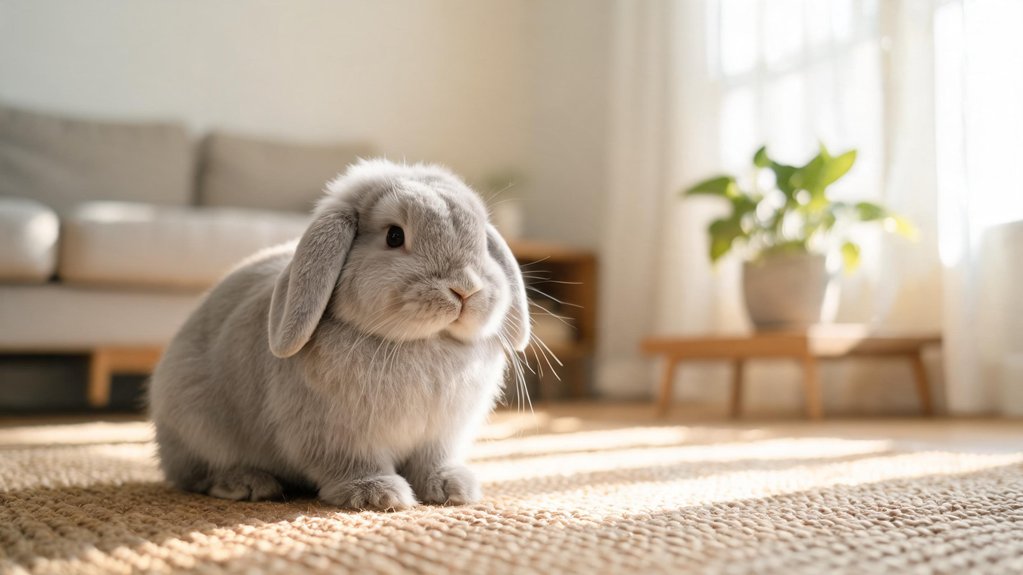
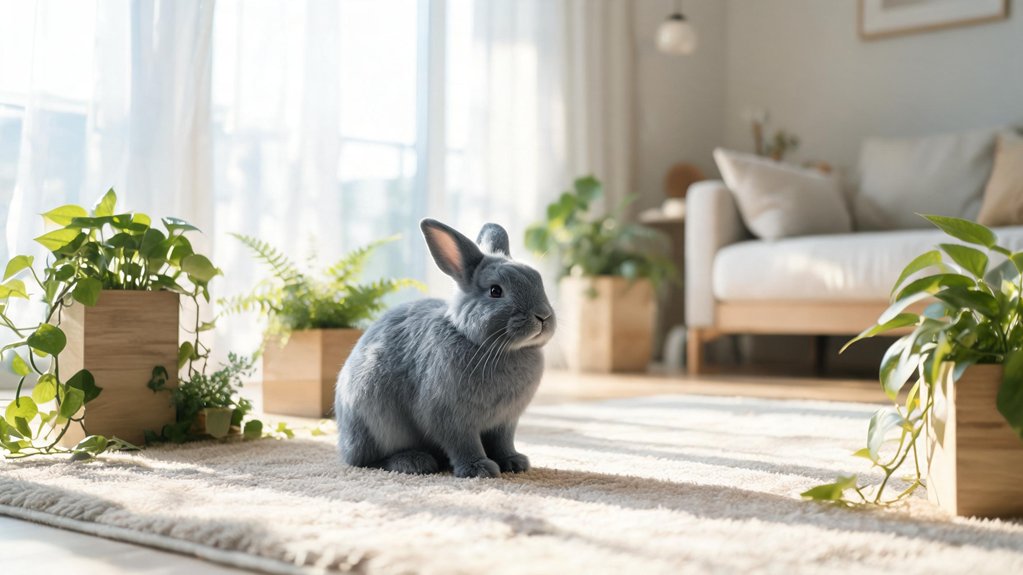
Satin and Mini Satin rabbits both have a polished, “silk-like” sheen, but Mini Satin fur feels denser and rolls back more. For housing, you’ll want more space for Satin—aim around 9.5–10 lb show weights—while Mini Satin stays compact at about 4 lb max. Their satin gene is recessive, so grooming matters: brush 1–2x weekly, and during molts go daily. Watch for dental, stasis, sore hocks, and urine issues—then you can pick the best fit and plan your budget. Keep going for more practical tips.
Swift Summary
- Satin and Mini Satin are polished “silk-like” breeds; Mini Satin fur is denser, lies closer, and shows stronger rollback.
- Satin is a recessive gene mutation (sa/sa required); carriers may look normal but pass satin to offspring.
- ARBA sizes differ: Satin averages ~8.5–11 lb, Mini Satin is ~4–4.75 lb, with compact housing needs.
- Grooming is weekly 10–20 minutes, with increased brushing during sheds and moulting, especially daily for Mini Satins.
- Health priorities include dental, stasis, obesity, sore hocks, urine issues, and reproductive problems; plan vet costs and stress reduction.
Satin vs Mini Satin: Key Differences at a Glance
Both coats glow like polished silk. But Mini Satin fur feels denser, fine, and lies closer, with strong rollback. adult satin rabbits use a standard rabbit frame, so plan housing accordingly and ensure enough space for exercise. Satin rabbits use a bigger frame, so plan housing accordingly.
Origins, ARBA Recognition, and Typical Lifespan
Satin and Mini Satin rabbits don’t just look special on the show table, they’ve a neat history behind them.
You’ll find Satin traced to an early-1930s coat mutation in Havana rabbits, in Indiana, led by Walter Huey, and you’ll see it first shown as “Satin Havanas.” Recessive gene geneticists later identified the sheen as a recessive gene.
And Harvard geneticists later identified the sheen as a recessive gene.
The ARBA—American Rabbit Breeders Association—recognized Satin in 1956, after careful selection of quality and colors.
Mini Satin began in the 1990s with J. Leo Collins, recognized in 2005.
Mini Satin was started in the 1990s by J. Leo Collins, then officially recognized by 2005.
With good care, expect lifespans around 5 to 10 years.
Size and Body Type: Show Weight vs Pet Fit
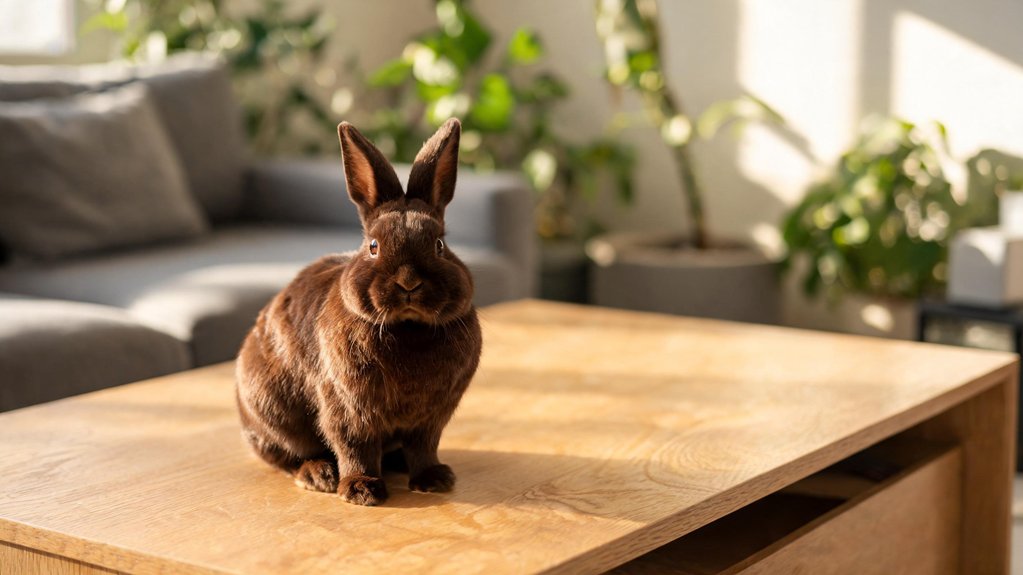
When you’re choosing between Satin and Mini Satin, start with weight and body type, because they directly affect how your rabbit will fit your home. Satin is medium to large commercial-bodied, with ideal ARBA show weights around 9.5 lb for bucks and 10 lb for does, typically about 8.5–11 lb. Mini Satin is compact, with ideal show weights around 4 lb, and a max of 4.75 lb. In addition, compact body type makes Mini Satins fall under the ARBA’s Compact body classification. So in pet life, Mini Satins feel roomier in smaller setups, while Satins need more floor space, larger dishes, and sturdier handling. Measure your enclosure now, then match your rabbit.
Satin Coat Genetics, Sheen, and Color Varieties
You’ve got a satin rabbit when the satin gene (a simple recessive gene, meaning it shows only when you inherit it from both parents) changes the hair structure so light reflects more strongly, giving that signature glassy “sheen.”
But remember, even non-satin rabbits can carry the gene, and the sparkle you see depends on fine, smooth fur and good coat condition—if fur is damaged or you’re in a molt, the luster fades fast.
Now let’s line up the colors: Satin shows in 11 ARBA-recognized varieties, like black, blue, chinchilla, otter, and white, while Mini Satin offers 16 showable varieties such as black, blue, broken, Himalayan, otter, and siamese.
Satin Gene Mechanism
Once you understand the satin gene, the “why” behind that famous luster gets a lot clearer.
You can think of the satin allele, “sa,” as autosomal recessive, meaning you need two copies—sa/sa—for real satin.
If a rabbit carries just one sa, it looks normal but it can pass satin to offspring.
The gene sits at a coat-structure spot, not in color or fur-length genes, so it mixes nicely with other recessives, like satin angora traits.
The mutation thins hair and smooths the cuticle, letting light enter, reflect, and refract.
That’s why pigments look deeper, richer, and pearly.
Color And Variety Chart
Let’s map out Satin and Mini Satin colors and varieties in a way that makes showing and buying easier. First, remember what ARBA prizes: satin sheen, that short, silky rollback fur with a “glass-like” shine that boosts true color depth.
For Satin, ARBA lists 11 varieties: black, blue, broken, Californian, chinchilla, chocolate, copper, otter, red, Siamese, white.
Broken means a recognized color mixed with a white base.
For Mini Satins, ARBA recognizes many more, starting with white, then adding black, blue, chinchilla, chocolate, copper, Himalayan, lilac, lynx, opal, otter, red, sable, Siamese, silver marten, smoke pearl, squirrel, tortoise, and more.
Aim for uniform shine.
Temperament and Who Each Breed Works For
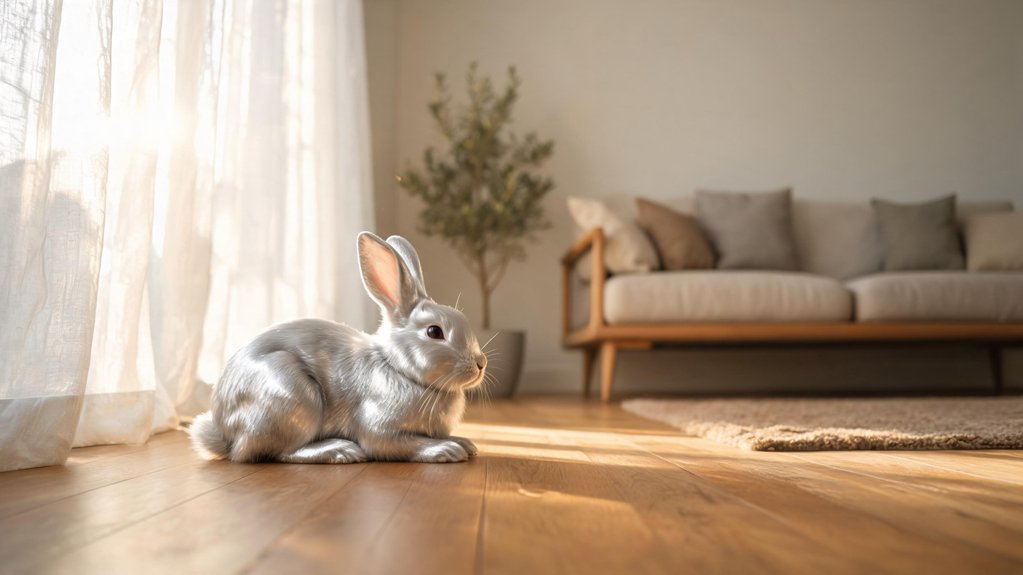
If you’re looking for a “satin rabbit” that feels calm and easy to live with, both Satin and Mini Satin are known for gentle, people-friendly personalities.
You’ll usually see even-tempered behavior, especially when you handle them gently and give them time to settle.
Satin fits you if you’re new to rabbits or have older kids, because it tends to tolerate handling well.
Mini Satin also suits first-timers and apartment life, and it loves predictable routines.
But expect skittish moments with unfamiliar handlers.
For juveniles and intact adults, keep hands slow, because hormones can cause lunging or nipping.
Grooming, Health Risks, and Daily Care Tips
Keep up with simple, regular grooming so your Satin or Mini Satin stays comfortable and healthy.
Brush 1–2 times per week, about 10–20 minutes, and go more often during heavy sheds.
Brush 1–2 times weekly for 10–20 minutes, and increase frequency during heavy sheds to keep fur healthy.
When moulting, brush weekly, or even daily for Mini Satins, to remove loose fur and prevent hair ingestion.
Use soft-bristled or slicker brushes, gentle strokes in the hair’s growth direction.
Avoid full baths; they can cause shock.
Wipe eyes, ears, nose, and the perineal area with a soft damp cloth or alcohol-free wipes.
Trim nails every 4–6 weeks.
Watch for dental disease, stasis signs, obesity, sore hocks, urine issues, and reproductive problems.
Housing, Diet, Cost in the US, and Adoption Options
For your Satin or Mini Satin, set up indoor housing that lets them stretch out, hop freely, and stand all the way up—use a solid floor (not wire) with paper-based or aspen bedding, plus a hidey spot and a daily cleaned toilet corner.
Feed them hay first (unlimited timothy or orchard grass), then measured rabbit pellets and a daily rotation of leafy greens, and keep fresh water available all day.
When you budget in the US, expect enclosure and starter supplies to run about $50–$300, plan for common adoption fees around $50–$160, and add vet costs like spay/neuter (often about $150–$300) so you’re ready before you bring your bunny home.
Ideal Hutch And Indoor Setup
A great indoor setup starts with space and safety, not fancy furniture. Build a rabbit-proof area at least 3m x 2m x 1m high for a pair, then add a sleeping hutch of about 1.8m x 0.6m x 0.6m (6ft x 2ft x 2ft).
Leave room for three hops and upright stretching.
Place it in a quiet room, away from traffic and other pets.
Use non-slip flooring.
Block electrical cables and hide power sockets.
Keep poisonous plants out.
Add hay rack, litter tray or boxes, tunnels, and hiding spots.
Consider rescue rules: aim for 4ft x 6ft or more plus free-roam.
US Diet Costs And Budgeting
Budgeting for a satin (or any) pet rabbit in the US gets easier once you plan for the big buckets first—housing setup, daily food, litter and cleaning, and vet care. For one rabbit, expect roughly $300–$1,400 per year total, with many owners landing near $400–$800 after setup.
Monthly food often runs $40–$80, mostly hay plus fresh greens. Pellets and produce add up to about $35–$95.
Litter and cleaning supplies are often $100–$250 yearly. Don’t forget vet care: $50–$150 for wellness, vaccines at $30–$100 per shot, emergencies $400–$1,500.
Adoption, Rescues, And Breeders
So, where do you actually find a Satin (or Mini Satin) rabbit in the US—and what should you expect when you do?
Start with local rabbit rescues, humane societies, and municipal shelters, plus online rescue listings and social media.
Many require indoor housing, litter training, and a rabbit-safe room away from dogs, because stress harms health.
Before adoption, you’ll often get a health check, spay/neuter, and a behavior test, and that lowers risk versus unaltered breeder stock.
Ask about foster-to-adopt, especially if you have resident rabbits.
For ARBA-recognized weights and colors, work with reputable breeders—yet always verify care, space, and bonding.
Frequently Asked Questions
Are Satin and Mini Satin the Same Breed or Completely Different?
No—you shouldn’t call them the same breed. Satin and Mini Satin are different ARBA-recognized breeds with separate body types and standards, even though they share the satin coat gene for that signature sheen.
What’s the Show Weight Range for Mini Satin ARBA Classes?
Mini Satin ARBA classes run up to 4 lb for juniors, and above that for seniors, up to 4 ¾ lb. Yes, you read that right—grow past 4 lb, and you “graduate” classes.
Do Satin Rabbits Shed More Than Other Short-Haired Breeds?
Yes, Satin rabbits shed during seasonal molts like other short-haired breeds, often ramping up in spring and fall. You’ll usually need a bit more brushing then, especially to reduce loose fur and hair ingestion.
Which ARBA Colors Are Officially Recognized for Standard Satin?
Absolutely—ARBA officially recognizes 11 Standard Satin colors: Black, Blue, Broken Group, Chinchilla, Chocolate, Copper, Himalayan, Lilac, Otter, Red, Siamese, and White.
Do Mini Satins Need the Same Grooming as Standard Satins?
Yes—you groom Mini Satins much like standard Satins: brush once weekly in normal periods, then step up during shedding and molts (sometimes daily in heavy sheds). Use gentle strokes and a soft brush to avoid damage.