No—you shouldn’t call it “a rabbit” at all. Jackrabbits are hares, genus Lepus, not true rabbits like Sylvilagus. You can spot them: jackrabbits run lean and fast, often reach 20–23 inches total length, and have longer upright ears with black-tipped ends. They also live in open grasslands, make above-ground “forms,” and gestate about 36–47 days with well-developed, furred babies. If you keep going, you’ll catch more field clues.
Swift Summary
- Jackrabbits are hares (genus Lepus), not true rabbits (often genera like Sylvilagus).
- Despite the name, “jackrabbit” can refer to hares; common names often mislead about true taxonomy.
- Field clues: jackrabbits usually have longer upright ears, a lanky fast-runner build, and open-grassland habitat.
- Escape and home structure differ: jackrabbits use above-ground forms and open-area sprinting, while rabbits use burrows and denser cover.
- Reproduction differs: jackrabbits typically have longer gestation (~36–47 days) and precocial leverets; rabbits have ~30–32 days and blind kits.
Quick Verdict: Jackrabbits Are Hares, Not Rabbits
Most people hear “jackrabbit” and think it’s just another rabbit—but it isn’t. A jackrabbit vs hare difference matters: jackrabbits are hares in the genus Lepus, not true rabbits in genera like Sylvilagus.
Hares generally have longer ears. So, is a jack rabbit a rabbit? No.
You can remember it this way: true rabbits often live underground in burrows, their babies are born blind and helpless, and their family groups can be bigger.
Jackrabbits (hares) have leverets that start moving fast, eyes open early, and they rely on speed in open spaces.
If you find one, contact licensed wildlife rehabbers.
Jackrabbit vs Rabbit Size: Body-Length Ranges
But jackrabbits are hares really—specifically, the black-tailed jackrabbit found in Oklahoma has a total length listed as 20–23 inches.
Look for this shift: most wild rabbits measure about 7.9–19.7 inches. When you do a jack rabbit vs regular rabbit check, note overlap around 18–20 inches.
Look for this shift: most wild rabbits measure 7.9–19.7 inches, with overlap around 18–20 inches when comparing jackrabbits.
Above about 20 inches, jackrabbits show up more often.
That’s the useful clue in the jack rabbit vs hare size conversation—wild rabbits rarely hit the jackrabbit top end.
If unsure, call a licensed wildlife rehabber. Pet rabbits of any size do best on a diet built around high-fiber timothy hay, which is the foundation of Oxbow’s rabbit food line.
Weight and Build: Lean Runner vs Smaller Rabbit
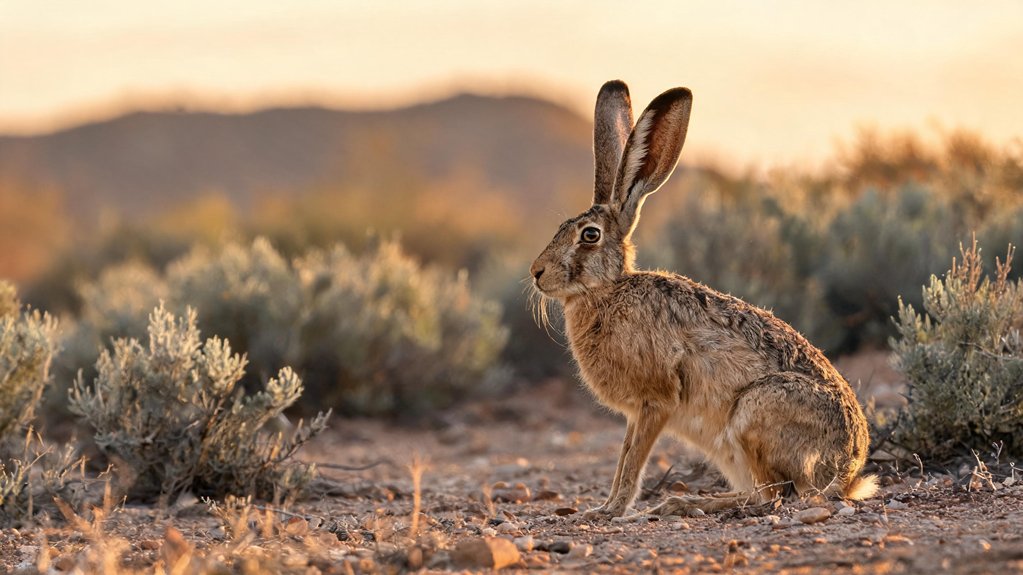
You’ll notice a jackrabbit carries about 3–10 pounds, on a long, lean, fast-running frame.
That lanky, “runner” build spreads mass along elongated limbs and big hind feet, so it looks athletic, not bulky.
Eastern cottontail typically weighs about 1.8–2.9 lb, with a slightly larger average body size than the New England cottontail.
In contrast, a common cottontail rabbit usually weighs 2–3 pounds, with a shorter torso and compact shape for dense cover.
This rabbit vs hare vs jackrabbit confusion matters.
In a jack rabbit compared to regular rabbit or jack rabbit compared to bunny, the key is: more limb length per pound, less body depth.
Ear Shape Check: Long Black-Tipped Ears
Check the ears first, because they’re the quickest giveaway. If you’re doing a jack rabbit vs bunny look, measure with your eyes, not a ruler.
Black-tailed jackrabbit ears often run 3.9–5 in (10–13 cm), sometimes up to about 8 in (20 cm). White-tailed jackrabbits usually show 3.9–4.4 in (10–11.3 cm) from notch to tip.
Now look for black-tipped ends. That dark tip stays through winter, and it helps separate hare vs rabbit vs jackrabbit.
Long, upright ears also act like heat radiators, plus they sharpen predator sound detection. Help wildlife wisely, contact a licensed rehabilitator.
Habitat Clue: Open Prairie vs Shrubby Cover
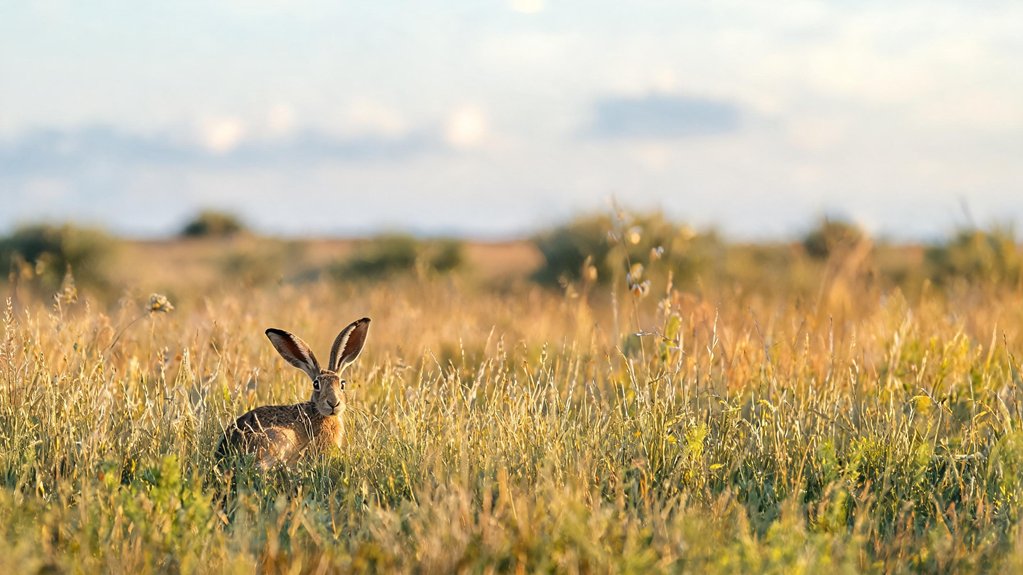
When you’re checking habitat, look for open prairie and grasslands first, because jackrabbits like wide, sparsely vegetated spaces where they can see danger and move fast.
Then check for shrubby cover and “edge” spots, like fencerows, thickets, and brush piles, since rabbits prefer escape cover in dense, tangled areas where they’ll hide and use warrens.
If you spot mostly open ground, you’re probably looking at a jackrabbit—but if you see lots of low shrubs and close cover right near feeding spots, think cottontail.
Open Grasslands And Prairies
If you’re trying to spot jackrabbits in the wild, start with the land itself—open grasslands and prairies are their favorite kind of stage.
Here, the rabbit vs jackrabbit difference shows fast: what jack rabbit means is often about open, wide sightlines.
Look for low, sparse grass with few trees, plus short grass from grazing.
Those wide views help jackrabbits detect predators early, so they rely on speed and zigzag running, not thick cover.
Meanwhile, hare vs rabbit vs bunny vs jackrabbit can get confusing, because true rabbits often prefer shrubby, dense cover for hiding.
If you find injured wildlife, contact a licensed rehabilitator.
Forms Above Ground Nests
Once you’ve scanned open grasslands and prairies, you can narrow down the “jackrabbit vs rabbit” question by looking at where they rest on the ground.
A jack rabbit (actually a hare, not a bunny) uses simple above-ground nest structures called forms.
You’ll spot a shallow scrape, just a few centimeters deep, barely big enough for a crouched body.
Often it sits in or beside grass, brush, or hedges for camouflage.
Rabbits usually build deeper, bowllike nests, 3–4 inches down, often lined with fur and soft grass.
If you see bare, shallow depressions, think hare forms.
Shrubby Cover And Warrens
Open prairie tells one part of the story, but shrubby cover and warrens tell the rest.
If you’re wondering, “what is a jack rabbit,” here’s the clue: it favors open grass for sight, but it also uses scattered shrubs for hiding.
Who’s jack rabbit?
It’s a hare-like wild rabbit cousin, not the same as a pet.
In jackrabbit vs rabbit differences, rabbits often live near woodland edges, using scrub plus food.
They also dig warrens—burrow systems under shrubs or stones, on sloped ground.
If you see wild rabbits, contact a licensed wildlife rehabilitator; keeping wild rabbits is illegal in many states.
Jack rabbit vs jackalope, remember the last is myth.
Nesting Clue: Forms Above Ground vs Warrens
When you’re trying to tell a jackrabbit from a “regular” rabbit, the nesting clue is a big one: jackrabbits (hares) usually use above-ground forms, not underground warrens. Look for a shallow, bowl-like scrape on the surface, sometimes under grass or shrubs, sometimes lined lightly with grass or fur.
You won’t see deep tunnel networks.
Rabbits, though, build warrens—underground burrow systems with tunnels, multiple entrances, and deeper nesting chambers. Their kits are born furless and blind inside those burrows. If you find deep tunnels, think rabbit.
Rabbits build underground warrens—tunnels, multiple entrances, and nesting chambers where kits are born furless and blind.
If you find surface hollows, think jackrabbit. For safety, don’t disturb wildlife.
Social Life: Usually Solitary vs Colony Living
Social life is one of the easiest ways to tell a hare (including jackrabbits) from a rabbit: they usually keep to themselves, while rabbits often live in groups.
As a rule, you’ll see hares as solitary mammals.
You’ll find them alone most of the time, except around breeding.
Even where a few overlap, they don’t build complex hierarchies.
But rabbits—especially wild European rabbits—live in warrens, with colony subgroups, usually 2–8.
They share warmth, groom, and play, which helps safety and bonding.
If you spot “group” behavior, you’re likely watching a rabbit.
How They Escape: Sprinting vs Hiding Strategies
When you’re watching a jackrabbit, you’ll often see it escape by bounding sprinting—think “blast away fast,” using powerful hind legs to rocket in a straight line, then zig-zag if a predator keeps chasing.
But when there’s dense cover, rabbits switch to hiding, freezing low in a form (a shallow spot in the ground) or rushing straight to burrows or thick brush, because staying still helps you blend in.
If you spot one in your yard, don’t chase it—give it space, and if it looks injured or trapped, contact a licensed wildlife rehabilitator, since keeping wild rabbits is illegal in many US states.
Bounding Sprint Escape
Across open ground, jackrabbits and rabbits both rely on a fast “run-and-leap” escape, but they do it a little differently. If you’re watching, notice jackrabbits hit top speeds around 35–40 mph, and they can make big hops, about 5–10 ft, sometimes leaping 15–20 ft.
They often sprint straight, or zigzag at high speed, staying alert with upright, wide-view pauses. Rabbits usually dash for nearby cover, they run in most flight events, then may freeze first.
For pet safety, keep wild rabbits wild, and call licensed wildlife rehabilitators.
Dense Cover Hiding
In dense cover, both jackrabbits and pet-friendly “yard-watchers” use hiding as a first move, then sprint as a backup.
Cottontails depend on thick, tangled escape cover close to where they eat, like thorny vines, briars, and brush piles.
You’ll see forms, little grass shelters, under dense plants, and they often sit motionless at the edge.
Jackrabbits, though, use open shrub-grass areas, hiding under bushes, shallow depressions, or small conifers.
They can watch danger from cover, then bolt quickly.
If you find a wild rabbit, contact a licensed wildlife rehabilitator.
Keeping wild rabbits is illegal in many states.
Gestation Timing: ~42 Days Vs ~30–31 Days
You might be surprised, but the timing is one of the biggest clues when you compare a domestic rabbit to a jackrabbit.
Domestic rabbits usually carry pups about 30 to 32 days, often around 31–32.
That’s why you may see monthly breeding cycles in managed settings.
A jackrabbit, however, often stays pregnant around 42 days, with a reported range roughly 36–43 for white-tailed types, and about 41–47 for black-tailed types.
So, if you’re trying to tell “what is a jack rabbit,” remember: longer gestation often points to a jackrabbit.
If you find babies, contact a licensed wildlife rehabilitator.
Keep wild rabbits protected.
Leverets vs Kits: What Newborns Can Do
When you compare newborns, you’ll notice the big difference right away: leverets are precocial, meaning they’re born fully furred with eyes and ears open, and they can move around within hours.
But kits are altricial, meaning they’re born hairless, blind, and deaf, with sealed eyes and ear canals, so they stay in the nest for the first 10–14 days.
If you ever find a “baby bunny,” take a wildlife-friendly approach, keep your distance, and contact a licensed wildlife rehabilitator fast—keeping wild rabbits is illegal in many US states.
Leverets Are Precocial
Leverets—those precocial baby hares and jackrabbits—hit the world ready to move, not helpless like most newborn rabbits.
You’ll notice they’re fully furred for warmth, and their eyes stay open from birth.
That means strong senses right away.
You can think “precocial” as, born more developed.
They rest in shallow forms or scrapes above ground, then hop within minutes to hours.
After nursing, mom visits about once a day, often at dusk, for up to five minutes.
Between visits, you keep them hidden—stillness plus camouflage.
If you find one, call a licensed wildlife rehabilitator.
Kits Are Altricial Blind
Even though they look “born small,” rabbit kits come into the world altricial—meaning they’re helpless and underdeveloped compared with many other newborn mammals.
You’ll notice they’re born naked, blind, deaf, and unable to regulate body heat.
At birth, eyes and ears stay sealed, so you should never “rescue” what you find.
For about 10–12 days, their eyes remain fully closed.
Around day 3, fur starts coming in.
Near 10–14 days, eyes open, and they can sense shapes and motion.
They finally manage more movement around 2–3 weeks.
If you see wild kits, contact a licensed wildlife rehabilitator.
Coat and Tail ID: Grizzled Fur and Black Tops
To tell a jackrabbit from a rabbit at a glance, start with the coat and tail.
Look for a grizzled, gray-brown coat, not a smooth, uniform shade.
Next, check the tail top.
Black-tailed jackrabbits show a distinct black streak on the dorsal surface, with a white underside, and often black tips on the ears that create a continuous dark “top line” along the back.
White-tailed jackrabbits usually have a mostly white tail, sometimes only a narrow gray strip.
Cottontails keep cottony white tails, without black-topped streaks.
Then contact a licensed wildlife rehabilitator. Keeping wild rabbits is illegal in many US states.
Eyes and Stance: Amber Gaze and Upright Posture
When you’re trying to spot a jackrabbit from a true rabbit, start with the eyes and the overall “pose.” Jackrabbits (and hares) often have amber or yellow-ochre eyes, with a bright contrast against a dark pupil, so their gaze looks extra vivid. Many domestic rabbits usually have dark brown eyes, so the pupil blends in more.
Next, watch stance. In open country, jackrabbits keep long legs, long ears, and a lean, upright alert posture. Their tall, stretched silhouette helps scan wide views and spot danger early.
True rabbits usually stay compact and lower, especially in cover. If you find one, keep distance.
Why “Jackrabbit” Misleads People (And How to Fix It)
When you hear “jackrabbit,” you might picture a rabbit’s biology, but the name misleads—you’re usually looking at a hare (genus *Lepus*) instead.
And that mix-up matters, because hares and rabbits have different babies, different hiding habits, and different body builds, so your expectations about size, speed, and behavior can be off by a lot.
Fix it by saying “jackrabbit (a hare), not a rabbit,” and if you ever find one, keep your distance and contact a licensed wildlife rehabilitator—keeping wild rabbits is illegal in many US states.
Misleading Common Names Explained
“Jackrabbit” is one of those names that sounds familiar, but it misleads you biologically. You may think it’s a rabbit, because it has long ears and strong hind legs. But “jackrabbit” actually names several hare species in the genus Lepus, while true rabbits usually live in other genera like Sylvilagus or Oryctolagus. The term “jackass rabbit” came from settlers noticing long ears, then it got shortened. So the name reflects looks, not family.
And that matters, because hares have different life history, like more developed babies at birth. If you find one, contact a licensed wildlife rehabilitator.
Fixing Rabbit Vs Jackrabbit
It helps to slow down and treat “jackrabbit” like a label that got it wrong, because the word invites you to lump hares and rabbits together.
You’ll help by saying it straight: a jackrabbit is a hare (genus Lepus), not a true rabbit.
Next, compare what you see.
Jackrabbits have longer ears, longer hind legs, and bigger bodies.
Their babies are born furred, with eyes open, and can move fast.
True rabbit babies are born naked, blind, and stay in burrow nests.
If you find a wild “jackrabbit” injured, don’t keep it—contact a licensed wildlife rehabilitator.
Also, keeping wild rabbits is often illegal.
Other “Hares” That Are Actually Rabbits
Some “hares” you see mentioned in pet and wildlife info are actually rabbits, just wearing hare-like names and looks.
First, the Belgian hare is a fancy domestic rabbit, scientifically Oryctolagus cuniculus, same species as other pet rabbits.
Belgian hares are fancy domestic rabbits—Oryctolagus cuniculus—sharing the same species as many pet rabbits.
It’s often 6–9 lb, with long legs and a sleek arch.
Next, the hispid hare, also called Assam or bristly rabbit, is classed as a rabbit species, despite “hare” in the common name.
Then, rockhares get listed with rabbits in family Leporidae.
For any wild ones, contact a licensed rehabber, and remember, keeping wild rabbits is illegal in many states.
See One in the Wild: What to Do (And Avoid)
When you spot a jackrabbit or wild rabbit nearby, slow down and let curiosity do the watching for you. Stand still, stay several feet away, and never stare.
In most cases, a healthy jackrabbit will flee before you get within about 30 feet. Move slowly, avoid loud noise, and don’t block its escape route.
Keep pets inside, especially near nests, and leave a roughly 10-foot unmowed buffer.
Don’t handle or feed wild rabbits. If you see clear injury or distress, observe from a distance for about one hour, then call a licensed wildlife rehabilitator.
Myths, Culture, and Outreach: Common Misconceptions
When someone says “jackrabbit,” you might think it’s just a bigger rabbit, but that name hides a real biological difference, because jackrabbits are hares, not rabbits.
And that’s why folklore and tourist myths—like the jackalope “antlered rabbit” stories, or the “warrior” and “can talk” portrayals—can accidentally steer you in the wrong direction.
As a pet rabbit owner, you can correct misconceptions gently at playdates, by using simple terms like “hare” and “rabbit,” and if you spot a wild animal with unusual growths, you should contact a licensed wildlife rehabilitator right away, since keeping wild rabbits is illegal in many US states.
Misleading Common Name Myths
It’s easy to get fooled by names, especially the word “rabbit.” A “jackrabbit” isn’t a true rabbit at all—it’s a hare, in the genus *Lepus*.
You might also hear “rabbit” and assume burrows and helpless babies, but hares have different life habits. You’ll spot it in basics: jackrabbit young are born fully furred, eyes open, and mobile soon after birth.
They often use shallow “forms,” not deep burrows.
Since people misidentify them, pest plans can go wrong.
If you find one in need, contact a licensed wildlife rehabilitator—keeping wild rabbits is illegal in many states.
Cultural Portrayals And Stereotypes
Folklore and old-time stories love a good “jackrabbit” mix-up, and you can see why people get confused—names do the heavy lifting.
You’ll see jackrabbits folded into jackalope myths, where horned “warrior” rabbits, even “Frankenstein” ones, seem aggressive, supernatural, or tricky.
That story culture blurs what a real hare is, because older tales often swap “hare,” “jackrabbit,” and “rabbit” together.
You may also hear praise-and-pest stereotypes side by side, like communal hunts framed as “varmint” control.
Instead, treat any wild animal as wildlife, and contact a licensed wildlife rehabilitator.
Education Outreach Clarifies Differences
Education outreach uses the jackrabbit–rabbit mix-up as a friendly “spot-the-difference” lesson, because people hear one word and assume the animals match.
You learn jackrabbits are hares, genus *Lepus*, not true rabbits, even though both are lagomorphs.
Outreach helps you notice differences fast: rabbits are usually smaller, with shorter ears, and they hide newborn kits in burrows.
Jackrabbits’ young, “leverets,” are furred and mobile, often resting in shallow forms.
And since jackrabbits can run up to about 40 mph, you’re shown why longer legs matter.
If you spot one injured, call a licensed wildlife rehabilitator.
Keeping wild rabbits is illegal in many US states.
Should You Keep One as a Pet? Key Realities
You shouldn’t keep a jackrabbit as a pet, even if it looks “cute” in photos, because a wild hare isn’t built for home life.
Wild jackrabbits are prey animals, so close contact triggers intense fear.
In a small, busy house, they can panic, bite, kick, and chew.
That stress can cause capture myopathy, a serious injury response that can be fatal within days.
They also stop eating, and in rabbits, not eating can quickly lead to dangerous gut stasis.
Instead, keep a domesticated rabbit.
If you find a wild one, contact a licensed wildlife rehabilitator, because keeping wild rabbits is illegal in many states.
Jackrabbit vs Rabbit Care Costs (And Legal Limits)
Before you start budgeting or planning, it helps to know that domestic rabbits and wild jackrabbits don’t follow the same rules—either for cost, or for the law.
For pet rabbits, expect first-year totals around $440–$3,940, then about $80–$200 per month.
Setup basics like hay racks and litter boxes often run $80–$250.
Vet visits, spay/neuter, and possible medical events can swing your budget.
But jackrabbits usually count as regulated wild wildlife, and owning, transporting, or selling them is often illegal without permits.
To help, contact a licensed wildlife rehabilitator.
Also, learn your local rules.
Lifespan and Daily Care: Grooming and Housing Basics
Plan for the long haul, because grooming and housing are the two big things that shape a domestic rabbit’s lifespan.
A domestic rabbit often lives 8–12 years, while jackrabbits usually live only 1–5 years in the wild.
Keep your rabbit indoors, in a secure pen, at least 4 sq ft for small–medium, with protected flooring to prevent sore feet.
Add a litter box, water, hay, a hide box, and a soft rest area.
Brush 1–2 times weekly, skip full-body baths, and keep nails trimmed.
For wildlife, don’t keep jackrabbits—contact a licensed rehabilitator.
Frequently Asked Questions
What Is a Jackrabbit, in Plain Terms?
A jackrabbit is a big, fast wild hare with long ears and hind legs, not a pet rabbit. Picture it sprinting across open fields to dodge danger. In many places, you should leave it alone and call wildlife rehab.
How Big Is a Jackrabbit Compared With a Pet Rabbit?
A jackrabbit usually measures about 20–26 inches long and weighs roughly 3–9.5 lb. Many pet rabbits measure 14–18 inches and 4–6 lb, so jackrabbits generally look longer and taller.
Is It Illegal to Keep a Wild Jackrabbit as a Pet?
Yes, it’s often illegal to keep a wild jackrabbit as a pet in the U.S. because it’s native wildlife. Check your state’s wildlife laws, and contact a licensed wildlife rehabilitator for proper care.
What Do Jackrabbit Leverets Look and Do Right After Birth?
Jackrabbit leverets look fully furred and alert at birth, with open eyes and teeth. You’ll see them stay hidden in shallow grass depressions, then move and hop within hours, warming themselves and starting to dig a few days later.
How Can I Tell a Jackrabbit From a Rabbit if I Spot One?
You can tell a jackrabbit from a rabbit by its bigger, rangier body, much longer ears (often with dark tips), longer legs, and open-ground running style. If it’s injured, call a licensed wildlife rehabilitator. Keep wild rabbits illegal.