You can learn a lot by watching your rabbit’s poop. Normal fecal pellets are dry, firm “nuggets,” golden to dark brown, usually 7–12 mm wide, and they should show up almost all day. Healthy cecotropes (soft, sticky, grape-like clusters) come once or twice daily, often overnight. But watery, unformed droppings, mushy liquid cecotropes, or no pellets for 4–12 hours can mean gut trouble—call a rabbit-savvy exotics vet ASAP, and keep going for more tips.
Swift Summary
- Describe normal rabbit droppings as frequent, dry, firm pellets that may crumble and have a mild earthy smell.
- Explain typical pellet size (about 7–12 mm) and color (golden to dark brown), and note big deviations from baseline.
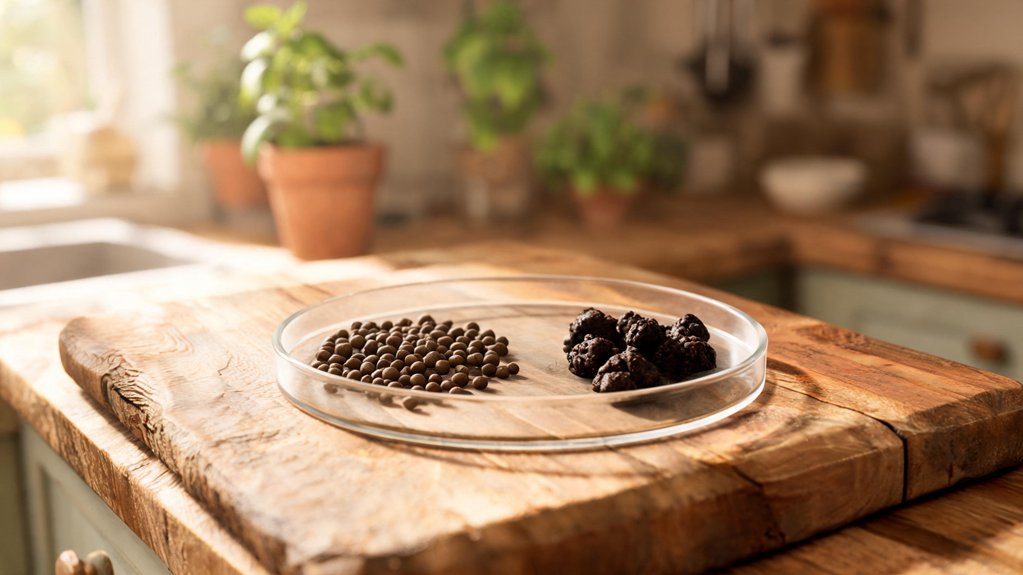
- Clarify normal cecotropes: dark brown/blackish-green grape-like clusters, soft/mucus-coated, usually appearing once or twice daily.
- List abnormal droppings signs, especially watery liquid stool without normal pellets, mucus/blood, bad odor, and wet fur under the tail.
- Recommend urgent action for severe diarrhea or no eating: contact a rabbit-savvy exotics vet immediately, especially if not eating 4+ hours or no pooping 12 hours.
Rabbit Poop Basics: What’s Normal
So, what should rabbit poop look like when everything’s healthy? You’ll see frequent, dry, firm fecal pellets—separate little nuggets, not wet or slimy. They crumble into fibrous bits when you break one, and they usually smell mild and earthy.
Your rabbit also makes soft caecotrophs once or twice daily, often overnight or early morning. Caecotrophs are mucus-coated grape-like clusters with a stronger odor, and many get eaten right away, so you may not see much.
Helpfully, plan to spot pellets almost all day, not 8–12 hour gaps. If they stop, call a rabbit-savvy exotics vet urgently.
Normal Fecal Pellets: Size and Color
Now that you know what “normal” looks like overall, let’s zoom in on the two things most owners can measure fast: pellet size and color.
Let’s zoom in on what most owners can measure quickly: pellet size and color—key signs of your rabbit’s digestive health.
What size is rabbit poop? Healthy fecal pellets are small, firm, dry balls, usually about 0.27–0.47 inches (7–12 mm) wide, like a pea or chickpea. They also stay a pretty consistent diameter for your rabbit. Healthy adult rabbit If pellets stop, treat it as urgent.
Color usually runs golden brown to dark brown, sometimes tan or even medium greenish tones.
Pick a baseline shade for your bunny, and watch for big changes, too.
If pellets stop, treat it as urgent.
Consult a rabbit-savvy exotics vet.
Healthy Cecotropes: Look, Feel, Timing
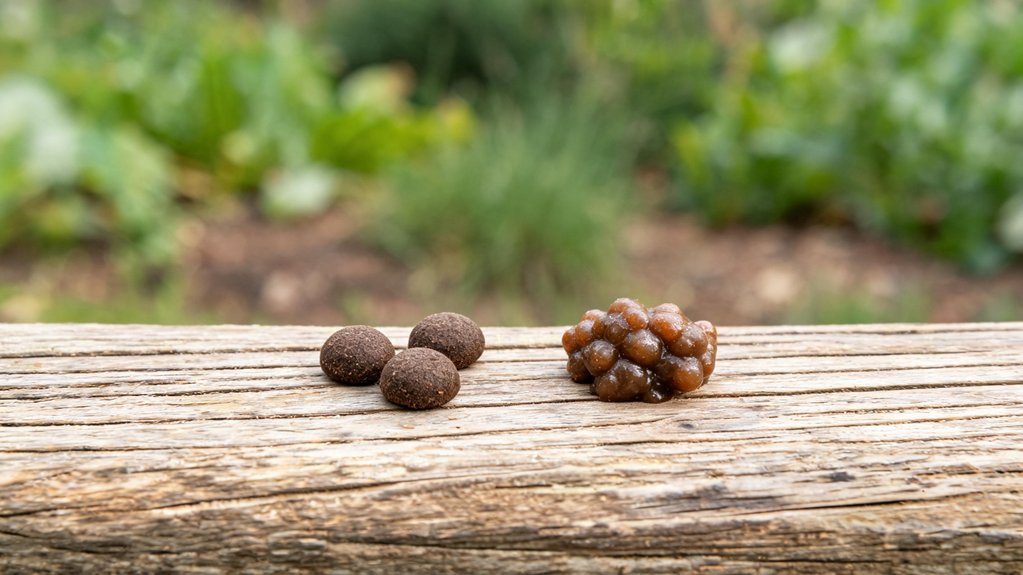
Healthy cecotropes usually show up once or twice a day, often about 8 hours after your rabbit eats those less-fiber parts of the meal, and they’re most common late evening or early morning. When you check, look for dark brown to blackish-green, shiny clusters that stick together like a bunch of grapes, with a soft, slightly sticky, mucus-coated feel. These are cecotropes—they’re produced in the cecum and are normally re-eaten soon after they exit the anus (cecotrophy). But remember—those are meant to be eaten right away, so you shouldn’t see lots of them lying around, and if your rabbit isn’t eating or pooping for 12 hours, call a rabbit-savvy exotics vet urgently.
Timing: Once Or Twice Daily
You’ll usually see healthy cecotropes happen once or twice a day, often in a couple of predictable “windows” that line up with your rabbit’s feeding and quiet rest.
That rhythm matters, because cecotropes are part of what keeps digestion on track.
After a main meal, you may notice them about 4–8 hours later, especially if you feed pellets in the evening.
With mostly hay diets, timing often shifts to 8–12 hours after big meals.
Many rabbits do this during quiet rest, not constant activity.
And if your rabbit stops making them or doesn’t eat, treat it as urgent.
Appearance: Shiny Clusters Like Grapes
After you learn when cecotropes usually show up, it’s just as helpful to recognize what they look like, because healthy ones have a very specific “grape cluster” look.
You’ll see dark, soft, shiny clusters, like small bunches of grapes or blackberries. Each tiny piece is fused, so you don’t get scattered pellets.
The color is usually dark brown to almost black, sometimes olive or greenish-black.
Feel them gently, they should compress easily, because a mucus coating makes them soft and slightly sticky.
The smell is stronger, musky or acrid.
This is healthy rabbit poop, not unhealthy watery diarrhea or dry, matte pellets.
Rabbit Diarrhea: Watery, Unformed Droppings
If you see watery, unformed droppings—basically liquid poop with no normal round pellets—you need to treat it as serious.
Watery diarrhea can show up after diet changes, stress, parasites, or the gut getting thrown off (and sometimes after unsuitable antibiotics), and it may come with mucus or even blood, plus a bad smell and wet, smeared fur under the tail.
But if you notice a rabbit not eating and not pooping for 12 hours, or you see few to no normal pellets, contact a rabbit-savvy exotics vet right away, because true liquid diarrhea is an emergency.
Watery Unformed Stool Causes
Watery, unformed rabbit droppings usually mean the gut isn’t moving food through the right way, and it often starts with what your rabbit eats.
If their diet is low-fiber, high in starch or sugar, their cecum flora goes off-balance, causing watery rabbit poop.
Pellet-only meals, seed mixes, fruit, bread, cereal, and frequent sweet treats push yeast and opportunistic bacteria to overgrow.
Also, slow transit from not enough hay can worsen fermentation.
Rapid diet changes can trigger enteritis complex and hypomotility.
Stress and antibiotics can also disrupt gut balance, leading to diarrhea.
If your rabbit stops eating or pooping for 12 hours, treat it as an emergency.
See a rabbit-savvy exotics vet.
Signs Of Severe Diarrhea
Severe diarrhea in rabbits doesn’t look like “a little off” poop. If you’re wondering what’s healthy rabbit poop, picture small, firm brown pellets.
Now watch for watery, unformed discharge—brown liquid, lots of it, pooling under the body. You may see mucus or gelatin-like clumps, no hard pellets, and stained fur on the perineum and back legs.
This can come with bloating, a sloshy belly, hunched posture, teeth grinding, and fast dehydration.
Offer immediate help by calling a rabbit-savvy exotics vet. A rabbit not eating or pooping for 12 hours is an emergency.
Abnormal Cecotropes and Gut Imbalance Signs
When your rabbit’s cecotropes (the soft “grape-like” night poops they re-eat) look wrong, you should treat it as a clue that something in the gut isn’t balancing out.
Abnormal cecotropes may turn mushy, pasty, or liquid, and they often smell awful, stick to fur, and leave soft clumps around the anus.
You may even see normal pellets plus soft liquid bits.
They can come with tiny pellets in yellow mucus.
Also watch for reduced appetite, weight loss, hunched posture, loud gurgling, bloating, teeth grinding, and small dark dry pellets.
If your rabbit isn’t eating or pooping for 12 hours, get an exotics vet.
What To Do for Sudden Poop Changes (Step-by-Step)
If you notice a sudden poop change, start acting right away, because rabbits can tip into gut slowdown fast.
First, note when it started, and when you last saw normal pellets.
Count stools, check size and shape, and separate hard pellets from true diarrhea, meaning unformed liquid.
Next, check appetite.
If they won’t eat for 4+ hours, or if they stop eating and pooping for 12 hours, treat it as an emergency and call a rabbit-savvy exotics vet now.
Provide unlimited familiar hay, offer fresh water, keep them warm, quiet, and calm.
Also, avoid over-the-counter meds.
Monitor closely.
Avoid These Common Rabbit Poop Mistakes
Once you’ve started watching for sudden poop changes, don’t let common mistakes slow you down—rabbits can get into gut slowdown fast.
Once you’ve started watching for sudden poop changes, don’t waste time—rabbits can slip into gut slowdown fast.
First, don’t skip daily monitoring. Quick checks help you spot subtle types of rabbit poop changes, like fewer, smaller pellets, or pellets strung with fur.
Second, don’t confuse cecotropes (soft, clustered “morning” droppings) with diarrhea. And don’t remove them or call them abnormal.
Third, act on diet clues. Low hay and little water mean dry, sparse pellets.
Fourth, never ignore mucus, foul odor, or repeated soft stool.
Also, if no poop happens 8–12 hours despite anorexia, treat it as emergency.
Frequently Asked Questions
How Often Should My Rabbit Poop Each Day?
Poop often: healthy rabbits usually pass several hundred small, round pellets daily, continuously day and night. A good adage: “When the gut’s running, the pellets keep coming.” Track your rabbit’s baseline; sudden drop needs urgent exotics vet help.
Why Do Rabbits Poop so Much Throughout the Day?
You’ll notice rabbits poop so much because they’re strict herbivores that eat fiber nonstop; their fast hindgut digestion keeps pellets moving through quickly, and they also produce and re-ingest cecotropes, so things don’t pause.
Why Are Rabbit Fecal Pellets Round?
Because your rabbit’s hindgut molds fibrous food into firm, rounded pellets. As muscles press, water reabsorbs, and the sphincter shapes each ball, so droppings stay consistently round, dry, and uniform. Feed hay for best results.
What Size Should Healthy Rabbit Pellets Be?
Healthy rabbit pellets should be about pea-sized, roughly 3/8–1/2 inch wide (6–12 mm). You’ll usually see fairly consistent pellet size for your rabbit; sudden much smaller or fewer pellets mean it’s time to call a rabbit-savvy exotics vet.
Is It Normal to See Cecotropes in the Living Area?
Not usually—healthy bunnies eat their soft, grape-like cecotropes right away, so you shouldn’t find fresh ones around. If you do, your rabbit may have a diet or gut issue; call a rabbit-savvy exotics vet.