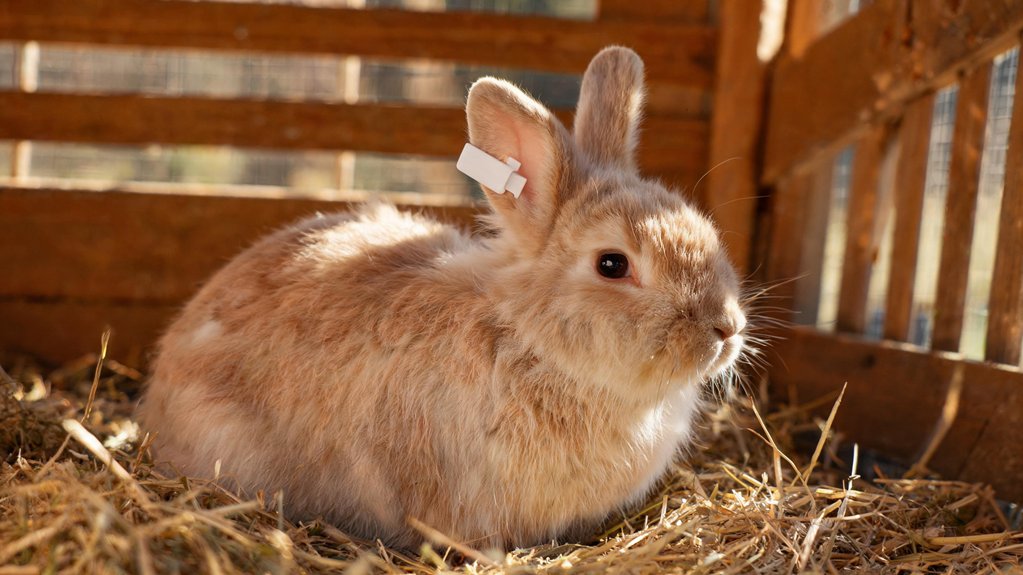
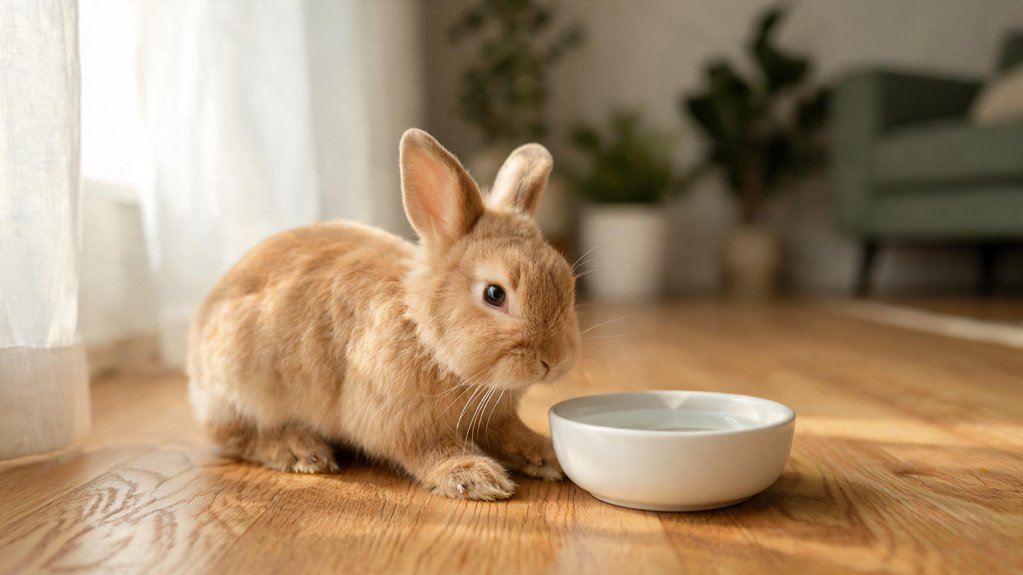
Spot fear early: crouching, pinned ears, wide eyes, freezing, frantic pacing, thumping, or rapid, shallow breathing. When you see that, move your bunny indoors before fireworks start into the quietest room far from the flashes, with windows closed, curtains drawn, and the hutch against an interior wall.
Add a deep hay-filled hide at least two. Cover part of the hutch with a thick blanket for flash dampening. Run low, steady white noise around 60 decibels so your bunny stays calmer and keeps eating. Then keep going to learn more.
Swift Summary
- Watch for early fear signs—flattening, pinned ears, dilated eyes, pacing/freezing, trembling, and rapid or shallow breathing—then act immediately.
- Move your rabbit indoors to a quiet room far from fireworks, close windows/doors, and block flashes with curtains or blackout blinds.
- Set up sound masking with steady background noise (white noise, soft music) at low volume, avoiding sudden loud audio.
- Improve enclosure comfort with extra hay, fleece/blanket sound dampening, and multiple secure hides away from windows.
- Monitor appetite and droppings during and after fireworks; reduced eating or dry stool needs prompt supportive care.
Identify Fear Signs Before Firework Night
Before firework night approaches, it’s essential to monitor your rabbit for early signs of fear to ensure you can take proactive steps to keep your pet safe and comfortable. Observing key behavioral indicators such as posture—crouching low or flattening against the enclosure—elevated breathing rate, and changes in habits can provide vital clues about your rabbit’s stress level. A frightened rabbit may exhibit signs like pinning their ears back, ceasing nose twitching, and displaying wide, dilated eyes that signal heightened anxiety. In addition, watch for stamping back feet and other frantic movements, as these can be early signs of panic in rabbits. In addition, pay close attention to physical responses such as frequent thumping, frantic bolting, crashing into the enclosure, rapid and shallow breathing, trembling, shaking, pacing, or freezing in place. These are clear indicators that your rabbit is experiencing significant distress. To effectively calm your rabbit during fireworks, regularly check their appetite and bowel movements; reduced eating, fewer droppings, or dry stool are strong signals of stress requiring immediate intervention. Implementing calming strategies, such as providing a safe hiding spot, minimizing noise exposure, and offering comforting treats, can help soothe your pet and prevent long-term trauma. Protecting your rabbit from fireworks not only enhances their well-being but also reinforces your commitment as a responsible pet owner to ensure a safe, stress-free environment during loud celebrations.

Materials: The 2 woven grass beds are made of natural dry grass, has its own organic grass fragrance that makes the pet feel relaxed, as if they are in their natural homes. The little toys in our package will be liked by your pets, because they are healthy and cute

Product: The bunny grass bed size about 11.1 x 8.3 in and the hay chew balls diameter approximately 3.9 in, can easily be placed inside most small animal cages. Outside of the cage, it is compact and can be moved from place to place without any hassle

【1 MINUTE QUICK CLEAN】BESNEW rabbit hay feeder comes with a litter box trash bag,dustpan and broom.You just need to remove the net frame and take away the trash bag.It can help you effectively reduce cleaning time and workload and achieve quick cleaning.
Move Hutches Indoors Before Fireworks Start
Once you spot early signs of fear in your pets, such as flattened ears, rapid breathing, or trembling, it’s crucial to act promptly and execute your firework safety plan. Moving outdoor hutches indoors before fireworks commence is the most effective way to protect your rabbits from loud bangs and bright flashes, ideally before the evening begins. By doing so, you help prevent them from experiencing the overwhelming stress of sudden noise and visual stimuli, ensuring their safety and well-being during this disturbing period. For extra confidence, keep the stable, familiar environment so your rabbits feel secure as the noise starts.
Transitioning your pet enclosures to a secure, indoor environment for the entire firework display period is essential to minimize repeated stress over multiple nights. Choose solid, well-ventilated indoor structures like a sturdy rabbit house, garage, or shed, and ensure the hutches are placed on stable, level flooring to avoid tipping or discomfort. Enhance their comfort and safety by adding extra bedding such as hay or straw, and provide a cozy cardboard hide box packed with hay to serve as a sanctuary. Before closing the hutch, check that water bottles or bowls are filled, and that ample supply of hay and nutritious food is available.
To further improve safety, cover parts of the hutch with breathable, fire-safe blankets, leaving ventilation gaps to maintain airflow while shielding your pets from flashes and sparks.
Implementing this proactive, comprehensive indoor solution not only safeguards your beloved small animals from fireworks-related stress but also provides peace of mind for pet owners looking to ensure a calm, secure environment during fireworks events. Proper preparation, early action, and protective modifications create a safer, more comfortable space, demonstrating your commitment to your pet’s health and emotional well-being during noisy celebrations.

The value soft small animal bedding mat cage liner set includes 3 pack blankets in different colors (gray, blue and pink).These blankets are available in 2 sizes (small & medium), you can choose the right blanket according to the size of your pet. Small : 13.7"*13.7", Medium: 19.2"*24". Suitable for guinea pigs, rabbits, chinchillas, hamsters, birds, lizards and other small animals.

Solid and Stable: This outdoor cat house insulated is crafted from sturdy, durable spruce wood with a waterproof asphalt roof. It remains stable and secure during extreme weather and accidental impacts, providing small animals with a reliable shelter to hide from predators and stay warm throughout the winter.

Super Soft: Made from premium, ultra-soft flannel fleece, these blankets provide a gentle and cozy surface that pets absolutely love. Whether your guinea pig wants to snuggle, your rabbit needs a soft spot to rest, or your kitten enjoys kneading, the cute patterns and silky texture create an irresistible haven for small animals and tiny puppies alike
Choose the Quietest Room and Best Placement
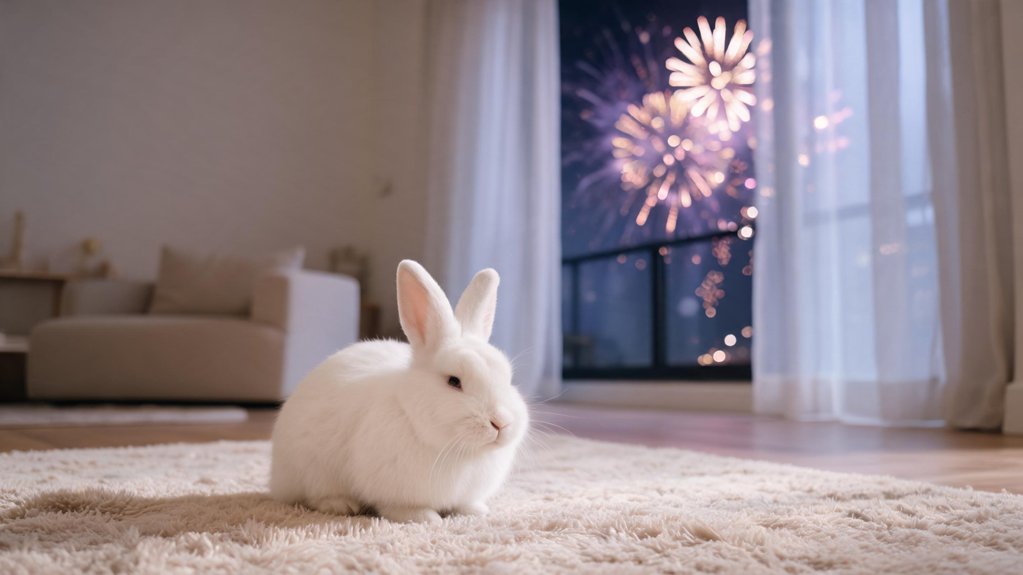
Choose a quiet, indoor room that’s strategically located on the side of your home furthest from fireworks displays, and away from busy traffic areas. This designated space should be free from external noise disturbances and provide a calm environment for your pet rabbit. By selecting a low-traffic corner with minimal external disturbance, you help to minimize loud bangs and sudden sounds that can cause stress for your bunny during fireworks season. Enhance the room’s tranquility by closing curtains or blackout blinds to block visual stimuli, and position the rabbit’s enclosure against an internal wall. Ensure that the covered side faces the wall, preventing your rabbit from seeing the fireworks explosions outside. Keep windows and doors fully closed to seal out external noise and maintain a steady, calmer sound environment. A sound level comparable to resting-level quiet, around 60 decibels, is ideal for helping your rabbit feel secure and relaxed. Creating this controlled environment with strategic room selection, thoughtful positioning, and noise reduction measures ensures your pet experiences minimal stress during loud events, making it a reliable and effective solution for pet owners seeking to safeguard their rabbits’ well-being during fireworks displays.

EFFECTIVELY CANCELS NOISE: Our signature sound has helped millions experience better sleep for generations—including our furry family members. White noise effectively cancels out noises that may disturb or distract your pet.

Keep Your Sanity - Say goodbye to annoying and noisy squeaky dog toys that drive you crazy. With its no-squeak design, this dog toy will stay quiet as your little pooch plays or chews on it.
Pick A Quiet Indoor Room
When fireworks start popping, you’ll want to provide your rabbit with a safe, quiet, and comfortable indoor environment to minimize stress and ensure their well-being. Choose a secure interior room that’s well insulated and located away from windows, doors, and exterior sources of noise to create a calm refuge for your bunny.
Opt for a designated space such as a spare bedroom, utility room, or long hallway that offers stability and insulation. Keep your rabbit’s enclosure against an internal wall, away from ground-level windows, busy streets, driveways, and parking areas to further reduce noise and visual stimuli.
Select a room with solid construction, fewer outside gaps, and a consistent, cool-but-not-cold temperature that promotes comfort. Ensure good ventilation in the space to prevent stuffiness and maintain airflow.
Prior to the fireworks display, close all windows and draw curtains or blinds to minimize flashes and visual disturbances. Avoid placing your rabbit near loud household chores or appliances that might create additional noise during this time.
Use the same indoor room consistently for fireworks events to help your bunny associate it with safety and reduce anxiety during future noise episodes. After the fireworks display, monitor your rabbit closely for signs of tummy upset or shock, providing reassurance and comfort as needed to support their recovery.
Shield Hutches From Sightlines
Begin by selecting the quietest room in your home, ideally one with minimal external noise, and then position the hutch against a solid internal wall to prevent visibility from outside sources. Ensure the hutch is placed away from windows, external doors, and any glass surfaces that could reflect or transmit distracting images.
Enhance your pet’s sense of security by setting an exercise pen in a corner that’s shielded from external views. Use thick, insulating blankets or duvets as visual covers on the sides of outdoor hutch enclosures, carefully leaving gaps for proper airflow to prevent overheating and ensure ventilation. Choosing a secure rabbit hideout gives your rabbit an enclosed resting space that offers shelter and a sense of security.
To further reduce visual stimulation, fully close curtains and blinds around the hutch. By implementing these strategic shielding measures, you provide a calm environment that minimizes stress and helps your rabbit remain composed during loud or startling events, making your home a safer sanctuary during fireworks or other loud celebrations.
Block Flash and Reduce Loud Noise Inside
First, block the sudden flashes of bright light and reduce the loud fireworks noise to ensure your rabbit’s safety and comfort before the fireworks begin. Move your bunny indoors to a quiet, secure room such as a spare bedroom, closet, or any interior space away from windows and outside views. Seal all windows and doors tightly, and draw curtains or blinds over glass to minimize visual disturbances caused by external flashes. To further decrease contrast and prevent startling your rabbit, turn on interior lights, creating a stable, less stressful environment.
Position your rabbit’s enclosure facing an interior wall to shield it from direct sight of external fireworks and flashes. Incorporate low, steady background noise like a white-noise fan, soft music, or a calming radio station at a moderate volume level to help drown out outdoor explosions and abrupt sounds. Maintaining a calm and controlled environment with these precautions can significantly minimize the risk of shock or gastrointestinal stasis associated with fireworks fright.
In addition, monitor your rabbit closely during and after fireworks displays, checking for signs of distress such as shock symptoms or signs of gastrointestinal stasis. Adopting these proactive measures ensures your pet’s safety and well-being by creating a secure, noise-reduced environment that mitigates stress and prevents health complications during fireworks season.

Portable soft plush cuddle cave: Half closed design of this cuddle pouch brings your pet a sense of security and safety, looks attractive placed in your home; Your furry little friend could play, rest, hide, sleep or do other activties in this safe shelter, which is also treated as a cozy home

Cute & Fun Hideout Design– This guinea pig snuggle sack is more than a guinea pig bed, it’s a cozy hideout and playful tunnel where curious guinea pigs, bunnies, and other small animal pets can explore, burrow, rest and feel secure inside their favorite cage accessories

Hideout: Guinea pigs are naturally timid, and this dark hideout provides a cozy and sheltered space for them to rest
Soundproof Safely With Blankets and Bedding
Blankets can effectively help muffle loud noises, providing a safer, more comfortable environment for your rabbit. To achieve optimal soundproofing, use soft, low-dust bedding options such as high-quality hay, straw, shredded cardboard, or paper-based bedding.
Incorporate fleece or fabric materials for added sound dampening, ensuring your rabbit’s safety and comfort.
Avoid using cedar or pine shavings, which can be harmful due to their aromatic oils and volatile compounds. Steer clear of cotton wool, as it can tangle or be ingested by your rabbit, posing health risks.
To enhance sound insulation, add an extra 4 to 6 inches of deep bedding, allowing your bunny to burrow and buffer noise effectively.
For comprehensive soundproofing, cover the hutch with a thick blanket or duvet, but ensure at least one side remains open to maintain proper airflow. Position the blankets close to the loudest side of the enclosure to maximize noise reduction.
Regularly refresh the bedding to maintain cleanliness and prevent odors, creating a quieter, healthier environment for your rabbit’s well-being.
This solution-focused approach helps you protect your pet from stressful noise disturbances while prioritizing their safety.

Effectively Calm and Relieve Stress: Our cat calming treats are formulated with natural plant extracts to help your feline friend stay relaxed during stressful situations like travel, vet visits, or boarding. These calming cat chews reduce anxiety, prevent scratching and biting, and promote a sense of calm. Perfect for calming care for cats, these calming cat treats are safe with no side effects, making them ideal for cat calming treats for indoor cats

Give the Gift of Peace- The perfect go-to when clipping nails, seeing the vet, giving meds, introducing a potential mate, dealing with noise, or any other stressful situation.

IRSEA, the #1 Pheromone Research leader introduces SecureBunny Home Transport, formulated to release signals that your bunnies perceive into their environment, enhancing their ability to adapt to environmental changes or disruptions to their normal routine.
Create a “Safe Hide” During Firework Anxiety
And when fireworks start, set up a safe hide immediately by placing 2–3 hay-filled boxes or burrow-style tunnels inside a secure, sturdy pen.
Ensure the enclosure has solid sides and a covered top designed to block flashes and loud noises, giving your bunny a private, calming retreat during stressful events.
Make certain that your pet can access the hide quickly and easily without risk of getting trapped; keep the entrances open and unobstructed.
Position the entire setup away from windows to minimize exposure to visual stimuli and sudden light flashes, allowing your bunny to retreat swiftly and re-emerge when feeling ready.
Maintain a consistent routine by providing fresh hay, ensuring water is nearby, and always keeping at least one familiar hide available inside the enclosure.
This reassuring environment helps prevent “scary” noises from escalating into unnecessary stress, providing your rabbit with a reliable, comforting refuge during fireworks, and making your home a safer, calmer space for your beloved pet during loud celebrations.

HAND-WOVEN ENRICHMENT TOY - Woven grass hideaway provides a cozy shelter while satisfying your pet's natural instincts to burrow, chew, nest, and hide with edible, pet-safe materials only

【Extral Large Size】After installation, the whole bunny castle size is about 42 x 13x 25.6 inch / 107 x 33 x 65 cm,which has enough room for the rabbits, guinea pigs, hamsters, little cats, chinchillas, ferrets and all kinds of small pets to rest, hide, explore and sleep in it. Futher more, it also come with a bunny hay feeder.

100% Edible Timothy Hay Toy: Made with premium Timothy hay for a tasty hideout, chew toy, and treat all in one
Provide Multiple Hay Hideouts
When fireworks begin to pop and illuminate the night sky with loud bangs and bright flashes, it’s essential to create a safe and comforting environment for your rabbit.
To help your pet feel more secure during firework events, provide multiple hay-filled hideouts, ensuring they’ve options that promote a sense of control and security.
Offering at least two hideouts—preferably one per bunny—in a quiet, secluded room away from windows minimizes stress and sensory overload.
Utilize sturdy, commercial-grade cardboard boxes or untreated wooden houses designed specifically for small mammals.
Each hideout should be filled generously with deep, nutritious hay that promotes natural burrowing behavior, helping your rabbit feel more grounded and safe.
Position the entrances facing away from noise sources, such as windows or loud appliances, to further reduce anxiety.
Inside each hideout, add soft, plush bedding materials to increase comfort, and prepare these hiding spots well in advance of fireworks displays to ensure your rabbit becomes familiar with their safe retreat.
Prioritizing this solution not only alleviates stress but also reinforces your commitment to your rabbit’s wellbeing during stressful events.
Ensure Safe, Untrapped Access
A comprehensive fireworks safety plan provides your rabbit with a secure, untrapped haven for immediate escape in case of distress. Construct a specialized hideout using durable, chew-safe, and non-toxic materials, ensuring it features solid walls, a sturdy roof, and a dark interior. Offering hay-based chews nearby can also support normal chewing behavior and give your rabbit a calming outlet while fireworks are going off.
The hide should be sufficiently spacious to allow your rabbit to turn around comfortably and rest peacefully, reducing stress during loud celebrations.
Incorporate at least two easily accessible entrances into the hide, enabling your rabbit to bolt out quickly if startled. Position the hide in the quietest corner of your living space, ideally facing a wall and away from visual flashes and commotion caused by fireworks or children.
During fireworks displays, enhance safety by placing deep bedding inside the hide, ensuring ample airflow beneath any coverings to prevent overheating.
After fireworks conclude, vigilantly monitor your rabbit for signs of shock, gastrointestinal stasis, reduced appetite, or changes in bowel movements.
Implementing these targeted safety measures, including high-quality, chew-safe hiding options and proper placement, guarantees a secure environment where your rabbit can remain calm, comfortable, and protected from accidental injury during celebrations.
Set Up a Temporary Exercise Pen Plan
Start by establishing a secure, temporary exercise pen in a quiet, sheltered indoor location. Choose a space farthest from street noise and away from windows to minimize distractions and external stressors.
Start by establishing a secure, temporary exercise pen in a quiet, sheltered indoor location, far from street noise and windows.
Position the pen against an interior wall for added stability, and cover nearby windows with blackout curtains or coverings to block flashes and prevent escape attempts.
Utilize 30–36 inch high, sturdy, modular panels designed specifically for pet containment, aiming for an enclosure that provides approximately 8 square feet per rabbit—ideally a 4 ft by 2 ft area. A well-designed indoor rabbit playpen should also leave room for a litter box, food, and water so your rabbit can eat and toilet without leaving the enclosure.
Place a waterproof, non-slip mat underneath the pen to ensure optimal traction and comfort, reducing the risk of slips and injuries.
Inside the pen, incorporate familiar bedding materials, deep hay, and a sturdy cardboard hide to promote comfort and security for your rabbit during the training or recovery process.
Complete your setup by rabbit-proofing the designated area thoroughly. Block or remove all cords, electrical wires, and small items that could pose choking or ingestion hazards.
Ensure toxic plants are removed from reach, and eliminate any items that could be ingested or cause injury.
Maintain a calm, routine environment throughout the process to reduce stress and facilitate successful adaptation to the temporary enclosure.
This comprehensive setup plan is tailored for pet owners seeking an effective, safe, and comfortable solution to temporarily contain or train their rabbit. Using high-quality, durable materials and thoughtful environmental modifications ensures your rabbit’s safety and well-being, while providing a controlled space that supports positive behavior and eases transition periods.

EXTRA LARGE 2-STORY SPACE: Measuring 51.6"L x 25.2"W x 36.2"H, this spacious double-tier design provides dedicated upper rest and lower play zones connected by a gentle ramp,...
Use Background Sound to Mask Sudden Bangs
Use background sound, such as TV, radio, soft music, or white noise, to help mask sudden firework bangs and make them feel less “different” to your rabbit. Select continuous, soothing audio tracks rather than abrupt clips to ensure a calming environment. Keep the volume low to moderate because rabbits have highly sensitive hearing, capable of perceiving sounds beyond human range.
Position the speaker away from the rabbit’s enclosure to prevent direct noise exposure, and enhance your environment by closing windows, drawing curtains, and running the sound inside a quiet room.
Starting this background masking technique 1 to 2 weeks before fireworks displays allows your rabbit to acclimate gradually, reducing stress during actual events.
Use short, consistent listening sessions during this acclimation period so the noise feels familiar and less alarming.
Avoid bass-heavy, jarring music tracks that could increase your rabbit’s anxiety. To improve overall sound masking, pair the audio setup with additional noise reduction measures, such as placing thick blankets or sound-absorbing materials over hutches and enclosures.
Ensure ventilation remains safe for your rabbit by preventing overheating or obstructed airflow while implementing these soundproofing strategies.
This comprehensive preparation will help create a calm, secure environment and significantly reduce firework-induced stress for your pet.
Keep Routines Steady: Hay, Water, Food
During fireworks, ensuring your rabbit feels secure starts with maintaining consistent routines for their essential habits because steady routines help calm the nervous system and support digestive health.
During fireworks, keep your rabbit’s routines consistent to calm the nervous system and support healthy digestion.
Keep unlimited, dust-free grass hay, such as Timothy, Orchard, or Meadow, available around the clock. This high-quality, fiber-rich forage should be within reach of your rabbit’s favorite hiding spots to promote natural foraging behavior and reduce stress. Choosing quality hay matters because fresh, long-stemmed grass hay wears down a rabbit’s continuously growing teeth and keeps their digestive system moving.
Check fresh water at least twice daily, using a heavy ceramic bowl or a secure hanging bottle, and ensure it remains free of any additives or contaminants. Providing clean, fresh hydration is crucial for your rabbit’s overall well-being, especially during stressful events.
Offer pellets at the same time each day, approximately 1/4 cup per 5 lbs of your rabbit’s body weight, and give consistent amounts of greens daily to maintain a balanced diet.
Avoid sudden changes in hay types or pellet brands, as abrupt alterations can upset your rabbit’s digestive system and cause unnecessary stress.
After the fireworks, monitor your rabbit closely for signs of slowed eating or other discomforts, and act promptly if you notice any abnormal behavior to support your pet’s recovery and safety.
Implementing these routine safeguards ensures your rabbit remains calm, comfortable, and healthy during and after loud, overwhelming events.

Guinea pig bed size: This guinea pig hideout measures 8.7"×8.7"×8.2"(L×W×H); Small animal bed allows pets to have enough space, providing a comfortable resting place for your pet; Suitable for guinea pigs, chinchillas, dwarf rabbits, and hamsters; Please measure the size specification before ordering

Play Tunnel & Cozy Hideout: Give your small pet the ultimate play zone with a plush tunnel and a dome hideout for napping, chasing, and hiding. Perfect for guinea pigs, hamsters, rabbits, ferrets, and other small animals

【Warm Guinea Pig Bedding】This fluff guinea pig or hamster bedding and hideout comes with a detachable cotton pee pad inside, make your furry little friends to feel comfortable and warm inside their little house
Provide Enrichment to Stop Panic Fixation
When fireworks start up, you can help your rabbit’s nervous system adapt by providing targeted enrichment that redirects their focus from panic to engaging, calming activities. Offering stimulating enrichment items such as hay, pellets, and leafy greens scattered strategically around their safe indoor environment encourages active foraging behavior, which is essential for mental stimulation and stress reduction. These food-based activities help shift their attention away from frightening noises, promoting relaxation and a sense of security.
Enhance their environment further by hiding nutritious treats within cardboard boxes or paper bags, and update these setups every night to maintain ongoing interest and curiosity.
Incorporate high-quality chew toys made from untreated wood, natural willow, or compressed hay to satisfy natural gnawing instincts and diminish anxiety.
Additionally, provide covered hides or straw piles designed for tunneling, creating secure spaces where your rabbit can retreat to comfort and feel protected during firework displays.
Remember to rotate these enrichment tools after each firework event to prevent boredom and continually promote mental engagement, making your rabbit’s environment a source of calm and security during stressful times.

Dehydrated for Freshness: Carefully dehydrated to lock in nutrients and natural flavor, ensuring a long-lasting treat.

PET ANXIETY-RELIEF SUPPLEMENT: The HomeoPet Anxiety Relief oral supplement may help promote relief from fear and general stress in dogs, cats, and other animals related to separation, kenneling, grooming visits, and other stressful situations.

Plan Warmth and Heat Pads for Cold Nights
As the fireworks set your rabbit on edge, you can ensure their comfort during cold nights by implementing targeted warmth solutions. Maintaining an indoor temperature of approximately 60–70°F (16–21°C) is essential for optimal rabbit health and comfort, and it’s important to eliminate drafts that could cause chilling.
Keep your rabbit’s enclosure positioned away from heat sources such as heaters, fireplaces, and cold windows to create a stable, warm environment.
For added warmth and safety, invest in rabbit-safe microwavable heat pads like SnuggleSafe, which are specifically designed to provide hours of consistent heat without electrical components. These heat packs significantly reduce risks associated with burns, fires, and chewing electrical cords.
To maximize comfort, place the heat pad underneath bedding or within a designated sleeping or nesting spot, then cover it with chew-proof fabric or fleece to prevent accidental damage.
Ensure the heat source remains optional, allowing your rabbit the freedom to move away if they seek cooler comfort. Supplement this setup with deep straw, hay, or paper bedding to trap and insulate warmth effectively.
After fireworks displays or loud noises, monitor your rabbit quietly for signs of shock or gastrointestinal issues such as GI stasis, and respond promptly to ensure their well-being during stressful nights.
Implementing these preemptive warmth strategies creates a safe, cozy environment that promotes your rabbit’s health and reduces stress during cold weather and fireworks disturbances.
Pick a Secure Carrier and Prevent Escapes
First, select a secure, rigid rabbit carrier that you can reliably trust during stressful situations. Opt for a high-quality hard-plastic or durable wire carrier with robust, secure latches, a solid, non-collapsible bottom, and firmly constructed joints. Many rabbit carriers are marketed specifically for veterinary visits, making them a practical choice for transport and checkups alike. These features are essential to prevent escapes and ensure your rabbit’s safety throughout transit.
Next, ensure the carrier provides a snug yet comfortable fit—your rabbit should have enough space to lie down and turn around freely without feeling cramped. Incorporate non-slip newspaper or specialized absorbent bedding to keep the interior clean and dry. Add a soft towel or a veterinarian-recommended plush vet bed to enhance comfort and provide padding during travel.
For optimal peace of mind, partially cover the carrier to create a secure, comforting environment for your rabbit, while maintaining proper ventilation through side mesh panels. When securing the carrier in your vehicle, use a sturdy seat belt to strap it firmly in place, ensuring it remains level on the vehicle floor. This prevents movement, reduces stress, and minimizes the risk of injury during sudden stops or turns, making your travel safer and more comfortable for your furry companion.
During Fireworks, Monitor Eating and Breathing
During fireworks, it’s essential to monitor your bunny closely, paying special attention to their hay intake, breathing patterns, and droppings.
Hay consumption is a key indicator of gastrointestinal health; if your rabbit stops eating hay altogether or if hay intake diminishes significantly over a period of 6 to 12 hours, prompt action may be necessary.
Noticing fewer, smaller, darker, or dry droppings also signals a potential gut slowdown, known as gastrointestinal stasis (GI stasis), which demands immediate veterinary consultation.
In addition to digestive health, observe your rabbit’s breathing carefully.
Rapid or labored breathing, especially if accompanied by open-mouth breathing or persistent breathing difficulty, can be indicative of acute distress.
If your rabbit exhibits any signs of respiratory problems that don’t resolve quickly, seek emergency veterinary care without delay.
Implementing vigilant monitoring and acting swiftly can prevent serious complications during fireworks and ensure your rabbit’s safety—consider investing in high-quality monitoring tools and maintaining close contact with your veterinarian for tailored advice and prompt intervention when needed.
Check Hay Intake
When fireworks start, it’s crucial to immediately assess your rabbit’s hay intake, as a sudden decrease in eating can quickly lead to serious gastrointestinal issues such as gastric stasis or ileus. A lack of consistent hay consumption jeopardizes their digestive health, so ensure they’re nibbling normally rather than sitting scared in their safe indoor space.
Offer fresh, unlimited high-quality hay, like timothy or orchard grass, in your rabbit’s designated safe area, even if they initially ignore it. This proactive approach encourages normal digestive function and provides comfort during stressful events.
Over the next several hours, closely monitor your rabbit for signs of reduced droppings—smaller or fewer pellets—and any cessation of normal chewing behavior.
If your rabbit stops eating altogether or produces only a few small pellets within 8 to 12 hours, contact your veterinarian promptly. Persistent lack of food intake beyond 24 hours warrants emergency consultation, as stress-induced gut slowdown can cause severe health complications.
Regular observation and prompt intervention are vital to maintaining your rabbit’s gastrointestinal health during stressful situations like fireworks.
Watch Breathing Rate
When fireworks go off, it’s essential to monitor your rabbit’s breathing rate carefully, as sudden noise can trigger significant stress and physiological changes. Keep a close eye on their chest or flank movement for a full 15 seconds, then multiply by four to determine if their breathing falls within the normal adult rabbit range of 30–60 breaths per minute at rest. A steady and calm rhythm indicates your rabbit remains relatively relaxed, but any deviation could signal distress.
During events like fireworks displays, you might observe rapid, shallow breaths, deeper inhalations, or nostrils that stay more open than usual.
Additionally, pay attention to your rabbit’s posture—frozen stillness can be a sign of fear or panic, which may require immediate calming interventions.
If you notice your rabbit’s breathing becoming labored or irregular, and they refuse to eat or drink, it’s vital to contact your veterinarian without delay to ensure prompt and effective treatment.
Prioritizing these signs and acting swiftly can help protect your rabbit’s health during stressful situations.
Monitor Droppings Carefully
Monitor Your Rabbit’s Droppings Carefully During Fireworks Events
Keep a close eye on your rabbit’s droppings and eating habits throughout the day, especially during fireworks displays.
Gut stasis, a dangerous condition where the rabbit’s intestines slow down or stop moving, can develop silently and worsen rapidly if not addressed promptly.
Regularly observe fecal output; rabbits typically defecate continuously, so if there are no droppings for more than 8 hours, this indicates a potential abnormal gut function that requires immediate attention.
Pay attention to changes in the timing and quantity of droppings.
If you notice a gradual decrease in poop production over 2 to 7 days, contact your veterinarian for guidance.
If your rabbit stops eating entirely or stops producing feces for 12 hours, treat this as an emergency situation to prevent serious health complications.
Additionally, monitor pellet size and appearance—small, dark, dry pellets, mucus, or runny stool following noise disturbances suggest stress or early gastrointestinal distress.
Immediate veterinary consultation and targeted treatment are essential to ensure your rabbit remains healthy and safe during high-stress situations like fireworks.
What to Do Right After the Fireworks Stop
Right after the fireworks stop, it’s essential to maintain a calm environment for your pets and household before resuming normal activities. Keep curtains closed, windows shut, and allow outside noise to remain blocked until the environment is truly quiet. This helps prevent additional stress or panic.
Set up a safe, quiet space by playing low-volume music or television briefly, then gradually lower the volume to help your pets adjust smoothly.
Next, carefully inspect your pets’ designated enclosure, such as a hutch or pen, for any damage, drafts, or signs of escape attempts. Look for behavioral signs of fear, including freezing, rapid breathing, or refusal to move. Check their eating, drinking, and bathroom habits to ensure they’re not distressed or dehydrated.
When approaching your pets, move gently and patiently, offering slow strokes or gently covering their eyes if needed to soothe them. Allow your pets to remain hidden if they choose, and provide treats once they start to relax.
Taking these calm, solution-focused steps will help them recover from fireworks stress and prevent long-term trauma.
When to Contact an Exotics Vet Urgently
If your rabbit refuses to eat or shows a significant decrease in normal droppings following fireworks displays or loud noises, don’t delay—contact an exotic veterinarian urgently. Gastrointestinal stasis, a life-threatening condition where the gut slows or stops moving, requires immediate intervention.
Act quickly if your rabbit has gone without food for 6 to 12 hours or if droppings have decreased or disappeared within this timeframe.
Look out for signs such as a distended, drum-like hard belly, absence of gut sounds or persistent violent gurgling, tiny misshapen or mucus-coated pellets, or an abrupt loss of appetite accompanied by a sudden cessation of bowel movements. These are critical symptoms that demand immediate veterinary attention to prevent rapid deterioration.
Also, be alert to signs of abdominal pain, including hunched posture, teeth grinding, pressing the abdomen against surfaces, sudden lethargy, or heat stress.
Rapid response with specialized exotics veterinary care can stabilize your rabbit’s health and prevent fatal outcomes. Early detection and prompt treatment are crucial in managing these urgent health crises effectively.
If your rabbit exhibits any of these warning signs or behavioral changes following loud noises, seek emergency veterinary support without delay to ensure the best chance of recovery.
Avoid These Common Mistakes During Loud Bangers
Don’t wait until the noise is completely over to notice signs of stress in your rabbit. If you observe hiding behavior, shaking, or refusal to eat treats, take immediate action to ensure your bunny’s safety. Keeping their indoor space calm, familiar, and quiet is essential during loud firework displays.
To protect your rabbit from the dangers of loud explosions, avoid using unsafe restraint methods. Instead of holding them down, gently guide your pet toward their favorite hiding spot, provide extra hay for comfort, and introduce a low-volume white-noise sound—set at a comfortable level, not excessively loud—to mask external noise. These strategies help reduce anxiety and prevent trauma.
Never leave your rabbit outside during fireworks because open-air blasts and flashes are more intense and can cause severe distress or physical harm. Instead, bring your pet indoors into a well-ventilated area.
Cover their enclosure with a light, breathable cloth to buffer the sound and provide a safe, secure environment. After the fireworks stop, closely monitor your rabbit for signs of shock or GI stasis, which can occur when digestion slows down due to stress.
If you notice a decrease in appetite or a change in bowel movements, contact an exotics veterinarian promptly. Ensuring proper preparation and immediate care during noisy events can significantly reduce your rabbit’s stress and support their health and safety.
Don’t Ignore Early Distress
When loud fireworks or firecrackers begin, you can’t assume your sensitive bunny is “fine” just because she remains quiet. Early signs of distress tend to be subtle but critical; watch for behaviors like freezing with wide eyes, thumping, hiding, rapid shallow breathing, or sudden changes in appetite and toileting habits. These indications often signal fear paralysis, acute stress responses, or alarm signals that require immediate attention.
If your rabbit exhibits trembling, restlessness, teeth grinding, or refuses to eat, it’s essential to act right away rather than waiting until the fireworks end. The next step is to provide a secure, indoor safe space for her to retreat to, ideally by covering her enclosure to minimize sensory overload. Start white noise or calming music before the fireworks peak to help drown out loud noises and create a soothing environment.
Monitoring for shock symptoms, such as lethargy or rapid heartbeat, is equally important—check her appetite and litter box activity later, especially overnight. If her reactions seem severe or if she displays any signs of distress that persist, contact your trusted rabbit veterinarian immediately for professional guidance and support.
Don’t Use Unsafe Restraint
Safe handling is essential to help your rabbit feel steady and secure, not trapped or stressed. During loud noise events like fireworks or fireworks-like bangers, avoid unsafe restraint techniques that can escalate fear and panic.
Instead, skip overhandling your rabbit unless absolutely necessary, as repeated “capture” actions can trigger intense panic responses, which may lead to shock or severe distress.
Always support your rabbit properly by lifting with full hindquarters support to prevent spinal injuries. Be cautious not to lift or manipulate your bunny by scruffing or dangling them by loose skin, as this can cause injury and discomfort.
Avoid making jerky, rapid reaches from above, which can scare or injure your pet, especially during stressful noise episodes.
Refrain from forceful confinement methods such as wrapping your rabbit tightly in a towel without breaks or trying to move them to quieter areas forcefully.
Instead, and only when necessary, intervene with calm, gentle, and brief actions. The goal is to diffuse stress effectively while minimizing the risk of injury, ensuring your rabbit’s safety and comfort during loud or startling situations.
Proper, gentle handling techniques are key to maintaining your pet’s wellbeing and building trust in challenging environments.
Don’t Leave Rabbits Outside
Before the first loud explosion or fireworks display hits your neighborhood, don’t leave your pet rabbit outside in an exposed garden hutch, even if it’s just for a short period. Outdoor hutches are typically positioned low to the ground and close to street-level noise, which means rabbits are vulnerable to intense vibrations from deep thumps, flashing lights, and whizzing noises all at once.
These environmental stressors can cause rabbits significant distress, shock, or even health issues like gastrointestinal stasis (GI stasis).
For the safety and well-being of your beloved bunny, it’s best to bring your rabbit indoors into a quiet, secure room or relocate them to an unused garage, shed, or dedicated pet area away from loud disturbances.
To further ensure their comfort, cover the carrier or enclosure with a thick, sound-absorbing blanket. Adding soft white noise, such as a low-volume television or calming music, can help mask the loud external sounds and create a soothing environment.
Keep bonded pairs of rabbits together during stressful events to provide mutual comfort and reassurance.
After the fireworks have ended, monitor your rabbit closely for signs of shock or GI stasis, such as loss of appetite, lethargy, or unusual behavior.
Taking these proactive steps with appropriate safety measures ensures your rabbit remains calm, protected, and comfortable during fireworks or other loud celebrations, while also maintaining their overall health and well-being.
Build a Yearly Plan Using Firework Dates
A comprehensive yearly firework preparation plan tailored to your rabbit’s needs can significantly reduce stress and promote wellbeing, especially in countries where noise disturbances occur frequently throughout the year.
Start by identifying and mapping key high-risk dates such as New Year’s Eve, Independence Day (July 4th in the United States), Diwali, and local bonfire festivals, which are associated with large-scale fireworks displays and loud noises.
Identify and map high-risk dates—New Year’s Eve, July 4th, Diwali, bonfire festivals—to anticipate fireworks and reduce your rabbit’s stress.
Next, recognize the weeks surrounding Halloween through to New Year’s and mid-summer events as periods of increased noise risk.
To ensure your rabbit’s safety and comfort, move outdoor hutches, cages, and enclosures indoors or into a quieter, enclosed space at least two to four weeks before these high-stress periods.
Incorporate deep bedding materials such as straw, hay, or soft fleece, and provide a cozy cardboard hide box to create a secure environment that minimizes noise-induced anxiety.
Utilize local council, community event calendars, and media notices to stay informed about scheduled fireworks events.
Consult neighbors and community members to gather firsthand information about upcoming celebrations that might affect your rabbit.
Regularly update your firework management plan annually, integrating new event dates or changes in local regulations, and maintain a readily accessible list of veterinarian emergency contacts for immediate response if needed.
Implementing this proactive, solution-focused approach with a detailed and resource-rich plan ensures your bunny’s safety and comfort through noise disturbances, fostering a stress-free environment that supports their health and happiness year-round.
Dealing With Repeat Noise: Reduce Long-Term Stress
When fireworks occur repeatedly, it’s essential to limit your rabbit’s prolonged exposure to the noise and prevent the “shock” from evolving into long-term stress or health complications. To ensure your rabbit remains calm and healthy, stay nearby after each loud event, maintaining a secure indoor environment by keeping the enclosure quiet and covered to reduce visual and auditory stress triggers.
Additionally, running high-quality white noise or soft background sounds at a moderate volume for approximately 30–60 minutes can help cushion the impact of sudden loud noises, preventing your rabbit from experiencing abrupt silence that may heighten stress.
Closely observe your rabbit for signs of stress or discomfort, such as reduced appetite, fewer poops, or GI stasis, which indicates slowed digestion.
If you notice any abnormal behaviors or symptoms, contact a certified exotics veterinarian promptly to ensure your rabbit receives appropriate care and support, minimizing the risk of long-term stress-related health issues.
Limit Repeated Firework Exposure
Limiting repeated firework exposure is essential for protecting your rabbit’s well-being throughout the seasonal fireworks displays. The cumulative “dose” of loud bangs, bright flashes, and unpredictable noise over the entire period can lead to significant stress and potential health issues for your pet.
By reducing how often these disruptive events occur near your home, you can significantly lower your rabbit’s long-term anxiety and improve its overall quality of life.
The best solution is to move your bunny’s hutch indoors or into a quiet, secure space such as a garage or shed for the duration of the fireworks season. Place the enclosure in a room away from windows, close curtains, and cover it with thick blankets that still allow airflow to maintain ventilation and safety.
Planning ahead is crucial: prior to known firework dates, start evening confinement 1 to 2 hours earlier to help your rabbit acclimate to the quieter environment.
Regularly monitor your rabbit for signs of chronic fear, such as hiding or loss of appetite, and be prepared to make immediate adjustments.
Implementing these proactive measures minimizes stress, promotes relaxation, and ensures your pet’s health and happiness remain protected during festive fireworks shows.
Protect your investment in your pet’s well-being with targeted, solution-oriented strategies that create a calmer environment and foster peace of mind for both you and your rabbit.
Maintain Calm After Each Event
After each fireworks burst, your primary focus is to help your rabbit recover quickly and feel secure again, preventing fear from becoming a long-term stressor. Immediately move your rabbit to a quiet, climate-controlled indoor room that’s away from windows, and close the curtains to block flashes of light. This creates a safe, calm environment that minimizes visual and auditory stimuli that can trigger stress responses.
Enhance the enclosure’s security by covering part of it with a soft blanket to buffer flashes of light, while ensuring good airflow is maintained for comfort and safety. Supplement your rabbit’s bedding with extra hay and deep, cushioned bedding materials to provide a sense of security and comfort. Keep the room temperature steady and within a comfortable range to support your rabbit’s physical stability during stressful events.
Further, utilize a low-volume television or white noise machine to mask the sudden loud bangs and unpredictable sound patterns from fireworks, promoting auditory calm.
Observe your rabbit carefully for the next 12 to 24 hours, monitoring signs of distress such as hiding behaviors, thumping, reduced appetite, fewer poops, or other indicators of stress and potential gastrointestinal (GI) stasis.
Regularly check your rabbit’s nails, skin, and overall physical health for any signs of discomfort or injury.
Record each fireworks event meticulously, including the date, time, and your observed responses to track patterns and improve your emergency response strategy.
Maintaining your usual calm routine is essential, as your steady demeanor reassures your rabbit and reduces anxiety.
FAQs: Rabbits, Fireworks Anxiety, and Safety
Why do fireworks cause significant stress in rabbits? Rabbits are prey animals with highly sensitive nervous systems, so the sudden loud noises, bright flashes, and unpredictable explosions of fireworks can trigger intense fear and anxiety. To protect your rabbit and ensure their safety and well-being, taking proactive steps before and during the fireworks display is crucial.
Begin by moving your rabbit indoors ahead of the fireworks show, ideally into a secure, sound-insulated space. If moving indoors isn’t possible, position the hutch facing a solid wall to minimize exposure to the noise and flashes. Enhance the space by adding a thick blanket to block sound and light, while ensuring ample airflow to prevent overheating.
Provide supplemental enrichment such as extra hay, straw, and a cozy hideout to offer your rabbit a sense of security. Keep a familiar rabbit companion nearby to provide reassurance and emotional support during stressful moments.
During the fireworks event, establish a dedicated quiet “safe room” where your rabbit can retreat. Close curtains to block out visual stimuli and use steady white noise or calming background music to mask the explosion sounds. These measures create a calmer environment that helps reduce your rabbit’s stress levels.
After the fireworks conclude, monitor your rabbit closely for signs of distress like stamping, hiding, rapid breathing, or trembling, which indicate shock or extreme anxiety. It’s also essential to observe their appetite and check their droppings over the next 24 hours to detect potential gastrointestinal issues like GI stasis.
If your rabbit exhibits prolonged distress or shows signs of shock, such as severe trembling or loss of appetite, contact a qualified veterinarian immediately. Implementing these safety-oriented, proactive strategies not only minimizes your rabbit’s fear and discomfort but also ensures their health and happiness during fireworks and other loud events.
Frequently Asked Questions
How Can I Calm My Rabbit During Fireworks if They Refuse to Come Out?
If your nervous or scared rabbit refuses to come out during fireworks, it is crucial not to force handling or cause additional stress. Instead, immediately move your rabbit to a quiet, secure room that provides a calm environment, and leave them hidden in their enclosure. Cover the enclosure with a soft cloth or blanket to help block out the frightening flashes of light and reduce visual stimuli.
To further soothe your anxious rabbit, run soft white noise or gentle music in the background, which can mask the loud, sudden sounds of fireworks. Offering an abundance of their favorite hay or useful hiding mats can provide comfort and a sense of safety. It is essential to closely monitor your rabbit following the fireworks event for signs of appetite loss or gastrointestinal stasis, and consult your veterinarian if you notice any concerning symptoms.
Creating a comforting, noise-reduced environment with hiding options and gentle background sounds can significantly help calm your rabbit during stressful fireworks displays, making your preparedness and care essential in maintaining their well-being.
Should I Cover My Rabbit’s Cage, and How Much Ventilation Is Safe?
Cover the rabbit’s cage, but do not seal it up completely. It is essential to leave visible airflow paths or at least one clear panel or gap to ensure proper ventilation. Avoid tight wrapping or completely sealing the enclosure, as this can lead to dangerous heat buildup or dampness, which can harm your rabbit’s health.
To optimize comfort and safety, consider using partial blankets or breathable materials combined with white noise to help maintain a calm environment. Regularly check the cage for any signs of heat stress or humidity, and adjust ventilation and cover strategies accordingly. Proper airflow and temperature regulation are critical for maintaining a healthy, stress-free habitat, making these adjustments highly effective for ensuring your rabbit’s well-being.
Can I Leave My Rabbit in the Dark With Hay During Firework Noise?
Yes, leaving your rabbit in a familiar, dim space with plenty of hay is a safe and effective solution during fireworks displays. Ensure the enclosure has ample airflow to prevent overheating and promote comfort. Providing hiding spots within the enclosure will help reduce stress and create a sense of security for your rabbit during loud noise events.
In addition, consider using gentle background sounds, such as soft music or white noise, to help mask the fireworks noise and further soothe your pet. After the firework display, closely monitor your rabbit for signs of shock, such as rapid breathing or lethargy, and watch for gastrointestinal issues like GI stasis, which may present as decreased appetite, abnormal pooping, or unusual lethargy. By implementing these strategies, you can minimize stress and promote your rabbit’s well-being during loud celebrations, ensuring a safer and more peaceful experience for your furry friend.
What Should I Watch for After Fireworks—Bloating, Gut Stasis, or Breathing Changes?
Watch for signs of GI stasis first, including decreased appetite, fewer or smaller poops, absence of caecotropes, hunched posture, teeth grinding, bloating or a firm belly, and loud or absent gut sounds. These symptoms indicate potential gastrointestinal slowdown that requires immediate attention. Promptly monitoring and addressing these signs can prevent serious health complications, ensuring your pet’s comfort and recovery.
Additionally, check for breathing abnormalities such as rapid, labored, or wheezy respiration, open-mouth breathing, and pale gums. These breathing issues could signal respiratory distress or shock, which necessitate urgent veterinary intervention. Recognizing these symptoms early with the right tools and knowledge can greatly increase the chances of a successful treatment outcome.
For comprehensive care and peace of mind after fireworks, consider consulting a veterinary professional or using specialized health monitoring products. Early detection of GI stasis or breathing difficulties ensures swift action, protecting your pet’s health and well-being.
When Is Fear so Severe That I Should Contact an Exotics Vet Immediately?
Sir Isaac Newton would say: If your rabbit exhibits severe distress such as screaming loudly, inability to use its back legs, sudden collapse, or difficulty breathing, you must contact an exotic pet veterinarian immediately. These signs indicate critical health emergencies that require prompt professional intervention to prevent further deterioration.
Additionally, if your rabbit refuses to eat, stops producing droppings, shows significant bloating, teeth grinding in pain, signs of shock, or persistent crashing behavior, urgent veterinary care is essential. Rapid response from a specialized exotics vet can make the difference between recovery and irreversible health consequences. Don’t delay—reach out to an experienced exotic pet vet today to ensure your rabbit receives the specialized treatment necessary to address these urgent concerns.