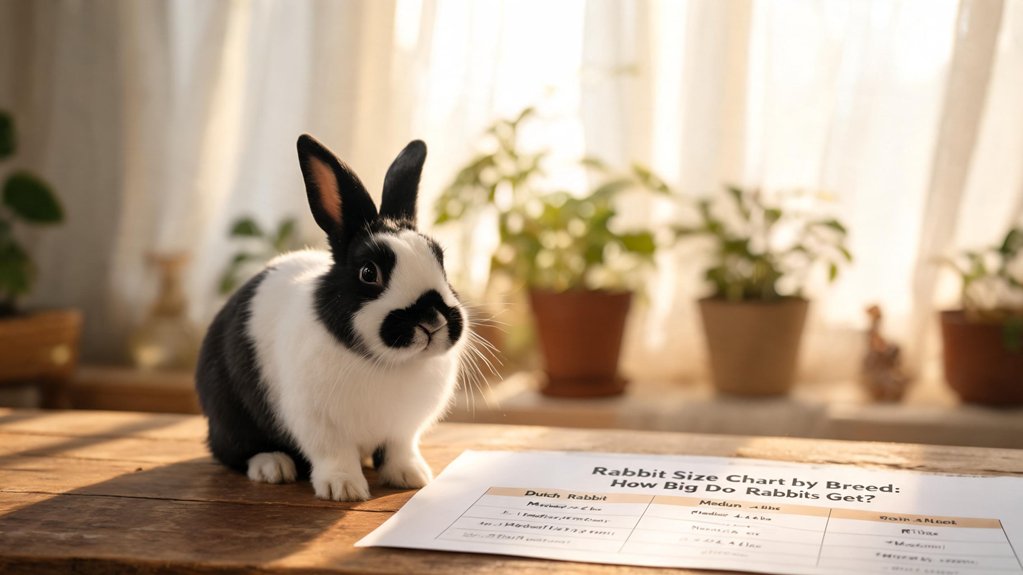
You can spot your bunny’s mood fast by checking ears, eyes, posture, and tail. Ears forward usually mean alert, curious, or scent-sampling; ears angling back more and more, especially pinned, usually means fear or stress. Do a quick 5–10 second ear/eye check for “whale eye” or wide, dilated pupils. A relaxed loaf or stretch means comfort. Freeze, hunched body, and half-closed eyes can mean pain. If eating or droppings change, call a rabbit-savvy vet—keep going to learn more.
Swift Summary
- Read ears first: forward/upright suggests curiosity, while flattening/pinning back often signals fear or worry.
- Check eyes and pupils for stress: wide “whale eye” or very dilated pupils indicate high-alert fear.
- Evaluate posture and tail: relaxed loaf/stretch shows comfort; hunched, freezing, or tense low posture suggests discomfort or pain.
- Distinguish play from anxiety: binkies/zoomies are joyful, while crouching, hiding, and thumping signal stress.
- Watch eating and droppings: sudden appetite loss, abnormal droppings, or reduced grooming can indicate GI or dental emergencies.
How To Spot Rabbit Mood Fast From Body Language
Start with your eyes, not your worries, and check your rabbit’s whole body in just a few seconds. You’re looking for unhappy rabbit body language fast, not just ears.
Yes, rabbit ears up vs down can help, but posture, movement, facial tension, tail, and legs tell the real story. If the ears point outwards and sit more relaxed, that often goes along with a happier, calmer mood.
Relaxed bunnies loaf, sprawl, or pancake, with loose muscles.
If you see a tense, hunched stance, squinting, or freezing, you may be dealing with fear, stress, or pain.
If you catch repeated circling—why do rabbits run in circles?—it can signal anxiety or restlessness.
When in doubt, offer calm space and check right away.
Start With The Ears: What Forward Vs Back Means
Start by checking your rabbit’s ears: if they’re forward and upright, that usually means alertness, curiosity, and “I’m watching this!”
If those ears angle back more and more, especially if they look tense or pinned, it’s often a sign of fear or worry—like your bunny’s saying, “Not comfortable.”
Watch what changes in the next 5–10 seconds, too, because a quick shift from forward to back can help you catch the problem early and respond gently.
Ears Forward Indicate Alertness
When your rabbit’s ears point forward, you’re usually looking at alertness and interest, not rest.
Ears forward indicate alertness, and your bunny is “tuning in” like antennae.
You may notice slight forward ears during mild curiosity, or bolt-upright, rigid ears when something grabs attention.
If your rabbit stretches its neck and keeps its head up, it’s checking changes nearby.
And if the ears stay forward while the nose twitches rapidly, that answers why do rabbits twitch their nose?
They sample scents.
Curious rabbits also ask: how do rabbits communicate with each other?
Watch ear shifts and gentle body lean toward sounds.
Ears Back Signal Fear
Ears pinned flat back against your rabbit’s head usually mean fear or high stress, not “being bad.”
You’ll often see it with a tense, crouched body, eyes that look wide or even a little bulgy, and your bunny freezing low to the floor like it’s trying to disappear.
And if you wonder why does my rabbit roll over, it can be a self-protection move when it feels unsafe.
Check the whole picture.
Tight, flat ears + stiff posture = worry.
Gently move slower, reduce noise, and remove the trigger.
But don’t confuse this with anger—why are bunnies so angry usually shows tail up, lunging, or boxing.
If you see why do rabbits suddenly run, it may be a fear burst.
Also, pain can cause grimacing.
Read Eye Details And Pupil Size For Stress Levels
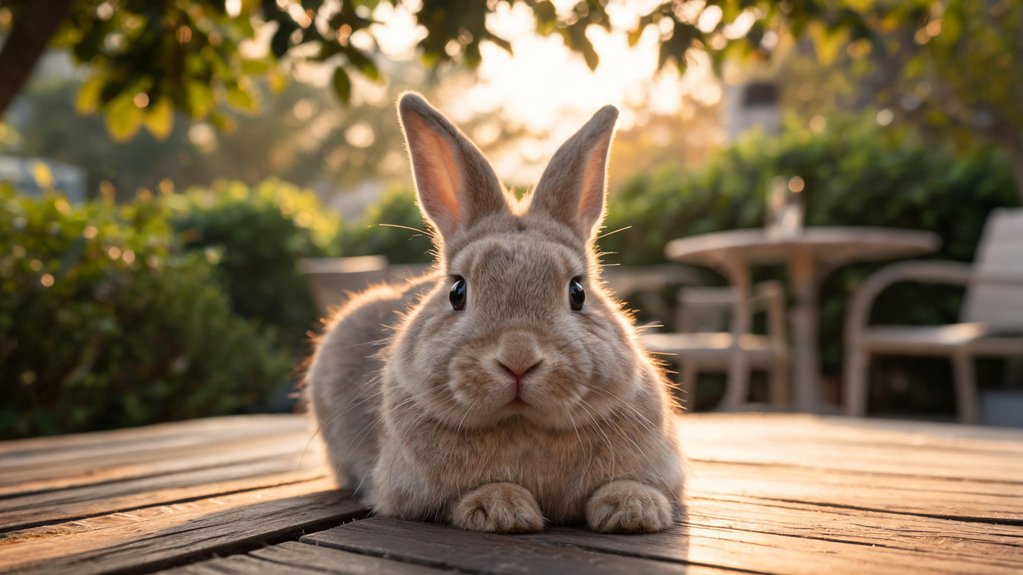
Take a close look at your rabbit’s eyes and pupils, because they often “talk” about stress faster than you’d expect.
If you’re wondering why rabbits get the zoomies, watch the rabbit eye and pupil stress signals first.
Wide, bulging eyes with visible white (the “whale eye”) mean high-alert fear.
You may also see flat ears, tense muscles, and freezing.
If the pupils stay very dilated while your bunny crouches, thumps, or tries to flee, treat it as strong worry.
Half-closed or squinting eyes can signal discomfort or pain—especially with hunched posture.
Also note the third eyelid, and eye color changes.
Understand Tail Position As Calm Or Defensive Warning
Tail position tells you a lot about how your rabbit feels, even before they thump or start conflict.
To understand rabbit body language, start with tail position calm vs defensive warning.
A relaxed tail stays close, loose, and natural.
If your bunny stretches out, and the tail isn’t rigid, you’re looking at comfort.
You can also see low-confidence calm when it angles slightly down.
But a raised, tense tail with laid-back ears signals a defensive warning.
If you spot upright tail during approach, back off, quietly.
And why do rabbits have white tails? The white underside can flash during escape, alerting nearby rabbits.
Decode Body Posture: Loafing, Stretching, Freezing
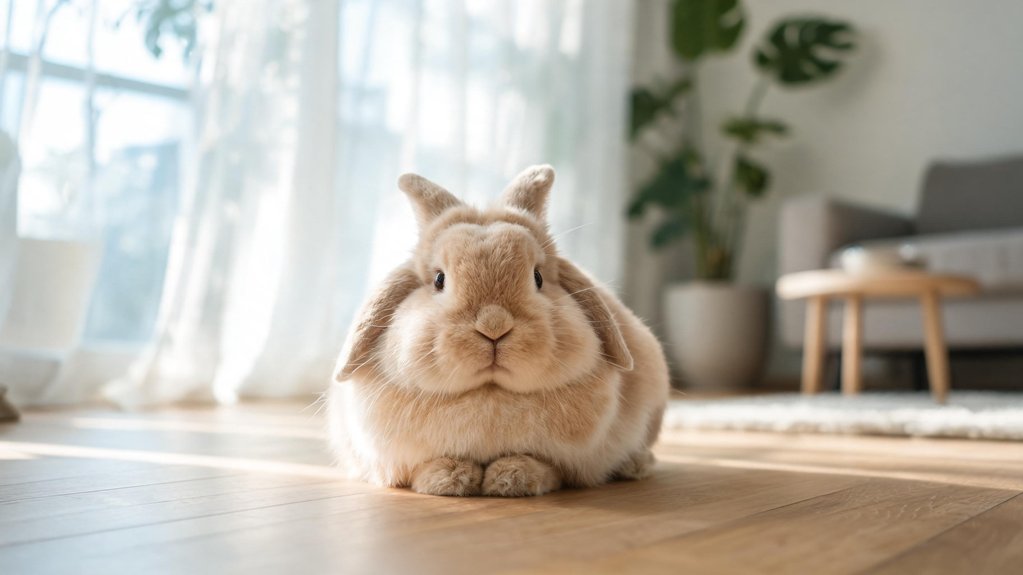
When you see loafing, notice the relaxed “tucked in” rest with legs under the body, soft or half-closed eyes, and normal nose twitching—it often means your rabbit feels calm and reasonably secure.
Then try the stretching look: when your bunny extends long with front paws forward and back legs out, especially right after play or a friendly check-in, you’re usually reading comfort and relaxed curiosity.
But if you spot freezing—flat to the floor, tense body, ears pinned back, eyes wide—slow down and check for fear first, while watching for pain signs like hunched posture, tooth grinding, or less eating.
Loafing: Calm, Secure Rest
If you see your rabbit curl up into a neat “bread loaf,” you’re usually looking at calm, secure rest—not fear.
Check the body shape, compact and rounded, with front paws tucked and hind feet hidden.
Look for relaxed ears, neutral or softly angled.
Watch soft, half-closed eyes, a loose jaw, and steady breathing, plus gentle nose movement, even light tooth grinding.
You might wonder why are rabbits so sassy, and what’re rabbit zoomies called—those are different moments.
For loafing, just let them be.
You can quietly offer hay, then observe.
Loaf often means your bunny feels safe.
Stretching: Comfort, Relaxed Curiosity
After you spot your rabbit loafing in that cozy “I feel safe” shape, stretching is the next common comfort clue.
You’ll see a relaxed, extended body, front paws forward, and back legs stretched out sideways.
Side-lying can look almost lifeless, but if breathing stays quiet and your bunny responds normally, it’s deep rest, not fear.
Stretching with soft, loose muscles also shows trust.
You might hear gentle purring or soft clicking, too.
For relaxed curiosity, your rabbit stretches forward with ears easy, eyes calm, and slow sniffing—often answering why do rabbits get the zoomies later.
If breathing turns rapid, seek vet care promptly.
Recognize Signs Of Relaxed Happiness Like “Purring
Along with loose, comfy body signals, a relaxed “purr” is one of the clearest signs your rabbit feels safe.
You’ll hear gentle, soft tooth grinding, like quiet clicking, usually only up close. Your bunny makes it with rapid, light jaw movement, and you may spot slight whisker lift.
Pair that sound with relaxed posture: loaf with legs tucked, or even a pancake flop with head down.
You’ll also see soft, half-closed eyes and ears neutral or slightly forward.
If purring stays quiet and rhythmic, enjoy the moment.
Offer calm petting near cheeks and forehead.
Identify Playful Excitement: Binkies And Zoomies
When you see a binky, you’re looking at pure joyful play—your rabbit makes a sudden hop, twist, or kick, then lands loose and balanced.
And when you spot zoomies, you know high energy has kicked in, because your rabbit blasts fast in quick loops or along the same route, with alert eyes and ears forward like “ready, set, go.”
Watch for these bursts right before or after playtime, then expect a smooth return to normal munching, exploring, or grooming.
Binkies Indicate Joyful Play
Binkies don’t mean your rabbit is “mad”—they usually mean your bunny is having fun and feeling safe. Watch for dramatic airborne leaps, often with a twist, ear flicks, and a head flip mid-jump.
A half-binky shows smaller flicks, just the shoulder or head. A full binky looks like a big hop with body contortion and lateral kicks.
You’ll often see several in a row, then quick running bursts.
When your bunny binkies after free-roam time, bigger space, or a favorite treat, it’s a joyful “jump for joy.”
If balance seems off, contact a vet.
Zoomies Signal High Energy
Zoomies are your rabbit’s way of showing high-energy, happy excitement, not “bad attitude.” If you’ve just seen playful binkies, you might notice the next step—sudden, explosive sprints around the room, rapid dashes, loops, and quick direction changes.
You’ll usually see loose, coordinated movement, ears up and forward or streaming back, bright eyes, and tail flicks during runs. They may sprint after rest, confinement, or boredom, like after being let out or given new toys.
Encourage gentle play, then wait for calm returns—exploring, eating, grooming, or flopping. If zoomies come with injury signs, get vet care.
Loose Alertness During Play
Often, you’ll notice your rabbit gets “loose and alert” during play, meaning they look relaxed but still ready to zoom around.
You’ll see a relaxed sitting posture, ears around 45°, and steady, slow nose twitches. Their body stays soft, not tense.
And then the fun hits: binkies. A binky is a sudden jump, with a twist or quick kick, then a quick landing.
When your bunny does several binkies in a row, they’re showing joy and confidence.
You might also spot loafing, grooming, or loafing after.
If binkies drop for no health reason, add enrichment and safe open space.
Spot Anxious Behavior: Crouching, Hiding, Thumping
When your rabbit is anxious, you’ll often notice a whole “stress sequence” starting with a crouch or freeze—your bunny goes tense, muscles tight, body low to the ground, and ears may flatten back while the head stays pressed down as if they’re trying to disappear. Pupils can look wide, and breathing may speed up.
Then you’ll often see hiding, your rabbit retreating into a dark, enclosed spot to feel safer.
If you hear thumping, it’s a loud, forceful stomp of the hind legs, a fear alarm that sometimes also means irritation.
Reduce noise, go slow, and let them choose distance.
Watch For Aggression Cues: Boxing, Growling, Lunging
Watch for aggression cues like boxing, growling, and lunging, because these are your rabbit’s clear “back off” signals.
If your bunny boxes, it stands on hind legs with front paws raised, ears upright, body tense, and weight forward.
That means fear, frustration, or territorial guarding.
If you hear growling, then don’t test it—growling is a warning, often followed by a lunge, scratch, swat, or bite.
When lunging happens, your rabbit rushes forward with head thrust, legs extended, ears pinned back, tail up, and hard staring.
Increase distance right away, and handle less.
Compare Boredom Vs Health Issues From Eating And Grooming
But don’t assume “unhappy” just because your rabbit looks extra fluffy or picks at their coat—boredom and medical issues can both change eating and grooming.
If your bunny gently overgrooms, yet eats regularly and passes normal round droppings, boredom may be the trigger. Try offering fresh hay, a chew toy, and 30 minutes of supervised play.
Now watch for health red flags. If your rabbit suddenly refuses fresh food, or drops small, odd, or absent fecal pellets, think GI stasis or dental trouble.
Excess grooming plus reduced eating and scant droppings can mean hair buildup.
If eating and droppings stop, seek emergency vet care.
Use A Quick “Pattern Match” For Mixed Signals
How do you tell when your rabbit looks “kind of off” but not fully upset? Start with a quick pattern match.
Look at whole-body posture: loose, stretched hind legs usually mean relaxation. Tucked-up, compact bodies mean worry.
Then check ears: both upright and relaxed fits calm, ears flattened tight to the back signals stress.
Next, scan eyes and nose: soft or partly closed eyes with normal nose twitching often means “safe.”
No nose twitching, tucked chin, and quiet withdrawal mean unhappy.
If you see mixed cues, think context—recent noise, a hand near you, even a vet visit.
Recheck within 30 seconds.
Avoid Common Misreads And Harmful Responses
When you’re reading rabbit body language, don’t just focus on one “pretty sign,” because rabbits can look calm while they’re actually scared.
If ears flatten tight, they’re stressed.
If they crouch, tense, head to the floor, they’re worried.
If nose twitching stops in a tucked-up rabbit, don’t assume “relaxed.”
If they freeze at noise or contact, treat it as fear.
Don’t label hiding, circling, fur-chewing, or bar-biting as boredom.
Don’t call loud teeth grinding “just vibes.”
And when they thump, turn away, or bite, don’t punish or force handling.
Instead, pause, give space, then regroup.
When To Contact A Rabbit-Savvy Vet Based On Signals
If your rabbit shows certain body-language and health clues, you shouldn’t wait for it to “work itself out.”
Start by watching the big categories: gut trouble (like no poop and a hunched, painful posture), breathing problems (like open-mouth breathing or gasping), balance or head-tilt issues, and signs of severe pain or shock (like collapse, cold ears, or loud grinding).
For gut trouble, call if appetite stops for 6–12 hours, or pellets shrink/vanish for 6–12 hours, or your bunny won’t stop hunching.
If you see loud grinding, or breathing through the mouth, contact a rabbit-savvy vet immediately.
If head tilt, circling, or balance loss happens, go within 24 hours—sooner if severe.
If you notice collapse, pale gums, or cold ears, treat it as an emergency.
Frequently Asked Questions
Why Do Rabbits Twitch Their Nose, and What Does It Mean?
Rabbits twitch their noses to sample scents and keep breathing smoothly. You’ll usually see slow, relaxed twitches when they feel safe, faster ones when they’re curious or alert, and sudden rapid changes if they’re stressed or overheated.
How Do Rabbits Communicate With Each Other Through Body Language?
You’ll notice rabbits communicate with each other through ear positions, relaxed or flattened postures, thumping warnings, nose nudges, gentle nips setting boundaries, grooming, and circling. They also flop, freeze, or hide to show comfort or fear.
Why Do Rabbits Run in Circles or Get “Zoomies”?
You might’ve heard zoomies mean “something’s wrong,” but often they’re just joy. You’ll see rabbits sprint in circles to burn pent-up energy, explore safely, and release excitement—especially after downtime or when you open the door.
Why Do Rabbits Roll Over, and Is It Always a Happy Sign?
Rabbits roll over for comfort, trust, and relaxation—often as a happy flop. You’ll see loose, relaxed flopping and relaxed breathing. But if they can’t right themselves or show illness, contact an exotics vet fast.
Why Do Rabbits Seem Angry or Sassy, and How Can I Tell Stress?
Rabbits seem “angry” when they feel scared, territorial, or overstimulated. You’ll spot stress through thumping, growling, lunging, ears back, tail up, and tense freezing. Check triggers, give space, offer hay, and vet pain causes fast.