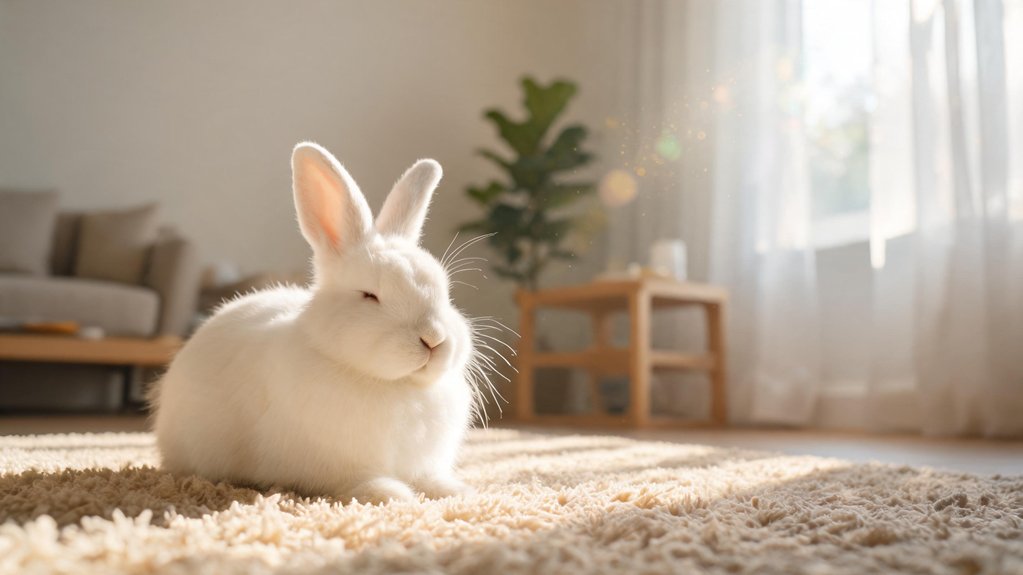
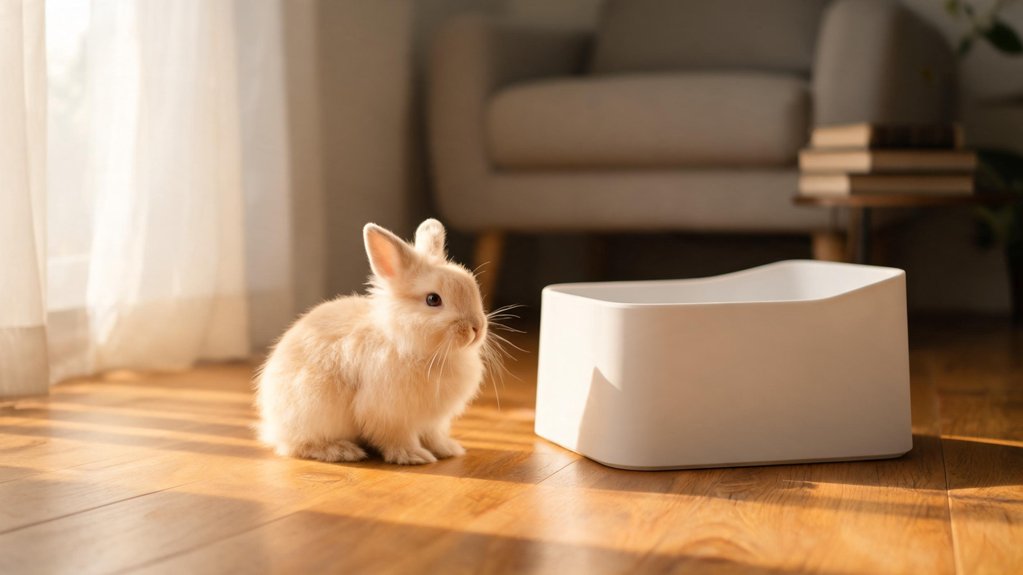
Meet the Lionhead rabbit, a tiny, long-maned companion that typically weighs about 2.5–3.75 lb (1.1–1.7 kg) and lives around 7–9 years with great care. You’ll want to brush daily, because their woolly “lion” mane can mat. For housing, aim for at least 18×24 in floor space plus daily play. In the US, expect about $40–$125 for pet-quality, with more for show lines. Keep going—there’s more you’ll want to know.
Swift Summary
- Lionhead rabbits are small, long-maned “lion” companion rabbits, typically 2.5–3.75 lb (1.1–1.7 kg) and about 8–10 inches long.
- Expect daily brushing to prevent matting of the woolly mane, with mane types that may vary and require extra grooming.
- Lifespan averages about 7–9 years with good care, sometimes longer, depending on health and diet.
- Price commonly ranges around $40–$125, with pet-quality typically $25–$150 and show/pedigreed rabbits often costing more.
- Provide a steady routine: hay 24/7, measured timothy-based pellets (~1/8 cup/day), and small spaced greens to support digestion and litter training.
Quick Facts About Lionhead Rabbits
Lionhead rabbits are small, long-maned companion rabbits, and once you see that “lion” mane, it’s easy to understand the name.
Lionhead rabbits are small, long-maned companion rabbits—once you see their “lion” mane, the name makes perfect sense.
If you’re wondering how big does a lionhead rabbit get, aim for about 2.5–3.75 lb as an adult, usually around 8–10 inches long. 2.5–3.75 lb
Next, plan for grooming, because the woolly mane needs daily brushing to prevent matting.
For lifespan, expect roughly 7–9 years with good care.
Want a budget? A lionhead rabbit price often lands near $40–$125, depending on color and where you shop.
Origin of Lionhead Rabbits and ARBA Recognition
You’ll usually trace Lionhead rabbits back to France and Belgium, where breeders created this new “dwarf” look by crossbreeding small breeds and wool types until the mane gene showed its woolly head and flanks.
Then you’ll see how the breed spread in the UK, where the British Rabbit Council gave official recognition in 2002 after imports helped shape the modern compact type.
In the U.S., ARBA first used a Certificate of Development step, then moved to full breed approval for specific color varieties like Ruby-Eyed White and Tortoise around 2013, with show eligibility starting February 1, 2014.
The mane gene is what produces the characteristic woolly “lion” head and shoulder fur.
Belgian And French Breeding
Belgian and French breeders really set the stage for what we now call the Lionhead. You can think of their work as early “mane-focused” experiments, pairing miniature dwarf rabbits with wool breeds.
In Belgium, breeders aimed for a long-coated dwarf look, then selected offspring that showed a localized head wool “mane.”
In France, you’ll hear “Tête de Lion,” and breeders kept refining that compact type through careful selection.
Now when you search “lionhead rabbit for sale,” remember size limits and ask “how much is a lionhead rabbit.” Weighing about 3.75 lb max helps.
For lionhead rabbit pros and cons, start with good grooming needs.
British Rabbit Council Recognition
When you look into the Lionhead rabbit, the “how did it become a recognized breed?” story starts in the UK and Europe long before you ever see one on an American show bench.
You’ll find European fanciers imported early Lionheads in the 1990s, then UK breeders like Derek Medlock and Joyce Taylor helped build stable, show-ready lines.
And the real turning point came when the British Rabbit Council (BRC) officially recognized the breed in 2002, using a working standard agreed in 2000.
The BRC also approved many colors and patterns.
Then, later, other countries followed.
ARBA Full Breed Recognition
After the British Rabbit Council (BRC) set the groundwork overseas, the Lionhead rabbit’s path in the U.S. picked up steam with ARBA.
You’ll see why. Imported in the late 1990s, these compact, wool-mane darlings caught hobby breeders fast.
Before full competition, ARBA showed them under Certificate of Development, then required three formal breed presentations proving consistent type across generations.
In 2013, ARBA accepted Lionhead as a recognized breed.
In 2014, you gained full show recognition for Best in Show and Grand Champion legs.
Early colors included Tortoise and Ruby-Eyed White.
How Big Do Lionhead Rabbits Get?
Wondering how big a lionhead rabbit gets? As an adult, you’ll usually see a small rabbit, about 2.5–3.75 pounds (1.1–1.7 kg).
Wondering how big a lionhead rabbit gets? As an adult, expect a small rabbit weighing about 2.5–3.75 pounds (1.1–1.7 kg).
That same healthy adult often measures around 8–10 inches long, roughly 20–25 cm.
Shoulder height runs about 5–6.5 inches, so plan ramps and ledges that your rabbit can reach easily.
Many guides even call lionheads “dwarf” at about 1.5 kg.
And their fluffy mane can make them look a bit bigger from the front.
Lionhead Body Type and Breed Standards
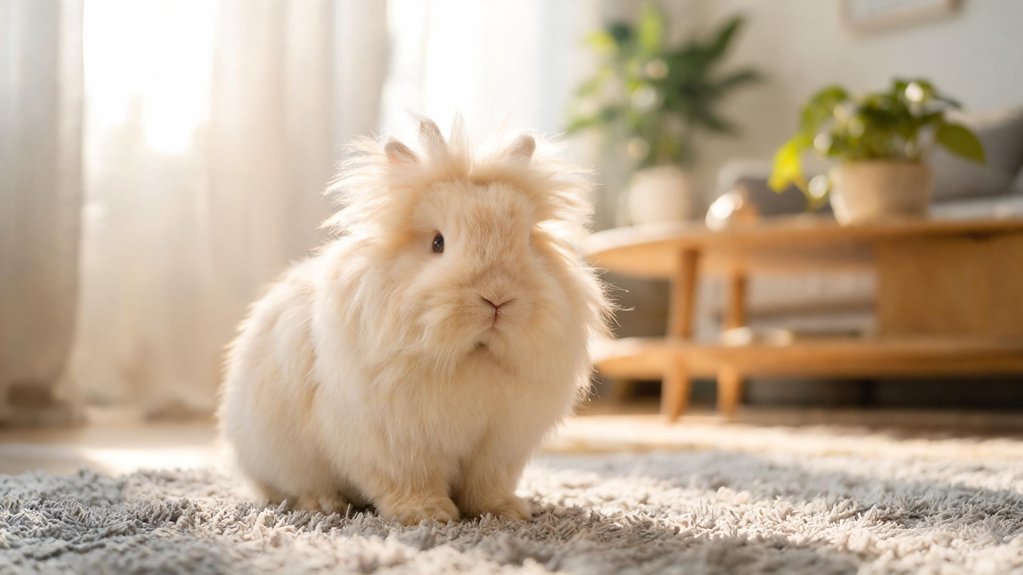
Now that you’ve got the basic idea of how big a lionhead gets, let’s talk body type, so you know what you’re looking at.
You want a compact, upright, cobby build. Think “short and well-rounded,” not long or rangy.
Aim for a broad chest and shoulders, matching your hindquarters, with firm, solid muscle you can feel.
In hand, it should feel like “a quarter of a basketball.”
On the show table, it sits full, and your hand slides from base of neck to tail without dips or hollow spots.
Add a bold wide head, plus a high, upright head mount and vertical ears.
Keep perfect condition.
Coat, Mane Types, and Common Colors
When you look at a lionhead, the coat is the “headline,” and it tells you a lot right away. You’ll see a strong, full-of-life mane, with evident crimp, at least 2 inches long, framing the face.
Some rabbits are double-mane, with thick mane and a wool skirt on the flanks for life. Others are single-mane, with a lighter, wispy mane that often thins after the first adult molt.
You’ll need extra brushing, to prevent mats.
Common ARBA colors include black, blue, chocolate, lilac, tortoise, chestnut, and ruby-eyed white.
Lionhead Rabbit Temperament and Social Behavior
You’ll usually find Lionhead rabbits are sweet, friendly, and seriously people-oriented, so they often bond fast with you and want attention.
You’ll also notice they’re smart and generally trainable, but you need gentle handling and calm, steady routines, because extra stress can make them skittish or defensive.
And if you can, keep them with a compatible rabbit companion, since social time helps them stay happier, more playful, and more confident around you.
Friendly, Sociable Companion Nature
Lionhead rabbits usually make friendly, sociable companion animals, and they often look to you (and their rabbit buddies) for interaction. You’ll notice curiosity right away, plus a moderate-to-high energy level for play and exploring.
Expect bonding too. Many rabbits follow you, nudge your hand for pets, and even groom your skin or clothing. They’re happiest with regular, calm attention at predictable times.
But be mindful. Some can get skittish with sudden sounds or movements. If a rabbit feels trapped, it may struggle, scratch, or nip, so move gently.
Trainable With Gentle Handling
Because Lionheads are smart and people-oriented, you’ll usually get the best results with training that feels calm and predictable. You handle your rabbit gently, so it feels safe.
This breed is sensitive, so rough grabbing or chasing can trigger fear and even aggression. With quiet surroundings and a steady daily routine, you’ll notice better focus.
Use positive reinforcement, meaning rewards, with tiny treats and a calm marker like “yes.” Keep sessions short, about 3–5 minutes, and use consistent cues.
You can teach name response, litter habits, and simple tricks like fetching toys, especially when boredom is avoided.
Activity Level: How Active Are Lionheads Indoors?
How active are lionhead rabbits indoors? Pretty active. You’ll see frequent play, exploration, running, and binkying (happy, springy hops).
They investigate fast, so expect them to sniff, chin, and test new things.
Because they’re crepuscular, they peak near dawn and dusk, then rest in between.
For daily needs, plan for 3–4 hours of free-roaming exercise outside their enclosure, and often aim for 4+ hours.
Use rabbit-proofed rooms or large pens, not just a cage.
Give traction-friendly floor, plus tunnels, hideouts, and rotating chew-and-forage toys.
Training Basics: Teaching Routines to a Lionhead
Start by setting a daily feeding routine, then keep meals and treats consistent, because your lionhead learns best when the day has a steady rhythm.
Next, teach simple litter habits by setting a small pen or enclosure first, placing litter trays in the corners your rabbit already chooses, and adding rabbit-safe litter topped with hay so toileting and eating happen together.
Then, reward right away when your rabbit uses the tray, and use short, frequent sessions so the routine sticks without stressing them.
Establish Daily Feeding Routine
To help your lionhead trust you and feel secure, set a simple daily feeding routine you can repeat almost every day.
Serve hay 24/7, refilling at the same time so it becomes a cue.
Offer greens in 2–3 small portions, spaced through the day, and remove leftovers after a few hours.
Feed young lionheads twice daily while they’re growing.
Use a fixed morning and evening window for greens and measured pellets.
Give adult pellets about 1/8 cup timothy-based daily, aiming for no more than 5% of their diet.
Use the same order, hay, greens, then pellets.
Teach Simple Litter Habits
Once your lionhead has a steady feeding routine, you can build litter habits the same way—by keeping things simple, predictable, and close by.
Set a sturdy, high-sided box in a preferred corner, line it with rabbit-safe litter like pelletized paper or wood pellets, and add a little soiled bedding or droppings to mark it.
Keep fresh hay in or right beside the box.
Start in a confined 4’x4’ area.
When your rabbit heads to a corner or lifts its tail, gently guide them into the nearest tray.
Reward with extra hay, scoop daily, and deep-clean monthly.
Avoid punishment.
Move boxes gradually.
Typical Lifespan: What Affects Lionhead Years?
Lionhead rabbits can live about 7–9 years on average in captivity, and with great care you often see 7–10 years—sometimes even a bit longer.
To help your rabbit thrive, start with food. You should offer unlimited hay, about 80–85% of intake, plus plain pellets daily, around 1/4 cup per adult. Add leafy greens, and limit sugary treats to avoid obesity, which shortens life.
Next, give space. Aim for an 18 x 24 inch home, plus about 8 square feet more, and 3–4 hours of safe exercise.
Then groom daily in the mane, and keep bedding dry.
Bonded companionship and annual vet checkups also support longevity.
Common Health Risks in Lionhead Rabbits
You’ll want to stay on top of dental malocclusion, because Lionhead teeth keep growing and poor alignment can cause overgrown incisors and cheek teeth—so do quick tooth checks weekly and call a rabbit vet right away if you notice drooling, messy eating, or weight loss.
And with a long mane, you’ve got to watch for wool matting, trapped moisture, and dirty rear fur, since that can lead to skin irritation and—especially in warm weather—heat stress when their thick coat can’t cool them well.
But don’t wait: brush gently as needed, keep the area clean, and keep your rabbit in a cool, shaded spot, because gastrointestinal stasis and breathing issues often start as “small” problems.
Dental Malocclusion And Tooth Checks
Because lionhead rabbits tend to have a higher risk of dental malocclusion—teeth that don’t line up right and don’t wear down normally—small mouth problems can turn into big pain fast.
You should check front incisors weekly, looking for uneven wear, overgrowth, or fractures. Watch eating and weight weekly too, since reduced appetite and hay refusal often come first.
Also notice drooling, wet chin, pawing at the mouth, watery eyes, and swelling under eyes, which can signal sharp cheek-teeth points or abscesses.
Schedule a vet dental exam once or twice yearly.
Left untreated, pain can trigger GI stasis, becoming life-threatening.
Wool Matting Skin And Heat Risks
With lionheads, wool mats aren’t just a “looks bad” problem—they quickly turn into health and heat risks. Dense mane and medium coat trap moisture and warmth against skin, so you need regular grooming.
During seasonal molts, mats form faster, especially around the head, shoulders, and rump. Check those zones often, and trim tiny tangles before they tighten.
Tight mats pull on thin skin, causing pain, inflammation, and hidden sores. Damp, dirty fur can trigger dermatitis and scalding.
It also supports flystrike, especially in warm, humid weather. In summer, inspect under the tail daily.
Keep fur dry, and act fast.
Dental Care and Tooth Checks for Lionheads
Even though Lionhead rabbits look small and fluffy, their teeth are a big deal—so make dental care part of your routine.
Their teeth keep growing, so you must watch them often.
Do a weekly visual check.
Gently lift the lips and look for even front incisors overlap, just a few millimeters.
If teeth angle, break, discolor, or feel loose, call a rabbit-savvy vet.
Also check cheeks and the lower jaw by touch for heat, lumps, or pain.
Watch for early signs: less hay, fewer droppings, weight loss, and wet mouth.
Schedule annual exams, plus X-rays if needed.
Grooming Routine: Preventing Matting and Skin Issues
Brush your lionhead’s mane 2–3 times weekly, and during spring and fall molts, switch to daily so tangles don’t form and wool doesn’t get swallowed.
While you groom, comb slowly in small sections from the fiber tips toward the skin, and use the fine-toothed comb to separate strands—this helps prevent matting and wool ingestion, which can lead to tummy trouble.
But don’t stop at brushing: do quick daily coat checks for redness, dampness, or tiny wounds, especially around the head/neck, behind the ears, under the chin, and near the rear.

7-in-1 Rabbit Grooming Kit: Not only gentle and safe for small animals, such as rabbit, hamster, guinea pig, and chinchilla; but also work great for larger animals like cats and dogs. Soft silicone small animal massage comb can help you protect your pet's skin and effectively keep their fur clean, healthly.

High-Quality Materials: Puppy grooming kit is made of high-quality materials. The handle of the comb fits the curve of the palm, providing a firm grip and preventing slipping, so your hands won't feel sore after long-term use. The nail clippers have sharp and tough blades, which can cut pet nails without getting stuck. The file has a fine sand surface, making the grinding process smooth and labor-saving.

7-in-1 Rabbit Grooming Kit: Not only gentle and safe for small animals, such as rabbit, hamster, guinea pig, and chinchilla; but also work great for larger animals like cats and dogs. Soft silicone small animal massage comb can help you protect your pet's skin and effectively keep their fur clean, healthly.
Brush Mane Several Times Weekly
Aim for mane brushing several times each week, and bump it up to daily during heavy shedding, especially if your Lionhead has a double mane. You’ll help prevent trapped debris, moisture buildup, and those hidden skin problems that can start quietly.
Use a fine-toothed metal comb or flea comb, plus a small slicker brush with light pressure. Brush gently for short sessions, lifting fibers to improve airflow and reveal the skin.
While you groom, check chin, flanks, tail base, and the underside of the mane.
If you see flaky, scratchy patches or bald spots, call your vet promptly.
Prevent Matting And Wool Ingestion
When you keep matting from starting, you also cut down on the hair your rabbit might swallow while grooming itself. Use a wide-tooth comb in layers, then switch to a slicker brush to lift loose surface wool.
For tiny knots, use a dematting comb and finger detangling, before they tighten into painful mats.
Hold the wool at the base, close to the skin, so you don’t drag.
Groom on a stable, non-slip surface.
Check chin, tail, flanks, and hindquarters daily, especially behind ears and under the chin.
During molts, do short sessions, every day, and remove loose fibers.
Monitor Skin For Irritation Daily
Take a few minutes every day to do a full-body skin check on your Lionhead, because spotting irritation early makes everything easier.
Gently run your fingers through the mane and body in short sections. Feel for heat, swelling, tenderness, and hidden sore spots.
Then separate the fur to look for redness, flaking, dampness, crusts, or color changes.
Check behind the ears, chin, chest, and front legs for moisture, and the rear end for urine staining or stuck feces.
In warm weather, check twice daily.
Keep a simple log.
If you find maggots, eggs, foul smell, or open moist lesions, seek urgent vet care.
Housing Setup: Space, Safety, and Temperature Needs
To keep your lionhead rabbit healthy and happy, set up housing that gives real room to move, plus safety details that prevent accidents.
Aim for at least 18 x 24 inches, or better 24 x 30 inches floor space, with about 12 square feet minimum indoors, and more is always kinder.
Use solid, non-wire flooring, cover it with dry paper bedding, add a litter tray, hay feeder, water dishes, tunnels, shelves, and chew toys.
Provide a hidey house for naps.
Before playtime, rabbit-proof the area.
Cover cords, block gaps, remove toxic plants.
Keep temperatures about 60–72°F, moderate humidity.
Diet Checklist: Hay, Greens, Pellets, and Treats
Start with the basics—your Lionhead rabbit should get unlimited grass hay at all times, because it’s the main “meal” that keeps their teeth wearing down and their gut moving smoothly.
Aim for high-quality, sweet-smelling, dust-free timothy, orchard, or meadow hay, and give at least as much as their body size in loose hay daily. For everyday feeding, timothy hay is a suitable grass hay choice that works well as the foundation of the diet.
Then add leafy greens every day, about 1 cup per 2 lb body weight, like romaine or dandelion greens.
Feed timothy-based pellets in small amounts, roughly 1/8–1/4 cup daily.
Offer treats rarely, under 5%, like 1–2 tbsp fruit a few times weekly.

PROUDLY GROWN IN THE USA: Harvested fresh from Oxbow?s family of farms by our expert hay growers˜

HAND-SELECTED TIMOTHY HAY FOR RABBITS, GUINEA PIGS, CHINCHILLAS, & SMALL ANIMALS to ensure long fiber strands and proper leaf to stem ratio

PREMIUM QUALITY OXBOW TIMOTHY HAY FOR SMALL PETS: High-fiber Oxbow timothy hay supports digestive & dental health for rabbits, guinea pigs; the perfect choice for pet parents seeking trusted rabbit hay, guinea pig hay, and nutritious daily bunny food
Lionhead Digestion, Poop, and Preventing GI Stasis
Your Lionhead rabbit’s digestion runs best when hay stays as the main “fuel,” and that’s why watching poop matters.
Keep hay as your Lionhead’s main fuel—watch droppings daily to support steady digestion and prevent stasis.
Aim for long-strand grass hay as about 80–85% of what they eat. That fiber keeps gut motion steady, and it helps cecal microflora ferment plant material.
You’ll know things are working when droppings are round, dry, crumbly, and dark brown. Check daily volume.
Fewer pellets can mean stasis is starting.
Cecotropes should be soft, shiny clusters, eaten immediately.
Watch for tiny, misshapen, mucus, watery stools. And help by introducing diet changes slowly, offering water, and preventing swallowed mane wool.
How Much Does a Lionhead Rabbit Cost in the US?
So, how much does a Lionhead rabbit cost in the US?
For a pet-quality Lionhead, you’ll usually pay about $25–$150, with many hobby-bred rabbits listed around $40–$125.
Typical breeders often place pet-quality animals in the $40–$150 band too.
If you choose a show-quality, ARBA-oriented rabbit, expect higher prices, often $200–$400, sometimes even $380–$580.
Pedigreed rabbits from specialty breeders commonly run $100–$150+.
Rescue fees often sit near $50–$150 (sometimes about $95–$200).

SIMPLE BUT PRACTICAL: The cage protection can effectively block rabbits from high peeing out of the cage, and it can also prevent scatter and mess from falling on the floor, reducing the cleaning work on the floor and walls. Reduces cleaning stress for the owner.In addition, The baffles can block guinea pigs from escaping through the gaps in the fence.

Know Why Chewing Is Innate In Their Attitude --- In their original habitat, rabbits spend a majority of their time running, leaping, and chasing each other or after inanimate objects. But, domestic rabbits are not able to roam freely, so you must provide them with chewing products. And what better choice you’d have than our SunGrow Veggie Chews.

[Soft Bunny Bed]: Guinea pig bed is selected from high-quality Arctic velvet fabrics, filled with high elastic sponge, soft to the touch, and locks in warmth. Three-dimensional shape, not easy to collapse
Where to Adopt or Buy a Lionhead Responsibly
Before you bring a Lionhead rabbit home, focus on responsible ways to adopt or buy, because a good match matters for both of you.
Start with rabbit rescues and the House Rabbit Society network. They list adoptable rabbits online, often with age, weight, sex, and bonding info.
You’ll usually complete an application or questionnaire, then get screened, sometimes after an education class like “Rabbit Care 101.”
Many rescues require vet work first, like spaying or neutering, and they place rabbits in foster homes.
Next, visit humane societies with walk-in hours, talk grooming needs, and check temperament.
If you buy, use ARBA breeder directories.

Spacious Rabbit Habitat: Cage measures 25" x 19" x 20"; provides ample room for play and rest in a comfortable enclosure

Fully equipped rabbit cage | cavie rabbit cage is a great starter home for a rabbit & includes a food dish, hay feeder, water bottle & Large hide-out

Easy clean tray – Deep pull-out tray with waterproof bottom helps prevent leaks and makes daily cleaning fast and simple with HOMESTEAD rabbit cage indoor
Who Lionhead Rabbits Are Best For as Pets
Lionhead rabbits make wonderful house pets, especially when you match their personality and care needs from the start.
You’ll do best with older, respectful kids who understand calm, gentle handling, because these rabbits can get frightened or stressed.
Very small children may struggle with the patience and controlled movements they need.
If you’re an adult or an experienced rabbit keeper, you’ll enjoy their social, attention-seeking nature.
Plan coat care too, brush or comb 2–3 times weekly, more during moults.
Provide 3–4 hours daily supervised exercise, plus rabbit-proof indoor space.
And if you like training, you can teach simple cues.
Frequently Asked Questions
What Grooming Tools Work Best for a Lionhead’s Wool Mane?
Use a fine-toothed metal flea comb for separating fibers, a wide-toothed comb for gentler first passes, and a small slicker plus soft brush for body coat. During mats, use a mat splitter or fine comb, plus blunt scissors for trims.
Do Lionheads Require Special Care for Heat Sensitivity?
Yes—you must treat heat like a sneaky fire: once it rises, your Lionhead can’t cool as well. Keep shade and airflow, brush often, and move indoors early; watch for fast breathing and hot ears.
Are Lionheads Good With Children and Other Household Pets?
Yes—lionheads often do well with children because they’re social and playful, especially with older kids who handle gently. Supervise closely to prevent falls. They also bond well with other rabbits; bond slowly and avoid guinea pigs.
How Often Should I Check a Lionhead Rabbit’s Teeth?
Check your Lionhead’s teeth weekly: inspect incisors for chips or overgrowth. Do a monthly mouth check too, then schedule a vet dental exam yearly—often every six months—especially if you notice drooling, weight loss, or picky eating.
What’s the Typical Cost Difference Between Pet and Show-Quality Lionheads?
You’ll usually pay about $100–$250 more for show-quality Lionheads versus pet-quality ones: pet typically runs $40–$150, while show-quality often costs $150–$400+ depending on pedigree and quality.