You’ll find pet rabbits usually live 8–12 years indoors, but outdoor hutches can be 3–6. They’re crepuscular, so they’ll most often snack and move at dawn and dusk. Yep, their teeth keep growing, so jaw changes can cause overgrowth. Feed long-strand grass hay daily for safe chewing wear, and don’t remove shiny, grape-like caecotrophs—they’re part of normal digestion. Give fresh greens, water, quiet space, and watch their habits daily—there’s more to know.
Swift Summary
- Pet rabbits commonly live about 8–12 years, with healthy house rabbits often reaching roughly 8–14 years.
- Rabbits are crepuscular, with most natural activity and feeding centered around dawn and dusk.
- Rabbit teeth continuously grow, so inadequate chewing can cause overgrowth and dental problems.
- Long-strand grass hay promotes safe side-to-side chewing for proper cheek-teeth wear.
- “Grape-like” caecotrophs are normal, and rabbits typically eat them for extra nutrients and healthy digestion.
How Long Do Pet Rabbits Really Live?
So, how long do pet rabbits really live?
For most owners, the overall life expectancy of pet rabbits sits around 8–12 years, with many healthy rabbits living about 7–10. That’s a big deal, because you’re planning for a roughly decade-long bond. Because typical captive/domestic rabbits often average 5–10 years of life (with the potential to live up to about 15 years), it helps to think in terms of a long-term commitment rather than a short “pet-phase.”
Indoor house rabbits often reach 8–14 years, while outdoor hutches average closer to 3–6.
And you can support longer life with rabbit facts for owners: keep them indoors, spay or neuter, schedule vet checks, manage dental care, and avoid obesity.
In exceptional cases, some rabbits live 16–19 years.
Rabbits Are Crepuscular: Normal Dawn/Dusk
Rabbits are crepuscular, which means they’re most active around dawn and dusk, not in the middle of the day. This is one of the rabbit facts that helps you meet your buddy’s rhythm. All rabbits are crepuscular. As crepuscular rabbits, they often move most at sunrise and sunset, and they may show under 2% movement from 10 a.m. to 4 p.m. for short bursts, then rest.
Feed with that in mind: offer hay and fresh greens at dawn and dusk, then expect quieter cecotrophy in early mornings.
If you’re curious, these rabbit facts interesting patterns also help explain why bunnies stay extra soft.
Why Rabbit Teeth Keep Growing
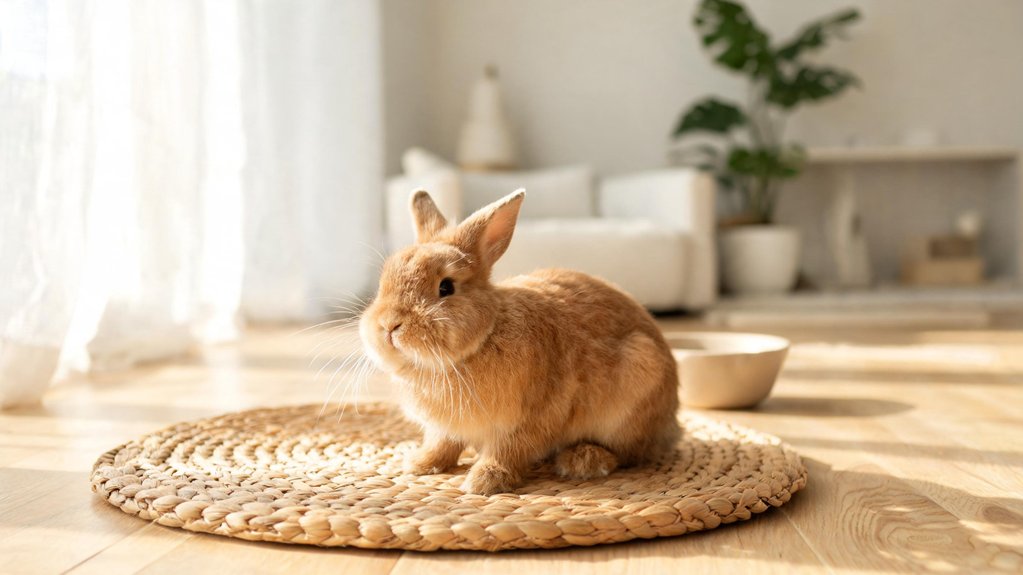
Because rabbit teeth never “stop,” you need to think about them like a pair of tools that keep getting replaced. This rabbit factsheet helps you care daily.
Why do they keep growing? Rabbits evolved to eat tough, fibrous plants. Their teeth are elodont, meaning they grow continuously, with no true anatomical root, so worn surfaces can be replaced. All rabbit teeth keep growing throughout life, and incisors grow about 2–3 mm per week.
When chewing works normally, tooth-to-tooth contact and abrasive food balance growth and wear. If jaw movement drops, teeth overgrow.
Also, consider how many rabbit in the world—your bunny needs your help to stay comfortable.
Hay Wears Teeth Down Safely
Give long-strand grass hay, like timothy or orchard, and you help those cheek teeth grind side-to-side.
That steady motion makes the surfaces meet evenly, so sharp points don’t form.
Mild silica in hay adds gentle abrasion, and the coarse texture keeps chewing longer.
Pellets and soft foods need less chewing, so teeth don’t wear well.
Aim for 80–90% hay daily, plus about 1/8 cup pellets once or twice. Checking hay quality when choosing hay for daily feeding helps ensure the long, coarse fibers your rabbit needs.
When you ask “how many rabbits are in the world,” most rabbits in the world would still benefit.
Top 10 rabbit facts start here—hay.
Also, why are bunnies soft?
Healthy teeth help them eat and stay comfortable.
Caecotrophy: Don’t Remove Soft Droppings
You might notice shiny, grape-like soft droppings in the morning—those are caecotrophs, and they’re normal, not “dirty.”
Your rabbit makes them in the cecum, then passes them about 3 to 8 hours after eating, and she eats them right away to grab extra nutrients from the fresh gut fermentation.
What Are Caecotrophs
Caecotrophs are soft “poop clusters” your rabbit makes and then eats right from the anus, and it’s a normal part of rabbit digestion.
These grape-like, moist bunches look different from dry, hard pellets.
Caecotrophs form in the caecum, which is your bunny’s fermentation chamber where microbes break down fiber.
About 3 to 8 hours after feeding, your rabbit may produce them, often during rest or at night.
Then your rabbit swallows them whole, so the mucus coating protects beneficial bacteria.
They’re rich in nutrients like B and K vitamins, plus protein and amino acids.
You’re supporting their gut balance!
Never Remove Soft Droppings
When your rabbit makes soft, grape-like droppings and then eats them, don’t stop that habit—it’s not a mess you’re meant to remove.
Those soft droppings (caecotrophs) hold about 28–30% crude protein, plus important B vitamins and vitamin K.
They also contain microbial protein, which helps your bunny get roughly 15–25% of needed amino acids.
And your rabbit’s gut turns plant fiber into energy, up to about 40% of maintenance needs.
If you remove them, you block this nutrient “second chance.”
Instead, provide a clean enclosure and let caecotrophy happen.
Normal Rabbit Poop: What Can Vary
Normal rabbit poop can look surprisingly different from day to day, but it still falls in a pretty clear “healthy” range.
You’ll usually see round pellets about 3/8–1/2 inch (6–12 mm), roughly pea to small marble.
Within your rabbit, pellet size stays fairly uniform, even if it varies a little.
Color can shift from dark brown to medium brown, sometimes almost black with darker hay.
Texture should be firm, dry, and crumbly, crumbling into fibrous “sawdust.”
Slightly smaller, harder pellets can mean less fiber.
Also, don’t panic about tiny routine changes.
Watch for big, lasting shifts.
Rabbit Not Eating = Emergency
If your rabbit stops eating, treat it like an emergency, not a “wait and see” moment.
After more than six hours without food, you risk a serious, possibly fatal situation.
Vet guidance says any rabbit not eating for over eight hours needs a vet check.
If your rabbit hasn’t eaten or produced feces for 12 hours, call for immediate care.
Also treat it as urgent if they stopped a few hours earlier and look lethargic or painful.
Common causes include dental pain, poor fiber diets, stress, or sickness.
Next, call a rabbit-savvy vet now, offer fresh hay and water.
Gut Stasis (Ileus) Can Turn Deadly Fast
Gut stasis (also called ileus) can turn deadly fast, and your rabbit’s gut can slow down in a way that starts small but escalates quickly.
When stomach and intestines stop moving, food just sits. That leads to gas, pain, and bacterial overgrowth.
Then your rabbit stops eating, gets dehydrated, and can slip into shock.
You may notice fewer, smaller, dry pellets or none at all.
You might feel doughy or firm belly contents, and hear little gut movement.
Watch for hunched posture, tooth grinding, and not wanting to move.
Call an experienced rabbit vet immediately.
Flystrike Is a Hygiene Emergency
Flystrike is a hygiene emergency—flies can lay eggs on your rabbit’s fur, and maggots can start eating into skin fast.
Check your rabbit’s bottom daily, especially if you see wet, dirty fur, bad smell, loose poop, or any eggs/maggots, and don’t wait around—this is an urgent vet situation.
Keep bedding dry, spot-clean droppings often, and if you spot signs, call your rabbit-savvy vet right away for immediate treatment.
Spot Flystrike Early
Spot flystrike early because it’s truly a hygiene emergency—maggots can start eating your rabbit’s skin after flies lay eggs, and it can become deadly in as little as 24 hours. Start by watching behavior.
If your bunny is suddenly quiet, lethargic, not eating, or stopping food, act fast.
Next, check the rear end and fur. Look for wet or matted fur, dark stains, red swollen skin, open sores, or even tiny white eggs.
Listen for a foul odor. Also notice hutch flies gathering.
If you see any eggs or maggots, contact an emergency vet immediately.
Prevent With Clean Bedding
Keeping your rabbit’s bedding clean and dry is one of the best ways to prevent flystrike, because flies lay eggs in damp, messy areas, and the problem can turn dangerous fast.
Daily, remove wet bedding, urine spots, and droppings, then spot-clean the toilet area at least once each day.
Check fur and bottoms too, and promptly clean any dirty spots.
In warm weather, do extra checks twice daily for elderly, overweight, long-haired, or mobility-difficulty rabbits.
Weekly, do a full bedding change, scrub litter trays and bowls, and disinfect with rabbit-safe cleaner.
Let everything air-dry fully.
Use absorbent pellets with straw, avoid damp hay.
Seek Urgent Vet Care
If you suspect flystrike, don’t treat it like a “wait and see” situation—call your vet for emergency help right away.
Flystrike (myiasis) is life-threatening.
Flies lay eggs in soiled, wet fur, and larvae can hatch in about 12–24 hours.
In 24–48 hours, a few can become many, damaging tissue fast.
Look for whitish-yellow maggots, wriggling larvae, wet fur, fur loss, sores, foul odor, or lethargy, hiding, or not eating.
While you wait, don’t remove eggs.
Keep your rabbit warm, calm, in clean dry bedding, then rush for same-day care.
Grooming Lowers Flystrike Risk
Grooming isn’t just about keeping your rabbit looking tidy—it also lowers flystrike risk. Flystrike happens when blowflies lay eggs on dirty, damp fur, usually around the rear.
First, brush on a schedule. Short-haired rabbits: at least weekly. Long-haired bunnies: daily grooming, or clip every 4–6 weeks, plus daily combing to prevent mats.
But don’t stop at the fur. Spot-clean the hindquarters with gentle cleanser instead of soaking, so it stays dry.
During warm weather, check bottoms twice daily, especially the perineal area, tail, and dewlap.
Also, remove soiled bedding daily, and use fly screens.
Rabbits stay soft because their fur is dense, not because it’s dirty.
About 1.3 billion rabbits live worldwide.
Thumping Means “I Feel Unsafe
When your rabbit thumps with a hind foot, you’re seeing a danger alarm—basically, “I feel unsafe,” and I need you to take notice.
You’ll most often hear it after sudden noise, like doorbells or fireworks, or when unfamiliar scents and new people/animals show up, and the timing matters: one thump can be a quick warning, while repeated thumps usually mean stronger fear or stress.
Watch the rest of their body too, if they freeze with wide eyes and ears up they’re on high alert, but if they’re tense and braced, pause whatever you’re doing and give them space.
Meaning Of Danger Signaling
When your rabbit thumps, they’re not “being bad”—they’re giving an alarm signal, because they feel unsafe. And that’s instinct.
Thumping stomps one or both hind feet, sending a sound and vibration through floors, so nearby rabbits can hear from farther away, even if they can’t see.
A single thump can mean a brief warning, or mild disapproval of a stimulus.
But repeated, fast thumps mean bigger danger, so you should pause, watch closely, and reduce stressors right now.
You may also notice frozen stillness, tense posture, upright ears, or wide eyes.
Causes: Fear, Noise, Unfamiliar Scents
Thumping isn’t your rabbit being “spiteful”—it’s their body saying, “I feel unsafe.” And that alarm usually starts with fear triggers, like a sudden noise, an unfamiliar smell, or an environmental change that makes them think a predator might be nearby.
You’ll notice freezing, hiding, or trying to escape, especially after barking dogs, hunting birds, or strangers nearby.
Rabbits hear high-frequency sounds, so fireworks, thunderstorms, doorbells, and even furnace clicks can set them off.
Vibrations from footsteps, traffic, or air-pressure shifts before storms can too.
Also, remove shoes with fox scent, new perfumes, and strong cleaning odors, and return the room layout to normal.
Single Vs Repeated Thumping Alarm
Single and repeated thumps sound similar, but they usually mean different things.
A single thump often acts like a quick “notice.” You’ll see it after a mild change, like moved furniture, then your rabbit goes right back to eating, moving, and relaxing. They may also look tense, with upright posture and dilated pupils, but distress stays brief.
Repeated thumping means “I feel unsafe” in a stronger way.
You’ll notice ongoing alarm, hiding, less appetite, or reluctance to move. It can keep going even with no clear threat to you. If it’s new, unexplained, or unusually frequent, monitor closely and consider a vet check.
Quick note: loud, harder thumps usually signal more urgency.
One Thump vs Repeated Thumps
You’ll hear it sometimes as a loud, sudden hind-foot stamp—one thump—and that usually reads like a quick “hey, I noticed something!” signal.
A single thump often means your rabbit detected a sudden threat, and then they freeze briefly before carrying on.
It can also show displeasure, like annoyance with handling.
Sometimes that single thump isn’t fear at all—it can mean displeasure, like annoyance with handling.
But repeated thumps, a fast series of stamps, usually mean ongoing alarm, stress, or frustration.
If they thump for more than 10–15 minutes, and also act fearful—check the room, lower noise, and remove anything scary.
This helps their body stay steady.
New Scents or Layouts Can Trigger Fear
Even when everything looks “the same” to you, new scents or a changed layout can make your rabbit feel unsafe, because rabbits are prey animals and they depend on familiar smells and places to judge safety.
And when you move things fast, you disrupt their “map” of safe zones.
Expect fear signs like freezing, hind-foot thumping, hiding, avoiding areas, or appetite changes.
That’s normal stress.
Thourough cleaning, new bedding, or relocating a cage wipes out chin, urine, and droppings scent marks.
So let them explore, keep shelters and litter in place, and reintroduce changes gradually over 3–7 days. If you move your rabbit’s outdoor setup for winter, a winter rabbit hutch cover can block cold, wind, and precipitation, but it does not by itself guarantee safe temperatures.
How many rabbits are in the world? No one knows exactly.
Rabbits Are Social: Pairing Helps
And remember, rabbits are social, so bonding helps cut stress and helps you prevent loneliness—especially since many pet rabbits kept alone can act more anxious and do odd repetitive behaviors.
When you pair two compatible neutered rabbits, they’re more likely to graze, rest, groom each other, and share warmth instead of spending all day on “watch for danger.”
Start slow, keep them separated at first for 1–2 weeks, then only bond when both are calm, because a good pairing usually makes a happier, healthier home.
Bonding Benefits Stress Reduction
Because rabbits are social animals, pairing—or bonding—your bunny with a compatible companion can noticeably lower stress.
When you bond well, you help them stay calm.
You’ll often see quieter behavior, less vigilance, more resting, and more play.
Pairing can also support smoother recovery after hard moments.
For example, after handling, bonded rabbits often return to normal pen behavior in about 3 seconds, while solitary rabbits may take about 8 seconds.
Bonded friends also show less stress-hormone activity and fewer stress-linked habits like bar-biting.
To do this, introduce slowly, side-by-side first, and watch closely for secure contact.
Compatible Pairing Prevents Loneliness
When you bond your rabbits well, you help them feel safe and less alone, right alongside everything else you’re already doing to reduce stress.
Rabbits are social. In the wild, European rabbits live in stable groups for protection and support.
So, if you keep one alone, you raise the risk of loneliness, chronic understimulation, and boredom behaviors like bar biting and chewing.
Welfare groups recommend housing with at least one friendly, compatible rabbit.
Once bonded, pairs often groom, eat, sleep side by side, and stay in sight.
Aim for at least 3m x 2m x 1m for two, with gradual introductions over weeks.
Rabbit Hierarchies: What Dominance Looks Like
Dominance in rabbit groups usually shows up as a clear pecking order—more like a “who goes first” line than a constant fight.
In many colonies, you’ll see a straight, linear order, in both wild and domestic rabbits.
Often, males and females run separate hierarchies, with one top buck above lower-ranking males.
Dominance usually depends on fearlessness, outgoing temperament, and social history, not size.
Watch for mounting as a dominance display, especially when the mounted rabbit stays still.
You may also see chasing, circling with grunts, then nipping or fur pulling if needed.
Higher rabbits control food, shelter, and space.
They often stand tall, with forward ears and an upright posture.
Bonding Takes Time, Space, and Care
You can’t rush rabbit bonding, so plan on slow socialization, enough space, and steady daily care.
Start with safe shared territory—neutral floor space or an open pen with a clear escape route—and keep first meet-and-greets short (about 1 minute), then build up as they stay calm.
Every day, stick to a quiet routine for feeding, gentle head or back petting only when they relax, and consistent grooming, because feeling secure helps trust grow.
Pairing Requires Slow Socialization
Pairing your rabbits works best with a slow, staged introduction, because bonding takes time, space, and steady care.
Start with side-by-side enclosures in a neutral room, so they can see and smell each other, but stay separated.
Keep first meetings short, about 10–30 minutes.
Use a barrier so they can lie side-by-side without major risk.
Gradually lengthen sessions only after calm signs, like curiosity or grooming.
For many pairs, bonding takes weeks, sometimes months.
Watch closely, and supervise nonstop.
Growling, thumping, pinned ears, or fast breathing mean slow down or pause.
Also spay or neuter first, then wait at least two weeks.
Provide Safe Shared Territory
Create a safe shared territory first, because bonding needs time, space, and careful supervision to stay calm.
Choose a neutral spot, like a bathroom, kitchen, hallway, or spare room.
Keep it away from your rabbits’ home base, because turf-guarding can spark fights.
Set up two adjacent cages or use secure mesh so they can see and smell each other, but not rush.
Start sessions at 20–30 minutes.
Aim for about six feet square, enough room to move, not hide.
Clean litter boxes well, then place multiple food, water, hay, and two litter boxes.
Add tunnels, hides with two exits, and barriers.
Maintain Daily Health And Grooming
Once your bonded-session setup is ready, keep the wins going by building daily health checks into your routine.
Each day, you watch appetite, drinking, droppings, and weight. If anything shifts fast, you act.
Next, observe breathing by watching chest movement. Fast, noisy, or labored breathing can signal a respiratory problem.
Check eyes and nose for redness or mucus, since infections or dental issues can show up there.
Weekly, inspect ears for crusts or mites.
Also do a whole-body check for lumps, wounds, parasites, dandruff, and bald spots, even under paws.
Brush short-haired weekly, daily in shedding, and long-haired daily.
Trim nails every 4–6 weeks, clipping about 2 mm below the quick.
Keep bedding clean, and check rear fur daily for urine stains.
Train Rabbits With Positive Rewards
When you train your rabbit with positive rewards, you teach them what you want by making it worth their while.
Use rabbit-safe treats first, like herbal hay pellets, fresh leafy herbs, or tiny bits of apple or banana.
Keep sugary or starchy treats rare, to help prevent stomach upset and weight gain. If you want a packaged option, Oxbow rabbit treats can serve as safe occasional rewards when given in small amounts.
Give rewards within a few seconds of the behavior, so your rabbit links the action to the good outcome.
Use a clear marker, like a specific sound, right before the treat.
Start with small steps, shaping up gradually.
Keep sessions short, 5–10 reps, and repeat in the morning or evening.
Use Target/Clicker Training Safely
Use target and clicker training only with positive rewards, and keep sessions super short—about 1 to 3 minutes at first, usually under 5—so you don’t wear your rabbit out.
Introduce the click gradually, or use a softer marker sound, and give food within a few seconds (under 5) so the “click” means “good things,” not surprise.
But if your rabbit hides, freezes, breathes fast, or tries to escape, pause right then, lower the challenge, and start again later when they seem calm and curious.
Safe Positive Reward Methods
Safe positive reward training is one of the kindest ways to teach your rabbit new manners, social skills, and even tricks.
You add a desirable outcome, like a tiny treat, after the behavior you want, so your bunny repeats it.
Instead of punishing, you ignore unwanted actions, so training never feels scary.
Don’t use shouting, forced handling, or physical pressure.
For clicker work, you click the exact moment, then give a treat within a few seconds.
First, click every time until the sound means “good!”
Use small, healthy bites.
And when your rabbit learns, you can reduce treats gradually.
Prevent Stress During Training
To keep training kind and effective, set yourself up for calm before you ever ask your rabbit to touch a target or earn a click. Use a quiet, familiar spot, and keep sessions 2–5 minutes, so your bunny stays relaxed.
Watch for stress early: freezing, rapid breathing, restlessness, or hiding. If you see it, pause right away, return to a safe area, and try again later.
Use a gentle click or soft marker, start low volume, and reward immediately.
Place the target a few inches from the nose, keep your body low, and move it in tiny steps. Record patterns, too.
Hiding Often Means Comfort, Not Illness
When your rabbit hides, it usually isn’t a mystery illness—it’s often just a normal “I need a little space” survival habit.
Rabbits are prey animals, so they withdraw when they feel unsure.
You’ll notice it when visitors arrive, noises start, or new people move around.
And when your bunny uses a tunnel, box, or enclosed bed, it often means comfort and security.
But watch the details.
If hiding happens with normal eating, poops, and relaxed body posture, you’re likely seeing comfort.
If appetite drops, droppings change, movement slows, or hiding persists all day, contact your rabbit-savvy vet.
Space to Run and Jump Matters
Give your rabbit enough space so it can run, stretch out, and do a few full hops without getting stuck or cramped—think at least 4 ft long × 2 ft wide × 4 ft tall, or about 12 sq ft total area, with a bigger run if you can.
Then add enrichment for jumping, like a tall (3–4 ft) exercise pen with ramps or step-ups, plus an outdoor run or indoor space long enough for three hops (about 5–6 ft of clear floor).
Aim for at least 3 hours of daily exercise in that larger area, and try to offer it when your rabbit is most active, like early morning, late afternoon, and overnight. For owners with outdoor space, a large outdoor rabbit run can provide this room while giving your rabbit fresh air and more freedom to move.
Minimum Space Requirements
Minimum space matters because rabbits don’t just “sit”—they need room to hop, stand tall, stretch out, and move between resting spots. For two average-sized rabbits, aim for a single enclosed area at least 3m x 2m, with about 1m height.
That size lets several full hops in each direction.
For a single rabbit, veterinary guidance often cites roughly 6ft x 3ft (≈1.8m x 0.9m), with bonded pairs needing more.
Don’t crowd the space—use clear floors, and subtract space taken by bowls and litter.
If your rabbit can’t stand upright on haunches, you’re too small.
Enrichment For Jumping
Make sure your rabbit has enough space to run, jump, and change direction, because that kind of movement does more than look fun.
Daily free-roam time of about 3–4 hours, plus at least 1 hour outside the enclosure, helps bones and muscles stay strong, especially with weight-bearing jumps.
It also lowers obesity risk by reducing long, still time.
Give room for “periscope” stretching, rearing up, and safe binky twists, since spinal health needs movement.
For safety, use sturdy raised platforms, grass for outdoor landings, and toys to jump over.
Permanent access to a run keeps stress down and keeps play going.
Also: bunnies are soft because their fur traps warmth.
There are many rabbits worldwide—overlap makes exact counts impossible.
A Hutch Alone Isn’t Enough
A hutch can be a cozy hideout, but it can’t be your rabbit’s whole world.
If you keep rabbits in a hutch alone, you miss minimum space, exercise, social time, and enrichment.
For two average rabbits, aim for at least 3 m x 2 m x 1 m enclosed space, plus 24-hour access to a larger run or rabbit-proofed room.
A sleeping hutch alone might be 1.8 m x 0.6 m x 0.6 m, yet many sold hutches are smaller.
Rabbits also need a compatible friend, because lone hiding leads to stress.
And yes, bunnies are soft because they’re fluffy!
Bunny-Safe Flooring Prevents Injuries
Now that you’ve got your rabbit enough space and companionship, let’s protect their feet—because bunny-safe flooring can prevent real injuries.
Protect your rabbit’s feet with bunny-safe flooring—helping prevent dangerous slips, sprains, and broken legs.
On polished tile or slippery wood, rabbits can skid, splay their hips, and end up with sprains or even broken legs.
You want solid flooring, not wire or grid, so paws don’t trap or scrape.
Choose dry, non-slip surfaces with good grip, plus soft cushioning for long rests. Well-designed rabbit mats offer comfort, grip, and safety in one surface.
Use washable low-pile rugs, veterinary fleece over absorbent padding, or rubber-backed non-chew mats.
Cover at least one-third of the cage floor with secure traction zones.
For ongoing care, clean daily.
Avoid exposed edges.
Add Hides and Multiple Escape Routes
When you add hides and multiple escape routes, you give your rabbit what a prey animal naturally needs—safe cover. Rabbits stay calmer, and you’ll see less stress and odd behavior when they can retreat.
Aim for 1 multi-entrance hide per rabbit, plus extra spares, and keep access 24/7 in both home and exercise areas.
Use boxes, tunnels, wide drain pipes, stools, or platforms. Add at least two doors on each hide, and avoid dead-end corners. Choose enclosed resting spaces that offer shelter and a sense of security.
This lets every rabbit slip away, even if another rabbit crowds them, and it supports confident exploring.
Fresh Water Daily Keeps Digestion Moving
Daily, give your rabbit fresh, clean water right where they can reach it. This helps digestion move along, because your rabbit’s gut needs constant hydration to keep fibrous food moist and flowing.
When they don’t drink enough, the contents get thick, motility slows, and gut stasis can become serious, even life-threatening.
Aim for about 50–150 ml per kilogram each day. For a 2.5 kg house rabbit, that’s roughly 125–375 ml.
Replace water daily, and more in heat or if they’re nursing.
Fresh bowls or sturdy bottles work well, just keep them clean.
Daily Exercise Supports Healthy Gut Motility
And yes, you should encourage daily running sessions, because movement helps your rabbit’s intestines keep pushing food along smoothly.
But don’t wait for a “bad day” to act—give them about a few hours out of the enclosure each day, with space around 6×3 feet if you can, and consider splitting it into dawn and dusk playtimes.
This routine can help prevent gut stasis (when gut movement slows down, gas builds up, and harmful bacteria can grow), so your bunny stays happier, safer, and more comfortable.
Encourage Daily Running Sessions
For your rabbit’s digestion, regular running really matters. Daily movement keeps food moving through the gut at an appropriate rate, supporting continuous-processing “gut motility,” which is peristalsis, the wave-like muscle action that transports meals.
Aim for at least 3–5 hours of free-roam running each day. If you can, plan around dawn and dusk, since rabbits are crepuscular.
Split it into two sessions of about 2 hours, and let them rest between bouts.
Provide safe space, start around 24 square feet or more, with a secure run like 8x4x4 ft.
You’ll also support a healthier gut, weight, and mood.
By the way, why are bunnies soft? Fur traps warmth and shields their skin.
How many rabbits are in the world? Millions, worldwide.
Prevent Gut Stasis Quickly
When you keep your rabbit moving every day, you help prevent gut stasis, a slowdown of the digestive system that can turn serious fast.
Give your bunny supervised out-of-cage play, 1–2 hours daily if you can.
Then feed what moves the gut: mostly grass hay, about 85–90% of intake.
Keep pellets small, and choose ones with roughly 15–20% fiber.
Skip muesli mixes and sugary treats.
Provide constant hay, water, and safe chew toys.
Groom often to cut hair buildup.
Keep routines steady, and change foods slowly over at least 7 days.
If appetite drops, call your vet quickly.
Most Rabbits Weigh Around 1.7–2.6 Kg
Most pet rabbits land in the “small-to-medium” zone, and many adult weights fall right around 1.7–2.6 kg (about 3.7–5.7 lb). This range is common for many healthy pet breeds, so you can use it as a helpful check.
For example, Dutch rabbits often average near 2 kg, and many lop types land between 2 and 2.5 kg.
Even wild rabbits usually average around 1–2 kg, so lighter adults fit here too.
As you care for your bunny, aim to confirm weight with your vet, not vibes. And weigh weekly.
Breed Differences Change Care Needs
Breed differences can change what you need to do every week. When you match body size to feeding and housing, you give your rabbit the right litter tray size, hide space, and floor space, and you keep their routine steady—especially for bigger rabbits that need extra care for sore hocks, with soft, dry flooring.
And because coat type drives grooming, you should brush short-coated rabbits once or twice a week, but long-haired and wool breeds need daily grooming to stop mats and hair from causing health problems.
Body Size Alters Feeding
Because your rabbit’s body size changes how much energy it needs, feeding isn’t one-size-fits-all.
Small rabbits usually get about 3–4 ounces (85–115 g) of pellets daily, while medium ones around 10 lb may need about 6 ounces (170 g).
Larger breeds often do well with about 8 ounces (225 g), if you use a complete ration.
And hay matters for every size. Offer unlimited hay, since it’s 70–85% of the diet and supports gut health.
Feed greens too: use weight charts—dwarf needs tiny treats, giants get more greens and water.
Coat Types Affect Grooming
Coat type really changes how much grooming work your rabbit needs, and it also affects which skin and health issues you should watch for.
Short-coated breeds like Dutch, New Zealand, and Mini Lop usually need 10–15 minutes weekly, but during shedding it can jump to ~30 minutes.
Dense plush coats also start at weekly brushing, then you step it up in molting.
Long or wool breeds, like Angora, need 30–60 minutes daily, or mats and wool block risk rise fast.
Rex and satin coats often need less brushing, yet check feet for sore hocks.
Mane coats need daily mane care, plus body brushing.
When Rabbits Reach Sexual Maturity
When your rabbit hits puberty, you’ll start seeing changes that are tied to reproduction—so it helps to know the timeline.
In pet rabbits, sexual maturity usually arrives between 3–8 months, with puberty starting around 3–5 months.
Small and medium breeds often peak around 4–5 months, while large breeds may take 5–8 months.
Does (females) tend to mature earlier, about 7–8 months, and bucks (males) often follow at 8–9 months.
Keep young rabbits in same-sex groups by 10–12 weeks to prevent unplanned litters.
Pregnancy Usually Lasts 31–32 Days
When you’re tracking a doe’s pregnancy, you’ll usually see it last about 31–32 days, with normal timing landing roughly between 30 and 33 days.
Most litters average around 4–10 kits, so it helps to plan for a busy birth day around the end of that window, often near day 31 or 32.
And while each bunny’s body can vary a little, if labor goes past about day 33, you should call your rabbit vet ASAP.
Typical Gestation Length 31–32 Days
Most rabbit pregnancies run about a month, and you can usually expect kindling—the birth of baby kits—around day 31 to 32. Plan your care like a good host.
Put the nesting box ready a few days early, and watch closely starting day 30.
Most vets describe a typical window of 31–33 days, with the most common dates landing on day 31 or 32.
If your doe hasn’t delivered by day 32, call your rabbit-savvy vet.
When pregnancy goes past 32–33 days, you face higher stillbirth risk, so don’t wait.
Litter Size Averages 4–10 Kits
You also wonder how many rabbits are in the world? It’s hard to count, since wild populations shift fast and pets vary widely.
Typical Litter Size: About 4–10 Kits
A typical domestic rabbit litter is about 4–10 kits, with many litters landing around 5–8 babies.
And that range matters for planning.
Breed size plays a big role, small breeds may have just one or two kits, while larger breeds can average 8–12.
First-time moms (primiparous does) often have smaller litters than experienced mothers.
You’ll usually see kindling about 30–33 days after mating, with risks rising if gestation stretches past ~32 days.
Heat, humidity, and food quality also affect how many embryos survive.
If you ever need help, ask your rabbit-savvy vet.
Spaying/Neutering Improves Long-Term Welfare
Spaying and neutering can make a huge difference in your rabbit’s long-term health, and it starts paying off the longer you have your pet.
First, you lower disease risks. Uterine cancer is the most common cancer in female rabbits, and it hits a large share of intact females over 4 years. Spaying (removing ovaries and uterus) virtually eliminates those cancers. Neutering male rabbits removes the risk of testicular cancer.
Next, you support calmer behavior. Fixed rabbits often lunge and spray less, and bonding goes more smoothly.
Finally, you control accidental litters. Always ask your rabbit vet for timing.
Bunnies Don’t Thrive as Solo Pets
You might think one rabbit can be “fine,” but bunnies are social, they bond, and they feel safer with a companion.
When you keep your rabbit alone, stress builds—loneliness and boredom can show up as listlessness, more biting or chewing, and staying on alert instead of relaxing.
If your goal is a happier, calmer bunny, plan for rabbit bonding and only keep them solo when a vet tells you it’s needed.
Social Bonding Matters
Social bonding isn’t just “nice to have” for pet rabbits—it’s how they naturally stay calm and healthy.
Rabbits evolved to live with other rabbits, so you should plan for company, not solitude.
In fact, companionship can matter as much as food, and major welfare groups treat it like a core need.
When you keep one rabbit alone, loneliness and boredom can creep in, plus you may see withdrawal.
Bonded pairs or small groups feel safer, they rest and sleep together, and they often groom each other.
For best matches, try a neutered female–neutered male pair, and introduce slowly, with space to retreat.
Stress Increases Alone
When rabbits don’t have a buddy, stress can creep in fast, and it shows in both behavior and body.
You’ll notice lonely buns hide more, pace, bar-bite, chew, overgroom, or act fearful.
Stress can also hit their gut, slow movement, and even suppress appetite, which raises the risk of GI stasis, a life-threatening gut slowdown.
Alone rabbits may sit up often, signaling fear, and they often recover slower after disturbances—over 8 seconds versus about 3 for pairs.
Even body temperature can run lower, up to 0.5°C.
Give companionship, and you protect their wellbeing.
Territoriality Can Include Resource Guarding
Because rabbits are territorial, “their space” can quickly include specific resources like food bowls, litter trays, toys, and even the exact corner of a pen or hutch. And when you guard something, you often mark it.
Your bunny may use urine and feces to draw boundaries, then lunge, grunt, box, scratch, kick, or bite if you step in. But it gets especially intense with high-value food, like pellets, or when you reach into a hutch to refill or remove bedding.
Also, unspayed or unneutered rabbits, or insecure setups, can raise guarding. Introduce resources widely during changes.
Sudden Noises Can Start Fear Thumping
You’ve probably noticed that rabbits can get “alarm-y” fast, and it often starts with something small you didn’t expect—like a sudden door slam, a vacuum turning on, or a dog barking next door.
Rabbits have acute hearing, so unpredictable noises can trigger fear thumping, a hind-foot alarm signal that means “danger!”
When sudden sound spikes happen, especially above about 70 dB, you may see freezing, then dashing, and thumps that can last several seconds.
To help, keep spaces calmer, use steady background sounds around 40–50 dB, and avoid bass-heavy vibrations from loud sources.
Body Posture Shows Calm, Fear, or Irritation
Your rabbit’s body language tells you a lot fast, so watch the whole picture, not just one detail.
Relaxed rabbits flop or lie with loose muscles, legs tucked or stretched, and ears close together slightly backward.
Deep calm looks like a full stretch along the floor, front paws forward, breathing easy.
You may also see “contented resting” with ears flat back, muscles soft, eyes not tense.
And when your bunny pauses statue-still, ears up, gaze fixed, they’re calmly alert.
But fear flattens the body, belly to the ground, ears wide and pressed back, pupils big—then give space, quietly.
Chinning and Scent Marking Are Normal
Chinning and scent marking are normal rabbit “communication,” and it helps your bunny map boundaries and say, “This is ours.”
You’ll notice it most on vertical or odd surfaces—like cage bars, toys, litterbox corners, feeders, and waterers—because the chin glands leave a waxy, chemical message that other rabbits (not you) can strongly detect.
If your rabbit chins the same spots every day, that’s usually reassuring, it lowers tension by signaling territories, and it helps everyone in the group recognize familiar locations.
Purpose Of Scent Marking
Scent marking might look like “messing,” but it usually means your rabbit is making things make sense—especially at home.
By chinning and scenting, your rabbit sets territorial boundaries in burrows, hutches, and favorite corners.
The chin, anal, and groin glands, plus urine and feces, create an odor “map” that shows core safe areas and outer border zones.
It also signals social status, because stronger rabbits mark more in trusted spots.
Subordinates learn identities, priority food, and mating readiness.
These chemical ID cards reduce fights, and they help rabbits feel secure, especially when exploring new spaces.
Chinning On Objects
When your rabbit “marks” a couch leg, table corner, or even the litter box, it can look like messy behavior, but it’s usually just your bunny making a familiar map at home.
Under the chin, your rabbit has a chin gland that makes oily, pheromone-rich secretions.
When you see chin rubbing, that’s “chinning,” a normal scent mark.
It can target table legs, toys, food bowls, and cage parts, and it often rises with new objects.
In unfamiliar places, chinning may fade within about 30 minutes.
Males, especially during breeding time, may chin more, and your rabbit may chin you too.
Boundaries And Territory Communication
Your rabbit doesn’t just live in your home—she “reads” it. Boundaries aren’t only fences to her.
Rabbits use scent glands under the chin, near the nose, and around the rear to share identity and claim space. The chin secretions act like pheromones, chemical messages you can’t smell, but other rabbits can.
When she explores new corners, she sniffs hard, then chin-tests and marks.
And that “mess”? It’s often normal. Rabbits leave droppings in spots like latrines, plus urine marks, which reinforce territory.
Dominant or hormonally active rabbits mark more, especially in unneutered, breeding times.
Zoomies” Usually Mean Play and Joy
Zoomies are those sudden, full-speed bursts of rabbit running, usually in loose loops around a room or enclosure, and they often come with binkies (mid-air twist jumps that show peak play).
Zoomies are sudden, full-speed sprints—often looping around the room—with binkies that show your bunny’s peak, joyful play.
And yes—your bunny’s “happy sprint” usually means play, joy, excitement, and confidence, not a problem.
You’ll often spot wide loops, figure-eights, quick turns in tight corners, and abrupt stops, sometimes after they ricochet off walls.
Common triggers include long rest, fresh hay or pellets sounds, toy or litter-box refreshes, and dawn or dusk energy.
Give space, safe hiding spots, and a balanced diet, and you’ll help zoomies stay calm.
Gentle Nips: Boundaries in Social Context
Gentle nips aren’t your bunny “being bad”—they’re often a real communication tool, like a quick tap that says, “Not that, not like that, or not right now.”
You might notice a soft nip while you’re petting, right when your rabbit wants you to stop, slow down, or give more space.
If you see that, stop contact immediately, then offer another spot, and watch relaxed body language.
Many gentle nips happen during grooming, or when your rabbit tests clothing and objects.
But if the nip lands on the belly or hindquarters, pause—sensitivity or pain may be involved.
Caecotrophs: Why They Smell and Matter
Caecotrophs are one of those rabbit “gross but important” facts, and understanding them helps you spot health issues fast.
Caecotrophs may seem gross, but spotting them fast helps catch rabbit health issues early.
You’ll see tiny grape-like droppings, blackish-green to dark brown, shiny, and covered with mucus.
When rabbits rest, they pass soft, wet balls from the cecum, then eat them right away from the anus.
That “ripe” smell is normal, thanks to fermentation acids and dense gut bacteria.
But if they’re mushy, liquid, or clump on fur, your rabbit may have cecal dysbiosis.
Missed caecotrophs means lost vitamins, amino acids, and energy.
Prevent Dental Disease With Side-to-Side Hay Chew
Since rabbit teeth grow nonstop, you have to help them wear those teeth down the natural way.
You do that with hay.
Rabbits grind hay side-to-side, and that motion spreads wear across their cheek teeth, keeping the surfaces level.
Chew fibers also need time, so long, fibrous grass and hay work best, not pellets.
Aim for 75–85% of daily food as hay, with grass hay about 80% or more.
Great options include timothy and orchard hay.
For tougher first-cut hay, expect stronger chewing.
If you underfeed hay, teeth can overgrow and get painful.
Keep a constant supply of fresh hay in your rabbit’s enclosure so they can graze throughout the day.
Spot Gut Stasis Clues Early
When your rabbit suddenly refuses pellets, or stops eating more than 4 hours, don’t wait around—gut stasis (food and gas not moving through) can start quietly.
Check for fewer or smaller cecotropes—those soft “poop” you’ll see in the morning—because reduced cecotrophs often comes with slower gut movement, and it can happen before you notice much else.
If eating and feces slow down together, especially with less energy or hunched posture, call an experienced rabbit vet right away.
Watch For Sudden Refusal
If your rabbit suddenly refuses food, don’t wait it out—GI stasis (a slow-down or stop in gut movement) can turn serious fast.
Watch for a 2–7 day decline in appetite, then sudden “nothing” at meals.
Complete food stoppage needs immediate vet help, because dehydration and serious illness risk rise fast.
You may also notice picky eating, ignoring pellets, fewer treats, and slower approaches to the bowl.
Check water, too—refusal often goes with appetite loss.
Cold ears or limbs, plus not drinking, can mean advanced stasis.
Also note lethargy, hiding, hunched posture, and discomfort with touch.
Seek urgent care.
Check For Reduced Cacotrophs
Keep a close eye on your rabbit’s cecotrophs, because reduced or uneaten ones can be one of the earliest gut stasis red flags.
Cecotrophs are soft, nutrient-rich droppings your rabbit usually eats right from the anus, so you rarely see them.
If you notice fewer cecotrophs, smaller darker pellets, or a “cluster” of sticky droppings on bedding, don’t wait.
Gastrointestinal (GI) stasis often builds over more than 24 hours, with droppings shrinking before complete stop.
Also watch for less appetite, fewer poops, and hunched posture.
If no feces for 12+ hours, call a vet now.
Check Appetite Daily: Catch Anorexia Fast
Start by checking your rabbit’s appetite every day, because rabbits can slide from “a little off” to life-threatening GI (gastrointestinal) stasis fast.
Use a baseline: how much hay, pellets, greens, and treats they eat, plus whether their food bowl stays full.
Twice-daily checks help you catch refusals early.
Look for full, untouched bowls, and watch the 2–7 day slide from fewer pellets to fewer greens, hay, then treats.
Notice droppings too—few, small, dark, dry pellets matter.
If they won’t eat for 8–12 hours, or feces stop, call an exotics vet immediately.
Wet, Messy Fur Raises Flystrike Risk
Wet, messy fur on your rabbit isn’t just “dirty”—it’s a big flystrike risk. Flies smell damp, soiled fur and lay eggs there, often around the rear, tail, and underside.
Then maggots (baby flies) can hatch fast and start eating skin, causing serious tissue damage. Check your rabbit’s bottom at least once daily.
If you spot wet fur, clean gently with warm water, then dry well. Watch for diarrhea, urine scald, or constant urine dribbling.
Also fix dirty bedding and litter, since moisture builds up quickly. Keep grooming sites dry, and you help protect their skin.
How many rabbits are in the world?
Calm Handling Reduces Stress and Health Crashes
When you handle your rabbit calmly, you help prevent a stressful chain reaction inside their body. Gentle, quiet contact lowers fear, so their gut stays working, their heart stays steadier, and their kidneys get less strain.
Move slow, keep things quiet, and restrain just enough to stay safe.
If you lift, support the chest and hindquarters, and keep hind legs tucked against your body to prevent powerful kicks.
Avoid ears and scruff, they’re extremely stressful and can cause pain.
Handling itself can raise blood sugar, by about 8.5 mmol/L, so use treats and let them choose contact.
Notice rapid breathing, freezing, or fleeing.
Prevent Overheating With Cool, Safe Setups
Hot days can sneak up on rabbits fast, and their bodies can’t handle heat the way ours can. Keep your rabbit’s space near 18–21°C, and watch closely if it’s above 80°F (27°C) for long.
Use air conditioning or cooling when rooms hit about 77°F (25°C). Place outdoor hutches in steady shade, and keep air moving with good ventilation.
Close sunny curtains, then open windows at cooler times for cross-ventilation.
Add frozen water bottles, ice bowls, or chilled ceramic tiles for cool rests.
Offer fresh cool water often, and use a fan over ice—never direct blasts.
Mist ears with cool water early.
Enrichment Beats Boredom and Stress
Once your rabbit’s cool space is set up and comfortable, it’s time to fight boredom the fun, helpful way: enrichment.
Pair your bunny with at least one other rabbit if you can, because companionship lowers loneliness and stress.
Pair your bunny with at least one other rabbit if you can—companionship lowers loneliness and stress, boosting happier play and rest.
You’ll also see more normal play, grooming, and resting.
If you skip a social partner, boredom-linked behaviors like overgrooming can show up.
Next, feed like a forager.
Scatter pellets and greens, hide food in cardboard boxes or under hay, and try leafy greens at different heights.
Add shredding with paper bags.
Rotate puzzle toys, then swap daily.
Even simple games build confidence.
Also, rabbits stay soft because their fur protects them.
How many are in the world?
No exact count exists.
Let Rabbits Do Natural Behaviors Indoors
Letting your rabbit do natural behaviors indoors is one of the best ways to keep them calm, healthy, and acting like a rabbit—not a house pet in a box.
Support digging, grazing, chewing, hiding, running, and toileting with simple, species-friendly setups, not sterile confinement. Rabbits tend to use quiet corner spots.
Put litter trays there, then place hay right beside them, so they eat while they potty.
Add one “dig box” (a big tray or cardboard box) with shredded paper, earth, or rabbit-safe sand, then rotate substrates.
Offer constant hay/grass, scatter small portions, and hide treats in tunnels.
Provide safe chew items like cardboard and untreated wood.
Wild Rabbit Networks Explain Pet Social Needs
Wild rabbits don’t live like lone lawn ornaments—instead, they form steady social groups where everyone has roles and routines.
In the wild, groups often run 2–10 rabbits, sometimes up to 20 in connected burrows called warrens.
You’ll see hierarchies, with dominant rabbits controlling food and burrow access, and males and females forming separate rank rules.
But don’t worry.
Your job is to meet that need safely.
Pair or group your pet rabbit with a compatible, neutered buddy of similar size.
Watch for hind-foot thumps, a danger signal, and add spots to retreat.
Rabbits thrive together, not alone.
Rabbit Baseline: Hay, Greens, and Water Daily
After you’ve set up safe social time and retreat spots for your rabbit buddy, focus on the daily “big three” that keep a pet rabbit’s gut moving and teeth wearing down the right way: hay, leafy greens, and fresh water.
After setting safe social and retreat spots, prioritize the daily “big three”: hay, leafy greens, and fresh water.
First, offer unlimited grass hay, about 80–85% of their diet by volume. Good hay should be dry, sweet-smelling, and mold-free. Refresh it once a day. When choosing hay, timothy hay is a suitable grass hay for everyday feeding and makes a dependable base for your rabbit’s daily diet.
Next, serve 1–2 cups leafy greens per 4 lb of body weight daily, washed well, introduced slowly. Try mix-and-rotate options like romaine, bok choy, and dandelion greens.
Finally, keep fresh water available every day. It supports hydration and steady digestion.
(About how many rabbits in the world? Hard to pin down, but pet rabbit owners care most about daily care. And yes, rabbits look soft because they’ve dense fur.)
Daily Rabbit Health Checklist (Quick Watch Plan)
Do a quick health check on your rabbit every day, because small changes can be the first warning sign.
Watch energy first, look for sudden quiet, hiding, or less hopping.
Listen for tooth grinding, and check breathing, if chest heaves or nose lifts, act fast.
Next, check appetite, plus drinking.
Weigh your rabbit regularly, and track poop—no droppings for over 12 hours, or soft diarrhea, means urgent help.
Then inspect fur and skin, especially dandruff, red areas, and a dirty bottom.
In warm weather, check the rear twice daily for flystrike signs.
Finally, watch eyes, nose, and any drooling or head tilt.
Frequently Asked Questions
How Many Rabbits Are in the World?
You can’t pin down one exact global number, but domestic rabbits alone total about 708–709 million worldwide. Wild rabbits are abundant too, likely pushing total rabbit numbers into the low billions, though no one fully counts them.
How Many Rabbits Are in the World Right Now?
Right now, there isn’t an exact agreed count, but estimates put the world rabbit population around about 1 billion total, including domestic and wild rabbits, with some analyses suggesting a range up to 2–3 billion.
Why Are Bunnies so Soft—What Makes Their Fur Feel That Way?
Bunnies feel so soft because they grow a dense double coat: thick, fine down hairs create a plush underlayer, while longer guard hairs protect it. Their super-fine, high-hair-count fur stays smooth and velvety to the touch.
Do Pet Rabbits Need a Rabbit Companion, or Can They Live Alone?
Yes, pet rabbits usually need a rabbit companion. Rabbits are social and bond for warmth and emotional wellbeing. If you house one alone, you must give daily interaction and rich enrichment, but a bonded, neutered pair is best.
What’s the Typical Adult Weight Range for Rabbits?
A cozy hop across the scale: most adult pet rabbits weigh about 2–15 lb, with many falling near 4–6 lb. Small ones run ~2–4 lb, medium-large ~6–12 lb, and giants often reach 15–20+ lb.