Spot-clean your rabbit’s cage daily, especially wet bedding and soiled litter near the tray corners, so odor and germs don’t build up. Do a weekly deep clean too: move your rabbit to a safe pen, remove all hay and bedding, scrub surfaces with warm water and mild soap. Then use diluted white vinegar (1:1) for urine spots. For stubborn mess, use undiluted vinegar briefly, rinse well, and dry completely.
With multiple rabbits or hot, humid weather, clean more often. Keep going and you’ll pick up extra tips.
Swift Summary
- Spot-clean daily: remove wet bedding, soiled spots, and uneaten food; scoop litter 1–2 times daily to prevent odor and bacteria.
- Replace bedding weekly (or sooner if soaked); remove all wet areas promptly and wipe high-touch spots with diluted white vinegar.
- Do a full deep clean weekly: scrape debris, wash all surfaces with gentle soap, then disinfect rabbit-safe and rinse thoroughly.
- Focus on the litter box: fully scrub, dry completely, and wipe surrounding areas before refilling with fresh bedding and hay.
- Adjust for summer and multiple rabbits: spot-check twice daily; deep-clean twice weekly for humid heat, and keep indoor areas dry.
How Often Should You Clean a Rabbit Cage
You should clean your rabbit’s cage regularly, following a consistent schedule to ensure optimal hygiene and health for your pet. For daily maintenance, remove waste, soiled bedding, and wet areas to prevent odor buildup and disease transmission. Conducting this regular cleaning prevents the accumulation of harmful bacteria and keeps your rabbit comfortable and happy.
For a thorough hygiene routine, perform a deep cleaning at least once a week. Use high-quality, hot, soapy water to scrub all surfaces of the cage, including corners, trays, and accessories, then dry everything thoroughly to prevent mold and mildew. Regularly replacing the bedding—at minimum on a weekly basis—is crucial for maintaining a clean environment, but increase this frequency if the bedding develops an odor or becomes soaked.
Deep clean weekly with hot, soapy water, scrubbing every surface, then dry thoroughly; refresh bedding at least weekly—or sooner if soaked.
In addition, managing the rabbit’s litter box is essential for controlling odors and promoting a hygienic habitat. Empty and clean the litter box weekly, then replenish with fresh, absorbent litter. In busy cages, small pens, or outdoor enclosures, consider changing the litter every 3 to 7 days based on the level of soiling and humidity. Increasing cleaning frequency in these scenarios will help prevent odor issues, reduce the risk of infections, and promote your rabbit’s overall well-being.
Regular, thorough cage maintenance is the most effective way to create a healthy, comfortable environment for your rabbit while minimizing cleaning time and effort.
Do Daily Spot-Cleaning in 10 Quick Steps
Daily spot-cleaning of your rabbit cage is essential for maintaining a fresh, odor-free environment and preventing health issues such as infections or respiratory problems. Performing a quick, consistent routine each day with safe cleaning supplies and proper ventilation ensures optimal hygiene and comfort for your rabbit. Litter box cleanliness helps reduce ammonia buildup and makes your rabbit less likely to avoid using the litter box consistently.
Start by temporarily relocating your rabbit to a secure, clean pen, allowing easy access to all cage areas. Gather your cleaning essentials, including a scoop, heavy-duty trash bag, paper towels, and a diluted white vinegar solution for effective disinfecting.
Scoop out wet spots and soiled areas within the rabbit’s litter box, typically 1–2 times daily, to prevent odor buildup and bacterial growth. Replace any clumped or soiled substrate, and level the remaining litter to maintain optimal absorbency and hygiene.
Wipe down the cage edges and corners with vinegar to disinfect and deodorize, paying special attention to high-touch areas like access doors or feeding zones.
Remove and replace wet bedding daily to ensure your rabbit’s living space remains dry and comfortable. Spot-treat and thoroughly dry any floor spots or messes, reducing moisture buildup that can lead to unpleasant odors or mold.
Sweep up scattered hay, pellets, and debris to keep the cage clean and inviting for your pet.
Inspect every corner, especially under hides and within corners, to remove unnoticed waste or soiled bedding that could compromise your rabbit’s health.
Finally, refresh food bowls, water bottles, and replace toys regularly, ensuring your rabbit has a clean, safe, and stimulating environment every day.
Implementing this efficient daily cleaning routine not only maintains a hygienic habitat but also promotes your rabbit’s well-being and happiness, making cage maintenance a simple and effective part of responsible pet ownership.
Deep-Clean Your Rabbit Cage Once a Week
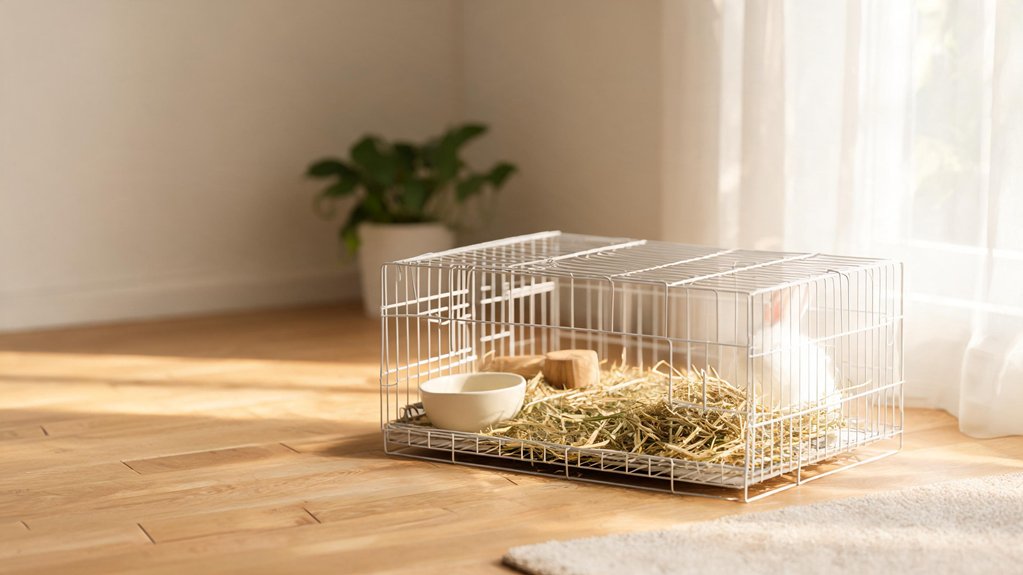
Deep clean your rabbit’s cage once a week to maintain a fresh, odor-free environment and prevent potential health issues. Begin by safely relocating your rabbit to a designated exercise area that provides ample space and enrichment to reduce stress during cleaning. RHDV2 spreads via In addition to general hygiene, remember that RHDV2 can spread through contaminated objects like cages and equipment, so thorough cleaning and disinfection are important. Thoroughly scrape away accumulated droppings, old bedding, loose fur, and uneaten food scraps from all surfaces. Remove every item from the rabbit’s enclosure, including bedding, hay, toys, and accessories.
Wash all surfaces with a gentle soap and warm water solution, ensuring they’re spotless and hygienic to eliminate bacteria and odors.
Pay special attention to the rabbit litter box—wash the tray thoroughly, dry it completely to prevent moisture buildup, and wipe down the surrounding areas. Regular cleaning of the litter tray helps maintain optimal hygiene and reduces odor; replace with fresh, dry rabbit litter immediately after cleaning.
After the cleaning process, replenish the cage with high-quality bedding, hay, and accessories, allowing all components to dry fully before returning your rabbit to a clean, safe habitat that promotes healthy living and comfort.
Use Rabbit-Safe Cleaners: Vinegar or Disinfectant
Choose vinegar for cleaning rabbit pee spots and eliminating odors, using equal parts white distilled vinegar and water for routine maintenance. For stubborn urine scale buildup, apply full-strength vinegar, allowing it to soak for a few minutes before scrubbing to achieve thorough stain removal and odor control.
Incorporating this natural, rabbit-safe cleaner into your regular cleaning routine can effectively keep your bunny’s living space fresh and hygienic. Store any rabbit treats, such as Oxbow products, away from cleaning supplies, and offer them only as occasional rewards once the cage is clean.
If your rabbit’s environment requires a more comprehensive disinfecting step, especially after illness or accidents, opt for a high-quality, rabbit-safe disinfectant that’s free from harsh chemicals like bleach and ammonia. Follow the manufacturer’s instructions for contact time to ensure effective disinfection, then rinse the area thoroughly until no cleaning solution smell remains.
Always rinse the cleaned surfaces completely and dry them thoroughly to prevent dampness, which can harbor odors and germs. Using proper cleaning agents and ensuring complete drying creates a safe, odor-free environment that promotes your rabbit’s health and comfort, making your cleaning routine more effective and stress-free.
Choose Vinegar For Urine
When you notice urine spots or a persistent ammonia-like odor in your rabbit’s environment, start with plain white distilled vinegar, one of the safest and most effective cleaning solutions for rabbit owners. Prepare a cleaning spray by mixing a 50-50 ratio of high-quality white vinegar and filtered water in a spray bottle, ensuring the solution is safe for your bunny’s delicate surroundings. Spray this mixture generously onto the affected area to target urine residue and neutralize odors efficiently.
Allow the vinegar solution to sit for about 1 to 2 minutes, providing enough time for the acidity to break down stubborn urine stains and mineral deposits. After this brief dwell time, wipe or blot the area thoroughly with a clean cloth or paper towel.
For regular, weekly deep cleaning routines, mix one part vinegar with three parts water to maintain a clean, odor-free environment while ensuring safety for your rabbit.
For stubborn stains, mineral crusts, or heavily soiled areas, apply undiluted white vinegar directly onto the surface. Let it soak for 15 to 60 minutes to loosen dried urine and mineral buildup, then scrub with a brush or scrubber designed for pet cleaning. Rinse the area thoroughly with water afterward and allow it to fully dry before your rabbit re-enters the space.
Using these targeted vinegar cleaning solutions guarantees a healthier, odor-free habitat that promotes your rabbit’s comfort and well-being.
Use Rabbit-Safe Disinfectant Products
Use rabbit-safe disinfectant products to ensure your rabbit’s habitat remains hygienic and free from harmful fumes or residue that could cause stress or health issues.
Selecting cleaners specifically labeled as “safe for rabbits” or designed for small-animal housing is essential for maintaining a safe environment.
Avoid using harsh chemicals such as bleach, ammonia, phenols, pine oils, and synthetic fragrances with strong scents, as these can be toxic or irritating to your bunny.
Look for disinfectants that provide clear instructions on dilution ratios and contact times—specifically, how long the surface needs to stay wet for effective sanitation.
For routine cleaning and maintenance, a solution of diluted vinegar or a gentle, pet-safe soap is highly effective and safe for your rabbit’s environment.
In situations where your rabbit has been sick, use targeted disinfectants like 3% hydrogen peroxide or veterinary-approved disinfectant solutions, ensuring you let all surfaces dry completely before reintroducing your bunny to prevent exposure to residual chemicals and to promote a healthy, hygienic living space.
Prioritizing these disinfectant choices enhances your pet’s safety and simplifies maintaining a clean, stress-free habitat.
Rinse Thoroughly And Dry
Once you’ve cleaned your rabbit’s habitat—including floors, trays, bars, and litter box components—with a rabbit-safe cleaner such as diluted vinegar or a gentle, pet-safe soap, the next step is crucial for thorough sanitation: rinsing and drying.
Use plain, potable water for the final rinse, ensuring that all residues of foaming or film from cleaning agents are completely eliminated.
Spray or pour water liberally over all surfaces, paying close attention to areas treated with vinegar, especially after heavy urine scale buildup, as strong vinegar residues can cling and cause unwanted odors or irritations.
Drain any pooled water carefully to prevent moisture stagnation.
Proper drying is essential for maintaining a healthy environment and preventing mold or bacterial growth.
You can air-dry surfaces naturally or wipe them with clean, absorbent towels.
For optimal results, drying in direct sunlight is recommended, as ultraviolet rays aid in disinfecting and deodorizing.
Avoid using hairdryers or artificial drying methods, as these can cause uneven drying or damage to sensitive materials.
Wait until all surfaces are completely dry to the touch, and confirm that indoor smells are neutralized before allowing your bunny back into its habitat.
Following this comprehensive rinse and dry protocol ensures a clean, safe, and odor-free environment that promotes your pet’s health and well-being.
Full Cage Wash Steps: Scrub, Rinse, Dry
After you’ve carefully removed your rabbit and cleared out all bedding, food, and accessories, it’s time to perform a comprehensive cage wash following the essential steps: scrub, rinse, and dry.
Begin by thoroughly scrubbing every surface of the cage using warm water combined with a mild, pet-safe soap specifically formulated for small animals. Pay close attention to corners, seams, and any urine-stained spots, ensuring the removal of dried urine scale and other stubborn debris. Utilizing a sponge or stiff brush will help achieve a deep clean, effectively eliminating dirt and residues that could affect your rabbit’s health.
For effective disinfection, select a rabbit-safe disinfectant, such as a properly diluted, veterinarian-approved bleach solution, and follow the manufacturer’s instructions carefully. Allow the solution to remain wet on all surfaces for approximately 5-10 minutes or longer if specified. This contact time is crucial for eliminating harmful bacteria and pathogens.
After disinfection, rinse all surfaces thoroughly with clean, warm water to remove any traces of cleaner and soap residue, ensuring your rabbit’s environment is completely sanitized.
Finally, dry the cage entirely, making sure no damp spots remain, to prevent mold or bacterial growth and provide a safe, hygienic living space for your rabbit.
Using high-quality cleaning products and following these steps consistently will promote a healthier, happier environment and reduce the risk of infections.
Clean Litter Trays and Hay Areas to Prevent Odor
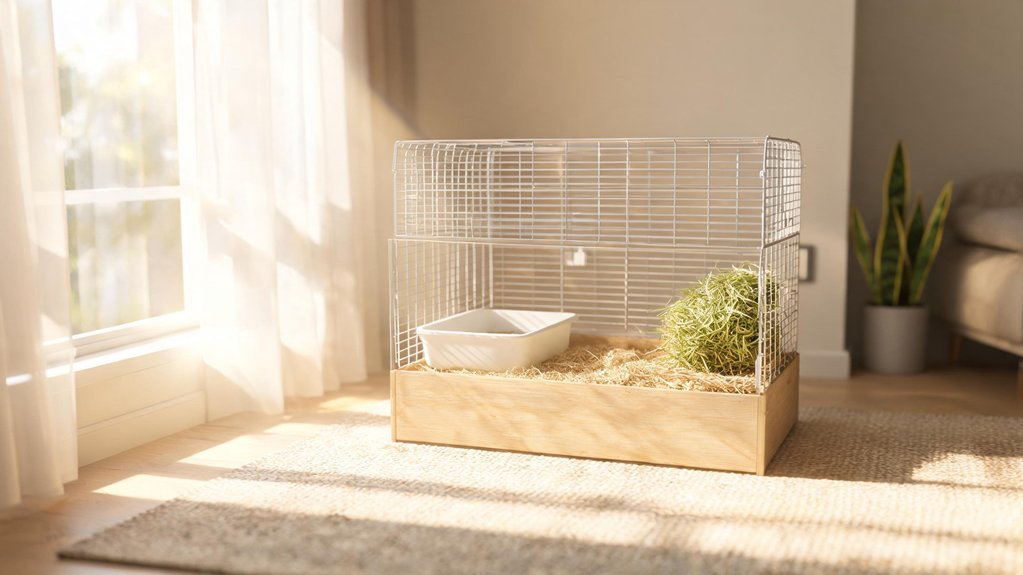
To maintain a fresh and odor-free environment for your rabbit, it’s essential to regularly clean the litter trays and hay areas. Damp hay and wet corners quickly develop unpleasant odors, so implementing a routine cleaning schedule is key.
Spot-check daily by removing wet spots and feces-contaminated litter at least once or twice per day. This practice ensures the surfaces stay dry and reduces the buildup of odor-causing bacteria.
For optimal urine odor control, perform a complete litter change each day. Once a week, thoroughly scrub the litter tray with a rabbit-safe cleaner to eliminate stubborn residues and bacterial buildup.
Additionally, use a diluted white vinegar solution, mixing one part vinegar with one part water, to clean urine scale and mineral deposits inside the tray.
For hay storage, pull out any damp hay each morning to prevent mold and unpleasant smells. Utilize a dedicated hay rack to keep hay dry and accessible.
Regularly clean nearby surfaces with vinegar and rinse thoroughly to prevent odor transfer.
Adopting these cleaning practices with quality cleaning supplies and tools will help ensure your rabbit’s living environment remains clean, odor-free, and healthy.
Adjust Cleaning for Multiple Rabbits and Seasons
When you manage multiple rabbits, it’s essential to perform daily spot checks, sometimes twice daily, particularly in high-mattention areas like hay storage zones and litter boxes where waste and mess can accumulate rapidly. Regular monitoring ensures timely cleaning, reduces odor buildup, and minimizes fly risk, creating a healthier environment for your furry companions.
During the summer months, implement a thorough weekly deep-cleaning routine. This includes pulling out wet bedding immediately, wiping down pee spots to prevent odor and fly attraction, and maintaining optimal hygiene in all living spaces. Consistent deep cleaning helps prevent health issues and ensures your rabbits stay comfortable and happy during warmer weather.
In colder winter months, focus on keeping indoor sleeping areas dry and well-ventilated. Remove damp or soiled litter daily to prevent moisture buildup and potential health problems. Additionally, give the entire hutch a more frequent scrub to remove residue and bacteria that can thrive in longer indoor stays. These proactive cleaning measures enhance overall hygiene, promote wellness, and facilitate a clean, odor-free habitat that supports your rabbits’ health throughout all seasons.
Increase Spot Checks With Multiples
Spot-checking becomes even more crucial when managing multiple rabbits within a shared cage environment. To ensure optimal health and hygiene, perform spot inspections twice daily—once in the morning and once in the evening.
With multiple rabbits, you’ll observe increased urine and fecal matter rapidly, necessitating diligent monitoring.
Begin by walking through the enclosure, promptly removing any wet bedding and scooping soiled litter, especially near designated toilet corners. Regular removal minimizes odor buildup and prevents ammonia accumulation, which can irritate your rabbits’ respiratory systems.
Additionally, check for any uneaten food, discarding leftovers to maintain a clean habitat.
If you share litter boxes among your rabbits, it’s essential to empty each one daily or at least every 1 to 2 days. This routine prevents saturation and odor buildup, supporting a healthier living environment. Selecting absorbent, low-dust litter suited to rabbit litter boxes can also help keep wet spots contained between daily emptyings.
During colder, less-ventilated days, maintaining this cleaning schedule is especially important to prevent ammonia buildup, which can exacerbate respiratory issues, leading to costly vet bills.
Deep Clean More Often In Summer
During the hot summer months, it’s essential to increase the frequency of deep cleaning your rabbit’s living environment to maintain optimal health and hygiene.
Start by continuing your regular weekly full clean, but adapt your cleaning routine to accommodate higher temperatures. For hutches, which are more exposed to heat and humidity, perform thorough cleaning twice a week, as waste and germs tend to accumulate at an accelerated rate in the summer.
Make sure to completely remove bedding and hay during each deep clean. Scrub all surfaces with a pet-safe disinfectant or a diluted vinegar solution to effectively eliminate germs and bacteria.
Rinse all surfaces thoroughly to prevent any residue from remaining, then dry everything completely to prevent mold and odor.
Additionally, change your rabbit’s litter more frequently, ideally every 24 to 48 hours, and conduct daily spot checks to identify and address damp spots or soiled areas promptly.
For households with multiple rabbits, consider scheduling bedding and lining changes once or twice weekly, and increase these routines for young or more sensitive bunnies.
Using specialized cleaning products and implementing a frequent cleaning schedule ensures a healthier environment, reduces odors, and minimizes the risk of illness during the hottest months.
Invest in high-quality cleaning tools and disinfectants designed specifically for small animal enclosures to ensure thorough sanitation and promote your rabbit’s well-being year-round.
Focus On Odor And Fly Risk
Focus on effective odor control and fly risk prevention in your rabbit habitat, as both issues escalate rapidly once urine, damp bedding, or residual droppings accumulate. Implementing a daily quick spot-cleaning routine is essential: promptly remove wet litter, soiled bedding, and any excrement, preventing ammonia buildup and early odor issues.
Regular maintenance of litter in trays—at least weekly—is critical, with more frequent replacement needed if moisture persists or strong odors emerge.
In environments housing multiple rabbits, diligent mid-day spot-cleaning and the addition of extra litter boxes are vital strategies to reduce ammonia concentration and minimize fly attraction. Enhancing sanitation by washing food and water bowls daily further deters odor and pests.
To further block flies, incorporate fine-mesh screens over bedding areas, ensure bedding remains dry at all times, and maintain a clean, pest-free environment. These proactive steps optimize hygiene, improve air quality, and create a healthier living space for your rabbits.
Avoid These Dangerous Cleaning Mistakes for Rabbits
Before you choose any cleaning product for your rabbit’s habitat, take a moment to pause. Rabbits have highly sensitive lungs and skin, making them susceptible to harm from standard household cleaners. To ensure a safe environment, avoid using harsh substances like bleach, ammonia-based cleaners, pine-oil disinfectants, and phenol-containing products such as traditional Dettol.
Instead, select gentle yet effective cleaning solutions formulated explicitly for small pets, and always follow label instructions carefully. Never mix different cleaning agents, as dangerous chemical reactions can occur, putting your rabbit at risk.
Use caution by not exceeding recommended bleach concentrations; more powerful solutions are unnecessary and potentially hazardous.
Start your cleaning routine by removing visible dirt and debris with mild soap and water first. Disinfect only when necessary, and when doing so, ensure the contact time is maintained correctly, typically around 5 to 10 minutes, to effectively eliminate germs without overstressing your rabbit’s sensitive respiratory system.
After disinfecting, thoroughly rinse all surfaces with clean water and dry entirely before returning your bunny to its habitat.
Additionally, always rinse food bowls and water crocks thoroughly to prevent chemical residue and keep your rabbit’s environment both clean and safe. Proper cleaning practices help maintain an optimal, healthy habitat for your pet, reducing health risks and promoting overall well-being.
Why Does Your Rabbit Cage Still Smell or Stay Wet?
If your rabbit cage continues to emit a strong odor or remains wet despite regular cleaning, it’s essential to identify the underlying cause rather than simply “cleaning again and hoping for the best.” The most common issue is waste buildup that isn’t being removed promptly and thoroughly. To effectively eliminate odors and moisture, perform daily spot cleaning by removing wet litter, fresh feces, and any soiled bedding, and conduct a comprehensive wash of the entire cage with hot, soapy water at least once a week.
Waiting longer than 1 to 3 days to change the litter allows urine and feces to decompose, increasing ammonia levels and intensifying foul smells.
Examine your litter box closely—if the litter isn’t sufficiently absorbent, urine can quickly pool and cause persistent dampness.
Additionally, check for areas where moisture can accumulate, such as scratches, wire grates, corners, and water bottle leaks, which trap wetness and promote odor.
Multiple rabbits housed together can significantly increase odor and moisture load, making regular cleaning and appropriate cage maintenance even more critical.
Investing in high-quality, absorbent bedding, leak-proof water bottles, and well-designed cage accessories can help you control moisture and maintain a fresher, cleaner environment for your rabbit.
Consistent, targeted cleaning combined with these solutions will reduce odor buildup and moisture retention, promoting your rabbit’s health, hygiene, and overall happiness.
Frequently Asked Questions
How Often Should I Fully Replace Rabbit Litter?
You should fully replace your rabbit litter every 1 to 3 days for most indoor rabbit owners to maintain optimal hygiene and odor control. If your litter box uses non-absorbent paper-based bedding or if you notice that the litter becomes wet or soiled quickly, it is advisable to do a complete replacement daily to prevent odors and ensure your rabbit’s comfort.
When changing the litter, dump out the used bedding, thoroughly wash the litter box with a safe cleaning solution, and then refill it with fresh, high-quality rabbit-safe litter. To maintain cleanliness and reduce the buildup of bacteria, perform a deep scrub of the litter box at least once a week, ensuring it remains a healthy environment for your rabbit. Regular and proactive litter replacement not only promotes your rabbit’s health but also makes cleaning easier, helping you maintain a clean and odor-free living space.
When Should I Change Rabbit Bedding in the Main Cage?
When should you change rabbit bedding in the main cage? It’s recommended to replace the bedding at least once a week to maintain a clean, healthy environment for your pet. Regular spot-cleaning of waste and soiled areas should be performed daily to keep odors at bay and promote fresh air circulation around your rabbit’s sensitive nose.
If you notice the bedding becoming damp, developing a strong odor, or forming clumps, it’s essential to change it immediately to prevent bacterial growth and ensure your rabbit’s comfort. Additionally, deep-clean all surfaces and accessories regularly to eliminate any residual waste and maintain optimal hygiene standards. Consistent, thorough bedding management significantly contributes to your rabbit’s health, happiness, and overall well-being.
How Do I Clean a Rabbit Litter Box Safely?
To clean a rabbit litter box safely and effectively, start by completely emptying the box to remove all waste material and soiled bedding. Rinse the empty litter box thoroughly with warm water to eliminate any residual debris, ensuring a clean surface for disinfecting.
Next, soak the entire litter box with a solution of diluted white vinegar for 5 to 10 minutes. This natural disinfectant helps eliminate bacteria and odors without harmful chemicals. After soaking, use a scrub brush or sponge to thoroughly clean all surfaces of the litter box, paying special attention to corners and textured areas where waste and urine may accumulate. Rinse the box well with warm water to remove any vinegar residue and dry it completely with a clean towel or allow it to air dry.
For daily maintenance, spot-clean droppings and wet spots on the bedding or litter to maintain cleanliness and hygiene. Additionally, wash the entire litter box at least once a week to prevent odor build-up and maintain a healthy environment for your rabbit. Avoid using bleach sprays or harsh chemical disinfectants, as they can be harmful to your pet. Using natural cleaning methods ensures a safe, odor-free, and sanitary litter box that promotes your rabbit’s health and well-being.
When Should I Change Rabbit Litter Box Liners or Trays?
Like a fresh start, change your rabbit’s litter liners or trays when they are soaked, emit a strong odor, or are visibly soiled with waste, ensuring a clean and comfortable environment for your pet. Spot clean the litter box daily to remove any immediate messes and maintain freshness. Fully swapping out and washing the litter liner or tray approximately once a week is recommended to prevent odor buildup and bacterial growth.
Increase the frequency of liner or tray replacements to sooner intervals if your rabbit experiences diarrhea or if the litter box remains persistently wet. Regularly maintaining and replacing your rabbit’s litter setup ensures optimal hygiene, reduces odor, and promotes a healthy living space, making it an essential aspect of effective pet care. Invest in high-quality, absorbent liners and durable trays to streamline the cleaning process and support your rabbit’s well-being.
What’s the Best Way to Remove Rabbit Urine Smell Fast?
Spray a precise 50/50 white vinegar and water mixture directly onto the rabbit urine stain, ensuring thorough coverage of the affected area. Allow the solution to penetrate the fibers for 10 to 15 minutes to effectively neutralize the urine odor. Afterward, scrub the contaminated spot with a soft brush or cloth and rinse thoroughly with clean water to remove residual odors and cleaning solution.
For stubborn or deeply embedded odors, apply a high-quality enzyme-based cleaner formulated specifically for pet urine removal. Allow this enzymatic solution to sit for 5 to 15 minutes, following the manufacturer’s instructions for optimal results. Blot the treated area with a clean, absorbent cloth to lift remaining moisture and odor particles, then ensure complete drying using a fan or dehumidifier. Using these proven, commercial-grade odor removal methods will achieve faster, more professional results, restoring freshness to your living space and preventing future odor recurrence.