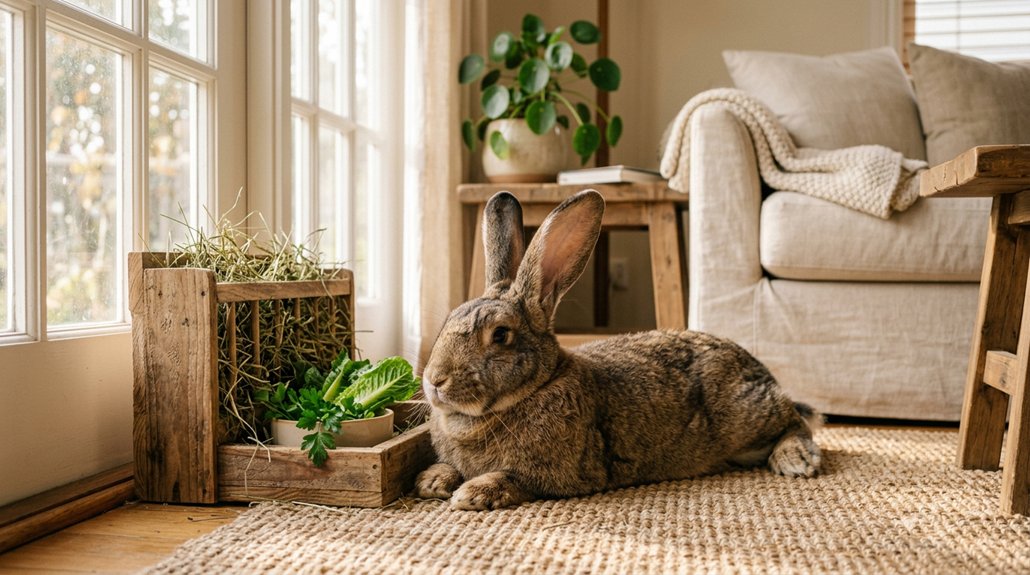
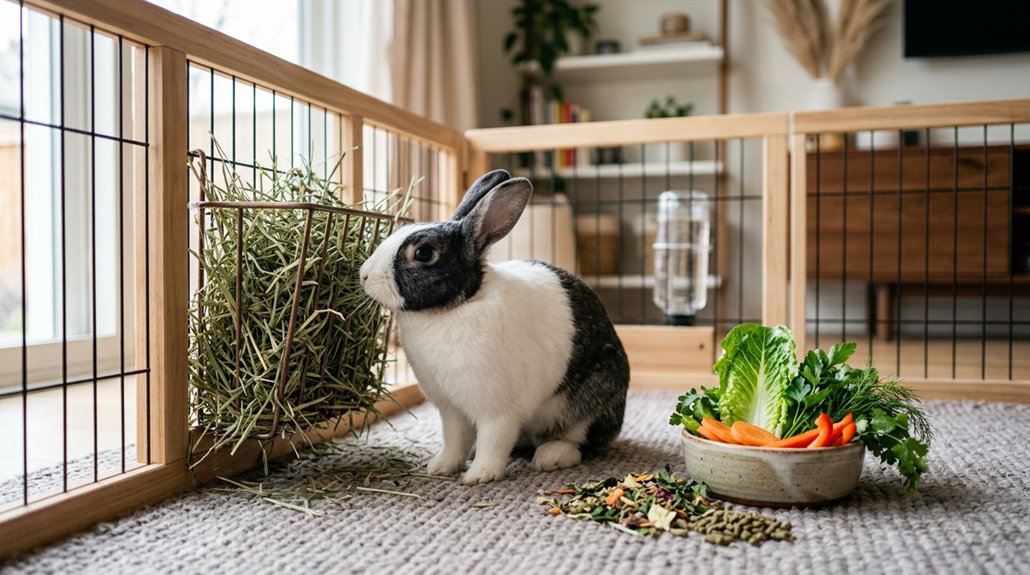
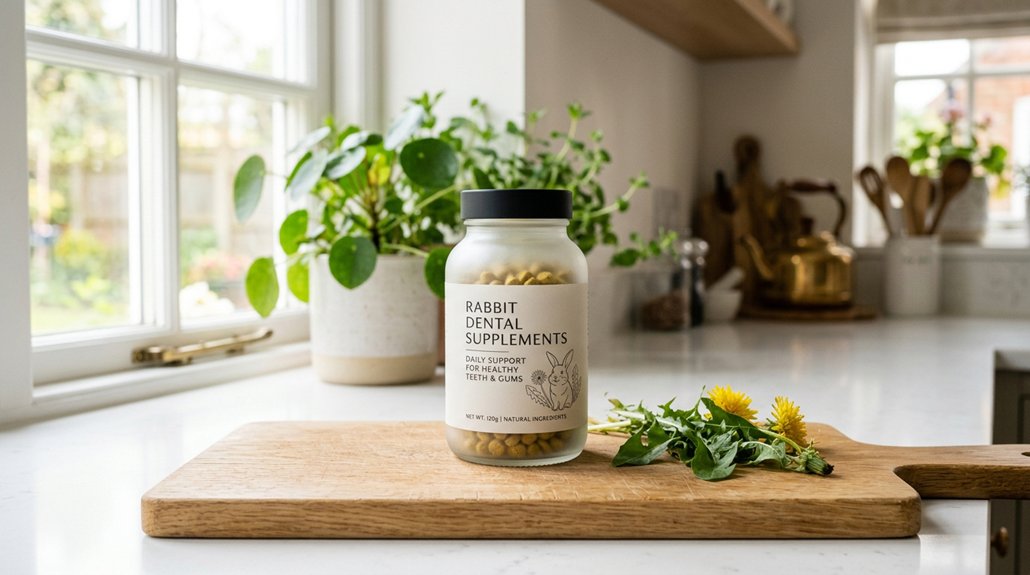
You can keep rabbit treats healthy by keeping them rare and fiber-first. Aim for 70–75% grass hay daily, then limit treats to about 5–10% total. Offer fruit just 1–2 times per week, tiny thumbnail pieces only, like 1–2 tablespoons per 5–6 lb per serving, with at least a day gap. For store-bought treats, pick hay-first labels, avoid sugar syrups, and skip yogurt drops or seed sticks. For DIY, make hay-herb mixes (no sweet add-ins) and watch stool twice daily—there’s more to learn next.
Swift Summary
- Keep treats at 5–10% of daily intake, with 70–75% grass hay to support gut motility.
- Offer fruit only 1–2 times weekly in tiny, seedless pieces; use about 1–2 tbsp per 5–6 lb per serving.
- Always wash fruit, remove pits/cores/stems, and cut into thumbnail-size pieces; discard leftovers promptly.
- Choose store-bought treats with grass hay first; avoid added sugar, syrups, honey, and grain- or starch-heavy ingredients.
- Prefer hay-based chews or forage mixes over yogurt/seed sticks; dried fruit is ~3× more concentrated, so reduce portions.
Set Treat Limits to Protect Gut Motility
When you’re shopping for bunny treats, keep treat limits front and center to protect your rabbit’s gut motility, which means the steady muscle movement that helps food move through. Fiber is especially important because large amounts of indigestible fiber help drive normal intestinal motility. Aim to keep treats at about 5–10% of what you offer each day, while keeping 70–75% as high-fiber grass hay. Offer bunny treats 1–2 times per week only, with teaspoon-scale portions. Cut back on sugar- and starch-heavy items, like yogurt drops or seed bars. If you’re learning how to make rabbit treats at home, stick to tiny, single-ingredient herbs or leafy greens, then always keep hay available.
Use the Fruit Rule: Tiny Pieces, Not Daily
You should follow the fruit rule, keep it to tiny pieces, and don’t treat fruit like a daily snack. Offer fruit just 1–2 times per week, with at most 1–2 tablespoons per 5–6 pounds of body weight, and always aim for smaller portions when in doubt. Then prep every piece for safety by removing seeds, pits, and cores, because those can’t go in a rabbit’s body—even if the fruit looks tempting. Be extra cautious with treat mixes that include high sugar, since excess sugar can be converted to fat or ferment quickly in the cecum and contribute to GI upset.
Tiny Fruit Portions Only
Tiny fruit portions can be a fun treat for your rabbit, but keep them *tiny*—think “one mouthful,” not “a snack bowl.”
Fruit is high in simple sugar, and too much too often can upset your bunny’s gut (that’s the digestion area in the intestines) and lead to issues like softer poop or tummy discomfort.
For example, fruit is high in sugar and should not be part of the daily diet.
For serving, aim for about 1–2 tablespoons of fresh fruit per 5–6 lb body weight as an upper ceiling, and consider even less as a regular “reward.”
Offer single bite-size pieces, like one small grape cut, or three blueberries.
Use no seeds, pits, or thick peels, and serve fruit only occasionally.
Limit Fruit To Weekly
Keeping fruit to a weekly treat helps your rabbit’s gut stay steady, and it also keeps hay and leafy greens in the driver’s seat.
You’ll want to skip daily fruit, because sugary pieces ferment fast in the cecum, that pouch that supports digestion.
Instead, pick one or two “fruit days” each week.
On those days, serve only tiny portions, about 1–2 tablespoons per rabbit, and treat carrots the same way.
Feed fruit after plenty of hay, so your bunny eats fiber first.
This schedule also curbs soft stools and reduces sweet-food begging.
Be consistent, and your rabbit will thrive.
Remove Seeds, Pits, Cores
Before you serve fruit as a treat, remove every seed, pit, and core, because those hard parts can be toxic and they also raise choking risk. Seeds and cores can contain harmful compounds, and pits from stone fruits like peach or plum count as toxic parts.
You also want to skip stems, too.
Then wash the fruit, cut away the non-edible centers, and slice the flesh into tiny thumbnail-size pieces, so your bunny can chew well.
Give only a small, occasional bite—think one grape half or a small cube of apple—never a daily snack.
Pick Store-Bought Treats With Hay-First Labels
When you’re grabbing store-bought bunny treats, check the label first, especially the first ingredient.
Pick products where grass hay shows up first—like timothy hay, meadow grass, or dried grass—since rabbits do best on a hay-heavy, high-fiber diet. Hay is the everyday staple of a rabbit’s diet, so a treat that features timothy hay as a main ingredient is a practical match for what they eat daily.
But avoid added sugar syrups and treat options where carbs like wheat, oats, corn, or sugar lead the list, because those are more energy-dense and can upset your bunny’s digestion.
Check Hay First Ingredients
Start with this simple rule: pick store-bought bunny treats that list hay first.
When you scan the ingredients, look for timothy hay, meadow hay, or other grass hay as the first item. That means the treat supports a hay-based diet, not a grain-heavy one.
Choose timothy-based products, especially “timothy grass hay” biscuits.
Also check that grains, seeds, and corn aren’t near the top of the list.
These hay-first treats are high in fiber, giving your rabbit good gut “movement” and chewing time.
Keep treats small, and always serve fresh hay alongside them.
Avoid Added Sugar Syrups
Even if a treat says it’s “for rabbits,” skip anything with added sugar syrups and sweeteners.
And yes, this includes “just a little.”
When you read the label, watch for sugar, corn syrup, high-fructose corn syrup, dextrose, honey, molasses, or anything ending in -ose.
Those sugars can upset your bunny’s gut, feed harmful bacteria, and raise soft-stool and gut-stasis risk.
If you want to serve a safe snack, pick treats that list hay-first ingredients, not yogurt drops, honey sticks, or syrup-packed fruit.
You’re helping their digestion stay steady.
Choose Minimal Carb Treats
Next time you shop for bunny treats, pick options with a hay-first label, because that’s the closest “reward” to your rabbit’s regular diet.
Check that grass hay lists first, like timothy, meadow, or orchard.
Then scan for grains or starch sources, like oats, corn, rice, wheat, peas, potatoes, flours, maltodextrin, and glycerin.
If you see cereals, choose a different bag.
Favor compressed hay cubes, balls, or biscuits made from timothy, or milled grass-hay nibble mixes with mostly leaves.
Offer treats sparingly, about 5% of daily intake, so hay, greens, and pellets stay on track.
Skip Sugary Snacks Like Yogurt Drops and Seed Sticks
You should skip sugary snacks like yogurt drops and seed sticks, because they’re not “treats” in the healthy rabbit way. And for good reason: they’re high in sugar and starch, so they can push your bunny away from hay and leafy greens.
But the bigger risk is tummy trouble. Sugar and starch can upset gut bacteria, leading to gas, soft poop, diarrhea, and GI stasis, a dangerous slowdown of digestion.
Also, rabbits can’t handle dairy well, so yogurt can cause more discomfort. Skip them, especially if your rabbit is under 12 weeks.
Choose Hay Chews and Forage Mixes for Fiber
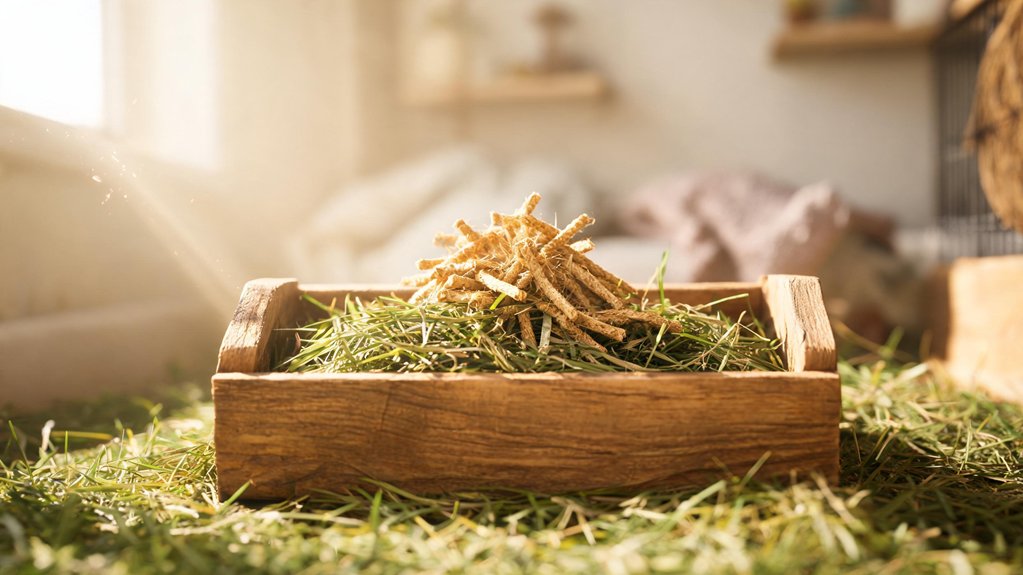
If you’re skipping sugary snacks like yogurt drops and seed sticks, it helps to swap in something your rabbit can use like “real food.” Hay chews and hay-based forage mixes are great healthy rabbit treats, because they’re made mostly from grass hay, the same backbone of a bunny’s diet.
Choose products with long-strand Timothy, orchard, or meadow hay. Long fiber supports gut motility, meaning normal gut movement.
It also helps teeth wear evenly, since rabbits’ teeth grow nonstop. Offer a small portion daily, but don’t replace unlimited grass hay. This keeps digestion steady and supports balanced cecal microflora. When choosing a grass hay for everyday feeding, Timothy hay is a widely recommended option for rabbits.
Shop Dried Fruit: No Added Sugar, No Syrups
Dried fruit can be a sweet little rabbit treat, but only when you pick the right bag and keep the portion tiny.
Dried fruit can be a sweet rabbit treat—just choose carefully and keep portions tiny.
Choose packages with an ingredient list that shows only fruit. Avoid added sugar, syrups, honey, molasses, or fruit-juice concentrates.
“No sugar added” still needs a label check.
Skip yogurt coatings, chocolate, and candy-style extras.
And remember dried fruit is about three times more concentrated than fresh, so you cut the amount to one-third.
If you offer 1 tablespoon fresh, offer about 1 teaspoon dried instead.
Start with small portions, then watch stools and appetite.
Rotate a Safe Fruit List (Tiny Portions)
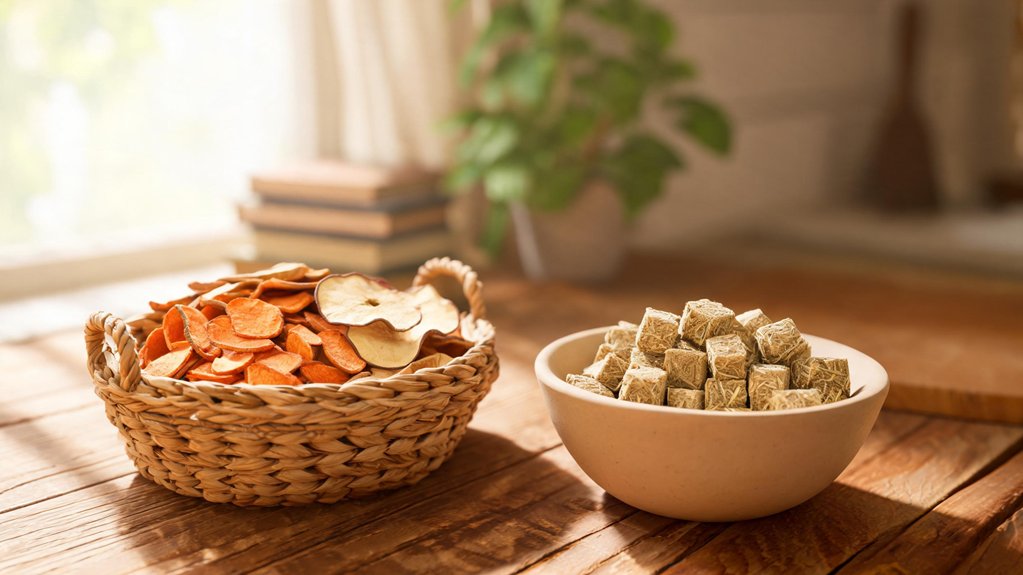
Keep a little “safe fruit list” and rotate through it, so your rabbit doesn’t get stuck on just one sweet flavor.
Offer tiny portions, once or twice per week, with no fruit on other days.
Pick from apples, pears, peaches, pineapple, melon, papaya, and mixed berries.
For rare rotation, add banana, grapes, or high-sugar fruits as very small slices, infrequently.
Use about 1–2 tablespoons total per 6 pounds body weight, or about 1/8 of an apple or pear for a single treat.
Choose one fruit each treat day.
If it’s inedible plant parts, skip it.
Wash Fruit and Remove Seeds, Pits, and Stems
Before you serve any fruit as a rabbit treat, take a minute to wash it well and strip out the risky parts.
Rinse every piece under cool running water, even organic fruit, to cut down pesticide and bacteria risk.
Then peel after washing if the origin is unclear, so you’re not relying on the skin.
Next, remove all seeds and pits.
Apple seeds and stone-fruit pits can contain cyanide compounds, and pits also raise choking and blockage risk.
Pull off stems and cores too, like apple stems and hard centers.
Finally, cut bite-size, serve small, then toss leftovers.
Choose Leafy Greens for Low-Sugar Variety
After you wash and prep fruit, you’ll do even more for your bunny’s “treat” cravings by choosing the right leafy greens.
Pick mostly low-sugar, high-fiber options, like romaine, green/red leaf lettuce, arugula, bok choy, endive, and watercress. Skip iceberg lettuce entirely.
Aim for daily variety, serve a few tablespoons per bunny (as part of the fresh food routine), and rotate greens across the week.
Herbs count too, like basil, cilantro, dill, parsley, and mint, for tasty flavor without fruit sugar.
For higher-oxalic greens like spinach, use only one among at least three leafy types.
Offer Non-Leafy Veggies in Small, Limited Servings
When you offer non-leafy veggies, keep the portions small—about 1 tablespoon per 2 pounds of your rabbit’s body weight per day, and count them inside the daily fresh-veg ration, not on top of it.
Choose low-sugar options, like bell pepper, cucumber, zucchini, or small pieces of carrot, and treat starchy, sugar-heavy veggies like carrots as tiny rewards only (about a 1 cm cube).
Then rotate your veggie mix weekly, and introduce any gas-prone choices like broccoli or Brussels sprouts slowly, watching for loose stool or tummy upset.
Choose Low-Sugar Portions
Offer non-leafy veggies in small, controlled portions, because they usually have more sugar and starch than leafy greens, and that’s where rabbits can get into trouble with gas or weight gain.
Keep non-leafy choices to about 1 tablespoon per 2 pounds of body weight per day, and total daily veggies around 1–2 cups per 6 pounds.
For a start, at ~12 weeks old, offer 1/2 ounce daily, then stay consistent.
When you serve, favor bell pepper, zucchini, cucumber, and broccoli stems or leaves.
Go easy with carrots, they’re treat-only—about a 1 cm cube.
Rotate Weekly Vegetable Mixes
Rotate your non-leafy veggie choices every week, and keep the portions small so your bunny’s tummy stays happy. Aim for variety, not repeats.
Each day, offer your rabbit the usual leafy greens twice, then add a small rotation of non-leafy veggies.
Try 5–6 plant types across the week, and keep at least 3 types on the same day.
Space out gasier options like broccoli, brussels sprouts, cabbage, celery, and kohlrabi, using only moderation.
Use about 1 leveled tablespoon per 2 pounds body weight per day for non-leafy veggies, and start new items slowly.
Use Herbs for Enrichment, Not Calorie Boosting
Herbs are perfect for adding fun, not extra calories.
Keep hay as the main food, you’ll still offer unlimited grass hay, plus daily leafy greens. Then add herbs in small, “thumbnail-sized” pieces, about 10% of the day’s intake max.
Choose soft culinary herbs like basil, coriander, parsley, dill, mint, oregano, thyme, sage, and lemon balm.
Many are low in sugar and starch, so you can use them often as enrichment.
Mix fresh or dried herbs into hay, scatter them on a snuffle mat, or tuck them into a forage box.
This keeps treats special, not staple-like.
Pick Safe Chew Branches; Avoid Toxic Stone-Fruit Wood
Before you hand your rabbit a chew stick, pick the wood like it’s important—because it is.
Before you hand your rabbit a chew stick, pick the wood like it’s important—because it is.
Choose plain, untreated branches, no paint, stain, varnish, or preservatives. Apple from unsprayed trees works, and willow, birch, hazel, and pear are common safe options.
But skip stone-fruit woods—cherry, plum, peach, and apricot. Their bark, wood, leaves, and pits can carry cyanide compounds, so poisoning risk is real.
If you’re ever unsure of species, treat it as unsafe.
For outdoor branches, harvest away from pesticides, herbicides, and road pollution, then air-dry days to weeks.
Make DIY Hay-Herb “Mixes” (No Sweet Add-Ins)
You can make simple DIY hay‑herb “mixes” that add scent and chew time, without turning treats into sugar snacks. Start with dust‑free grass hay as your base, aiming for about 75–80% of the mix.
Add herbs and safe weeds only as a small supplement. Chop or lightly crumble rabbit‑safe options like basil, coriander, parsley, dill, mint, or thyme.
For rotation, use tiny amounts of oregano, sage, rosemary, lemon balm, or lavender.
If foraging, only pick unsprayed plants and match welfare lists.
Mix through plain hay, scatter daily, and keep it under roughly 10% total diet.
Introduce New Treats Step-by-Step (Watch Stool)
After you’ve made your hay-herb mixes, start introducing any brand-new “treat” step-by-step, so your bunny’s gut has time to adjust.
Set up a stable routine first: unlimited grass hay, daily leafy greens, and only a small pellet amount.
Then offer one tiny, bite-sized piece once daily.
Keep fruit/sweets very rare.
Over the next several days, check stool twice a day.
Look for abundant, dry, round, uniform fecal pellets.
Also note cecotropes.
If stool output drops, pellets change shape, or anything feels off within 24 hours, stop treats and call your vet.
Troubleshoot Soft Stools, Bloating, Or Diarrhea Fast
If your bunny suddenly has soft stools, bloating, or diarrhea-like poop, act fast—because rabbits’ gut problems can change quickly.
First, check the shape. Soft sticky “grape-like” cecotropes are normal, just not eaten. Soft smelly blobs mixed with normal round pellets can mean cecal imbalance. True diarrhea is liquid or no normal pellets—call your vet urgently.
Check droppings: soft sticky cecotropes may be normal, but smelly blobs or true diarrhea mean cecal imbalance—call your vet.
Next, offer unlimited high-quality grass hay right away. Remove fruit and sweet treats, and cut back pellets temporarily. Then watch for red flags: watery nonstop diarrhea, severe belly swelling, hunched posture, no poop, blood, or sudden weakness.
Also, offer fresh water, and track poop for 12–24 hours.
How Often Can Rabbits Have Fruit and Treats?
When your rabbit’s poop has been off, you’ll want to get back to a gentle, steady routine fast—starting with what you feed as “treats.”
After a gut upset, it helps to slow down on anything sweet, then rebuild with your regular basics: unlimited grass hay, daily leafy greens, and only a small amount of pellets.
For most adult rabbits, fruit counts as an occasional treat, not daily.
Offer fruit just once or twice weekly, with at least one day between fruit servings.
Use about 1–2 tablespoons fresh fruit per 6 pounds body weight, per serving, and go smaller for dried fruit.
Keep pellets and sugary treats very limited, especially if your rabbit is young or prone to weight gain.
Frequently Asked Questions
Can I Feed Fruit Daily if It’s Tiny Pieces?
No, don’t feed fruit daily—even tiny pieces. Fruit is a treat, not a staple; it’s like sugar on a slippery slope for your rabbit’s gut. Offer fruit only once or twice weekly, in very small amounts.
What Homemade Treats Can I Make Without Any Added Sugar?
You can make no-added-sugar homemade treats from plain grass hay, chopped leafy greens, and safe herbs: freeze small herb-and-green cubes in water, or bake hay-and-herb bites. Offer tiny portions alongside unlimited hay and daily greens.
Are Hay-Based Biscuits Safer Than Yogurt Drops or Seed Sticks?
Yes—hay-based biscuits are safer than yogurt drops or seed sticks. You’re feeding grass hay fiber, not dairy, sugar, honey, or seeds, which can upset your rabbit’s gut. Use them sparingly alongside daily greens and unlimited hay.
How Do I Rotate Vegetables and Herbs Without Upsetting Digestion?
Rotate greens by using 2–3 leafy staples plus 1–2 herbs each week. Introduce one new item at a time in tiny amounts, watch droppings 24–48 hours, then increase slowly over a week. Remove any offender.
What Should I Do Immediately if My Rabbit Gets Soft Stools?
When your rabbit gets soft stools, act fast—like a fire alarm. Check for watery diarrhea, appetite loss, or lethargy. Start hay-only, remove pellets and treats, keep water clean, and call a rabbit-experienced vet immediately if it worsens.