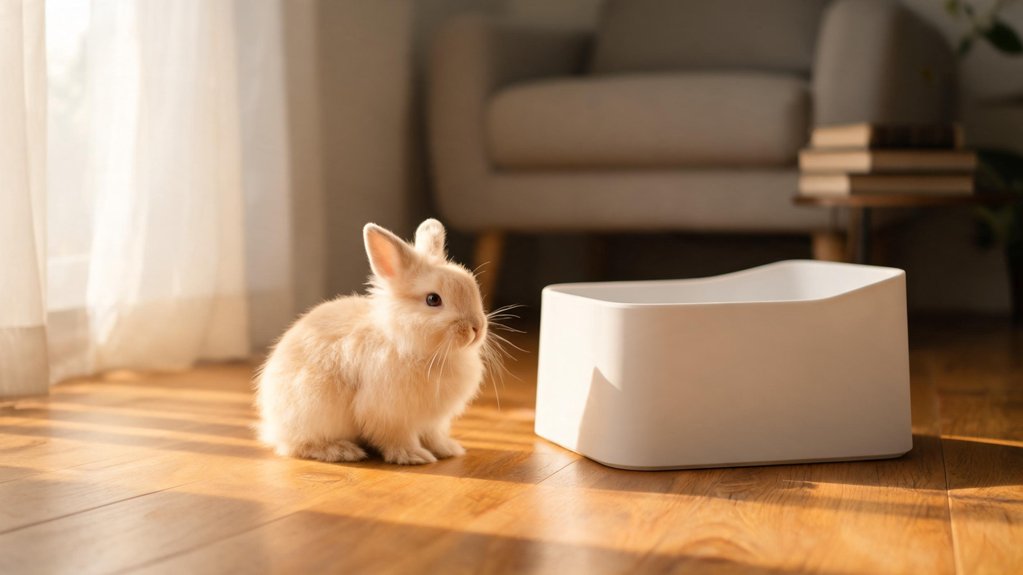
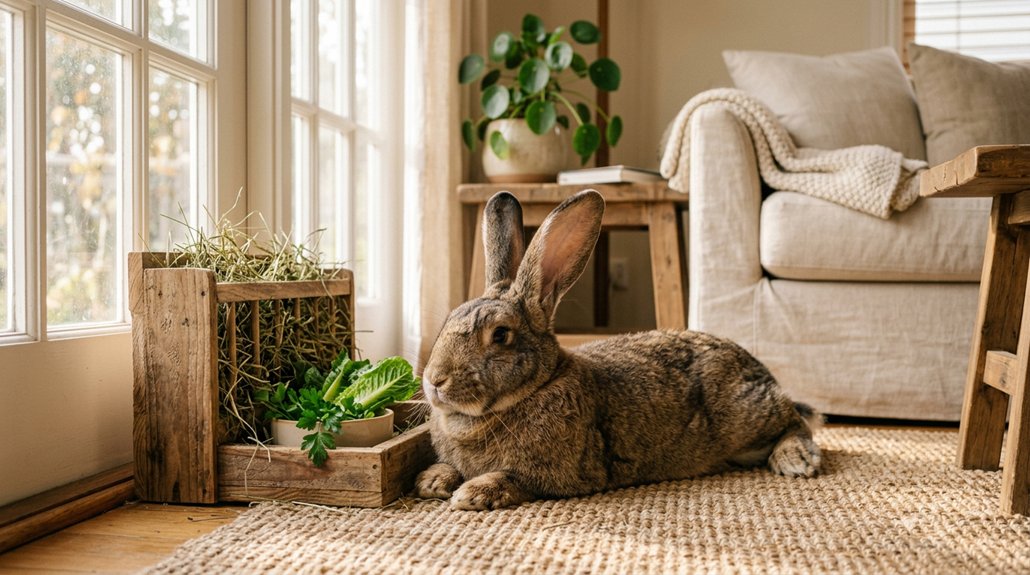
You can expect a Flemish Giant to top out around 15–22 lb (6–10 kg), with a long body and calm “gentle giant” temperament. Plan for 5–8 years of life with good care. You’ll need serious space, like about 3 ft × 10 ft indoors, plus daily free-roam time (around 3 hours). Feed unlimited grass hay, measured pellets, and 2–4 cups greens. Budget roughly $20–$40/month for hay, plus vet and bedding, and keep going to nail the details.
Swift Summary
- Flemish Giants are the largest domestic rabbit breed, typically 15–22 lb and 2.5–4 ft long with ears up to ~21 cm.
- Average lifespan is 5–8 years, with some rabbits reaching 8–10 years using excellent genetics and early health care.
- Provide ample indoor space (about 36″×36″×120″ minimum), daily 3+ hours free-roam, soft non-slip floors, and low ramps.
- Feed unlimited grass hay (most of the diet), measured timothy pellets, and 2–4 cups leafy greens daily to prevent obesity and GI stasis.
- Budget for larger housing, grooming, and vet care; costs vary by region, but they’re typically higher due to size and feed needs.
Flemish Giant Quick Facts at a Glance?
If you’re wondering what makes a Flemish Giant so special, start with the basics—this is the largest domestic rabbit breed, and yes, they really do look big even before you fully stretch them out.
Meet the Flemish Giant: the largest domestic rabbit breed—big even before it stretches out.
largest How big is a flemish giant rabbit? Expect about 2.5–4 feet long fully stretched, and ears up to ~21 cm.
How much is a flemish giant rabbit, and how much does it weigh? Typical adult weight runs about 13–22 lb (6–10 kg).
Many pet-quality adults are 15–22 lb.
Plus, you’ll enjoy their calm, “gentle giant” vibe.
Where Flemish Giants Come From (and ARBA)?
Flemish Giants didn’t just “show up” big— they grew that way through real history in Belgium, and ARBA ties into that story too.
You’ll find where are flemish giant rabbit from: Flanders, near Ghent, where farmers bred huge, hardy rabbits for meat and dense fur.
Early records point to giant Ghent-type rabbits by around 1860, with breed standards written in 1893 and Belgian recognition around 1895.
Then, giant flemish rabbits spread across Europe, and they reached the U.S. in the early 1890s.
If you’re searching for a flemish giant for sale, look for ARBA recognized breeding.
How Big Do Flemish Giants Get in Weight?
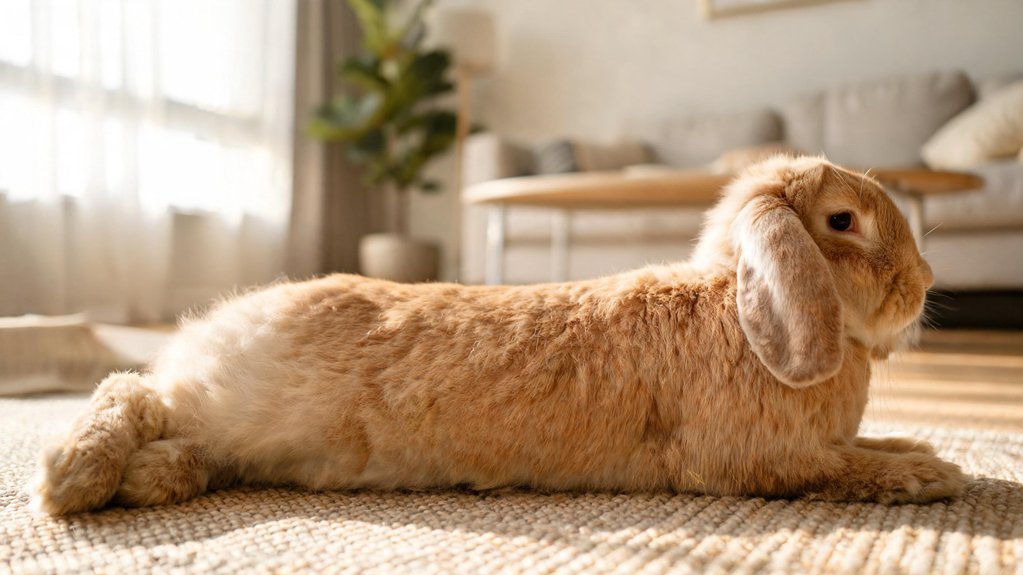
You’ll usually see adult Flemish Giants land in the “big but normal” range of about 15 to 20 pounds.
If you’re wondering how much does a flemish giant rabbit weigh, think 6–9 kg (a healthy band, with less ideal “overweight” beyond that).
ARBA also sets minimums: 13 pounds for a senior buck, 14 pounds for a senior doe, with no maximum.
Many males and females settle into those healthy ranges, and some giant flemish rabbit and white flemish giant friends may run closer to 20 pounds.
Weigh monthly, and call your vet if gains seem fast.
What Body Type Makes Flemish Giants Stand Out?
You’ll spot a Flemish Giant fast because its body type is built for size and steadiness: a semi-arch “mandolin” shape, with a long, powerful frame and broad, heavy hindquarters that lift smoothly starting at the shoulders (not right behind the ears).
And when you look at proportions, aim for a long body stretch, firm “solid” flesh, and strong, straight legs that keep that low, grounded carriage.
But don’t forget the temperament—many people call them a calm “gentle giant,” so handle them slowly and give them a few minutes to settle before judging movement.
Giant Frame And Heavy Bone
When you picture a Flemish Giant, focus on the frame first, not just the number on the scale. This flemish giant rabbit for sale should look roomy, roomy on top, with a flat or semi-arched topline and broad fore and hindquarters.
You’ll see semi-arch (a “mandolin” shape), where the high point sits over the hips, and that strong rear matters. Its legs should be large, straight, long, and powerful, built for real weight, not soft fluff.
When you ask how much does a flemish giant rabbit cost, remember, bone and stance show type, not only heavy pounds.
Long Body Stretch Proportions
After you’ve looked at the big frame and heavy bone, shift your eye to the long, stretching body that makes a Flemish Giant instantly recognizable.
You’ll notice a semi-arch, or “mandolin,” topline that starts just behind the shoulders, peaks over the hips, then curves full to the tail base.
In profile, you see an elongated silhouette.
Standards describe a large, long trunk, with adult body length about 70–80 cm, roughly 2.5–4 feet, when fully stretched.
Some specify around 20 inches minimum body length for ideal specimens.
You’ll also see broad forequarters and hindquarters, plus strong legs that support that reach.
Calm “Gentle Giant” Temperament
With their long, heavy bodies, Flemish Giants don’t just *look* like “gentle giants”—they usually *act* like them too. You’ll often see docile, patient behavior, relaxed lounging, and easy tolerance around people, even children, when supervised.
Their calm, laid-back vibe means low aggression, not territorial fussing. With proper support, they handle grooming, health checks, and transport with less stress.
But don’t rush in. Rough handling or invading personal space can trigger defensive biting or scratching. Use gentle, confident lifts, support the spine and hindquarters.
This breed likes quiet, low-stress daily routines.
Coat Colors and Markings of Flemish Giants?
When you’re shopping for a giant flemish, check the coat color first, because ARBA-recognized Flemish Giants come in seven show colors: black, blue, fawn, light gray, sandy, steel gray, and white.
But markings matter too—ARBA standards usually want solid, uniform color for the self colors, while the agouti types (light gray, sandy, steel gray) need ticking (banded hair color) spread evenly, not big spots or broken patterns.
Common Coat Colors
Coat color is one of the first things you’ll notice on a Flemish Giant, and it can also help you spot what to expect in quality and variety.
You’ll find seven ARBA-recognized colors: black, blue, fawn, light gray, sandy, steel gray, and white.
For classic black, you’re looking for a deep, glossy solid coat, with dark brown eyes.
Blue shows even slate blue-gray.
Fawn and sandy bring warm golden tones, often with lighter underparts.
Light gray and steel gray run cooler with ticking (small darker specks).
White is usually ruby-eyed or blue-eyed, and it’s less common.
Markings And Patterns
Markings and patterns are a big part of what makes a Flemish Giant look “finished,” not just big. You’ll want an even, glossy coat color across the body, not patchy or smudgy areas.
When you brush, dense fur should briefly stand, then settle smoothly.
For steel grey, you’ll see black and grey tipping, giving a ticked or sprinkled look over a slate undercolor, while the belly and under tail stay white.
Light-toned rabbits often show slightly lighter lower flanks and underside.
Heavy dark ticking, smudging, or random white spots can count as faults.
Show Standards Variations
Even though Flemish Giants are all “built” for size and type, the way judges read the coat can look a little different from country to country.
In the U.S., ARBA recognizes seven coat colors: black, blue, fawn, light gray, sandy, steel gray, and white.
The National Federation of Flemish Giant Rabbit Breeders backs only these seven.
If you show a non-approved color, judges can disqualify it on the show table.
Now, note the British approach: they recognize “steel” only, and color can be worth 30 points, so ticking and dark steel tone matter.
Are Flemish Giants Really Gentle Giants?
Yes—Flemish Giants can be truly gentle, and many owners describe them as calm, patient, and easy-going, like the “gentle giant” label they’ve earned.
Flemish Giants are often calm, patient, and easy-going—earning their reputation as true gentle giants.
And that shows up in real life, since many feel less skittish than smaller, more reactive breeds.
But you still need to set them up for success.
Bond with your rabbit, offer slow petting, and let them choose lap time.
Some love sitting near you, like a cat would.
However, don’t rough-handle or drop them—big bodies mean real spinal risk.
If you lift, support fully, and keep sessions floor-level.
Flemish Giant Lifespan: What Affects Longevity?
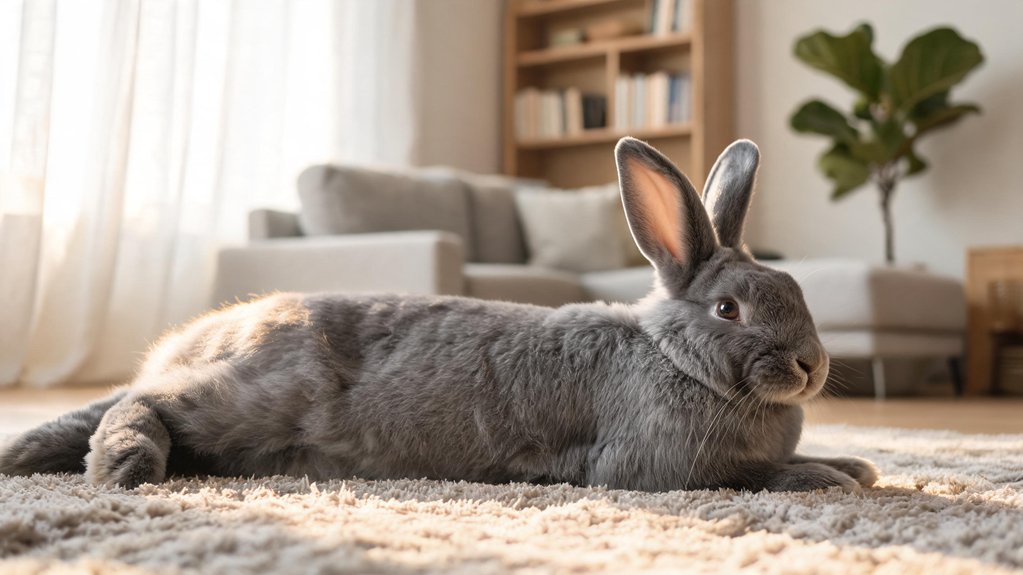
Genetics and early health set the tone for how long your Flemish Giant can stick around, so you’ll want to start with a reputable breeder and a clean bill of health from day one.
And because giant rabbits are more prone to weight and gut problems, you’ll feed high-fiber hay as the main food, then keep pellets and treats controlled, so your rabbit stays lean and keeps moving its gut.
But if you notice less eating, bloating, or sore hocks, you don’t wait—you call a vet right away, because fast treatment can make all the difference.
Genetics And Early Health
When you bring home a Flemish Giant, you’re also setting the stage for their lifespan.
Their genetics and early health shape how hard those big bones and organs have to work.
And because giant breeds mature fast, many live about 5–8 years, though some reach closer to 8–10 with great care.
Bigger body mass can strain the heart and speed up joint wear, so osteoarthritis and sore hocks become more likely.
Start early.
Between 8 weeks and 9–12 months they grow quickly, and by 18 months (or later) they’re fully grown.
Slow growth, good space, and prompt vet care help protect you.
Diet Quality And Weight Control
A great Flemish Giant lifespan starts with what you put in the bowl every day, not just how you care for them after they get sick. Aim for hay that makes up 70–80% of intake, and offer unlimited grass hay. A simple rule: give about your rabbit’s body weight in hay each day, support gut motility, and keep teeth worn down.
Next, measure pellets. Use about 1/4 cup per 4–5 pounds daily, or ~20 g per kilo. Choose plain timothy pellets only, skip seeds and sugary bits.
Feed 2–4 cups leafy greens daily. Avoid muesli, overfeeding, and rich treats.
Common Flemish Giant Health Issues to Watch?
Because Flemish Giants are big, you’ll want to stay extra alert to a few common health problems.
Because Flemish Giants are big, stay alert to key health issues like sore hocks, obesity, and GI stasis.
First, watch sore hocks, or “ulcerative pododermatitis,” which can start from hard, wire, wet, or dirty floors. Look for red heel patches, limping, or open sores, and get vet care fast if you see them.
Next, prevent obesity, which strains joints and increases arthritis, falls, and urine scald.
Also monitor gut slow-down, called GI stasis. Fewer droppings, no appetite, and belly discomfort mean urgent help.
Finally, keep an eye on dental overgrowth, plus heat stress and infections.
Weekly Grooming Routine for Flemish Giants
Once a week, grab a slicker brush or rubber grooming tool and brush your Flemish Giant all over—back, sides, belly, and hindquarters—to lift loose fur and spread natural skin oils.
While you’re at it, do a nail check, looking for sharp overgrowth, then plan a trim every 4 to 6 weeks so nails don’t scratch skin or snag on flooring.
And if you hit the heavy molting weeks, bump the brushing to several times a week so you’re not left with a fur “snowstorm” everywhere.
Coat Brush And Comb
Grab your grooming tools and plan on a simple weekly routine for your Flemish Giant—most weeks, one good brushing session is enough to lift loose fur from that dense, short “rollback” coat and keep the fur smooth and glossy.
Use a slicker brush with fine, flexible pins first, with gentle, short strokes in the direction of hair growth. Then add a rubber mitt to pull out shed clumps, and finish with a soft-bristle brush for shine.
During spring and fall molts, brush daily.
Comb with a wide-tooth tool to untangle minor mats.
Keep your work calm, brief, and stable, supporting spine and hindquarters.
Nail Check And Trim
Every week, set aside a quick moment to check your Flemish Giant’s nails, because those nails grow continuously and can turn into a problem before you notice. Check all four paws, plus dewclaws. You’ll usually need trims every 4–8 weeks, depending on growth and where your rabbit walks.
Next, gather large-breed clippers, styptic powder, and a towel for a “burrito” wrap. Ask a helper if your giant is 15–20 lb.
Trim only the tip, a few millimeters from the quick, the sensitive pink area, to avoid pain. For dark nails, use a flashlight or micro-trims.
How Much Hay Should a Flemish Giant Eat?
When it comes to feeding a Flemish Giant, hay should be your main “go-to” food every single day—think *unlimited*. You want grass hay always available, 24/7.
For adults, aim for hay to make up about 75–90% of total food intake. That means you don’t ration with a fixed cup. Instead, keep a steady supply, and refresh it at least once daily.
Offer grass types like timothy, orchard, oat, or brome. Long-stemmed grass hay supports a high-fiber diet that keeps digestion moving and helps wear down constantly growing teeth. Use several hay stations, or refill the rack several times, so they always have access.
A little waste is normal.
Pellets and Greens: How Much Per Day?
And if your rabbit’s growing, breeding, or in lactation, or if their body condition changes, you should adjust with your vet, because pellet needs and green amounts can shift for different life stages. Since extra body weight adds strain to the joints, keeping your giant rabbit at a healthy weight also supports long-term mobility, and if you’re concerned about joint comfort, ask your vet whether joint supplements are appropriate for your rabbit.

ESSENTIAL INGREDIENTS FOR A HEALTHY, ACTIVE LIFESTYLE: Made with high fiber Oxbow Timothy Hay to support healthy digestion
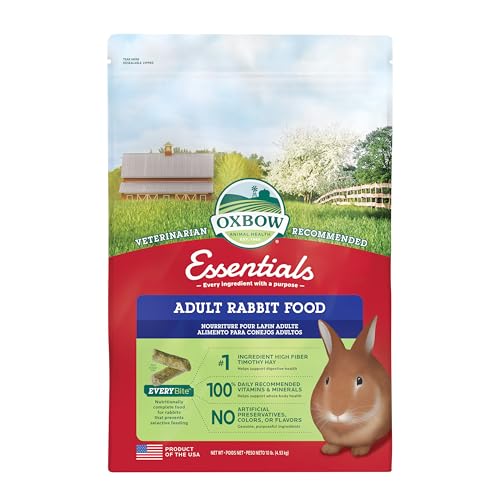
COMPLETE NUTRITION IN EVERY BITE: Oxbow EVERYBite foods are specially formulated to deliver balanced, complete nutrition in every serving; Each bite ensures your rabbit gets the essential vitamins and minerals needed for a healthy, active, and happy life

DAILY BUNNY PELLETS: Formulated with 100% of your pet’s daily recommended vitamins and minerals, this balanced rabbit food supports whole-body health, including strong immunity, healthy growth, and vibrant energy levels for rabbits
Pellet Portions By Weight
Pellets should never be a free-for-all, so start by measuring—especially if you’re wondering how much a giant like a Flemish Giant really needs.
For adult Flemish Giants (6–10 kg), offer 100–150 g fiber-rich pellets daily, with unlimited hay and daily greens.
For a large adult, plan about 1/4–1/2 cup pellets per day, and some guides allow up to 3/4 cup only as a supplement.
For most adults overall, pellets fit roughly 5–10% of total daily food.
Use the rabbit’s body condition, not guesswork.
Twice-Daily Greens Measurement
Twice-daily greens are your easiest way to keep a Flemish Giant’s digestion steady, and you don’t have to get fancy with weighing every leaf. Aim for the day’s total first, then split it.
Start with about 2 cups chopped vegetables per 6 lb body weight each day, or use 1–2 cups per 6 lb if stools get too soft. For a 15–20 lb Flemish Giant-type, that’s roughly 2–4 cups leafy greens daily.
Offer once in the morning and again in the evening, evenly. Use an adult-sized handful twice daily, plus at least 3 different greens.
Watch hay and poop consistency.
Adjusting Amounts With Vet
When you talk with your vet about pellets and greens, you don’t just “pick a number,” you fine-tune a measured daily amount to your Flemish Giant’s body condition.
Start with baseline guidance: pellets about 1/4 cup per 4–5 lb body weight, and greens roughly 2–4 cups daily, with unlimited hay as the base.
Then adjust. If your rabbit gains or loses weight, your vet may raise or lower pellets, often aiming near ~20 g pellets per kg.
Age, activity, and reproductive status matter too.
Feed pellets once or twice, measure greens, and track changes daily, then follow their plan.
Housing Size Rules for Flemish Giants
If you’re housing a Flemish Giant indoors, start by thinking “more floor space, more height, fewer shortcuts,” because these rabbits need room to stretch, flop, and stand up tall without bumping their ears or getting stuck.
Aim for at least 36″ wide × 36″ tall × 120″ long, about 3 ft × 10 ft, and provide around 30 sq ft usable floor as an absolute minimum.
Height matters, so they can stand fully upright.
Height matters—give your Flemish Giant enough space to stand fully upright without bumping anything.
For outdoors, set a baseline around 6′ × 2.5′ × 2.5′ high, and remember: bigger for pairs—double the space.

Perfect XXL Rabbit Cage Starter Kit for 1-2 Rabbits | Rabbit cage includes 2 large water bottles, 2 hay feeders, feeding bowl & elevated feeding area ideal for up to 2 rabbits or 3 guinea pigs!

3 DEEP removable tray can pull out from back or front, Better plastic quality, easy to clean !
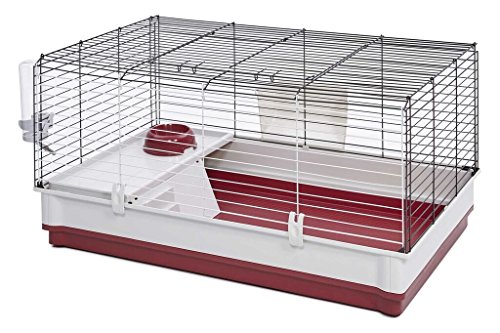
Rabbit Cage includes FREE hay feeder, water bottle, feeding bowl & elevated feeding area | Ideal for Rabbits, Guinea Pigs & Chinchillas
Exercise Tips That Protect Joints and Weight?
To protect your Flemish Giant’s joints and keep weight in check, you’ll want a daily routine that lets them move a lot, without beating up their hips, knees, or spine.
Aim for at least 3 hours of free-roam play each day. Split it into early morning, then late afternoon, so movement stays steady.
Choose soft, non-slip floors—rugs, foam mats, or textured runners.
Avoid slippery tile and bare concrete.
Use ramps instead of high jumps, and keep agility jumps low.
Add tunnels, low platforms, and digging boxes with shredded paper and hay.
Most importantly, encourage walking and exploring, not sprinting.
Litter Training and Bonding With a Flemish Giant?
Litter training a Flemish Giant isn’t magic—it’s planning plus patience, and you’ll be amazed how fast it clicks once you set them up right.
Start with a large box about 1.5× your rabbit’s body length, set in a favored corner.
Use rabbit-safe absorbent bedding under a thick hay layer.
Confine them to ~4×4 feet (8–12 sq ft) at first.
Move droppings into the box for a scent marker.
Clean misses with white vinegar or unscented enzymatic cleaner.
Guide them gently, add hay and treats.
Next, use calm daily time together to strengthen trust.
What Does a Flemish Giant Cost in the US?
Flemish Giant rabbits can cost a lot less than you’d expect at first, because pet-quality rabbits often run about $50–$300 in the US.
And if you’re comparing options, expect rescue fees around $50–$150, sometimes with spay/neuter and basic care included.
For show-ready or well-bred breeding stock, prices commonly land near $200–$500+.
But you might see “pick of the litter” offers up to about $399–$799, with a few listings reaching roughly $1,450.
Plan ahead, too: total ownership over 8–10 years often hits about $5,600–$12,000.
Choose wisely, so you can care kindly.

Protective Liner – This guinea pig cage is designed with a waterproof liner placed outside the frame, effectively preventing pets from chewing and ensuring long-lasting use.

STURDY & CHEW-RESISTANT: This rabbit hutch is built with solid wood and reinforced aluminum alloy framing—tough enough to stand up to chewing (perfect for active rabbits, guinea pigs, and small pets), weather damage, and daily wear. It won’t warp, crack, or break easily, ensuring long-lasting protection and a safe space for your furry friends, indoors or outdoors

3 DEEP removable tray can pull out from back or front, Better plastic quality, easy to clean !
Adoption vs Breeders: Where to Find One?
When you’re ready to bring home a Flemish Giant, you’ve basically got two solid paths—adoption or a breeder.
Start with shelters, rescues, and rabbit-focused organizations. You’ll sometimes find a larger-breed rabbit listed, like a 3-year-old Flemish Giant, with basic details such as age, sex, weight, and where it’s housed.
Plan to check listings, then visit during set adoption hours for a staff-led meet-and-greet and counseling.
And if you want specific lineage or colors, use vetted breeder directories by location, city, or federation membership, then contact breeders directly.

Spacious & Well‑Ventilated Small Pet Enclosure: Measuring 62"L x 22.6"W x 33.5"H with 10.93 square feet living space, this large rabbit hutch accommodates rabbits, guinea pigs, chinchillas and ferrets. Durable wire mesh ensures safety and steady airflow, creating a cozy ventilated habitat for small pets all year round

【Spacious Guinea Pig Cages】Designs 47″×24″×12″ (7.74 sq ft) with 4″×1″ safety gaps, this guinea pig playpen is roomy enough for two guinea pigs, while keeping curious paws safe with a secure top cover. It can be used as a bunny cage, hedgehog cage, chicken cage, quail cage, puppy playpen etc.
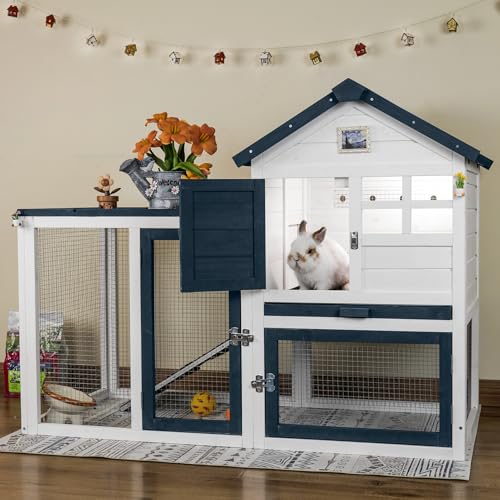
Paw-Safe & Comfy: This indoor bunny hutch features a paw-friendly wire floor (0.43" spacing) to prevent sore hocks, plus a non-slip ramp mat for safe climbing. A truly caring bunny hutch indoor
Yearly Budget for Hay, Vet Care, and Bedding?
Before you bring home a Flemish Giant, map out a realistic yearly budget for the “big three” ongoing costs: hay, vet care, and bedding.
Hay runs about $20–$40 per month, so expect roughly $240–$480 a year, or up to $360–$720 with higher estimates. Since timothy hay should make up the bulk of your rabbit’s daily diet, it is the most important hay to budget for.
Vet spending depends on how proactive you are. Plan around $75–$150 for a wellness visit, and add $30–$80 for vaccine boosters, with many guides putting annual vet/health near $500.
For bedding, budget $120–$300 yearly for paper or similar litter.
This keeps you ready to serve your rabbit well.

HAND-SELECTED TIMOTHY HAY FOR RABBITS, GUINEA PIGS, CHINCHILLAS, & SMALL ANIMALS to ensure long fiber strands and proper leaf to stem ratio

PROUDLY GROWN IN THE USA: Harvested fresh from Oxbow?s family of farms by our expert hay growers˜

Checklist: Space, Diet, and Vet Plan Before Bringing Home?
Start your plan a few days before pickup by lining up space, diet, and a vet schedule in one simple checklist.
Aim for at least 3 ft x 4 ft indoors, or upgrade to 4 ft x 6 ft, with solid non-wire floors and soft bedding.
Give doors and hides openings about 30 cm wide and 35 cm high, so joints stay safe.
Provide door and hide openings about 30 cm wide and 35 cm high to keep joints comfortable and safe.
Set hay as the daily core, unlimited high-quality grass hay 24/7 for fiber, gut help, and tooth wear.
Plan greens 2–4 cups daily for a 15–20 lb rabbit.
Measure pellets as a small supplement, not the main meal.
Book a rabbit-savvy vet for a pre-home check.
Who’s a Flemish Giant Best Suited For?
Flemish Giants are best suited for people who already know rabbits take commitment, not “just a cute pet.” This breed is often recommended for experienced, hands-on rabbit keepers because they’re truly big, their bodies need careful handling, and one wrong lift can hurt you or your rabbit.
You’ll also need to learn gentle, purposeful handling, so you prevent stress, nips, and scratches.
Choose a calm, supervised home if you have older kids, too, because they shouldn’t be picked up often.
And if you want low-stress lounging with other pets, set up slow, controlled introductions.
Finally, make sure you can offer space for daily floor time.
Frequently Asked Questions
How Much Is a Flemish Giant Rabbit in the US, Typically?
In the US, you’ll typically pay about $50–$150 for a pet-quality Flemish Giant kitten from a reputable hobby breeder. Show or breeding potential often runs around $150–$300+, and premium lines can cost $300–$500+.
What ARBA Weight Standards Apply to Flemish Giant Senior Bucks and Does?
You’ll hit ARBA minimums: Flemish Giant senior bucks must weigh at least 13 lb, and senior does at least 14 lb—so helping them stay qualified starts with the scale.
How Big Is a Full-Stretched Flemish Giant Rabbit Lengthwise?
A full-stretched Flemish Giant typically runs about 2.5 to 4 feet long nose-to-tail; many adults stretch roughly 2.5 feet, and larger specimens can reach close to 4 feet.
What Recognized ARBA Coat Colors and Markings Are for Flemish Giants?
Like a rainbow, ARBA recognizes seven solid coat colors for Flemish Giants: black, blue, fawn, light gray, sandy, steel gray, and white. Show-markings outside these solid self and agouti/ticking standards don’t qualify.
Do Flemish Giants Need Special Dental Care Due to Their Size?
Yes—you should give Flemish Giants the same dental vigilance as any rabbit, plus extra monitoring. Feed unlimited grass hay for proper tooth wear, avoid soft diets, and watch for reduced appetite, drooling, or slower eating.