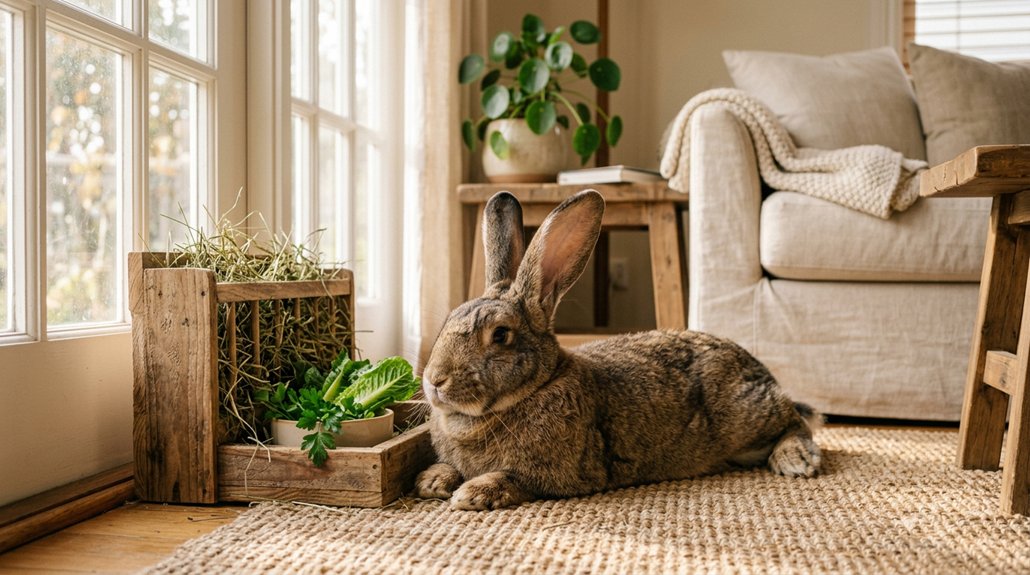
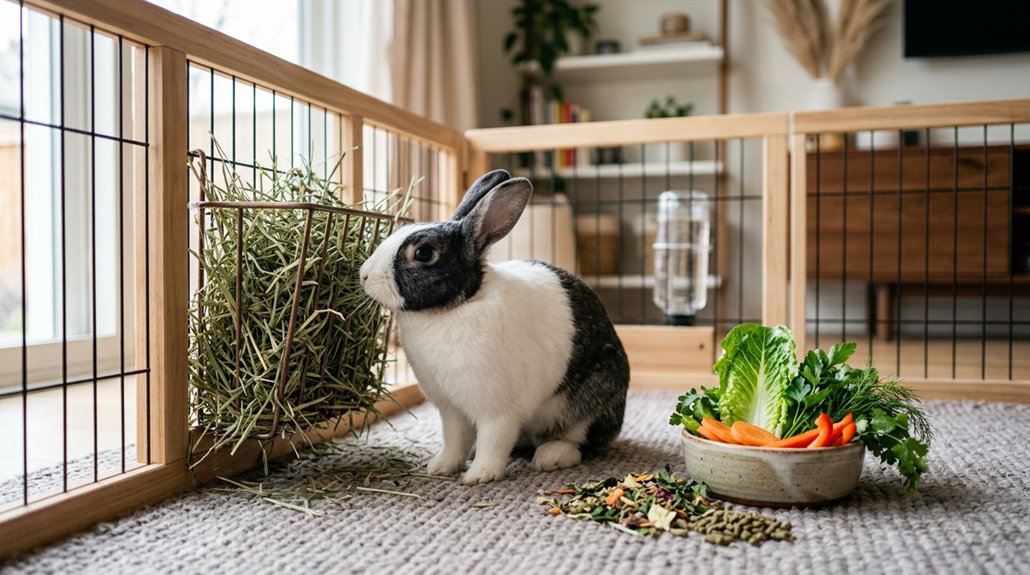
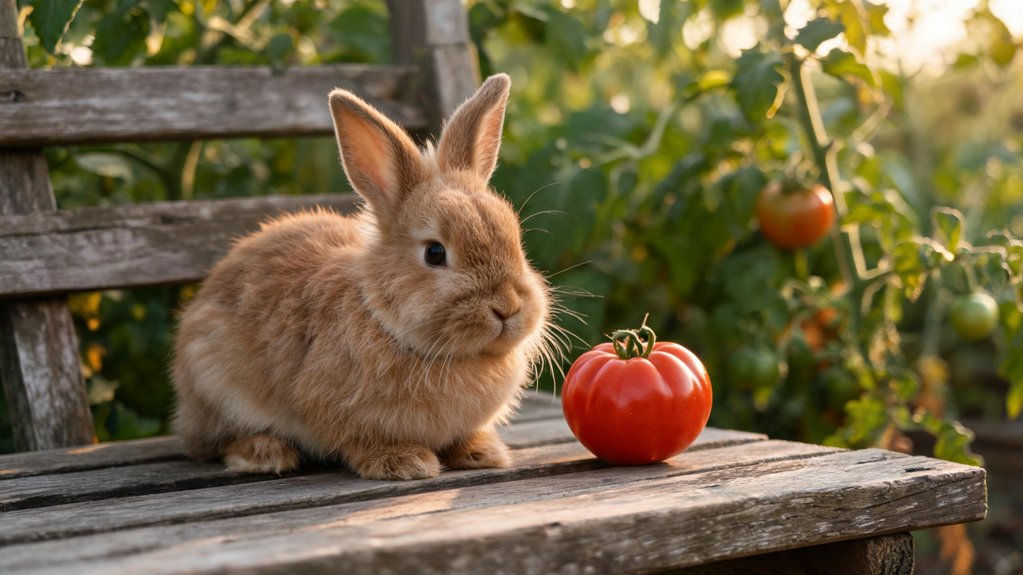
Yes, you can give your rabbit ripe tomato as an occasional treat. Offer only the red, fully ripe flesh, plain and washed, cut into tiny pieces, about 1–2 tablespoons for a 6 lb rabbit (roughly 1 teaspoon per 2 lb). Keep it to 1–2 times a week, and remove leftovers after a few hours. But don’t ever let them chew tomato leaves, stems, vines, or unripe green parts—they’re toxic. If you want safer snacks and the exact dos and don’ts, keep going.
Swift Summary
- Rabbits can eat ripe tomato flesh only, as an occasional fruit treat, not as a daily food.
- Feed tomatoes about once or twice per week, keeping total treats around 5–10% of the diet.
- Use tiny portions: roughly 1–2 tablespoons for a 6 lb rabbit, or half a cherry for 2–3 lb rabbits.
- Never feed leaves, stems, vines, calyx, or unripe green tomato; these contain toxic glycoalkaloids.
- Watch for soft stool/diarrhea after feeding; stop tomatoes and call a rabbit-savvy vet if symptoms appear.
Can Rabbits Eat Tomatoes? (Yes, as a Treat)?
Yes, you can give your rabbit tomatoes, but only as a treat—not as a daily food. If you’ve been wondering, can rabbits eat tomatoes safely? Yes, but keep it occasional. Start with ripe tomato flesh only, like a small slice or a few bite-sized cubes, about 1–2 tablespoons for a 6 lb rabbit. Aim for treat frequency fruit treats once or twice a week, and keep total treats, including tomatoes, under about 5–10% of the whole diet. Feed unlimited grass hay and daily leafy greens first, then remove any leftovers after a few hours. Watch for soft stool.
Which Tomato Parts Are Safe for Rabbits?
Stick to safe, ripe tomato flesh only for your rabbit—think bright red, fully ripe fruit, in tiny amounts like about 1 tablespoon per 2 lb of body weight. never assume unlisted plants are safe.
Skip every green plant part, including leaves, stems, vines, and any green-tinged tomato, because those are the toxic parts (nightshade plants can upset digestion).
Also, wash the tomato well, cut out the seeds, and serve plain—no salt, sugar, oil, or seasoning.
Safe Ripe Flesh Only
Ripe tomato flesh is the only tomato part you should offer your rabbit, and only as a small, occasional treat. Wash the tomato well, then cut off fully red, soft fruit flesh into tiny bite-sized pieces. You can include the red skin if it’s attached and the tomato is fully ripe, but skip seeds if you can, since internal parts link to higher nightshade compounds. Tomato stems and leaves are poisonous Offer just 1 cherry tomato, or a thin slice of larger tomato, no more than once or twice weekly. Too much sugar and water can upset their tummy, so keep it extra, not everyday.
Avoid Green Plant Parts
When it comes to tomatoes, treat the green parts like a hard “no.” Tomato leaves and stems aren’t safe for rabbits, because they contain nightshade compounds called glycoalkaloids (like tomatine and solanine) that veterinary and rabbit-care poison guides list as toxic.
Avoid vines, too, along with the green star-shaped calyx at the top.
Also skip any unripe, green, or partly green tomatoes, since they’re higher-risk.
Before you offer any tomato treat, check it carefully, and remove every leaf, stem, vine, and calyx piece.
Give only fully ripe tomato flesh, and serve in tiny bites.
Which Tomato Parts Are Dangerous for Rabbits?
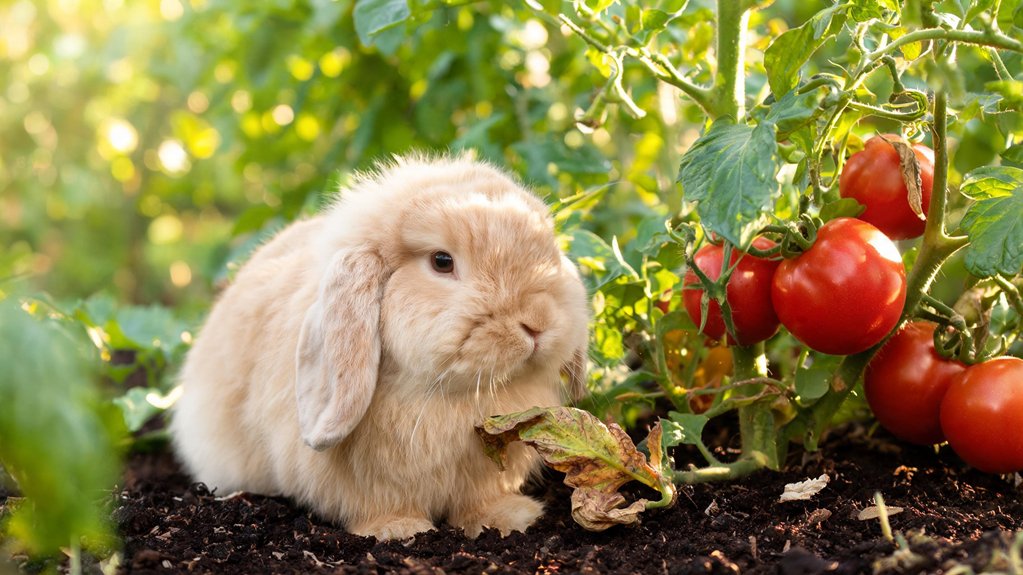
You should treat almost every green part of a tomato plant as a danger zone for your rabbit. Leaves, stems, vines, stalks, and even the star-shaped calyx at the top are “never feed” items. If your rabbit nibbles any, call your vet right away, because poisoning can cause diarrhea, vomiting, lethargy, and even tremors.
Next, be extra careful with unripe green tomatoes. Remove any fruit that still has green patches or is attached to stems. Also skip seeds and the seed-filled core.
Offer only a tiny amount of fully ripe red flesh, and only after you’ve removed seeds.
Why Tomato Leaves Are Toxic (Solanine/Tomatine)?
Tomato leaves can be risky because they’re loaded with chemical “defense” compounds called glycoalkaloids—especially α-tomatine and dehydrotomatine.
These compounds mess with cell membranes. They bind to cholesterol inside cells, then form clumps, which weakens the cell wall. That leads to leaks, irritation, and even cell death in the gut.
Next, in your rabbit’s intestines, tomatine can damage the lining, so more stuff gets absorbed. It can also interfere with nerves by blocking acetylcholinesterase, a normal “signal stop” enzyme.
If you’re serving veggies, skip tomato leaves.
Why Are Unripe Green Tomatoes Riskier?
Unripe green tomatoes are riskier because they carry much higher levels of the nightshade plant’s natural defense chemicals—glycoalkaloids, including α-tomatine and α-dehydrotomatine (these are compounds the plant uses to protect itself).
And because rabbits have smaller bodies, even “modest” amounts can hit harder.
In measurements, young green fruit can reach hundreds of mg/kg, while red ripe tomato flesh shows little to none.
Very young green tomatoes also show far higher α-tomatine than full-size red.
If you’re serving your rabbit, skip unripe fruit and keep to safe leafy greens daily.
How Much Ripe Tomato Can a Rabbit Have?
You can treat your rabbit to ripe tomato flesh, but keep it tiny—about 1 teaspoon per treat, or roughly half a cherry tomato for small rabbits (up to 2 cherry tomatoes for large breeds). Offer it just once or twice a week, not daily, and skip it completely if your rabbit’s on the small side or has a sensitive stomach.
Also, remove the seeds and any skin bits when you prep it, and never feed the leaves, stems, or green parts.
Portion Size For Adults
For most adult rabbits, keep ripe tomato portions tiny—think about 1 teaspoon to 1 tablespoon of chopped ripe tomato flesh per serving.
You should count tomato as fruit, so it counts toward their daily fruit treat cap.
As a simple rule, offer no more than about 1 teaspoon of fruit per 2 pounds of body weight, with tomato included.
For a typical 6-pound adult, that usually lands at 1 teaspoon to 1 tablespoon of ripe flesh.
Keep all fruit, including tomato, under roughly 5% of total daily food.
Serve once, then watch digestion and stop if stools change.
Limit Frequency To Weekly
Most rabbit owners do best if they treat ripe tomato as a weekly snack, not a daily one, so you keep it firmly in the “fruit treat” lane.
Plan on just one to two small bites per rabbit, once or twice weekly.
Don’t offer tomato back-to-back days.
Rotate it with other safe vegetables or fruits, so variety replaces repetition.
Ripe tomato flesh acts like a sugary fruit, so too much can upset digestion and crowd out hay, which keeps the gut working.
Start slowly, watch for soft stools, and if any issues pop up, cut tomorrow’s “tomato day” later.
Remove Seeds And Skin
Ripe tomato can work as a small, sweet fruit treat, but the “how much” matters—especially if you’re trying to keep seeds and skin exposure low. Aim for plain, fully ripe flesh.
Wash the tomato under running water, then cut into tiny bite-sized pieces, about 0.5 inch across. Trim off the green stem area, the calyx, and any green-tinged skin.
Now remove seeds and inner pulp as much as you can. Serve about one cherry tomato or a thin slice, or roughly one teaspoon of ripe flesh, per serving.
Keep it occasional, not daily.
How Often Can Rabbits Eat Tomato?
Tomatoes are a treat, so you should offer them only occasionally—about one cherry-sized piece, one to two times per week at most.
Since rabbits need unlimited grass hay, daily leafy greens, and only a small amount of pellets, you keep tomato out of the daily mix.
If your rabbit is under 12 weeks, skip tomato unless a vet says otherwise, and start with a tiny fingertip piece.
Then wait 24–48 hours, watch poops, appetite, and energy.
If your rabbit gets soft stools, is overweight, or loves lots of treats, feed tomato even less, or not at all.
What’s the Best Way to Serve Ripe Tomato?
You can offer ripe tomato as a tiny treat—think one bite-size cube or a small slice, and keep it plain (no salt, no sauce). Wash the tomato, then remove the skin and most seeds, because less bulk and less “seedy” stuff is gentler at first. Start with just a small portion once a week, and after you try it, watch for 24–48 hours for soft stools or belly upset.
Offer Small Ripe Portions
When you’re ready to share tomato as a treat, keep it small and perfectly ripe, because tomato belongs in the “occasional nibble” category, not a daily snack. Offer it once or twice a week.
Use body-weight portions: 2–3 lb rabbits get half a cherry tomato, or a thin wedge of larger tomato.
4–6 lb rabbits get one cherry tomato, or about 1 teaspoon to 1 tablespoon of chopped ripe flesh.
Big breeds, 8–10+ lb, can have up to two cherry tomatoes.
Always count tomato with other fruit. Serve bite-sized chunks, remove uneaten after a few hours.
Remove Seeds And Skin
Before you offer a tomato treat, focus on two safety steps: strip away the skin and keep the seeds to a minimum—because tomato flesh is the only part most rabbit care guides feel good about.
Wash the tomato well.
Then cut it open, scoop out the seeds and gel, and remove any green bits, stems, or the calyx.
If you want extra peace of mind, peel it too, since skin guidance varies and can upset sensitive bellies.
Serve only tiny, bite-size pieces, and offer this as an occasional treat, not a daily food.
Limit To Once Weekly
Stick with ripe tomato as a once-a-week treat, not a daily snack, for most pet rabbits. You’ll protect sensitive tummies by serving just one small bite.
Choose fully ripe, red flesh with no green shoulders, and skip any unripe green fruit.
Wash the tomato well, then trim off the stem end and green calyx completely.
Cut it into small wedges or cubes, about 0.5 inch (1.25 cm), and serve at room temperature after hay.
Offer no other sugary fruits that day.
Watch poop for 24 hours.
If stools get soft, pause fruit and call your vet.
Should You Remove Tomato Seeds?
Should you remove tomato seeds before you offer tomato to your rabbit? Yes, you should. Tomatoes are in the nightshade family, and the plant has natural alkaloids like tomatine and solanine, which are risky for small animals.
Seeds and the gel can carry similar alkaloids, and seeds are also harder to digest than soft tomato flesh.
If you want to serve a treat, scoop out the seeds, use only ripe, seedless tomato, and offer a tiny bite once in a while. Watch for diarrhea, loose stool, or less appetite, and call your vet if anything seems off.
Can Rabbits Eat Tomato Skin?
Ripe tomato skin can be part of a rabbit’s safe, occasional treat—as long as you’re offering only the red, fully ripe fruit and not any of the plant.
Serve it to a healthy rabbit, not as a daily food.
First, remove every stem, leaf, vine, and any green or unripe bits.
Then, give one small slice, or two bite-sized pieces, with the skin still on.
Keep it to once or twice a week, max.
Tomato fruit has lots of water, and sugars, so it won’t replace hay or leafy greens.
If unsure, skip it.
How to Introduce Tomato Without Diarrhea?
When you introduce tomato to your rabbit, go slow, because sugars and acid can upset their gut. Start with a ripe red or yellow, thumbnail-sized piece, cut small, no seeds, no stem or green areas. Wash it well.
Pick a calm day when hay and pellets stay the same. Offer one tiny piece, then wait 24 hours before you try more.
During the first two weeks, keep portions smaller than usual treat amounts, and give tomato only once or twice weekly. Add no other new fruits or veggies that day.
For rabbits under 12 weeks, or with soft stools, ask your vet first.
What Sugar and Water Do to Rabbit Tummies?
Sugar can be rough on a rabbit’s tummy, especially if you go beyond the “small treat” amount. Rabbits are hindgut fermenters, meaning they depend on high-fiber grass hay and big caecum fermentation.
When you add extra sugars or starches, they travel through the small intestine, then ferment fast in the caecum. That can upset gut bacteria, trigger hyperfermentation, and lead to soft stools or diarrhea.
Too little fiber also slows things down, causing gas and discomfort. Stick to daily hay, leafy greens, and only 1–2 teaspoons of low-sugar fruit, or about 2 tablespoons per 5 pounds.
Does Ripe Tomato Help Digestion at All?
Ripe tomato won’t really “help digestion” the way hay and leafy greens do, because tomato fruit has limited fiber for gut motility—the rough, high-fiber stuff that keeps things moving.
It’s also watery and a bit sugary and acidic, so if you offer too much, you can end up with soft stool, gas, or even a stasis risk when it displaces hay.
Keep tomatoes as a tiny treat only—think a few small bites at a time, no more than a couple times a week—and make sure your rabbit still eats plenty of grass hay every day.
Limited Fiber For Gut Motility
Yes, ripe tomato *adds a little* fiber, but don’t count on it to “fix” digestion.
You should know that tomatoes are low-fiber, so they don’t meaningfully boost gut motility, which means the steady movement that keeps things moving.
Your rabbit’s real fuel is unlimited grass hay, plus daily leafy greens.
Hay provides the tough, rough fiber that supports cecal fermentation, the gut process where microbes help maintain regular motion.
Tomato can be an occasional, tiny supplement—think 1–2 small pieces.
If you swap hay for tomato, you raise stasis risk.
High Water, Sugar Risk
Usually, tomatoes *sound* like they could help digestion, since they’re full of water—but that same high-water load can push your rabbit toward soft, runny stool.
And if you offer too much, you may also reduce how much water your rabbit drinks on its own, which can further change poop consistency.
Ripe tomato fruit also brings more sugar and carbs than hay and leafy greens.
Too many quick carbs can upset gut balance, leading to gas, bloating, and diarrhea.
If you serve tomato at all, stick to one small slice, once or twice weekly for an adult.
Watch for any tummy trouble, then stop.
What Vitamins and Antioxidants Are in Tomato?
Tomatoes bring a tasty mix of vitamins and antioxidants to the plate—think vitamin C for your immune system, vitamin A precursors for healthy eyes, and vitamin K for blood clotting and bone support.
Tomatoes offer vitamins and antioxidants—vitamin C, vitamin A precursors, and vitamin K—to support immunity, vision, and healthy blood and bones.
One medium raw tomato also brings folate, plus small B-complex vitamins like thiamin and B6.
Antioxidants help protect cells from damage.
Red tomatoes shine with lycopene, with beta-carotene, and lutein plus zeaxanthin for eye-area pigments.
The peel and pulp carry phenolic compounds, like caffeic and ferulic acids.
When you serve rabbits, keep tomatoes tiny—treat-sized.
What Signs Mean Tomato Upset or Poisoning?
If your rabbit has eaten tomato—especially tomato leaves, stems, vines, or green (unripe) parts—watch closely for “nightshade” type toxicity signs, because the leafy portions are the bigger concern.
Start with the gut. Look for soft stools, watery diarrhea, or a sudden change from normal dry droppings. Notice belly bloating, gas, hunched posture, and a painful tummy when you gently palpate.
Check for fewer or no fecal pellets, reduced gut sounds, or stopped eating.
Next, watch behavior: lethargy, hiding, teeth grinding, drooling, lip-licking, or wobbliness.
Also watch for fast, labored breathing, dilated pupils, tremors, seizures, collapse, or dehydration.
If food refusal lasts over 12 hours, treat it as urgent.
When to Call a Vet After Plant Ingestion?
If your rabbit seems off after any tomato plant nibble, call your vet right away—don’t wait for signs, since poison can start fast.
Watch appetite and droppings closely for the next few hours, and if you see fewer droppings, diarrhea, or no interest in food, get same-day advice.
And if you can, bring a piece of the plant or clear photos, plus tell them what part was eaten (fruit vs leaves/stems) and about how long ago it happened.
Immediate Vet Advice If Unwell
When a rabbit eats or chews an unknown plant, you shouldn’t wait for things to “look better.”
Call a rabbit-experienced vet right away, because with toxic plant exposure the danger is hard to measure at home, and some poisons can cause signs within hours.
Even if you think it was just a little, don’t gamble.
If you notice tremors, twitching, incoordination, or seizures, treat it as an emergency.
Also act fast for labored or irregular breathing, pale gums, weakness, collapse, or paralysis.
Watery or repeated diarrhea, hunched posture, teeth grinding, or a bloated, painful belly need urgent help too.
Monitor Appetite And Feces
After a rabbit eats or chews an unfamiliar plant like tomato fruit, leaves, or vines, you can’t rely on “maybe it’ll pass.” Start by closely watching appetite and droppings for at least 24 hours, because early gut slowdown can show up fast and you’ll spot it sooner than later.
Compare today’s meals to normal: hay, pellets, and greens. Check pellet number, size, and shape—healthy rabbits make abundant, large, round droppings. Note any softer stool, fewer pellets, mucus, or blood.
If your rabbit won’t eat, drink, or produce feces for 6 hours, call a rabbit-savvy vet now.
Bring Plant Samples Promptly
Even though you might want to wait and see, plant poisoning doesn’t give you much warning time.
If your rabbit chewed unknown or possibly toxic greenery, call a vet or emergency clinic right away—don’t “watch and wait.”
While you’re on the phone, bring plant samples promptly.
Put fresh clippings, leaves, or flowers in a sealed bag.
If you can’t safely collect them, snap clear photos and include the growing spot.
If ingestion involves very toxic houseplants like yew, oleander, or dieffenbachia, treat it as an emergency immediately, even before symptoms.
Share timing, amount, and signs like drooling, weakness, or breathing changes.
What Tomato Products Should Rabbits Avoid Completely?
Because rabbits can’t process tomato the way we do, you should treat *most* tomato products as a total no-go.
Skip tomato leaves, stems, vines, flowers, and unripe green fruit forever. And keep seeds, calyces, and roots out of their reach too.
Next, avoid processed foods: no ketchup, tomato sauce, canned tomatoes, or tomato soup.
They often include added sugar, salt, and additives that can upset bellies.
But also steer clear of seasoned dishes, pasta or casserole sauces, salsas, and jarred meals.
These include onion, garlic, spices, and vinegar.
Finally, don’t offer tomato chips or “dried” seasoned snacks.
Can Baby Rabbits Eat Tomatoes Safely?
When you’ve skipped all tomato leaves, stems, vines, and green fruit (that stuff is a hard no), you can focus on what tomato *fruit* means for babies.
First, don’t offer any tomato until your rabbit is about 12 weeks old.
Their gut flora, the helpful bacteria in the digestive tract, is still developing, so sugary, juicy treats can trigger diarrhea or gas.
Once your bunny handles leafy greens well, you can offer only fully ripe, seedless red tomato flesh, a tiny 0.5-inch slice, very occasionally, no more than once or twice a week.
Always monitor stool.
Can Pregnant Does Eat Tomato as a Treat?
Your pregnant doe can have a small amount of ripe tomato fruit as a rare treat, but you’ve gotta keep it small and infrequent.
Stick to a hay-first diet: unlimited grass hay, daily leafy greens, and normal pellets.
Then, after she’s eaten her usual hay and greens, offer just a small slice, or a few bite-sized pieces.
Aim for occasional only, not daily.
Tomato fruit is generally edible, but it’s acidic, and too much can cause softer poop.
Also, never risk leaves or stems.
If she’s diarrhea, stop treats and call your rabbit-savvy vet.
Best Fruit Alternatives to Tomato for Rabbits?
If you’re looking for a safer “tomato-style” treat while still keeping your rabbit’s diet on track, fruit options can scratch that itch without risking the acidic bite.
Pick berries first: strawberries, blueberries, raspberries, and blackberries. Serve fresh, washed, and stem-free. Give one medium or large strawberry, or a small handful of blueberries, once to a few times per week.
Next, offer apple or pear slices, but remove stems, cores, and seeds, because pips contain toxic compounds. Use about 1/8 per treat, only once or twice weekly.
Finally, try small watermelon cubes, seeds removed, as an occasional 1-inch serving.
Frequently Asked Questions
Can Rabbits Eat Cherry Tomatoes, or Only Larger Ones?
Yes, you can feed ripe red cherry tomatoes as an occasional treat, just like larger ripe tomato flesh. Don’t feed unripe green ones, or any leaves, stems, or vines. Remove the stem/calyx and cut away green parts. Feed once or twice weekly.
How Do I Tell if My Tomato Is Fully Ripe Enough?
Check that your tomato’s color looks evenly mature, the skin shines, it gives slightly when pressed, it smells pleasantly near the stem, and it detaches easily with a gentle twist. That’s the ripe “ready-to-serve” sign.
Are Cooked Tomatoes Safe, or Should I Only Use Fresh?
Cooked tomatoes aren’t safe for rabbits. You should only offer tiny amounts of fresh, fully ripe raw tomato flesh. Avoid canned, sauced, seasoned, or green parts, and remove seeds, stems, and attached green calyx.
What Should I Do if My Rabbit Eats Tomato Leaves?
If your rabbit eats tomato leaves, remove it from the plant immediately, don’t delay. Check for symptoms, save plant pieces, and call an experienced rabbit vet right away. Keep your rabbit calm and monitor poop, appetite, and energy closely.
Can Rabbits Eat Tomato Treats Daily, or Is Weekly Better?
Weekly is better—daily tomato treats can upset digestion. Offer only ripe red flesh, tiny portions, once or twice weekly at most. If you notice softer droppings or less hay, stop and switch back to greens and unlimited hay.