DIY rabbit toys can be super cheap and safe. Start with plain toilet-paper or paper-towel rolls, fold the ends, and stuff with 1–2 tablespoons of hay or a few pellets. Punch holes in untreated cardboard boxes to make tunnels and ramps.
For foraging fun, use uncoated brown paper bags, fill two-thirds with grass hay, then hide pellets inside. Avoid glue when possible, and check for splinters. Rotate toys daily and replace when soaked or shredded—keep going and you’ll learn more tips.
Swift Summary
- Use safe, non-toxic materials like untreated cardboard, plain paper, dried hay, and natural plant fibers for chewing.
- Build free enrichment tunnels and climbs using toilet-paper or paper-towel rolls, punched boxes, and folded-end treat tubes.
- Fill tubes or parcels with small amounts of hay and a few pellets to encourage foraging without replacing diet.
- Avoid risky woods and hazards; inspect for splinters, cracked parts, and loose strings, and remove damp or heavily chewed items.
- Prefer friction-fit tabs or folding instead of glue; use only non-toxic, water-soluble glue sparingly if absolutely required.
Build DIY Rabbit Toys With Safe, Cheap Materials
When you create DIY rabbit toys, prioritize safe, non-toxic materials that promote healthy chewing habits and prevent potential blockages. Look for untreated cardboard, plain paper, dried hay, and natural plant fibers, which are affordable, accessible, and perfectly safe for rabbits to nibble, shred, and explore. check items regularly By doing this, you can catch damage early and replace toys before they become unsafe. To enhance your rabbit’s play area, punch holes in plain cardboard boxes to craft tunnels that encourage exploration and activity. Place toilet-paper or paper-towel cores filled with nutritious timothy hay to provide both entertainment and healthy snacking options. Additionally, shredded kraft paper can be spread in a tray to create a digging substrate, satisfying your rabbit’s natural digging instincts while keeping them engaged. Stacking cardboard tubes into pyramid formations makes excellent climbing structures, stimulating physical exercise and mental enrichment. These cost-effective, DIY rabbit toys are designed to be simple, safe, and snackable, providing an ideal solution for rabbit owners seeking affordable ways to enrich their pet’s environment without exposing them to toxic, soft plastics, painted items, or glossy finishes. Focus on building playful, safe enrichment tools that promote your rabbit’s well-being while maintaining a budget-friendly approach.
Choose Chew Wood For Better Dental Wear
Choosing the right chew wood is essential for promoting optimal dental wear in rabbits. By providing safe, high-quality hardwood options, you support healthy, controlled abrasion of their continuously growing teeth. This helps maintain proper tooth alignment and reduces the risk of malocclusion. Using reliable chew sticks and natural chew wood made from safe hardwoods like apple, pear, willow, birch, maple, hazel, or kiln-dried pine ensures your rabbit receives gentle yet effective grinding against tooth edges, preventing dental overgrowth and related health issues. Remember, hay accounts for approximately 80% of your rabbit’s chewing activity, playing a major role in maintaining dental health. However, supplementing with carefully selected chew wood offers focused resistance that encourages proper tooth wearing. For best results, incorporate a mixture of softer woods such as birch and aspen, alongside harder options to create a balanced chewing environment. Avoid using any potentially toxic or unsuitable woods like cherry, plum, cedar, pine fresh, oak, or any toxic plants. Always dry branches thoroughly for days to weeks before offering them to your rabbit, ensuring safety and preventing mold or bacterial growth. Investing in high-quality, appropriately chosen chew wood is a simple, effective solution to support your rabbit’s dental health proactively.
DIY Rabbit Toy Safety: Avoid Glue & Splinters
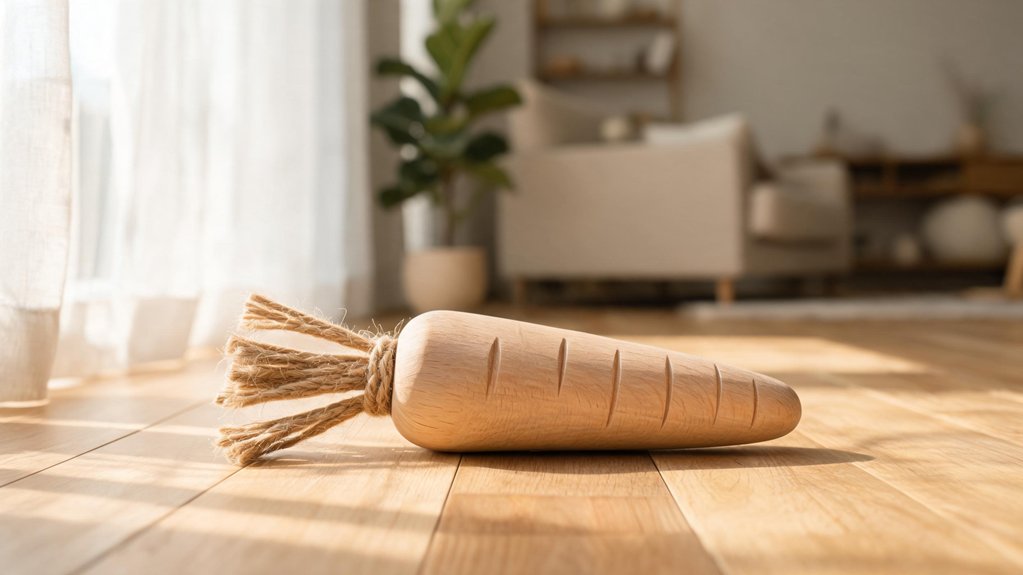
Before you build or buy a DIY rabbit toy, focus on two critical safety essentials: avoid using glue and prevent splinters. Serving your rabbit’s safety and well-being begins with assembling toys that feature secure fastening methods such as folding, twisting, or friction-fit tabs, instead of relying on glue. If gluing is absolutely necessary, utilize only non-toxic, water-soluble glue, applying it sparingly to avoid excess and ensuring that glued areas are out of reach from your rabbit’s chewing habits. Next, thoroughly inspect all toy components for hazards. Steer clear of cracked or splintering wood, as these pose a risk of injury or mouth irritation. Avoid plywood scraps with layered edges, which can splinter easily. Opt for smooth, sanded surfaces to protect your rabbit’s paws and mouth during play. For added safety, choose commercially available, rabbit-safe scratching posts, wheels, and cat scratchers designed specifically for rabbit use—these snag-free, purpose-built items help prevent injury and promote healthy activity. Purpose-built rabbit chew toys also give your rabbit safe chewing options that support enrichment and activity. Include only non-toxic, rabbit-safe materials, since rabbits may chew and ingest small amounts during play.
Use Cardboard Rolls For Free Chewing And Climbing
Grab a plain toilet paper or paper towel roll, fold the ends in to securely hold treats and hay, creating an interactive enrichment toy for your rabbit. Fill the roll partially with approximately 1–2 tablespoons of hay or a few pellets to ensure the “treasure” comes out smoothly, encouraging natural foraging behavior without causing frustration. Monitor your rabbit’s chewing activity to maintain the roll as a safe, stimulating enrichment item rather than a primary dietary source.
Enhance your rabbit’s environment by stacking several sturdy cardboard rolls at different angles, designing simple tunnels and climbing spots that promote physical activity and mental stimulation. Regularly replace these rolls when they become damp or excessively chewed to preserve their structural integrity and ongoing engagement. Implementing these low-cost, eco-friendly cardboard solutions efficiently transforms your rabbit’s habitat into a dynamic space that fosters healthy chewing habits and active exploration, optimizing both enrichment and safety.
Fold Ends For Secure Treats
Fold the ends on your sturdy, eco-friendly cardboard roll treats to transform a basic toilet paper tube into a secure, engaging puzzle toy for your small pet.
Many pet owners wonder, “Do rabbits utilize exercise wheels?” While some do, this DIY treat dispenser emphasizes natural foraging and chewing behaviors, promoting health and mental stimulation.
Choose a clean, plain cardboard tube free of glossy coatings or inks to ensure safety.
Carefully fold one rim end, making four evenly spaced cuts to create tabs that fold inward and overlap securely.
Enhance the puzzle’s appeal by adding a handful of nutritious pellets, a pinch of aromatic dried herbs, or fresh hay inside the tube.
Then, fold the other end shut using crescent-shaped folds to minimize gaps and prevent the contents from spilling out.
Supervised initial use is recommended, and dispose of the tube when it becomes heavily shredded to maintain your pet’s safety and continued engagement.
This DIY puzzle offers a cost-effective, environmentally friendly alternative to commercial toys, encouraging natural foraging and chewing behaviors.
It’s a smart addition to your pet enrichment routine, fostering activity, reducing boredom, and supporting overall well-being.
Stack Tubes For Tunneling Climbs
Once you’ve acquired plain cardboard tubes, you can quickly transform them into an engaging mini tunnel-and-climb play area for your rabbit, enhancing its environment within just a few minutes. Stack large-diameter rolls strategically to create comfortable digging zones and durable chewing stations, providing your rabbit with safe outlets for natural behaviors.
This setup not only offers entertainment but also promotes mental stimulation and physical activity, which are essential for your rabbit’s overall well-being.
To ensure stability and safety, place the heavier tubes or cardboard boxes on the bottom to prevent tipping and collapse. Carefully leave clear entrances and exits—avoid creating corner traps that could cause frustration or injury.
You can also angle a few tubes like ramps to encourage climbing or join tubes to cardboard boxes with cut-out holes to mimic burrow-style tunnels, offering a realistic and enriching habitat.
Incorporate hay-stuffed sections within the tubes and boxes to promote foraging, satisfying your rabbit’s instinctual desire to search and nibble. Regularly replace chewed or soiled cardboard components to maintain a clean and hygienic environment.
These customizable tunnel and climbing solutions are an affordable and effective way to upgrade your rabbit’s indoor habitat, ensuring a safe, stimulating, and comforting space that supports your pet’s natural behaviors and overall health.
Make Hay Foraging Toys To Keep Them Busy
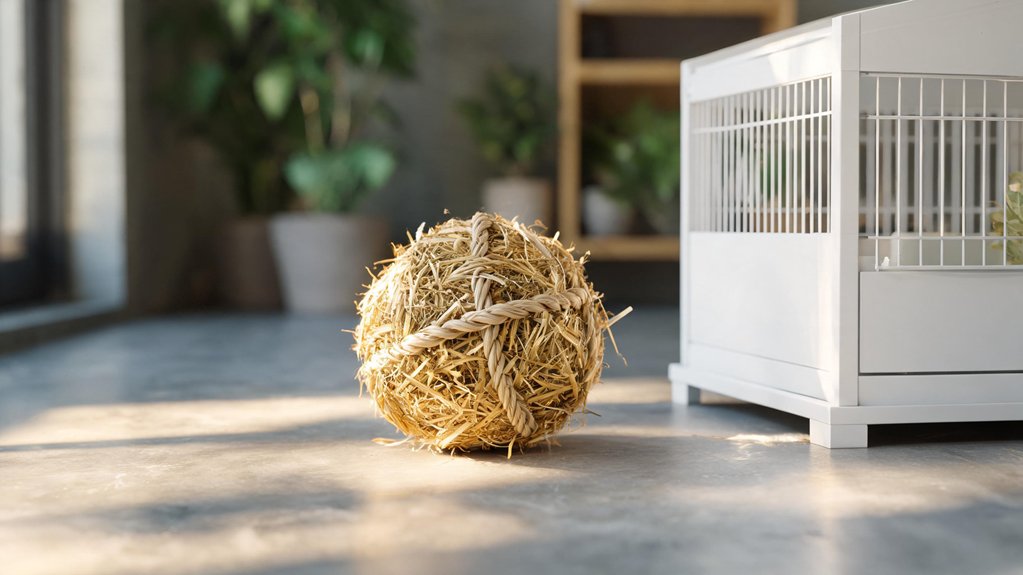
Make hay-filled treat tube rolls, paper bag unwrap parcels, and woven hay shredding balls to provide engaging, DIY enrichment options that keep your rabbit occupied and prevent boredom. These durable, safe toys encourage natural foraging behaviors and promote mental stimulation, essential for overall health and happiness. For a store-bought alternative, a rabbit foraging mat can also encourage your rabbit to search for hidden treats scattered within its textured surface.
To maximize their effectiveness, use high-quality, sweet-smelling hay and pack it snugly inside each tube or bag. Tie the woven hay balls loosely so your rabbit can pull, shred, and snack safely, ensuring they remain engaged for longer periods. Aim to set up one new toy daily to maintain variety and interest.
Refresh each toy with fresh, dust-free hay every 20 to 30 minutes as your rabbit interacts with and cleans out the contents. Regularly rotating and replenishing these DIY toy options helps sustain your rabbit’s curiosity and provides a cost-effective, natural way to satisfy their chewing instinct and reduce destructive behavior.
Hay-Filled Treat Tube Rolls
Hay-filled cardboard tube rolls are among the simplest, most cost-effective DIY rabbit toys you can create at home. These engaging foraging toys effectively stimulate your bunny’s natural foraging instincts, providing enrichment and entertainment.
Use plain, untreated toilet or paper towel tubes, ensuring they’re free from tape, staples, and glossy finishes to guarantee your rabbit’s safety.
Carefully remove any adhesives and smooth any rough edges to prevent injury. Fill the tubes densely with long-strand, rabbit-safe grass hay such as timothy, meadow, or orchard hay. This filling creates a satisfying challenge that encourages natural foraging behavior.
Remember, these toy rolls are designed as play and enrichment tools, not hay storage solutions.
Stuff the tubes tightly and leave the ends open to allow access, or fold the tabs to slow your rabbit’s retrieval, increasing the toy’s durability and engagement.
Offer this interactive toy during daily ration times to promote mental and physical activity.
Supervise your rabbit while they play and remove the toy if it becomes soggy, heavily soiled, or chewed apart to ensure ongoing safety and hygiene.
This simple, cost-effective foraging toy requires no wheels or complex mechanisms, making it an essential addition to your rabbit’s enrichment routine and a natural way to keep your pet entertained and stimulated.
Paper Bag Unwrap Foraging Parcels
If you’re seeking a fun, cost-effective way to keep your rabbit engaged with enriching foraging activities, paper bag unwrap parcels are an excellent solution. These parcels utilize plain, uncoated brown paper bags or natural packing paper, which are untreated, safe for shredding, and free from harmful dyes, gloss coatings, heavy inks, tape, staples, or exposed glue.
For optimal safety and engagement, ensure that all bag handles are completely removed before use.
To create a stimulating foraging experience, fill a standard lunch or grocery-sized paper bag approximately two-thirds full with high-quality grass hay, providing essential fiber and digestion support.
Add several handfuls of crumpled, untreated packing paper to introduce tactile dig-and-shred textures that encourage natural foraging behaviors.
Place a portion of your rabbit’s nutritious pellets at the bottom of the bag to incentivize exploration and reward curiosity.
Next, loosely fold the top of the bag, then strategically bunch and fold the paper around wrapped, untreated treats—such as dried herbs, fruits, or veggies—to challenge your rabbit’s problem-solving skills and prolong activity.
Allow your rabbit to unwrap and find the hidden treats for a mentally stimulating experience, which also helps prevent boredom and supports overall well-being.
For a comprehensive enrichment setup, combine these foraging parcels with essential accessories like scratching posts and exercise wheels.
These additional items promote healthy physical activity, muscle development, and natural behaviors, ensuring your rabbit remains active, content, and well-rounded.
Implementing these engaging foraging parcels alongside structural toys offers a balanced approach to your rabbit’s enrichment plan, making every day more enriching and enjoyable.
Woven Hay Shredding Balls
After your paper bag unwrapping, parcels, and gift deliveries, keep your rabbit engaged and active with woven hay shredding balls. These innovative, edible foraging toys are designed to promote mental stimulation and natural chewing behaviors. The woven hay balls roll easily, get nudged around, and invite your rabbit to shred and nibble on the hay fibers, providing both entertainment and health benefits.
Constructed from untreated woven materials such as durable willow, natural seagrass, or high-quality grass hay, these toys are free from unsafe adhesives, staples, or metal hardware, ensuring your rabbit’s safety during play. Aim for a hollow sphere shape and stuff the interior with loose-cut timothy or marigold hay—these fillings serve as tasty rewards and encourage foraging instincts.
Place the woven hay shredding ball in your rabbit’s enclosure for 30 to 60 minutes daily, alongside unlimited access to loose hay, to maximize engagement.
Chewing on fibers like these supports side-to-side tooth wear, helping prevent overgrowth and dental issues, while also aiding digestion through increased fiber intake. Rotating various textural options, such as different woven materials or fillings, provides variety and continuous mental stimulation.
Even with scratching posts and exercise wheels, incorporating woven hay shredding balls offers a comprehensive solution to keep your rabbit’s mind active, satisfy natural instincts, and promote overall oral and digestive health. Make these engaging foraging toys a core part of your pet’s enrichment routine for a healthier, happier bunny.
Create Shredding Toys From Paper Bags And News
Paper bags and newsprint are some of the most accessible and engaging DIY shredding toys you can create for your rabbit, providing enrichment and mental stimulation. Your primary task is to set up these toys safely and securely for your pet’s enjoyment.
Start with high-quality, plain brown paper lunch bags made from durable, non-toxic materials. Be sure to choose bags without handles, as handles can pose a safety risk by tangling your rabbit’s legs or neck during play.
Fill each bag with a nutritious mixture of hay, shredded paper, and a few healthy treats to encourage activity and exploration. Fold the top of the bag securely to contain the contents and prevent spillage, enhancing safety and durability.
For additional entertainment, crumple or loosely roll torn newsprint into a lightweight tunnel or ball, fostering a more dynamic environment.
When using shredded newspaper, ensure all materials are safe for rabbits by removing glossy covers, inks, or coatings that could be harmful if ingested. Avoid the use of tape, spray adhesives, or heavily printed inks on newspaper to minimize health risks.
Monitor your rabbit during play sessions and remove the toys after one day if they’re heavily shredded or if your rabbit has ingested a significant amount of the shredded materials. This simple, cost-effective solution increases dietary enrichment and habitat stimulation, promoting your rabbit’s overall well-being and natural foraging instincts.
Turn Wicker Baskets Into Digging And Gnaw Stations
Pick untreated wicker only, such as natural willow or authentic rattan, and avoid anything that’s painted or chemically treated. These natural materials are safer and more appealing to your rabbit, encouraging natural digging and gnawing behaviors.
Fill the wicker basket generously with hay, creating an engaging and nutritious environment that allows your bunny to dig and munch simultaneously, promoting healthy activity and mental stimulation.
Ensure that any loose ends or irregularities are regularly checked and secured by inspecting for sharp splinters or broken pieces every few days.
Maintaining a sturdy, well-kept basket minimizes the risk of injury and extends its lifespan as a safe, interactive digging and gnawing station. By keeping the basket in optimal condition and removing broken bits promptly, you provide your rabbit with a reliable and enjoyable enrichment item that encourages natural instincts and active play—making it an essential addition to your pet’s safe and stimulating environment.
Choose Untreated Wicker Only
Choose only untreated wicker for your rabbit’s play and enrichment area. Select natural plant fiber wicker options such as willow, seagrass, rattan, or water hyacinth that are free from preservatives, stains, varnish, glue, or chemical fire retardants. Ensuring these materials are untreated guarantees your rabbit’s safety and promotes a natural, healthy environment.
When shopping for wicker baskets, avoid products with sharp staples, loose bits, or tiny parts that could break off and pose a choking hazard. Opt for medium to large-sized baskets, providing ample space for your rabbit to hop in and out freely, encouraging active play and exploration.
Regularly check the basket daily for signs of chewing or weakening of the weave, and discard the basket once pieces are chewed off or the structure becomes unsafe.
A dedicated chewing and scratching station made from all-natural wicker offers an engaging solution to satisfy your rabbit’s natural instincts to bite and scratch. These durable, chemical-free wicker baskets not only serve as play objects but also help promote healthy teeth and claws.
Keep your rabbit entertained and prevent destructive chewing on household items by providing irresistible, all-natural wicker solutions designed specifically for small mammals like rabbits.
Add Hay For Digging
Once you’ve prepared an untreated wicker basket, enhance your rabbit’s enrichment and mental stimulation by adding a thick, fluffy layer of hay, creating an engaging digging and gnawing station your rabbit will genuinely utilize. Aim for a deep layer, approximately 6 to 8 inches, allowing your rabbit to sink in and burrow comfortably, promoting natural behaviors and reducing stress.
Place the basket on a protective surface such as sturdy cardboard, a litter tray, or a solid mat to prevent hay from scattering on your flooring. Incorporate shredded paper or fleece scraps into the hay to provide softer resistance and additional sensory stimulation during digging activities.
For added foraging excitement, scatter small amounts of pellets, fresh herbs, or dried herbs on top of the hay.
Position this enriching station in an easy-to-clean, accessible location within your rabbit’s habitat, and make sure to replace the hay weekly to maintain freshness and continued engagement.
Incorporating this solution into your rabbit’s environment encourages natural digging instincts, promotes physical activity, and supports overall well-being, making it an essential addition to your comprehensive rabbit care and enrichment routine.
Seal Loose Ends Securely
After you’ve constructed the hay-digging layer for your rabbit’s nesting environment, take a moment to reinforce the safety and durability of the basket itself. Since rabbits are known to chew and paw at anything within their reach, it’s essential to inspect every inch of the wicker or woven material for potential hazards. Carefully trim frayed ends flush with the weave and smooth any rough spots using fine sandpaper to prevent splinters or injuries.
Ensure all loose strands are gently bent back into the weave, avoiding the addition of hardware such as staples, nails, wire, or plastic trims that could pose risks. Refrain from using tapes, hot glue, paint, or varnishes during repairs to maintain a non-toxic environment suitable for your pet.
Additionally, remove all labels, tags, threads, and sticky residue that could tempt the rabbit to chew or swallow harmful materials.
In cases where the basket has major structural issues—such as staples, nails, wire, significant breaks, or broken parts—dispose of the item to prevent injury.
Instead, secure the rim by tying it tightly with natural materials like timothy rope or twine, which are safe and durable for rabbit environments.
Remember, always supervise your rabbit when using the basket initially to ensure safety and stability, providing a secure habitat that promotes natural behaviors while minimizing potential hazards.
This proactive approach ensures your rabbit’s comfort, safety, and well-being, making the basket a reliable addition to your pet’s living space.
Set Up Hide-And-Seek Boxes With Entry Holes
To set up effective hide-and-seek boxes for your rabbit, begin with a simple, sturdy cardboard refuge that allows your rabbit to hop inside fully and feel securely hidden. Choose plain, uncoated cardboard free of shiny finishes to ensure safety and comfort. Carefully cut one or more appropriately sized, round entry holes—designed to match your rabbit’s size—making sure the box is large enough to allow your rabbit to comfortably turn around inside.
If you keep multiple rabbits, add several entry points to prevent blockages and ensure each rabbit has its own secure hiding space. Place at least one hide box per rabbit, along with an extra to accommodate their natural curiosity and need for variety.
Position these boxes away from household noise, bright light, and pets such as dogs or cats to create a safe, stress-free environment.
Enhance your rabbits’ comfort by tucking in hay or shredded paper inside each hide, encouraging natural nesting behavior. Regularly inspect the boxes daily for signs of chewing or damage, and replace or repair them as needed to maintain a safe and inviting shelter space.
Fill Toilet Paper Tubes With Hay Or Treat Pellets
Fill a plain, unbleached toilet paper or paper towel tube with high-quality hay first to create an engaging foraging activity for your rabbit.
Then, add a few small, rabbit-safe pellets to provide an extra challenge and stimulate natural foraging instincts. Ensure you select a sturdy, chemical-free cardboard tube with no glossy coatings, inks, scents, or adhesives like staples, tape, or sticky glue that could harm your pet.
Choose an appropriately sized tube that prevents your rabbit from swallowing large pieces whole, and keep the pieces big enough to promote safe chewing and extraction.
Stuff the tube about halfway with nutritious timothy hay or other safe hay options for rabbits, then loosely top it up with additional hay. Fold or lightly crimp the ends to secure the contents, creating a secure, engaging toy.
For enhanced enrichment, place a small amount of premium rabbit pellets inside, then roll or toss the tube to encourage your rabbit to pull hay out strand by strand.
This interactive and rewarding method promotes mental stimulation, dental health, and physical activity, making it an ideal addition to your rabbit’s enrichment routine and environmental enrichment strategy.
Weave Hay Mats And Balls For Chewing
Weave simple chew toys that your rabbit will genuinely enjoy and actively seek out, enhancing their natural foraging instincts and dental health. Start by interlacing long, clean grass hay strands—such as Timothy hay or other untreated, high-quality grass hays—using an over-under weaving pattern. Secure the edges with plain, pet-safe twine to maintain a durable, shape-retentive structure. These woven hay mats serve as engaging, safe chew surfaces that promote healthy teeth wear and provide mental stimulation.
Next, shape hay into resilient balls by twisting coils of fresh, untreated grass hay and wrapping them tightly with over-and-under layers to prevent loose bits from breaking off into tiny, potentially hazardous pieces. Ensure the hay balls are approximately 1 to 2 inches in thickness, providing a comfortable, easy-to-chew texture while making it difficult for your rabbit to unravel them quickly. Use only Timothy or similar high-fiber, untreated grass hays for safety and optimal nutritional benefits. These handmade hay chew toys offer a cost-effective, customizable solution to keep your rabbit entertained, healthy, and satisfied, making them a valuable addition to your pet’s enrichment regimen.
Weave Hay Strands With Twine
Grab a handful of untreated hay strands, such as dry timothy grass, and start weaving them together with natural, plant-based twine to create durable, safe chew and foraging toys—ideal hay mats or small, gnawable balls that encourage your rabbit to nudge, shred, and explore.
Work with these dry, dye-free grass strands, ensuring you use only untreated, eco-friendly twine to maintain your pet’s safety and health. Tightly interlace the hay strands, then securely wrap the twine around the edges to keep the weave compact and resilient during play.
Regularly check every 1 to 2 inches of your woven toy, tugging lightly to identify any gaps or loose fibers that could pose a choking hazard or be hazardous for chewing.
Once completed, offer these engaging hay toys to your rabbit in short, supervised sessions, removing any items that develop loose threads or become fragile over time.
Remember, rabbits prefer chewing, rolling, and foraging activities over scratching posts, so these handcrafted hay toys serve as enriching, natural solutions to satisfy their behavioral needs and promote overall well-being.
Properly designed, these toys enhance your pet’s environment, encourage natural foraging behavior, and foster healthier, happier rabbits.
Tie Simple Hay Chew Mats
If you want an effective, easy-to-make DIY rabbit toy that encourages natural behaviors and gets ample use, creating a tied hay chew mat is an excellent solution.
Select high-quality, clean grass hay such as timothy, orchard grass, or seagrass, and combine it with a flat, woven base or a scrap piece of mat to serve as the foundational surface.
To assemble, bundle small handfuls of the chosen hay, then securely knot them through gaps or around the edges of the woven base to ensure the tufts stay firmly in place.
This method creates a raised, durable chewing surface that promotes healthy oral habits and satisfies your rabbit’s instincts to chew, dig, and forage.
You can enhance engagement by tucking pellets or vegetable bits between the fibers, prompting your rabbit to search, pull, and nibble.
Using safe, natural fibers helps prevent ingestion of harmful substances, making this chew mat not only entertaining but also safe and beneficial for your pet’s well-being.
Remember to avoid any use of glue, plastic, metal, varnish, or synthetic dyes, ensuring the toy remains completely natural and safe.
Unlike general cat scratchers or novelty chew toys, this tailored creation keeps focus on chewing and foraging, providing a sustainable, cost-effective solution that supports your rabbit’s health and happiness.
Shape Hay Balls For Gnawing
Shape hay balls for gnawing to keep your rabbit engaged and healthy. These sturdy, all-plant-based chew toys allow your rabbit to chew, roll, and “hunt” simultaneously—without the need for any fancy gadgets or plastics. Use 100% high-quality Timothy hay as your primary ingredient, ensuring a nutrient-rich chewy experience, then securely bind handfuls with natural seagrass or water-grass ropes.
Prioritize a fully plant-based composition by avoiding paints, glues, plastic trims, and metal hardware to promote safe, healthy chewing habits. Aim for a diameter of approximately 3 inches, providing a satisfying shape that encourages vigorous gnawing and natural foraging behavior. For added durability, you can hand-roll the hay tightly and bind it securely, or create a template using a cardboard ring to interlock segments and wrap hay around it for a more uniform shape.
Enhance the nutritional value and appeal by mixing in dried dandelion or marigold for additional fiber and natural enrichment. While these hay balls don’t serve as wheels, offering alternative enrichment items like mats and balls can further boost your rabbit’s physical activity and mental stimulation. This targeted solution combines simplicity, safety, and engagement, ensuring your rabbit receives a satisfying, healthy chewing experience. Pairing these hay balls with a practical hay feeder can also help keep hay accessible while reducing mess.
Make Toss And Rattling Toys From Household Items
Toss-and-rattle toys are one of the simplest and most effective DIY rabbit enrichment options you can create at home, providing your bunny with engaging objects to chase, nudge, and bat. These toys help promote natural foraging and play behaviors while requiring minimal investment in materials.
Start with household items such as unblemished plastic baby keys, durable key rings, or hard-plastic rattles, ensuring they contain no tiny, detachable parts that could pose a choking hazard.
Convert everyday household items into stimulating toys by repurposing paper towel tubes into tossing and rattling devices. Loosely stuff these tubes with hay or dried grasses to create gentle rustling sounds that attract your rabbit’s curiosity.
For additional auditory stimulation, use smooth-edged pull-top can rings, threading them onto a metal ring for clinking sounds. Always inspect these items frequently for sharp edges or broken pieces to ensure safety.
Offering sturdy, hard-plastic balls with internal bells can encourage active play and mental stimulation, enriching your rabbit’s environment. However, supervise your pet during playtime to prevent any accidental ingestion or damage.
To maximize safety and engagement, avoid using items such as cat scratchers or wheels that aren’t designed for rabbits.
Creating cost-effective, homemade rabbit toys from household items not only saves money but also enhances your pet’s well-being by providing safe and stimulating play options. These solutions are tailored for rabbit owners seeking practical, DIY enrichment ideas that promote health and happiness in their furry companions.
Build Cardboard Treat Puzzles For Problem-Solving
Cardboard treat puzzles transform typical snack time into engaging, brain-stimulating activities for your rabbit. You can easily create these stimulating puzzles using everyday household items such as plain, non-coated cardboard—think shipping boxes, egg cartons, or other sturdy household materials.
These DIY puzzles encourage your rabbit to problem-solve by pushing, digging, or pulling to access hidden treats, effectively slowing down their eating pace and promoting healthier digestion.
For a more enriching experience, try constructing a forage box by filling a sturdy cardboard box with hay and hiding small treats partly beneath crumpled paper or within simple pockets made from cardboard.
Additionally, toilet-paper tubes are an excellent option:stuff them with hay, insert pellets, and fold the ends inward to keep the treats secure.
It’s important to avoid using tape and staples to maintain safety and prevent ingestion hazards.
While providing scratching options for your rabbit remains essential, incorporating these DIY treat puzzles offers an affordable, engaging solution that stimulates mental activity daily.
These cost-effective, easy-to-build puzzles provide your pet with valuable mental engagement, helping reduce boredom and supporting overall well-being.
Maximize your rabbit’s happiness and health by integrating these creative, homemade treat puzzles into their daily routine, transforming snack time into a fun, enriching problem-solving experience.
Wrap Forage Parcels For Slow Unwrapping Fun
Once you’ve tried simple treat puzzles, wrap forage into “parcels” to encourage your rabbit to slow down, search a little, and shred for the reward. Use plain brown or uncoated packing paper—avoiding shiny gift wrap—to ensure safety.
Fill the center of each parcel with nutritious hay, readigrass, dried leaves, or aromatic herbs, then add a small spoonful of familiar pellets or dried vegetables, deducting it from your rabbit’s normal daily ration. This engaging activity promotes natural foraging behaviors and mental stimulation, making treat time more interactive and enjoyable.
For creating a roll, layer the snacks on a strip of paper or thin cardboard, then roll and twist the ends to seal. Start with a loose roll to allow easy access, tightening it gradually as your rabbit gets more skilled at unwrapping.
Offering multiple small parcels within one session enhances engagement, prolongs activity, and prevents boredom. Always avoid using tape, staples, glue, or plastic windows to maintain a safe and healthful experience for your pet.
Rotate DIY Rabbit Toys To Prevent Boredom
To prevent your rabbit from becoming bored and ensure ongoing mental stimulation, implement a strategic rotation of your DIY rabbit toys.
Regularly swap out 3 to 5 items in the main play area, keeping only 2 to 3 toys accessible at any given time.
Changing toys every 3 to 7 days, or following a weekly to bi-weekly cycle, keeps your rabbit engaged with fresh and interesting options.
This careful rotation not only maintains curiosity but also helps prevent habituation, ensuring your pet remains mentally stimulated and calmer.
In addition, rotate your rabbit’s chew toys, such as wooden blocks, natural fiber chews, or rubber toys, to redirect their natural chewing instincts away from cage bars.
Aim to swap out 1 to 2 chew items every 3 to 5 days and store the rest out of sight.
Reintroduce these stored toys after a period of 3 to 4 weeks to keep them novel and stimulating.
Remember, while rabbits do use scratchers and wheels, regularly rotate these items too, providing fresh experiences and preventing boredom.
Rotating in foraging-based toys that hide hay or treats gives rabbits a chance to practice natural foraging behaviors and keeps their minds busy.
This proactive approach enhances your rabbit’s well-being, promotes safe chewing habits, and keeps playtime both entertaining and enriching.
Troubleshoot: Chewing Too Fast Or Swallowing Risk
If your rabbit is chewing so fast that you hear numerous tiny bites, or you notice them gulping pieces without properly chewing, it’s crucial to slow down their feeding immediately. Chewing too quickly significantly increases the risk of choking, internal blockages, and swallowed fragments that could harm your pet’s digestive health.
Inspect every toy and chewer; if any items can fully fit into your rabbit’s mouth, such as small beads, miniature parts, detached bells, clips, or hooks, remove them promptly. Avoid using unsafe materials like foam, vinyl, latex, rubber, or heavily glued and painted pieces, as these pose choking and ingestion hazards. Instead, opt for larger, solid, untreated cardboard toys designed for rabbit safety to promote healthy chewing habits.
Provide short, supervised feeding or play sessions with these safe, sturdy toys to encourage proper chewing behavior. Continuously monitor your rabbit during playtime to catch any signs of distress or changes in appetite. If you notice your rabbit’s appetite declining, fecal output shrinking, or lethargy setting in, contact your veterinarian immediately to ensure prompt treatment.
Prioritize safe, high-quality chew toys to maintain your rabbit’s health and prevent dangerous choking incidents.
Safety Quick-Check Before Every DIY Toy Is Offered
Before handing your rabbit any DIY toy, perform a quick safety check just like a professional toy inspector. Ensuring your pet’s safety is essential, and a small oversight can turn a fun chew session into a potential health risk. Use only safe, non-toxic materials such as plain cardboard, paper, hay, straw, seagrass, untreated willow, untreated wicker, or rabbit-safe woods like apple, willow, aspen, or kiln-dried pine.
Before giving DIY toys, do a quick safety check to prevent chew-time risks, using only safe, non-toxic materials for rabbits.
Avoid hazardous materials like painted, stained, varnished, pressure-treated wood, cedar, and branches from cherry or peach trees, which can be toxic.
Next, carefully examine the toy for proper screen size and gaps, ensuring there are no loops that could catch ears or limbs. Avoid including wheels, balls, or enclosed rolling toys that might cause injury.
Remove all glue-heavy parts, staples, foil, cords, and loose strings to prevent choking hazards or entanglement. Inspect all edges to confirm they’re smooth, preventing cuts or splinters.
It’s important to recheck the toy each time before offering it to your rabbit, maintaining ongoing safety and durability.
Frequently Asked Questions
Do Rabbits Use Scratching Posts, and Can DIY Ones Be Safe?
You bet rabbits utilize scratching posts, especially those designed to cater to their natural behaviors. They prefer floor-level scratching options made from durable, safe materials such as sisal-wrapped posts or hay-filled digging areas. Incorporating these elements into your bunny’s enclosure not only encourages healthy scratching habits but also helps prevent damage to furniture and other household items.
DIY scratching solutions can be entirely safe when constructed with non-toxic, untreated materials. Use high-quality, rabbit-safe wood like apple or willow, natural hemp or sisal ropes, and sturdy cardboard designed for pet use. Implement a “dig first, snack later” approach by placing these materials strategically to satisfy their instinctual digging behaviors while offering nutritional enrichment through hay or fresh vegetables nearby.
Avoid tall, plastic-based scratching structures as they may pose safety risks or cause stress to your rabbit. Opting for a combination of natural, biodegradable, and appropriately sized DIY scratching elements will promote your rabbit’s physical health and mental stimulation. Investing in well-designed, safe, and engaging scratching solutions ultimately supports your pet’s well-being and prevents destructive tendencies, making your home both happier and more harmonious.
Do Rabbits Use Wheels or Exercise Wheels, and Are DIY Safe?
No, rabbits should not use exercise wheels or wheels of any kind, as these can force awkward spine bending and significantly increase the risk of injury. It is essential for rabbit owners to prioritize safe and natural forms of exercise, avoiding DIY wheel modifications that may compromise your pet’s health.
Instead, provide ample floor time in a spacious, rabbit-friendly environment where they can hop freely and stretch out naturally. Incorporate engaging tunnels, ramps, and obstacle courses designed to replicate their natural habitat and promote healthy movement. These solutions not only ensure your rabbit receives adequate exercise but also support their physical well-being in a safe, enriching manner.
Invest in high-quality, commercially available agility setups and enrichment accessories specifically crafted for rabbits. These products undergo rigorous safety testing and are designed to encourage natural hopping behaviors while minimizing injury risks. By focusing on these safe, natural activities, you can ensure your rabbit stays healthy, active, and happy.
Are Cat Scratchers Okay for Rabbits, and What Should I Look For?
Yes, cat scratchers can be suitable for rabbits, especially when designed with safe materials. To ensure your rabbit’s safety and promote healthy chewing behavior, choose plain, unbleached corrugated cardboard scratchers. Avoid scratchers with inks, coatings, foam, and other potentially toxic additives, as these can be harmful if ingested.
Additionally, always remove tape, staples, and any other hardware before allowing your rabbit to use the scratcher. Supervise your rabbit during shred time to prevent accidental ingestion of small pieces, and replace the scratcher when the cardboard becomes too small or worn out. Investing in high-quality, rabbit-safe scratchers promotes mental stimulation and helps satisfy your rabbit’s natural instincts to chew, ensuring a safe, engaging, and durable enrichment solution.
How Do I Prevent Rabbits From Chewing Too Fast or Swallowing Pieces?
To effectively prevent rabbits from chewing too quickly and swallowing large pieces, it is crucial to supervise their interaction with new toys closely. Provide only veterinarian-approved, safe chew toys specifically designed for rabbits, which are durable and free from harmful materials. Regularly inspect all toys and chew items, replacing any that show signs of splintering, fraying, or shedding fragments to minimize the risk of choking or digestive blockages.
Ensure your rabbit’s environment is optimized for safe chewing habits by offering unlimited access to high-quality hay, which promotes natural gnawing behavior and supports dental health. Rotate toys frequently to keep your rabbit engaged and prevent boredom, reducing the inclination to gnaw excessively or improperly. Make sure all chew openings are sufficiently large to accommodate your rabbit’s size and avoid any loose or removable parts that could pose ingestion hazards. Implementing these targeted strategies will ensure your rabbit’s safety while encouraging healthy, controlled chewing behavior.
How Often Should I Rotate DIY Toys, and What Should I Replace First?
You don’t need constant new toys; instead, rotate DIY rabbit enrichment items every 1–2 weeks to maintain your pet’s engagement and prevent boredom. Monitor your rabbit’s interest, and swap out toys sooner if they begin to ignore them or show signs of disinterest, ensuring continued stimulation.
Prioritize replacing DIY toys that are damp, heavily soiled, structurally broken, or fraying cardboard, as these can pose health and safety risks. Additionally, remove any toys with exposed wire or string that could potentially harm your rabbit. Chew items reduced to nubs or with significant damage should also be replaced promptly to ensure your rabbit’s safety and to promote healthy chewing behavior.
Implementing a regular rotation and replacement strategy for DIY rabbit toys not only keeps your pet entertained and mentally stimulated but also supports their overall well-being. Investing in high-quality, safe materials and sourcing durable, engaging DIY projects can further enhance your rabbit’s environmental enrichment. By maintaining a proactive approach, you can create a safe, stimulating environment that nurtures your rabbit’s natural behaviors and enhances their quality of life.