Yes, you can feed apples to your rabbit, but only as an occasional treat. Offer it 1–2 times per week, and keep it under about 5% of their daily food. Serve a tiny amount, like 1–2 thin slices once or twice weekly (or 1 tsp to 1 tbsp depending on size). Remove all seeds, the core, the stem, and don’t include leaves, plus wash well. If you notice soft stool, extra cecotropes, gas, or fewer droppings, stop right away and stick to hay and greens—then keep going to learn more.
Swift Summary
- Rabbits can eat apples only as an occasional treat, typically 1–2 times per week, not daily.
- Keep apple to under about 5% of daily food, with small portions like 1–2 thin slices per serving.
- Remove seeds, the core, and the stem; never include leaves.
- Wash apples well to reduce pesticide residue before offering.
- Too much apple can cause GI upset, diarrhea, dysbiosis, or stasis—stop immediately if stool changes or appetite drops.
Can Rabbits Eat Apples Safely?
Yes—you can feed your rabbit apples safely, as long as you treat them like a true “sometimes food,” not a daily meal.
If you’re wondering can rabbits eat apples, the answer is yes, as long as you prepare them right.
Do rabbits eat apples?
They can, but you must remove every seed, core, and stem, plus the leaves. seeds and cores contain compounds that can be harmful to rabbits, so they should never be included. Wash the apple well to cut pesticide leftovers, then offer a tiny portion, like 1–2 thin slices, once or twice a week.
Keep apples under about 5% of their daily food, and use them only as a supplement to hay and leafy greens.
What Happens If Your Rabbit Eats Too Much Apple?
If your rabbit eats too much apple, you might see GI upset fast, like softer droppings or diarrhea, because the extra sugar can throw off their gut bacteria balance. overfeeding risks can include weight gain, since fruit and other sweet treats are recommended only in very small, occasional portions. And when you overdo it, you can start nudging them toward weight gain, plus less hay fiber, which raises the risk of gut slowdown (stasis, meaning food and gas can’t move through well). If you notice smaller or fewer droppings, bloating, hiding, or they stop eating, call your rabbit-savvy vet right away, because severe stasis is an emergency.
GI Upset And Diarrhea
When your rabbit eats too much apple, their gut can get thrown off quickly, and that’s when you may see soft stool or even diarrhea. Apples add sugar and carbs, and too much can disrupt gut flora, that’s the “good bacteria,” and change how water moves in the intestines. high sugar is a common trigger for dysbiosis and can also contribute to GI stasis in rabbits. You might notice misshapen droppings, excess cecotropes, or sticky, foul-smelling mess. If you see loose stool, remove all apple treats right away. Give unlimited grass hay and fresh water. If diarrhea lasts, your rabbit stops eating, or they act in pain, call an experienced rabbit vet the same day.
Weight Gain And Stasis Risk
Too much apple can quietly tip your rabbit toward weight gain, and that matters because extra body fat often means they move less—and their gut moves more slowly too, raising the risk of gastrointestinal stasis (when the digestive system slows down or stops).
And apple is high sugar, high calorie, low fiber, so big or frequent servings add simple carbs fast.
But you can prevent trouble: keep fruit to a small treat only, like a 1-inch cube once or twice weekly, or about one teaspoon per 2 lbs body weight.
If your rabbit seems puffy, skip apple and focus on hay, daily greens, and measured pellets.
Apple Nutrition: What’s Good About Apples for Rabbits
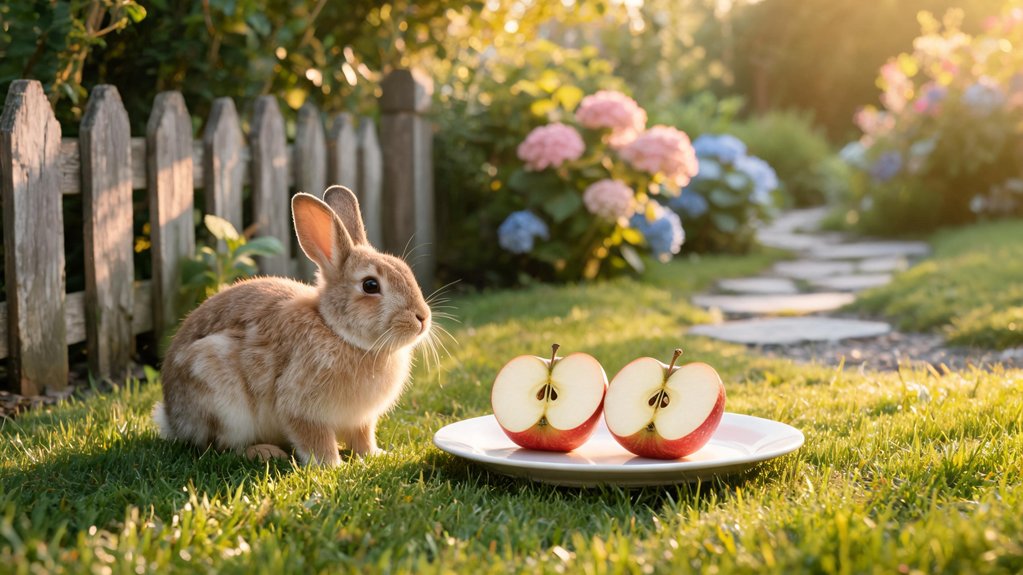
You can think of apples as a small treat with real perks for your rabbit.
Apples bring water for hydration, plus some fiber from the skin and flesh to support healthy digestion, but you’ll still want hay as the main “roughage” source.
They also add vitamins and minerals like vitamin A and potassium for everyday body work, and a little antioxidant boost too—so keep it to about 1–2 thin slices, once or twice a week, for enrichment without overdoing the sugar.
Fiber, Water, Micronutrients
Apples can add a little fiber, water, and some helpful vitamins and minerals—just don’t treat them like a main food.
Fiber helps digestion, but apple fiber is mostly soluble pectin, not the coarse, hay-style roughage rabbits need.
And apples also bring lots of water, about 85–86%, which can support smooth gut transit in small portions.
For micronutrients, you’ll get modest vitamin C, vitamin A, plus vitamin K and E, and trace B vitamins.
Apples offer some potassium too.
Serve a few thin slices, never a daily staple.
Occasional Enrichment Benefits
Occasionally, a few thin slices of apple flesh can be a fun enrichment treat, and there’s some real “nice-to-haves” in what you’re offering.
You add a sweet taste, a crisp bite, and a new smell, so your rabbit stays curious, not bored.
That novelty also helps with training.
Use tiny apple bits as a high-value reward when your rabbit allows handling, or when you need them to accept a carrier.
And during oral meds, offer very small rewards to reduce stress.
But keep it rare, and always skip seeds, core, and stems.
Risks of Apple Fruit for Rabbits: Sugar, Diarrhea, and Weight Gain
Because apples are high in sugar, they can easily throw your rabbit’s stomach off balance. When you give too much, the sugar can disrupt the gut’s helpful bacteria, leading to soft stools or diarrhea.
And that can spiral into gut stasis, a serious slowing or stopping of gut movement, especially if your rabbit isn’t getting plenty of fiber from unlimited grass hay. But there’s more.
Frequent apple treats add extra calories fast, raising weight gain and obesity risk. Keep apples as an occasional, tiny treat, and always remove any seeds and cores.
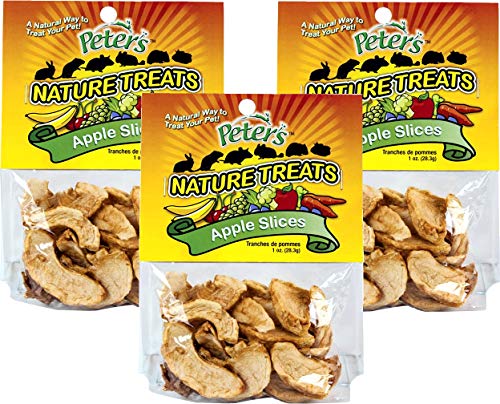
Nature Treats Apple Slices 1 oz., 3 pack (3 oz. total)

Product of the USA. Grown in the USA. Made in the USA.

Product of the USA. Grown in the USA. Made in the USA.
Safe Apple Serving Sizes for Rabbits by Body Weight
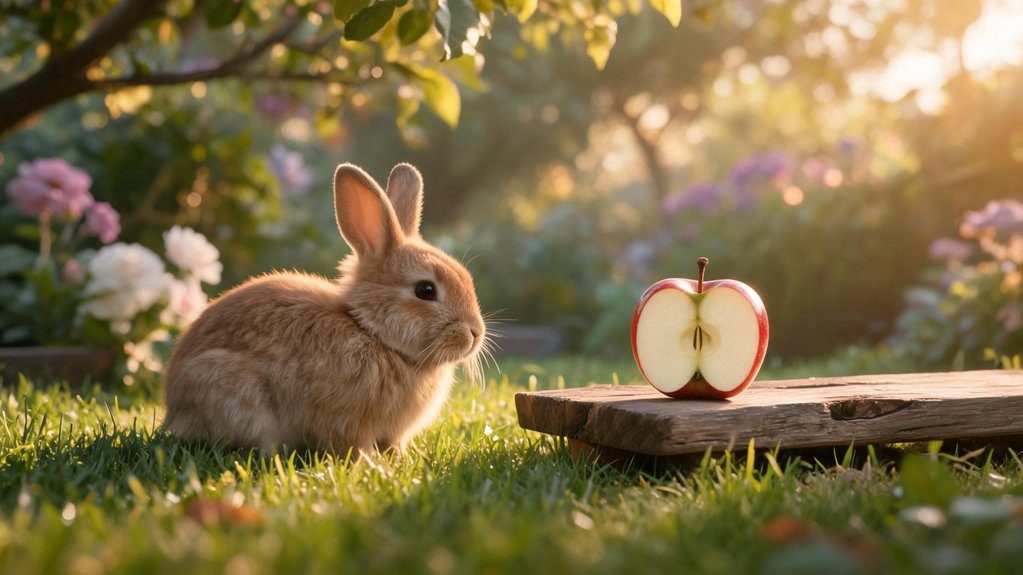
Once you’ve kept the risks in mind from too much sugar, you can still share apple safely—just use a portion size that matches your rabbit’s body weight.
You can still share apple safely—just choose a portion that matches your rabbit’s body weight and keep sugar risks in mind.
For small rabbits, give about 1 teaspoon diced apple flesh per treat.
For medium rabbits, offer about 1 tablespoon.
For large rabbits, use 1–2 tablespoons.
For giant rabbits, give 2–3 tablespoons.
As a quick household guide, a 5–6 lb rabbit can have a thumb-sized wedge, about 1–2 tablespoons.
Measure once, then repeat.
Always remove seeds, core, stem, and leaves.
Treats stay minor beside hay and leafy greens.

NUTRITIOUS TREATS: Oxbow Simple Rewards Baked Treats are crafted with nourishing, high-quality ingredients like fiber-rich Timothy Hay, apples, and bananas—supporting your small pet’s health with no artificial colors, flavors, or preservatives

4 ounces of Animal Lovens Apple Strudels treats for small animals

Real-food recipe with simple ingredients: ground Timothy hay and oats blended with human-grade applesauce and bananas.
How Often Can You Feed Apple Treats to Rabbits
You can feed your rabbit apple treats, but keep it to 1–2 times per week, not daily.
Apples are a fruit, and fruit has extra sugar, so you schedule it as a small, occasional reward.
Aim for about 1–2 tablespoons total fresh fruit per rabbit once or twice weekly, and count apple toward that total.
Don’t add other sugary fruits on the same day.
Offer apple after hay and leafy greens, so you don’t crowd out core fiber foods.
Space treat days out, often with at least one non-fruit day between.
Start small, then watch stools and appetite.


Apple Sticks Branches: great for small pets teeth molar and chew toys for small animals.

How to Prepare Apples for Rabbits: Skin vs Seeds, Core, and Stem
When you prep an apple for your rabbit, think “safe, small, and seed-free.” Start by washing the whole apple really well under running water, then scrub the skin if you can, since the outer layer can hold dirt and residue.
Next, cut the apple into small, bite-size pieces. Keep the washed skin if it’s clean, because it’s generally okay for rabbits in small treats, but peeling can help if you’re worried about wax or pesticide history.
Now, remove everything non-flesh: all seeds, the core, and the stem. Finally, discard stems and any seed bits—no exceptions.

Organic Apple Branches: Natural apple sticks with no addition, good for pets' teeth molar and chew activities

Appetizing, Unrefined Bunny Chew Treat --- Made from a delicious combination of real apple tree branches and timothy grass cakes, the Vila Rabbit Chew Sticks is wholesome and nutritional. These ingredients are grown using materials offered from Mother Earth, with no dyes or artificial compounds added. The rabbit treat keeps your furry friend entertained while cleaning its teeth at the same time.

Natural Material: 100% Organic apple sticks select raw materials and refuse to add,They came in individually sealed packages to keep them fresh and have a nice mix of apple branches and Chamomile to introduce With Sweet Taste,to Ensure The Healthy Growth Of Small Pet Teeth.
How to Introduce Apple Slowly and Spot Digestive Upset
After you’ve washed, chunked, and seed- and stem-free prepped the apple, the next step is teaching your rabbit’s gut to handle it.
Don’t offer apples to babies under twelve weeks.
Start with a tiny, half-teaspoon cube for a healthy adult.
Pick a day you can watch for at least 24 hours.
Check droppings—firm, round, and regular.
If you see soft or misshapen stool, extra cecotropes (the night pellets), mild gas, or fewer poops, stop fruit treats right away.
If appetite drops, remove the apple, then return to hay and greens.
When all stays normal, increase slowly over 7–14 days.

🐰 4-in-1 Variety Keeps Small Pets Excited & Engaged Unlike single-flavor chews that quickly bore picky eaters, GREMBEB's blend of Apple Branch, Sweet Bamboo, Timothy Hay, and Alfalfa delivers four distinct textures and flavors in every single bag. Your bunny or guinea pig enjoys a rotating menu with each handful — eliminating mealtime monotony while encouraging natural foraging instincts. The variety also promotes comprehensive dental health through varied gnawing resistance that targets different tooth surfaces with every chew session. Perfect for daily enrichment.

100% Natural Ingredients: Rabbit toys made of 100% natural Timothy hay and apple branches, rich in vitamins, easy for small animals to chew and digest, promote intestinal peristalsis, and improve pet appetite
Frequently Asked Questions
Can Rabbits Eat Apple Seeds, Cores, or Stems by Accident?
No, you shouldn’t feed rabbits apple seeds, cores, or stems—even by accident. If they chew any, remove remaining pieces and call a rabbit-savvy vet or poison line right away, especially if they act lethargic, drool, or stop eating.
Is Apple Skin Safe if I Don’T Peel It Completely?
Yes, apple skin can be safe if you wash it well, remove the core and all seeds, and offer just a tiny treat portion. Don’t overdo it; watch for soft stools, and stop if your rabbit seems off.
Can I Give Apples to Baby Rabbits or Seniors?
Yes, but only if your rabbit’s old enough. Don’t give apples to babies under 3 months (or usually under 7 months). For seniors, offer just a tiny slice once weekly, and remove all seeds and core.
What if My Rabbit Won’T Eat Hay After Apple Treats?
🚫 If your rabbit won’t eat hay after apple treats, treat it like a siren: stop the fruit, offer unlimited fresh grass hay, and check droppings. If hay refusal lasts or slows, call your rabbit-savvy vet urgently.
Are Dried or Cooked Apples Safe, or Only Fresh?
You should only offer fresh, raw apple flesh; skip dried apple and avoid cooked apples, applesauce, and juice. Dried and cooked forms pack more sugar or lose chewing benefits, raising upset risk. If you serve apple, remove seeds and core.