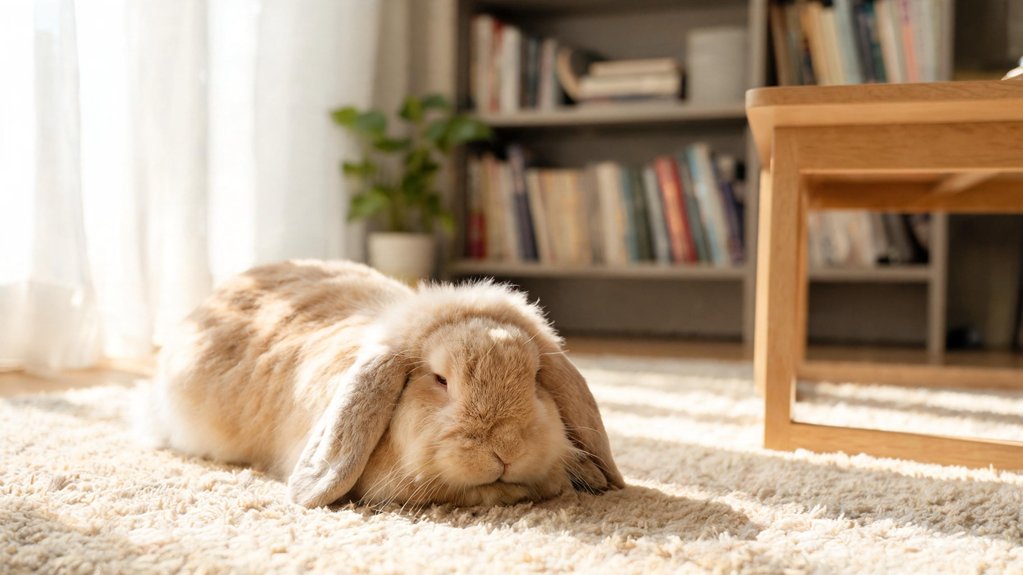
You’ll love the Rex rabbit’s velvet coat—ultra-dense fur that springs back when you gently pet it. It’s docile and people-friendly, so handling feels easy, but still support the chest and hindquarters. For care, start with fresh grass hay twice daily, then add greens, and keep pellets about 5–10% (roughly 1/3–1/2 cup for a 7–10.5 lb Rex). Use solid floors to prevent sore hocks, groom weekly with a soft brush, and call the vet fast if eating stops. There’s more you can learn next.
Swift Summary
- Rex rabbits have a dense, plush velvet coat with nearly uniform short hair and strong spring-back that resists matting.
- They’re typically gentle, calm, and people-friendly, often approaching willingly, making them well-suited for family handling.
- Feed hay first with unlimited fresh grass hay, plus measured pellets and a small daily portion of leafy greens.
- Provide solid, cushioned flooring to prevent sore hocks, and give daily exercise in a rabbit-proof space.
- Use positive reinforcement training with short 3–5 minute sessions, and groom gently with soft tools to avoid damaging coat fibers.
Rex Rabbit Quick Facts: Velvet Coat to Lifespan
Start with the “wow” factor: Rex rabbits have a short, extremely dense, upright fur coat that feels like velvet or plush fabric, and it springs back smoothly when you gently pet it. That’s your first clue you’re choosing a rex bunny.
Feel a Rex rabbit’s plush, velvet-like fur that springs back smoothly—one touch is your first unmistakable clue.
You’ll also notice docile, calm manners, and many people find rex rabbits for sale that fit family life. For size, plan on a medium-to-large rabbit, with ARBA show max weight 10.5 lb. Care matters for lifespan, often about 6–8 years.
Because the coat traps heat, keep indoors near 80°F with airflow. Use solid bedding to protect sensitive feet.

Clean Pets, Clean House: Depets cat & dog brush for shedding can easily remove loose hair, shedding mats, dander and dirt of your pet, which not only keep your pet clean, but also provide you with a clean and hygienic home environment

FLAT SLICKER - The Paw Brothers Coated Pin Flat Slicker Brush is an essential tool for anyone who wants to keep their pet's coat looking and feeling its best. With its durable construction and superior performance, this brush is sure to become a staple in your grooming routine.

【Easy Desheding】: Swihauk self cleaning dog brush for long haired dogs with release bottom helps effortlessly reduce shedding. A must have dog brush for short haired dogs, cat brush for indoor cats, cat brush for shedding, slicker brush for dogs.
What Makes a Rex Coat Feel Like Velvet?
Because Rex rabbits grow a very short, super-dense coat with a nearly uniform hair length, their fur doesn’t lie flat or feel “wiry” the way most rabbits do. You’ll notice a plush, velvety hand because the coarse guard hairs lose their thicker diameter, so the coat behaves more like fine down. And that dense, even pile—about ⅝ inch (1.6 cm) long with guard hairs nearly matching the undercoat—stands upright instead of flattening. The spring-back when you gently stroke it tells you the fibers resist matting. When you care well, you preserve that smooth, cushiony feel. This distinctive “velvet” effect is created by the shortened guard hairs that are nearly the same length as the undercoat.


PROUDLY GROWN IN THE USA: Harvested fresh from Oxbow?s family of farms by our expert hay growers˜

HAND-SELECTED TIMOTHY HAY FOR RABBITS, GUINEA PIGS, CHINCHILLAS, & SMALL ANIMALS to ensure long fiber strands and proper leaf to stem ratio
Velvet Coat Genetics: The Rex Short-Hair Gene
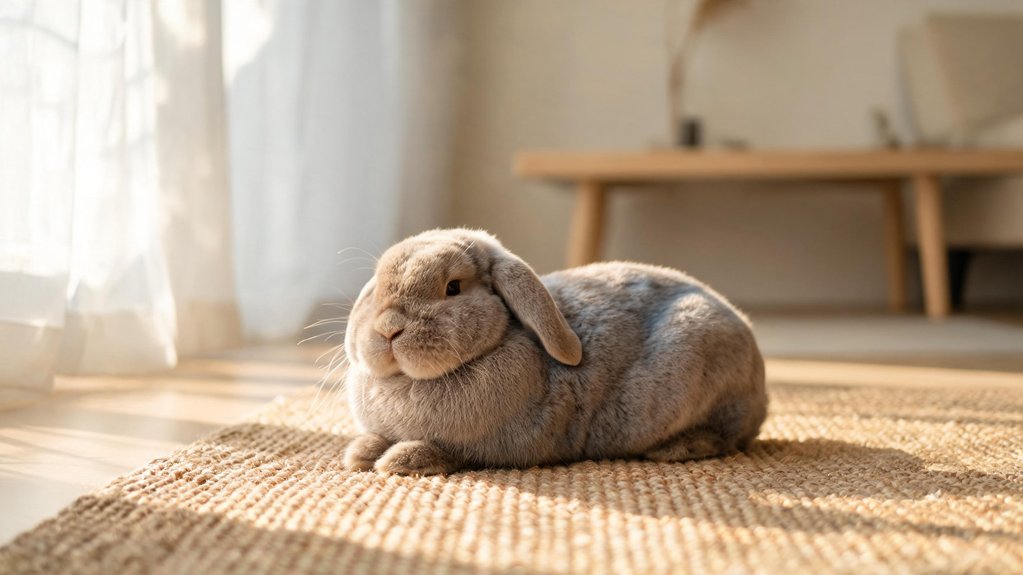
When you feel that Rex “velvet” coat, you’re really noticing the genetics behind the plush, short hair—not just a grooming trick.
The Rex short-hair coat comes from recessive alleles called rex, often written as r (the normal allele is R). You may see three main mutations: LIPH gene deletion, r1 (“French”), r2, and r3 (“Normandy”). r1 links with r2 on the same chromosome, about 10–12% recombination, but r3 separates independently. r1 involves a deletion in the LIPH gene, which disrupts hair-shaft growth. You’ll also notice fewer guard hairs, plus curled whiskers early.

16 ft² Spacious Space: Provides 16 square feet of living area for small animal. Ideal extension of our rabbit cage or independent use. Give small pets freedom to frolic indoors or outdoors

[Premium Material & Sturdy Structure]: Our plastic bunny hutch outdoor is made of double-layer thick HDPE material, more sturdy than ordinary plastic and wood, designed to withstand chewing from rabbits and small pets, guaranteeing long-term durability and a secure space for your pet.

𝐍𝐄𝐖𝐋𝐘 𝐔𝐏𝐆𝐑𝐀𝐃𝐄𝐃 𝐅𝐔𝐋𝐋-𝐁𝐎𝐃𝐘 𝐈𝐑𝐎𝐍 𝐅𝐑𝐀𝐌𝐄 - Featuring a newly upgraded full-body iron frame, this large rabbit hutch is stable, bite-resistant, and not easily collapsible, with reinforced metal supports throughout the structure
Rex Rabbit Size, Weight, and Body Type
You’ll find the Rex is a medium-to-large rabbit with a commercial-type body, meaning it’s solid and well-built, not tiny or dainty.
Focus on a round, substantial frame, strong hindquarters, and a calm, steady stance—when they’re at good weight, their loin, ribs, back, and shoulders look full and balanced.
For adult sizing, plan around ARBA’s typical 7.5–10.5 lb range, with bucks often nearer the lower end and does more often toward the upper end.

Lots of flavor, not fillers: Just two simple, all-natural ingredients mean low calories and high nutritional value, making a tasty but healthy treat that your pup will actually love


FREEZE DRIED RAW RABBIT DOG TREATS – CRUNCHY, BITE SIZED FOR TRAINING, 2 OZ BAG: High protein dog treats made with rabbit. Perfect as high value dog training treats, puppy training treats, and everyday rewards
Medium To Large Frame
A Rex rabbit has a medium-to-large, commercial-style frame, so it won’t feel “tiny” the way a Mini Rex can. You’ll typically see an ARBA standard Rex weigh about 7.5–10.5 lb, or roughly 3.4–4.8 kg.
You can expect a rounder, well-proportioned body that looks built to fill out across the whole frame. The ears stand upright, and the head can seem a bit broader than many breeds.
You’ll also notice proportionally smaller feet for its size. When you handle daily, support that sturdy middle gently, every time.
Strong Hindquarters And Calm Stance
Strong hindquarters and a calm, confident stance go right along with the Rex’s medium-to-large, commercial build.
You’ll notice well-rounded hips, a wide loin, and a gentle body slope up to those quarters. That compact, well-muscled shape gives powerful rear support on strong hind legs.
Next, look at the feet. They should sit parallel and not-too-long, so your Rex stays square and stable.
Now for temperament. You’ll often see docile, friendly calm, with relaxed posture when handled. Alert eyes and upright ears show awareness, not skittishness.
Rex Rabbit Coat Colors and Show Standards
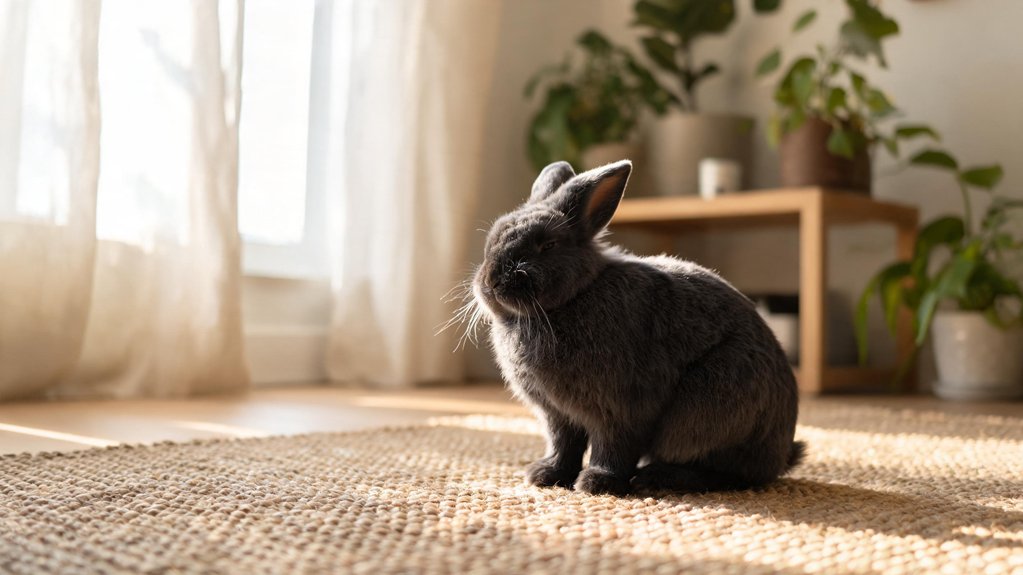
If you’re looking for a rex bunny, the coat is where the breed really shows off.
For rex bunnies, the coat is the real showstopper—plush, dense, and perfectly “springy” in both texture and color.
In ARBA show rules, you’ll see Rex colors grouped into recognized varieties, usually 16 accepted shades.
Common names include Black, Blue, Castor, Chinchilla, Chocolate, Lilac, Lynx, Otter group, Sable, Seal, Amber, Red, and White, plus patterned types like Broken, Bi-color, Tri-color, and Dalmatian-like spots.
For judging, prioritize plush fur that “springs back” after you press it.
Fur length should be 0.5 to 0.875 inch, even across the body, with color distribution looking tidy.

Cat Hair Remover: Quickly and easily detangles fur, removes loose hair and smoothes the coat

Designer series soft slicker grooming brushes

CURVED SLICKER - The Paw Brothers Soft Pin Curved Slicker Brush is an essential tool for anyone who wants to keep their pet's coat looking and feeling its best.
Rex Rabbit Temperament: Calm and People-Friendly
You’ll be happy with Rex rabbits because they’re gentle and docile, and they usually handle human contact calmly once trust is built.
When you move slowly, keep their feet supported, and offer calm, regular attention, you’ll notice they get people-oriented—often coming to the front of the pen when you enter.
And if you stick to a simple routine, use treats to guide them, and practice short sessions (about 5 minutes), you can build learnable routines and even easy tricks.

PEELS OFF IN LAYERS Wafer Cut Timothy Hay reduces mess and makes feeding easier

PROUDLY GROWN IN THE USA: Oxbow hay is harvested fresh from our family of farms, ensuring high quality for your pets; Perfect for rabbits, guinea pigs, and other small animals; It supports healthy digestion and is ideal for bunny food and hay for rabbits

PREMIUM QUALITY OXBOW TIMOTHY HAY FOR SMALL PETS: High-fiber Oxbow timothy hay supports digestive & dental health for rabbits, guinea pigs; the perfect choice for pet parents seeking trusted rabbit hay, guinea pig hay, and nutritious daily bunny food
Gentle, Docile Handling
Rex rabbits are known for being calm, gentle, and people-friendly, so handling often feels smoother than with more skittish breeds. Approach predictably, speak softly, and let your rabbit sniff you first.
Keep sessions short at first, then build up, because frequent positive handling shapes trust.
Many Rexes prefer ground-level greetings.
Set one hand low, support the chest and hindquarters, and avoid lifting unless your rabbit truly accepts it.
Since strong hind legs can kick, stay steady, patient, and close to the body.
For grooming or health checks, move slowly, watch for thumping, and stop if insecurity shows.
People-Oriented Social Behavior
Because Rex rabbits tend to be calm and people-friendly, they often act more like “social pets” than skittish lawn ornaments.
You’ll notice many Rexes approach when you enter, they want your attention, and they may settle beside you.
When you feed and care for them daily, you help them bond, often most strongly with the main caretaker.
During calm time, you can offer quiet lap time, or sit nearby so they learn you’re safe.
If your rabbit turns away, respect that boundary.
Tooth grinding or purring means contentment.
Thumping can mean “not now.”
Learnable Routines And Tricks
Calm, people-friendly Rex rabbits usually learn best when you set up clear, happy routines, and then you reward the exact behavior you want.
Start in a quiet room. Pair a clicker sound with treats, click then snack, so the “click” means, “Yes!”
Keep sessions short, a few minutes, and end while your bunny still feels good.
Use a target stick, so your rabbit touches it first, then you shape bigger tricks.
Practice mat settling, carrier entry, and litter-box routines.
For agility, click when back feet clear a low bar.
For care, target training helps voluntary scale checks, grooming, and calm vet handling.
How Smart Are Rex Rabbits, and What Can They Learn?
How smart are Rex rabbits, really—and what can you teach them? You’ll be glad you asked, because Rex rabbits are known as highly intelligent and very trainable.
Many learn litter habits, and they can respond to basic commands like coming when you call. They’re big on associative learning, meaning they connect actions with outcomes.
You can use positive reinforcement: reward the behavior you want, then repeat. Clicker training works well too.
Pair a click sound with small food treats, start in a quiet space, and keep sessions to 3–5 minutes. With shaping, you build complex tricks step-by-step.

[Premium Material & Sturdy Structure]: Our plastic bunny hutch outdoor is made of double-layer thick HDPE material, more sturdy than ordinary plastic and wood, designed to withstand chewing from rabbits and small pets, guaranteeing long-term durability and a secure space for your pet.

Spacious Living Area: Rabbit playpen offers a generous 16 square feet of living space for your rabbit to play and explore

Paw-Safe & Comfy: This indoor bunny hutch features a paw-friendly wire floor (0.43" spacing) to prevent sore hocks, plus a non-slip ramp mat for safe climbing. A truly caring bunny hutch indoor
Housing for Digging, Jumping, and Binkies
Where do your Rex rabbits spend their best “moves”—running, jumping, and binkies? Give them room, not just a cozy box.
Aim for solid-floor pens, roughly 12 sq ft or more for an adult, and larger exercise time—about 3–4 hours daily—in a rabbit-proofed space.
Set up a floor you can wipe, with fleece liners or washable mats, because Rex feet need soft footing to help prevent sore hocks. Choose rabbit mats that balance comfort, grip, and safety for resting spots and play areas.
Add a digging box: a sturdy, dark container filled with play sand or diggable bedding.
Include a jump-friendly layout, with vertical space for rearing, no ceiling ear hassles.

NUTRITIOUS TREATS: Oxbow Simple Rewards Baked Treats are crafted with nourishing, high-quality ingredients like fiber-rich Timothy Hay, apples, and bananas—supporting your small pet’s health with no artificial colors, flavors, or preservatives

Natural dog treats made with added vitamins and minerals and no corn, wheat, or soy at only 2 calories per treat

WORRY FREE DOG REWARDS: Our Rabbit Jerky Strips are made with only real, pure, dehydrated rabbit meat; Now you can treat your allergy-prone pal to a 100% hypoallergenic dog treat!
Rex Rabbit Diet: Hay, Greens, and Pellet Limits
Your Rex’s food schedule works best when it’s built on hay first, then greens, then a careful, measured amount of pellets. Serve fresh grass hay (timothy, orchard grass, meadow, or oat) at least twice daily, and keep it available all day. This long-stem fiber supports healthy digestion and helps wear down teeth. When choosing hay for daily feeding, pick high-quality hay that smells fresh and sweet and has a soft, leafy texture rather than dusty or musty stems.
Next, add leafy greens and non-starchy veggies about 10–20% of the diet, roughly 10% daily. But skip high-sugar foods, and keep fruit under 5%.
For pellets, choose plain timothy, no seeds. Limit to about 5–10%, roughly 1/3–1/2 cup daily for a 7–10 lb Rex.

Stainless Steel Pins And Non-Slip Grips
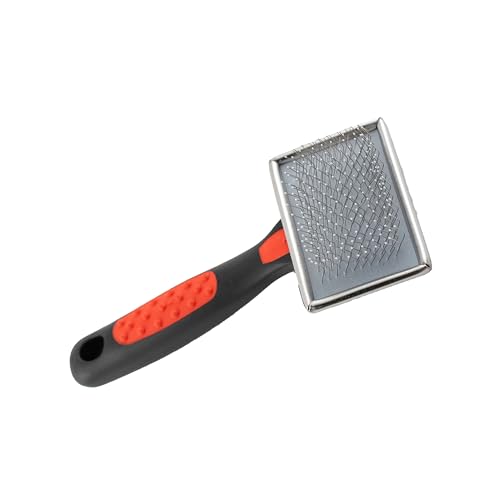
Stainless steel pins with plastic coated tips
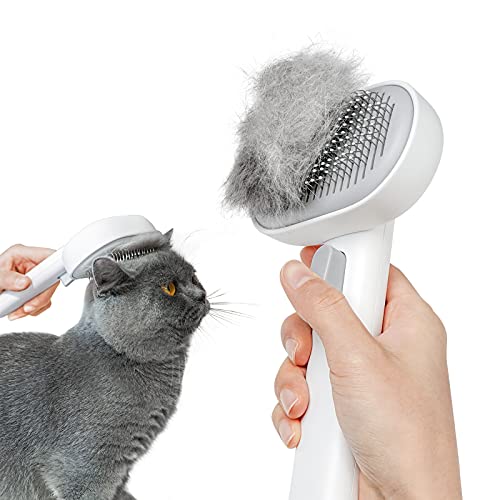
【Professional Cat Hair Brush】Perfect gift for pet owners, vets, and pet groomers. Using this cat brush for long haired cats on a regular basis can gently and effectively remove loose hair, tangles, knots, dander and trapped dirt. Suitable for short, medium or long, thick, thin or curly haired dogs/cats/rabbits, making your pets shiny and healthy.
Rex Lifespan: What Affects How Long They Live?
Rex rabbits usually live about 6–8 years, but several big factors decide whether your buddy lands closer to the shorter end or stretches toward the 8–12 year range.
Genetics matters, including bloodline and body size, and larger rabbits often don’t live as long as smaller types.
Housing matters too. Keep your Rex indoors when you can. Safe, spacious housing and stable, cool temperatures help.
Outdoors, use predator-proof, well-insulated setups with shade and ventilation to prevent heat stress.
Next, protect their emotions. Low-stress handling, companionship, toys, and daily exercise reduce boredom and chronic stress.
Also, spaying reduces reproductive risks.


SOFT TEXTURE & SWEET FLAVOR: With its soft texture and naturally sweet flavor, Orchard grass hay appeals to rabbits, guinea pigs, and small herbivores; This high-fiber hay supports healthy digestion while encouraging natural chewing behaviors

A naturally grown blend of timothy, orchard, and alfalfa hay provides a variety of textures and flavors for added enrichment
Common Rex Health Red Flags (Vet Call Triggers)
When it comes to Rex rabbit care, a good rule is this: if something seems “off,” you don’t wait around—call the vet.
And watch for gut trouble fast.
If your Rex stops eating for 6+ hours, has few or no droppings, or looks bloated, that can mean GI stasis, blockage, or even liver torsion.
Also treat dark sticky poop, diarrhea plus pain, or jelly-like feces plus hunched posture as emergencies.
Next, respond to breathing problems.
Heavy, noisy, mouth breathing, bluish lips, fever, or cold floppy body need urgent care.
Sudden head tilt, seizures, collapse, or flystrike also require immediate help.
Feet Care for Rex Rabbits (Prevent Sore Hocks)
Feet care for Rex rabbits starts with one simple idea: protect their hocks, the bony spots on the bottom of the back legs.
Rex fur on the feet is short and plush, so pressure and friction hit skin faster.
Keep their housing kind.
Skip wire-mesh, bare plastic, and hard floors.
Choose solid, cushioned flooring, and add deep, dry bedding or fleece pads in a soft rest zone.
Change soiled bedding daily, and keep litter and bedding dry, moisture makes sores worse.
Place bowls away from resting areas.
Keep weight healthy with unlimited hay and correct pellets, and check hocks often for redness.
How to Groom a Rex Rabbit Without Damaging Velvet
Use a soft-bristle brush, a rubber mitt, or lightly damp hands to lift loose fur. Brushes designed for loose-fur removal suit routine grooming because they lift shed hair without the heavy scraping of tools made for deep undercoat work.
Skip wire slicker brushes, undercoat rakes, and de-shedding blades.
Rex fur is plush because the guard hairs match the undercoat, so harsh tools pull that delicate nap and can leave thin patches.
Check several times weekly.
In non-moult times, brush or pat once a week.
During spring and fall moults, remove shed tufts daily with gentle pinching.
Stop if you see thinning, crusts, or dampness.
Rex Rabbit Price in the US & Adoption Tips
Rex rabbit prices in the US vary a lot, so a little planning helps you avoid overpaying. Typical pet-quality Rex rabbits often cost about $20–$250, while show or specialty lines can be several hundred dollars up to around $3,000.
Rex rabbit prices vary widely in the US—pet-quality often $20–$250, while show or specialty lines may reach $3,000.
And if you want to keep costs kind, consider adoption. Rex rescues and shelters commonly charge $0–$75, often including spay/neuter and a basic health check, which lowers upfront medical surprises.
Check local listings, compare mini Rex prices, and ask for vet notes.
For rehoming, pay what feels fair, and confirm age and temperament.
Who Rex Rabbits Suit Best (And Who Should Skip)
You’ll usually get the best match with a Rex rabbit if your kids are older and you’ve got close adult supervision, since they can be gentle but they still don’t love being lifted.
If your household includes small children who might grab, chase, or pick up a bunny, you should skip a Rex and choose a setup where everyone understands “slow hands” and ground-level interaction.
Set them up with at least a 12–16 sq ft enclosure, then plan on 3–4+ hours of supervised play time daily, so you both build trust without stress.
Best With Older Supervision
With the right oversight, a Rex bunny can be a genuinely wonderful match—calm, social, and often happy to interact once trust grows.
If you have responsible older kids, ideally around age eight or more, you’re in a great spot.
You also need you, or another adult, supervising every handling moment.
Let interactions happen on the floor, with short floor-level play sessions.
That way, your Rex can approach voluntarily, and you can prevent dropped accidents.
You’ll teach rabbit-safe handling, protect the fragile spine, and keep daily care steady.
High-chaos homes and “low-maintenance” owners should skip.
Avoid For Small Children
If you’ve got toddlers or preschoolers at home, it’s smart to skip the “grab-and-carry” setup entirely, because Rex rabbits just don’t handle that kind of handling safely.
Rex backs are fragile, so rough lifting can cause serious spinal injury.
Also, Rex rabbits usually dislike being picked up and held still.
That stress can trigger nips, scratches, or painful kicks from strong hind legs.
And since rabbits spook fast, they may lunge or thump, creating a fall risk.
If kids are around, aim for floor-level time, with you supervising closely, and keep handling for older children—about eight and up.
Frequently Asked Questions
Are Rex Rabbits Good With Other Pets Like Cats and Dogs?
Yes—but with careful management. Prey instinct means cats and chasing dogs can frighten or injure Rex rabbits. You should keep them separated behind barriers, scent-swap first, and only allow short, supervised contact. Never leave them alone together.
Do Rex Rabbits Bite or Scratch, and How Can I Prevent It?
Yes, rex rabbits bite or scratch if they feel scared or territorial. You prevent it by approaching calmly, letting them come to you, supporting them fully when lifting, avoiding cage intrusions, and spaying/neutering when appropriate.
What’s the Safest Way to Handle a Rex Rabbit?
Safest way: handle a rex rabbit calmly, close to ground. Approach slowly, support chest and rump with two hands, tuck hind legs, keep back supported. Watch stress signals—stop if needed. You’ll prevent injury and help them feel secure.
How Often Should I Trim Nails and Check for Sore Hocks?
Trim nails every 4–6 weeks, and check feet and hocks daily. If nails overgrow, nibble-trim small amounts more often, since longer nails shift weight. Keep bedding clean, dry, and watch for enlarging bald, red, or painful skin.
Do Rex Rabbits Shed Heavily, and How Do I Manage It?
Yes, Rex rabbits shed during seasonal molts, though their dense velvet coat hides loose fur. You manage shedding by brushing 1–2x weekly, then every other day in spring/autumn, using a soft brush, and spot-cleaning mats with a damp cloth.