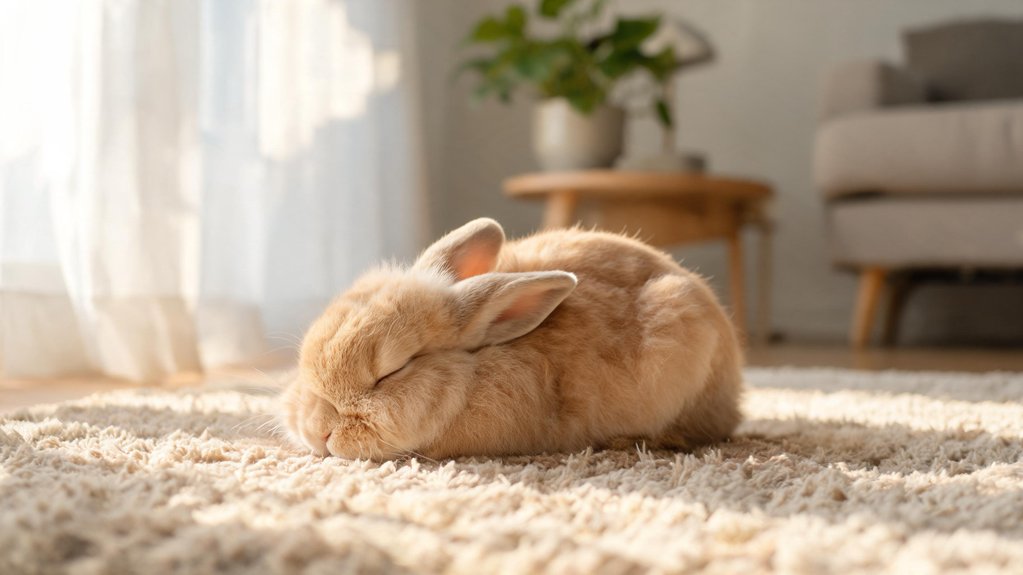
If you want the easiest, cuddly bunny, pick a neutered buck. He usually settles fast and often bonds quicker, with fewer hormone tricks like mounting and urine spraying. A spayed doe can be just as sweet too, but she may need a 2–3 week adjustment. Avoid intact rabbits, they can start spraying, fighting, and even pregnancies from about 3 months. Desex around 4–6 months for the best litter habits, and then you’re set—keep going to learn the details.
Swift Summary
- Neutered bucks are often easier, more cuddly, and can calm down quickly, typically within weeks.
- Spayed does can become similarly affectionate, but may need a 2–3 week adjustment after surgery.
- Avoid intact rabbits due to mounting, spraying, and fighting, and because pregnancy risk starts around three months.
- After desexing, urine spraying usually drops dramatically (often ~99%) and litter box success improves within weeks.
- Territoriality and digging patterns differ: does may guard more fiercely and dig/nest more, especially around pseudopregnancy.
Bucks vs Does: Quick Pet Verdict
If you’re deciding between a buck (intact male) and a doe (intact female), start here: for most US pet homes, a neutered buck usually wins for an easy, cuddly vibe. In the male rabbit vs female rabbit debate, you’ll often see neutered bucks more laid-back, affectionate, and comfortable with handling. But you can still serve your household well with spayed does, too. Spayed does can calm down to a similar, cuddly temperament, especially after surgery. Skip “intact” status, because sexual maturity can trigger mounting, spraying, chewing, and fighting, plus accidental litters. Choose altered rabbits, then match personalities. One key reason to plan for early alteration is that rabbits can get pregnant at around three months old.
Buck vs Doe Quick Comparison (At a Glance)
When you’re choosing a buck vs a doe, start with temperament: bucks are often more laid-back and bond faster, while does tend to be more cautious and may be more dominant, especially if space feels invaded. Next comes territorial habits, digging, and nesting—does usually defend their area more and dig and rearrange more, while bucks can be calmer about territory but may chase other bucks during breeding season. Before you decide based on behavior, sexing matters most for knowing whether you’re dealing with a buck or a doe, since determining sex requires examining the genitals and can be difficult in young rabbits. And don’t forget neutering’s impact: spaying and castration around 4–6 months cuts hormone-driven urination, reduces spraying and mounting, and helps you avoid the risk of accidental litters.

Sherwood Pet Health

Comprehensive PET Care Kit: the rabbit starter kit is designed to meet all your pet care needs, including 19 items, 1 rabbit litter box about 25 x 19.5 x 3 cm, 1 white strawberry bear pet blanket about 13.78 x 11.02 inches, 1 pair of small pet nail clippers and files, 1 animal grooming kit, 6 fun rabbit toys and 1 small pet bowl and 1 hanging automatic food and water dispenser, 1 small animal external grass stand, all tools are carefully designed to provide comfort and enjoyment for pets

Kit Includes: 42x18”x20” habitat, a rebate for up to $10 off any Kaytee Rabbit or Guinea food, Clean & Cozy bedding, water bottle and food dish.
Temperament Differences At Home
In most home setups, you’ll usually notice a buck (neutered male) settling into a calmer, more handle-tolerant vibe, while a doe (spayed female) often starts out more cautious and independent. neutering reduces hormone-driven behaviours, which can help both sexes become easier and more settled at home. For your female rabbit vs male rabbit decision, here’s the practical truth: after spaying or neutering, sex matters less than personality. Still, you may find your boy rabbit vs girl rabbit tends to accept touch faster, while girl rabbit vs boy rabbit needs a slower intro. Neuter reduces hormone swings, so daily handling feels easier. Spayed does usually relax too, just give 2–3 weeks, gentle routines, and watch for stress. Also, spay/neuter prevents accidental litters.
Territoriality, Digging, Bonding
Territorial behavior is one of the biggest “buck vs doe” things you’ll notice at home, especially around the spots your rabbits think are theirs.
A female bunny often guards her core space and nest area more fiercely, while a male rabbit may patrol wider.
You’ll see marking too: bucks may chin-scent and urine-spray, does often focus droppings and urine in one spot.
For digging, expect does to dig more, expand tunnels, and build nests, especially during pregnancy or pseudopregnancy.
For bonding, start in neutral space, and skip unaltered pairings if you can.
Spay and neuter reduce aggression and accidental litters.
Neutering Impacts Urination
Neutering can change your bunny’s bathroom habits fast, and that difference often looks different in bucks versus does.
Intact bucks spray more, especially after puberty, and they may target humans and furniture.
Intact does can spray too, since both can mark with vertical urine.
Then spay/neuter helps most pets.
Reports commonly describe near-elimination of urine spraying, around 99%, after desexing.
Neutered bucks often calm down within weeks.
Spayed does also reduce hormone marking, plus nesting-related mess.
Desex before 6 months for best litter box success.
If you neuter, expect possible fertility for 4–6 weeks.
Temperament: Intact Vs Neutered Buck/Doe
If you keep an intact buck or doe, you can run into hormone-fueled temperament changes, like chasing, biting, and intense territorial behavior that often starts around 3–6 months.
When you spay or neuter, you usually get a calmer rabbit, better bonding, and way less mounting and mounting-driven “I’m in charge” behavior, though it can take a few weeks for hormones and old habits to settle.
And if you’re not spaying your doe, don’t gamble—accidental litters can happen fast, so prioritize spaying to prevent pregnancy and false pregnancy mood swings.
Intact Temperament Differences
While you might love your rabbit’s personality, intact (not spayed or neutered) bucks and does often show more hormone-driven behavior than neutered rabbits—especially when they’re sexually mature.
You’ll likely see more mounting, circling, restlessness, and even territorial aggression.
Bucks often mount more and may spray urine to mark space.
Yes, does can seem calmer at baseline, but pregnancy or caring for young can trigger strong protectiveness, and sometimes biting or lunging.
If you spay or neuter, you remove the main hormone source, so sexually motivated mounting and restless pacing often drop fast.
Also, reduce accidental litter risks.
Neutered Bonding Ease
Once your rabbits are fixed (neutered, meaning their sex hormones are turned down), bonding usually gets a lot easier—especially compared with intact bucks and does. You reduce hormone-driven aggression, like chasing and lunging, so introductions feel safer. But give it time.
Neutering benefits build over several weeks to months as hormones drop. Wait at least one month after surgery before close-contact bonding, and keep them in separate but adjacent housing during recovery so they can smell and see each other.
For most stability, choose a neutered buck with a neutered doe. This also helps prevent accidental litters.
Mounting And Mounting Behavior
Mounting in rabbits can look “romantic,” but it’s usually more about hormones and social rules than about mating—especially when you compare intact (not fixed) rabbits to neutered ones.
If you keep an intact buck, you may see urgent, frequent mounting of mates, pets, and even shoes.
When you spay a doe or neuter a buck, much of that hormone-driven mounting drops, though some social mounting can remain.
Mounting also works as a dominance signal.
During bonding, expect brief, tolerated mounting, then it should fade.
Still, don’t gamble—intact rabbits can cause accidental litters, fast.
Neutering a Buck & Spaying a Doe (What Changes)
When you neuter a buck or spay a doe, you’re doing more than just “taking care of hormones”—you’re changing how your rabbit behaves and what health risks she or he faces.
And you help protect your whole household from accidental litters, too.
After neutering, your buck usually mounts less, stops spraying and roaming, and uses the litter box better.
But it can take 4–6 weeks for hormone behavior to fade.
After spaying, your doe has fewer false pregnancies and nesting, steadier moods, and less stress.
Spaying also nearly eliminates ovarian, uterine, and breast cancer risks.

Size: XS fit for rabbits/chinchilla/guinea pigs with head circumference between 3.9"-8.7"(10-22cm). S fit for rabbits/chinchilla/guinea pigs with head circumference between 4.3"-10.2"(11-26cm). Please measure the size of your pet before order, take each measurement a bit loosely.

Size: XS fit for rabbits/chinchilla/guinea pigs with head circumference between 3.9"-7.9"(10-20cm). S fit for rabbits/chinchilla/guinea pigs with head circumference between 5.9"-9.8"(15-25cm). Please measure the size of your pet before order, take each measurement a bit loosely.

COMFORTABL MATERIAL - Made of soft fleece and filled with PP cotton, won't irritate pets skin, comfortable to wear. Ensures pet comfortable wearing experience and won't irritate pets skin.
Territory Aggression & Digging: Buck Vs Doe

If you have a doe, you may notice more territorial lunging and chasing, especially around nest spots or any closed-in “favorite” area. She also tends to dig for nest-making and defense, so even short bursts of digging can mean she’s setting up her space, not “being naughty.”
With a buck, aggression is often more about boundary marking and fights with other rabbits, and he usually shows less digging overall.
Doe Territorial Lunge And Chasing
And in a lot of homes, you’ll notice that an unspayed doe (female rabbit) can turn into a tiny, furious “territory guard.” She may lunge, grunt, box, scratch, kick, and even bite when another rabbit steps too close—especially around “nest zones” like a favorite hidey spot, tunnel entrance, or nest box.
You’ll often see this around 3–6 months, and sometimes in spring when hormones surge. False pregnancy can trigger nest-building and chasing.
Spaying a doe helps reduce hormonally driven lunging, and it also lowers the risk of accidental litters. If she fights, separate her safely, then add space, hides, and calm routines.
Bucks Less Digging Tendency
While you might expect both rabbits to dig, bucks usually show a lighter, more “spotty” digging style than does. You’ll often see shallow scrapes, short bursts, and digging right near favorite spots for scent marking and lying down.
That’s different from does, who commonly build big burrows and nest chambers, especially around false pregnancy and pre-kindling periods, when digging and chewing can feel nonstop.
But you can help both sexes: spay or neuter. It reduces hormone-driven digging, lowers territorial behavior, and helps prevent accidental litters from unspayed females.
When digging starts, adjust space and enrichments.
Nesting and Pseudopregnancy: What to Watch in Does
When your female rabbit starts acting “nest-ready,” it doesn’t always mean she’s pregnant. Pseudopregnancy happens when she ovulates without fertilization, so hormones act like late pregnancy for about 16–18 days.
Sterile mounting, or even seeing intact males, can trigger it.
Watch for frantic hay or bedding hauling, fur-plucking from the chest, belly, or dewlap, and a big, bowl-like nest in one corner.
Many does also get grumpy, guard the area, grunt, or box.
If she doesn’t “deliver” after 28–33 days, that points away from real pregnancy.
Spay reduces repeated episodes and accidental litters.
Spraying & Litter Training: Buck Vs Doe Reality
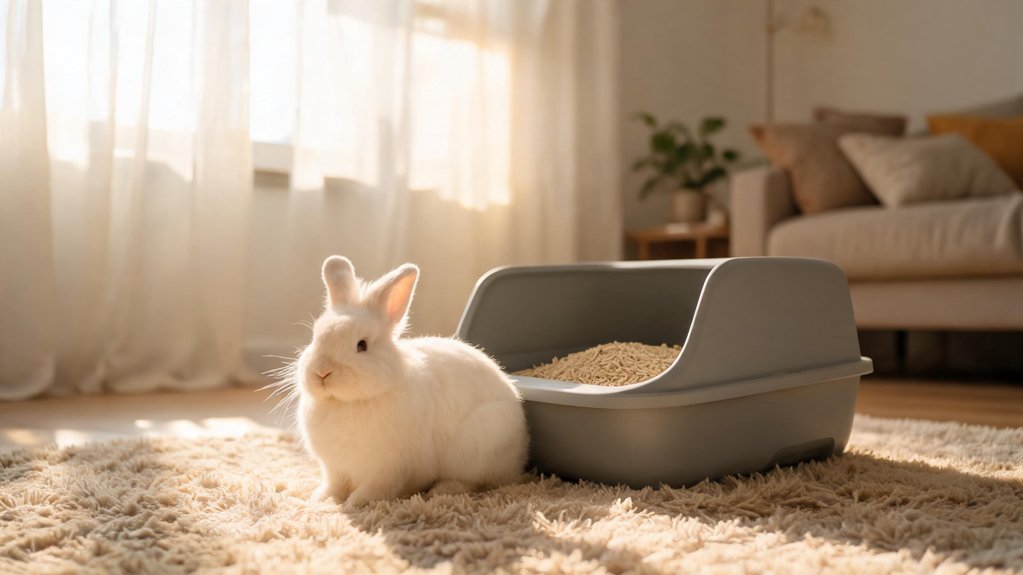
Once your rabbit hits sexual maturity, spraying can feel like it comes out of nowhere—especially if you’re dealing with an intact buck.
At 3–6 months, hormones push territorial marking.
Bucks often spray sideways, wide arcs, across bars, walls, and furniture, so litter training can feel “impossible.”
Does may spray too, but usually less, though some do persist.
Choose spaying or neutering, because it removes the hormone drive, and spraying often drops within 2–4 weeks.
After that, most urine goes into the box, around 99%, and pellets, about 85%.
After spaying or neutering, most urine goes into the box—about 99%—with pellets around 85%.
Still, new pets or big changes can trigger brief relapses.

TAOKEKE All-in-One Rabbit Litter Box Kit: Includes a stainless steel litter box, hay feeder, raised grid, three-sided splash guard, scoop, anti-slip pad; No tools required for assembly; Large litter box perfect for rabbit owners who want hygienic materials

More Hygienic---Feces and urine naturally fall through the grid to the lower layer, effectively keeping the upper layer clean and sanitary, significantly reducing cleaning efforts.

Spacious Comfortable: This large rabbit litter box offers ample space with dimensions of 16.9" long x 11.8" wide x 6.3" high, making it ideal for adult rabbits, guinea pigs, ferrets and chinchillas.The litter box rabbit, say goodbye to cramped corners
Health, Lifespan, Cancer Risks, and Injuries
Health-wise, your rabbit’s sex matters—but the biggest difference you’ll feel as a pet parent is often from whether your rabbit is spayed or neutered, not just “male vs female.”
In most good homes, rabbits commonly live around 7–10 years (many sources cite 8–12), and neutered rabbits of either sex usually land in that same healthy range.
But intact does face far higher reproductive cancer risks, especially uterine cancer, which can cut lifespan.
Intact bucks generally avoid that major threat.
Also, fighting causes bite wounds, infection, even death.
Sex matters less than pairing compatibility.
If you bond, watch closely, and spay/neuter to prevent accidental litters.
Best Housing/Setup for Bucks Vs Does
While bucks and does need roughly the same *base* space for their body size, you’ll set things up a bit differently to match how each one acts.
Plan for at least 4x stretched-body length, plus upright height.
Outdoors, use a single-level hutch about 1.8 m tall with a 3 m x 2 m x 1 m run.
For bucks, give more open floor, clear sightlines, and escape routes.
For does, add solid-bottom areas and nesting boxes with bedding, plus duplicate favorite spots.
Keep sexes separate long-term to prevent accidental litters, even if you spay or neuter.

Measured Fit for Hutches: With approximate outer dimensions of 16 inches long by 11 inches wide by 11 inches high, this rabbit nesting box creates a separate nesting area inside a larger pen or hutch. The size information helps owners plan placement alongside feeding and activity areas. Measure the available space and compare your animal with the entrance and interior before use, leaving room in front for access and around the structure for routine cleaning

Easy Assemble with All Hardware Included: Pre-drilled holes and cleanly cut panels make setup quick and hassle-free. Comes with all screws plus a screwdriver and step-by-step instructions — assemble by hand in minutes, perfect for pet owners
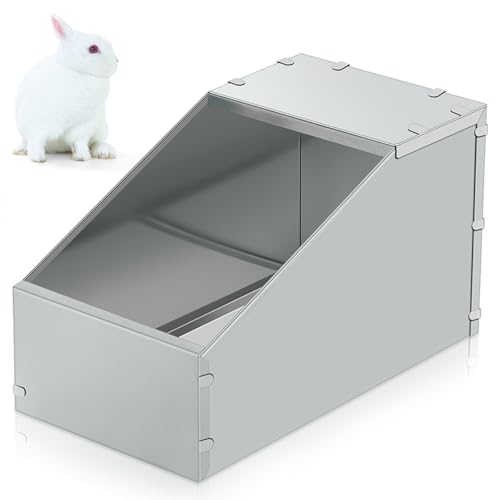
Package Included: the package includes 1 pieces of rabbit nesting box; You will need to assemble and use it after receiving it to provide your rabbit with a comfortable environment
Bucks or Does? Pick the Right Rabbit?
Choose based on personality, but also plan for what hormones can do. Neutered bucks often seem more laid‑back, and they can be sweet and playful, especially with interactive play.
Neutered bucks often feel more laid-back—sweet and playful, especially when you offer interactive play and steady attention.
Spayed does usually act more independent and cautious, and they may engage only when they feel safe.
Either sex can be calm if you socialize them well.
But unspayed does can get territorial, guard food, and handle “hormone moods” less consistently.
Intact rabbits can also mark with urine, mount, and nip.
If you want a better home, spay or neuter, and prevent accidental litters fast.
Frequently Asked Questions
Should I Spay a Female Bunny Even if She’s Calm Now?
Yes—you should spay a calm female bunny. Even quiet girls can develop hormone behaviors and face serious reproductive risks later. Spaying removes uterus and ovaries, prevents life-threatening infections, and stops accidental litters. Ask a rabbit-savvy vet, ideally around 4–6 months.
How Can I Prevent Accidental Litters With a Male and Female Rabbit?
Stop surprises before they hatch: keep them in separate enclosures, use solid barriers, double-check sexes, and supervise any time together. Book spaying ASAP for your female, and avoid contact with an unneutered male.
Are Female Rabbits More Likely to Spray or Mark Territory Indoors?
Yes, female rabbits can spray or mark territory indoors, but you’ll usually see it less than with intact males. Expect more hormone-driven spraying with intact females; spaying often reduces it and helps prevent messy accidents and territorial marking.
What Should I Do if My Spayed Doe Still Digs a Lot?
Roughly 1 in 3 spayed does still digs more than you’d expect—so don’t panic. Offer a big dig box, add paper/hay fill, protect carpets, redirect with a cue, and check stress or medical pain if it worsens.
Can a Neutered Male and Spayed Female Still Mount Each Other?
Yes— even a neutered male and spayed female can still mount. You’ll often see it as normal bonding or dominance behavior, not sex. Let brief mounting slide, but interrupt if it turns aggressive, intense, or causes distress.