You encounter an Isabella German Shepherd, a rare variant arising from homozygous recessive alleles at the B and D loci. These genes convert black eumelanin into muted taupe and lilac tones, creating a distinctive wolf-like appearance. While temperament mirrors standard breeds, owners must monitor for dilution-related dermatologic issues. Continue exploring to understand the full genetic and health implications.
Swift Summary
- Isabella German Shepherds result from double-dilute genes creating a unique lilac coat.
- Their pale, wolf-like appearance features desaturated tones and absence of standard black pigment.
- This rare color is considered a fault by major kennel clubs and not for show.
- Owners should monitor for health risks like color dilution alopecia and skin sensitivity.
- Their temperament mirrors standard German Shepherds despite their uncommon and striking visual traits.
What Is an Isabella German Shepherd
Because the Isabella German Shepherd results from combined liver and blue dilution genes, you’ll observe a rare, double-dilute coat classified as lilac or lavender.
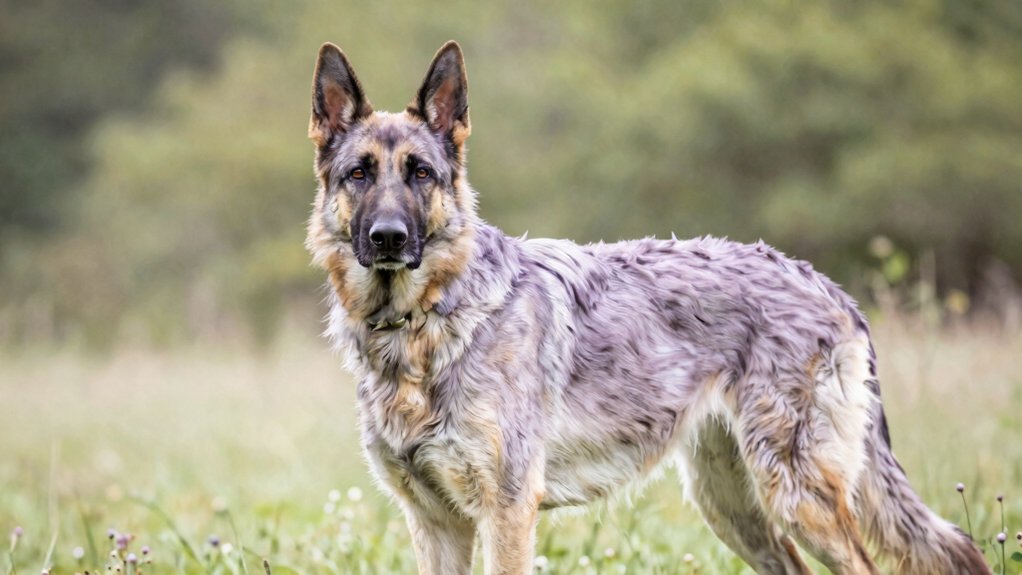
You see a purebred variety distinct from standard colors, lacking black pigment entirely on noses, paws, and eye rims. Compared with the sable coat, which features black-tipped hairs over a lighter base, the Isabella coat lacks black pigment altogether. Its diluted brown tones range from pale taupe to dusty fawn.
You note light blue, amber, or hazel eyes contributing to a striking, predatory gaze.
This specific phenotype creates an Isabella German Shepherd wolf resemblance due to muted earth tones and solid appearance.
Breeders classify it as legitimate purebred genetics despite non-standard status.
You recognize it remains exceptionally uncommon within breeding programs, often appearing only sporadically even when parents carry dilute genes.
Major kennel clubs classify this coloration as a fault, yet enthusiasts document its unique visual characteristics extensively.
Isabella is a distinctive coat variation in German Shepherds known as the Isabella German Shepherd.
Isabella German Shepherd Genetics Explained
How do the specific genetic mechanisms behind the Isabella German Shepherd phenotype function? You must understand that this rare coat requires homozygosity at two independent loci: the B locus for liver (b/b) and the D locus for dilution (d/d).
The recessive b/b genotype converts black eumelanin to brown, while d/d further dilutes this pigment into a silvery lilac or taupe shade.
You observe that standard black and tan Shepherds often carry hidden alleles; breeders must test for B and D loci to identify carriers accurately.
Because four specific recessive alleles must align, the probability of producing an Isabella puppy remains low.
This double-dilute mechanism explains the phenotype’s rarity.
You assure responsible breeding by verifying genotypes before mating.
Breeders who transport dogs to health testing appointments or breeding trips can keep food, water, and waste supplies organized in a dog travel bag designed for on-the-go essentials.
Understanding the Isabella Wolf-Look
You observe a wolf-like profile defined by the Isabella aesthetic tone, which manifests as a rare dilute appearance through genetic pigment dilution.
This phenotype reduces melanin saturation, producing soft, desaturated fur colors that mimic wild canid coats.
Consequently, the resulting visual characteristics emphasize structural outlines over standard breed coloration. Although the coat color draws attention, German Shepherds are also distinguished from Rottweilers by their lighter, more athletic build.
Isabella German Shepherds are a unique variant distinguished by their distinctive coat color, resulting from a rare genetic trait that dilutes black pigment, producing a blend of cream, black, brown, and sometimes lavender or bluish undertones.
Wolf-Look Profile
When you examine an Isabella wolf-look German Shepherd, you see a double-dilute liver dog expressing a sable or wolf-gray pattern that produces a pale, grizzled, wolf-like coat.
You observe individual hairs displaying multiple color bands along their length, typically featuring lighter bases with darker or diluted ends. This pattern retains the original dominant structure found in German Shepherds, but you note the distinct absence of black pigment.
The coat’s contrast softens considerably because deep black bands convert to pale taupe or dusty fawn shades. You recognize these dogs carry multiple recessive alleles, making this phenotype exceptionally rare. This rarity stems from the need to inherit both recessive genes from parents who carry them.
Moreover, you must inform potential owners that double dilution links to increased risks of color-dilution alopecia, requiring attentive care from you.
Isabella Aesthetic Tone
Although the Isabella wolf-look aesthetic centers on soft, desaturated liver-based hues, you observe a cohesive pastel mood across the coat, nose, eyes, and skin. You notice pale taupe, dusty lilac, and creamy beige tones defining the spectrum. The absence of black pigment removes harsh outlines, softening the silhouette.
Uniform pale pigment produces low contrast between body regions. Light pink or soft brown noses, paired with blue or gray eyes, enhance a gentle facial expression. Silvery overlays on golden bases create a muted metallic sheen. This dilution of eumelanin reduces shadow depth within feathering. You see how these elements combine to form a harmonious, understated visual character. You understand that this specific pigment distribution supports a calm aesthetic, enabling you to accurately serve breeders and owners seeking precise color identification and care for these unique dogs.
These dogs result from inheriting a second dilution gene on liver, producing a light or deep golden coat.
Rare Dilute Appearance
Because the Isabella German Shepherd’s double-dilute (bb dd) genotype simultaneously suppresses eumelanin and dilutes pheomelanin, you observe a coat lacking black pigment that presents as a pale, muted, lilac-taupe or silvery-beige hue.
This double dilution uniformly lightens skin, nose, paw pads, and eye rims to pink-liver tones, reinforcing a wild-type visual impression. You note eyes typically appear light blue, hazel, or amber, enhancing the dilute aesthetic.
Clinically, this non-standard color carries potential risk for color dilution alopecia and heightened sun sensitivity due to reduced melanin. Serving owners responsibly means monitoring coat quality, providing shade, and prioritizing companionship over conformation.
You must educate clients about these physiological implications and health considerations when working with these rare dogs.
Are Isabella German Shepherds Rare?
Why are Isabella German Shepherds considered rare? You must understand this coat color arises from a rare genetic combination. The Isabella phenotype requires the dog to inherit two recessive liver alleles and two recessive blue alleles simultaneously.
This specific genotype occurs in only one out of sixteen puppies when both parents carry the necessary genes. Consequently, Isabella Shepherds represent the rarest color variation within the breed.
Major kennel clubs classify this color as a non-standard fault, discouraging intentional breeding for show purposes. Breeders often avoid these matings, further limiting availability.
You’ll find these dogs primarily in niche pet markets rather than working lines. This scarcity drives significant pricing differences compared to standard coat colors like black and tan. Owners should also monitor their dog’s body condition over time, since healthy weight for a German Shepherd varies with age and sex.
Isabella German Shepherd Health and Temperament
You’ll observe that Isabella German Shepherds share standard breed health risks, including hip dysplasia, color dilution alopecia, and degenerative myelopathy. Owners should watch for early warning signs such as progressive hind leg weakness, dragging paws, or stumbling, which can indicate degenerative myelopathy in an aging dog.
These dogs maintain a loyal, vigilant temperament with high exercise and mental stimulation requirements due to their working drive.
Proper veterinary care and structured activity are essential for managing their musculoskeletal health and behavioral needs.
Common Health Concerns
How do Isabella German Shepherds compare to standard lines regarding health risks? Their health profile largely mirrors standard German Shepherds; dilute genetics primarily influence dermatologic issues rather than adding systemic disease burdens. You must recognize that selecting for recessive blue and liver dilution genes narrows the gene pool, increasing long-term susceptibility to hereditary disorders.
You will observe that breed-wide orthopedic concerns remain prevalent. Approximately 20% develop hip dysplasia and 15% face degenerative myelopathy. These conditions cause progressive weakness and chronic pain regardless of coat color.
Dilute lines also face color dilution alopecia, leading to patchy hair loss and irritation. You should screen for bloat and guarantee responsible breeding to mitigate these risks.
Typical Temperament Traits
Although coat color genetics don’t fundamentally alter core behavior, you’ll observe that Isabella German Shepherds exhibit temperament traits identical to standard lines when breeding and socialization are sound. You’ll see direct, fearless, self-confident expressions aligned with breed standards.
Their temperament features strong nerves, good-natured character, and resilience suitable for companion and working roles. You’ll note their curious, attentive style favoring observation over indiscriminate social engagement.
These dogs demonstrate high intelligence with exceptional trainability, showing strong will-to-please drives supporting service functions. However, you must address their occasional stubbornness through firm, consistent training structures.
Their inherent guarding instincts create natural watchdog roles with vigilant alerting behaviors. You’ll observe reserved attitudes toward unfamiliar people until environmental assessment occurs.
Strong bonding capacities form deep attachments to primary caregivers, with affectionate interactions within family contexts. You must manage their high energy levels with structured mental and physical stimulation.
Prolonged isolation risks separation anxiety requiring proactive engagement strategies.
Are Isabella German Shepherds Show Standard?
You must recognize that major kennel clubs classify this coat as a serious fault. AKC standards require rich pigmentation, rejecting pale, washed-out tones like Isabella’s dilute liver and blue combination.
While you can register these dogs, conformation judges consistently penalize them for deviating from the ideal working-dog type. Evidence shows Isabella coats fall outside accepted color lists, which prioritize black, tan, sable, and solid black.
You’ll observe that breed experts group these shades with non-standard colors, effectively barring competitive success. Registrable yet disqualified from ideal evaluation, these dogs face predictable downgrading.
Consequently, if you aim to serve breeders seeking show eligibility, you should advise against pursuing Isabella phenotypes for conformation careers, as standards explicitly exclude such dilute variations. German Shepherds are valued for police and K9 work because their intelligence, trainability, and strong working drive are the traits breed standards emphasize most.
Isabella German Shepherd Ownership and Costs
Why consider the financial implications of Isabella German Shepherd ownership? Acquiring this rare coat color demands higher upfront investment. Purchase prices range from $1,000 to $5,000, driven by scarcity compared to standard German Shepherds. Adoption costs remain comparable at $150–$300, yet supply is limited.
Annual maintenance averages $2,000–$7,000, covering nutrition, veterinary care, and preventives. Insurance premiums often reach $480–$1,080 yearly due to breed-specific orthopedic risks. Initial healthcare setup requires several hundred dollars for vaccinations and spay/neuter procedures.
Lifetime expenditures project between $18,000 and $35,000. You must evaluate these recurring expenses carefully. Your budget should account for the lifetime cost of food, veterinary care, insurance, grooming, and supplies. Ensuring you can sustain this financial burden guarantees you provide prime, evidence-based care.
Understanding these economic factors enables you to serve these animals effectively throughout their lifespan without compromising welfare standards or nutritional needs.
Frequently Asked Questions
How Do Isabella German Shepherds Compare to Wolf Hybrids?
You must grasp this: Isabella German Shepherds are wildly predictable service dogs, whereas wolf hybrids behave like explosive, unpredictable wild predators. You will never confuse their stable, trainable temperaments with the chaotic, aggressive nature of true wolf genetics.
Is Isabella German Shepherd Coat Color a Good Choice for Families?
Yes, you can choose an Isabella German Shepherd for your family, provided you verify health clear, commit to daily exercise, and accept the color’s non-standard status when selecting a responsible breeder for your household’s needs.
Can Isabella German Shepherds Compete in Working Trials and Sports?
You can enter Isabella Shepherds in most sports, but serious pigment faults often exclude them from conformation shows and elite breeding endorsements under standard registries, limiting their full working-trial pedigree recognition.
How Does Sunlight Affect the Visible Shade of an Isabella Coat?
Does your Isabella’s coat shift under the sun? Sunlight bleaches pigment, lightening diluted hairs in direct rays. This UV damage fades color, creating uneven, warmer, or patchy tones that you must monitor to preserve the dog’s unique, healthy appearance.
Do Isabella German Shepherds Require Different Grooming Than Standard Colors?
Isabella German Shepherds require intensified grooming due to their longer, silkier coat texture. You must brush more frequently to prevent matting, use gentle shampoos for dilute pigment, and guarantee thorough drying to avoid skin irritation under the dense double coat.