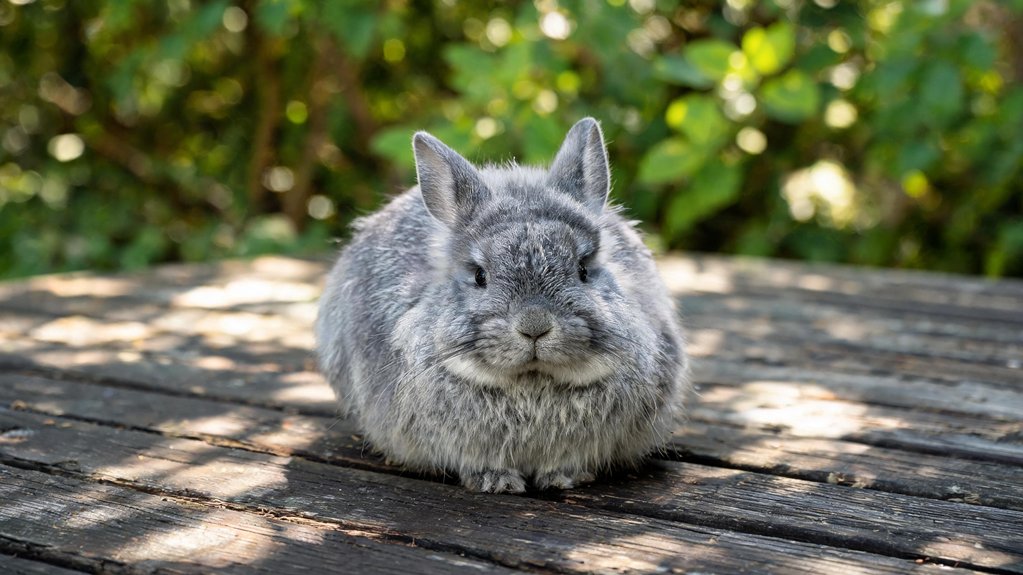
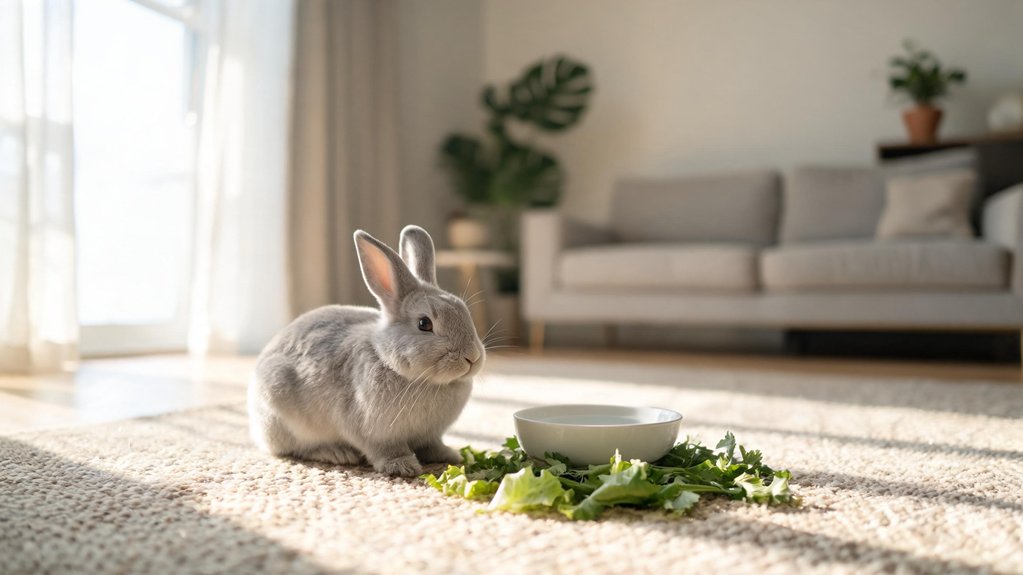
Your rabbits usually stay pregnant about 31 days after mating, and that’s the classic “one month” estimate. Normal gestation often falls around 30–33 days, but it can range roughly 28–35 days. To plan, add ~31 days from the breeding or conception date. In the last week, you’ll see nesting, digging, and fur-pulling, then kindling. After birth, milk starts right away, and the doe can go back into heat within 24 hours, so keep her separated—there’s more to know next.
Swift Summary
- Domestic rabbits are typically pregnant for about 31 days after mating/conception.
- The normal gestation range is roughly 28–35 days, so due dates should allow variation.
- Gestation timing can vary by breed and doe size, and by litter size.
- Small litters often run closer to day 32–33, while large litters may arrive closer to day 31.
- Near kindling signs include nesting, fur pulling, and appetite changes during the final 1–7 days.
How Long Are Rabbits Pregnant? (Gestation Answer)
Roughly, your rabbit’s pregnancy lasts about a month—most domestic rabbits give birth (called kindling) around 31 days after mating.
Roughly, a rabbit’s pregnancy lasts about a month, with most domestic rabbits kindling around 31 days after mating.
If you’re wondering how long is rabbit pregnancy, most will kindle in about 30–32 days.
How long is rabbit gestation? Expect a common window of 28 to 35 days, depending on breed and litter size.
Typically, does carrying smaller litters can run a bit longer.
Typically, pregnancy is induced ovulation, so mating can trigger pregnancy even without any obvious cycle signs.
So, how long does a rabbit stay pregnant? Track day 0 as mating day, and prepare for 4.5 weeks.
For safety, get your rabbit spayed or neutered to prevent accidental litters.
What’s the Normal Rabbit Gestation Range?
Most domestic rabbits carry their babies for about 30–33 days, and that’s the most common “normal” window you’ll hear from vet and pet-care references.
If you’re wondering how long is a rabbit pregnant, plan for roughly one month.
But “normal” isn’t always one exact day.
Many references list about 28–35 days as a wider, healthy range, influenced by litter size, breed type, and even temperature or diet.
And yes, a rabbit gestation calculator can help you estimate, yet it can’t predict perfectly.
When can rabbits get pregnant?
They can mate again soon after, so spay or neuter to prevent accidental litters.
How to Calculate Your Rabbit’s Due Date
Once you know the normal rabbit gestation range, you can figure out when to expect babies.
First, use the due-date core: expected kindling date = breeding (or conception) date + about 31 days. Most calculators use 31 as the default, but you can adjust within roughly 28–35 days. Rabbit gestation is about 31 days, so the due date is based on that typical timing.
If you only know one confirmed mating day, add 31 days.
You’ll also get a normal kindling window, often around day 28 to day 33–34.
If breeding happened over several days, use first and last exposure.
Finally, protect your rabbit—spay/neuter lowers accidental litter stress.

Comprehensive Package: with 34 items including a rabbit litter box, a pet blanket, a small pet nail scissors, two straw mats, a mini dustpan and brush set, thin rabbit cage liners, a small pet bowl, a hanging automatic food and water dispenser, rabbit toys, a rabbit leash set, a rabbit tunnel, a set of rabbit stacking cups in 8 different colors and a grooming kit

Package Includes: the rabbit supplies starter kit is designed to meet all your pet care needs; 104 items including a rabbit litter box, a pet blanket, a small pet nail clippers, two straw MATS, a mini dust pan and brush kit, a small pet bowl, a hanging automatic food and water dispenser, rabbit toys, rabbit tunnels, grooming and cleaning kits, A set of 12 door small animal enclosures and a cage waterproof floor mat to meet the needs of your small pets and provide them with comfort and enjoyment

【Christmas Advent Calendar2026 for Small Pets】Perfect Holiday-exclusive small pet treats, ideal for rabbits, hamsters, and guinea pigs, chinchillas, and other small animals. It combines nutrition with grinding effect, It effectively trims overgrown teeth and also meets your pet’s daily dietary needs , relieve pets’ boredom. (Timothy Hay + Alfalfa: Best for rabbits and chinchillas; Seeds/Grains: better suited for hamsters) Tip: Please feed in small amounts.
Why Do Rabbit Pregnancies Vary by Breed and Size?
Rabbit pregnancies can vary by breed and size because their bodies handle pregnancy a little differently from one doe to the next.
You’ll usually see rabbit gestation about 28–35 days.
Genetics matter: some breeds tend long, like Flemish, while others run shorter, like Belgian.
Doe size matters too.
Smaller breeds may deliver closer to 28–30 days, while larger breeds may land nearer 32.
Their uterine and placenta “work area” also differs, which affects how long kits need to grow.
So, always plan for up to 35 days.
Spay and neuter to prevent accidental litters.

DIMENSIONS: Spacious 24 x 24 x 16 inch cage provides ample room for rabbits, guinea pigs, and other small pets to move comfortably

Easy clean tray – Deep pull-out tray with waterproof bottom helps prevent leaks and makes daily cleaning fast and simple with HOMESTEAD rabbit cage indoor

DIMENSIONS: Spacious 24 x 24 x 16 inch cage provides ample room for rabbits, guinea pigs, and other small pets to move comfortably
How Litter Size Changes Rabbit Gestation Length

You’ll notice a pattern when you’re watching for kindling: small litters of 1–2 kits often run about 32.4–32.5 days, while larger litters tend to arrive sooner, around 31.3–31.5 days for 9–14 kits.
But don’t treat litter size like a timer—most domestic rabbits still deliver in that 28–35 day window, with many kits born around 31–32 days.
Keep spaying and neutering a priority, because accidental litters can happen fast, and your “due date” can shift a day or so with the number of babies.
Small Litters, Longer Gestation
Small litters can quietly stretch out rabbit pregnancy a bit, so keep an eye on the calendar.
If you’re expecting 1–2 kits, many does still kindle around 31–33 days, but timing can drift upward, even past day 35.
That matters for safety.
With fewer fetuses, weaker “parturition” (birthing) signals and less uterine stretch can delay contractions.
You’ll want to be ready by day 32, especially if nothing has happened.
If kindling doesn’t start, call your vet promptly.
And remember, spay and neuter to prevent accidental litters.
Large Litters, Shorter Gestation
When a doe carries a larger litter, her pregnancy often runs a bit shorter, and that means you need to watch the calendar closely. Most domestic pregnancies center around about 31 days, but large litters can kindle a day or two earlier than the typical 30–32 day window.
You’re also more likely to see litters arrive around days 30–32, yet very large groups may show up near day 28–35.
Plan ahead, and keep nesting supplies ready.
If you don’t want accidental litters, spay and neuter, seriously.
After day 32, ask your vet about stillbirth risk.
What Timing Signs Mean Kindling Is Near?
How can you tell that kindling—meaning giving birth—is getting close? Start by counting days from breeding, because most rabbits kinde around day 31, right within a 28–34 day window.
In the last week, you may see your doe get more withdrawn, and then more “busy,” like digging and scratching corners, plus extra hunger. Her belly may look fuller by days 24–28, and you might notice jerky fetal kicks.
In the final 1–24 hours, the strongest sign is fur-pulling from her chest, belly, and dewlap. Also expect brief food refusal.
After spaying, avoid accidental litters.
What Nesting Behavior Should You Expect Before Birth?
A few days after you start seeing the kind of “busy” digging and food-getting-up-again energy that tells you birth is close, your doe usually turns that restlessness into full-on nesting.
Around days 25–26, she often completes a clear sequence, and it usually finishes within the final day before parturition, which means giving birth. First, you may notice digging about 6–8 days before kindling, then she gathers hay or straw, carries it in her mouth, and keeps rearranging it.
Next, she pulls fur from her belly and chest, sometimes up to five days early, sometimes just the last one to two days. Provide quiet shelter. A sturdy nest box lined with clean straw gives her a secure, enclosed space where she can build her nest and kindle safely.

Natural Straw: Natural straw, sun-dried and free from chemicals. This Garden Straw won’t sprout during use, making it perfect for Excellent Animal Bedding. Directly sourced from farmers, it offers your pets a natural, safe environment while also being ideal for gardening. Use it with confidence
Natural Straw: Natural straw is sun-dried. This garden straw stays intact without new growth, making it perfect for excellent animal bedding. Directly sourced from farmers, it offers your pets a natural, safe environment while also being ideal for gardening. Use it with confidence

WOVEN GRASS MAT: Hand-woven grass rabbit bed has the scent of the outdoors that your little pet loves. Please note that because this is a hand-woven product, each pet bedding mat is not always the same size
What Happens During Kindling and the First Hours?
When kindling starts, you’ll usually see it happen at night or very early morning, and it typically runs about 15–30 minutes from the first kit to the last, with kits coming every 1–5 minutes.
After that, you won’t usually catch nursing right away—expect the doe’s first brief “milk bar” session (about 3–5 minutes) sometime within the first 24 hours, and then just once a day for a bit, because newborn kits need that warmth and milk to stay hydrated.
But here’s the part that really matters for planning: once birth is over, the doe can go into postpartum estrus (can come back into heat soon), so if you don’t have her spayed or you’re not keeping males fully separated, an accidental litter can happen fast.

ODOR ABSORBENT TO MINIMIZE PET ODORS: Effectively neutralizes odors to keep bunny bedding & hamster bedding fresh; Ideal for pet bedding, ferret cages, and litter boxes, it helps maintain a clean environment for your pets and a better experience for you

ODOR ABSORBENT TO MINIMIZE PET ODORS: Effectively neutralizes odors to keep bunny bedding & hamster bedding fresh; Ideal for pet bedding, ferret cages, and litter boxes, it helps maintain a clean environment for your pets and a better experience for you

✔ NATURAL - Made from 100% natural Virginia-grown cotton
Kindling Timing And Stages
Kindling is the big moment, and it usually lands near the end of your doe’s pregnancy. Gestation runs about 28–35 days, with most does kindling around day 31.
Two to three days before, she packs the nest, and you’ll see more carrying hay or straw. In the final day, she pulls fur from her chest and belly to line it.
Hours before, she gets restless, eats less, then keeps popping between the nest box and the cage.
Early labor can start up to five days ahead. Then active pushing begins, and the whole birthing process often takes 10–30 minutes.
Nursing Schedule After Birth
After she finishes giving birth, you’ll notice nursing starts right away—because suckling triggers milk let-down.
Give her at least one hour of quiet first. Let her clean kits, eat placentas, then settle.
Kits begin nursing within 24 hours, and their first meal is colostrum, rich in antibodies for immunity.
During the first 24 hours, warmth and feeding are most critical.
You may see a rounded belly and a white “milk spot” through translucent skin.
Domestic does usually nurse once daily, sometimes twice, often at dawn or dusk.
Each bout lasts 1–5 minutes, about 3.
Check daily, briefly.
Postpartum Estrus Window
Once you’ve confirmed she’s finished giving birth and started nursing, watch for the postpartum estrus window—because your doe can go back into heat shockingly fast.
Kindling (birthing) wraps up in about 15–30 minutes.
Right after, postpartum estrus can begin within ~24 hours.
That means she may ovulate only when she’s mated, since rabbits can be “induced ovulators.”
During this time, you’ll see less foraging and drinking, more grooming, plus restlessness, chin rubbing, and strong interest in other rabbits.
Her vulva may look slightly swollen, moist, and reddish.
Keep her separate, prevent accidental litters.
If breeding, note receptive posture.
When Do Does Go Back Into Heat After Giving Birth?
Right after your doe gives birth, you should think “back to breeding mode fast,” because she can sometimes accept a buck within hours.
Rabbits don’t have a monthly cycle like cats or dogs. Instead, a doe becomes receptive when she accepts mating, since ovulation is triggered by the buck.
She can be ready immediately after kindling, and conception can happen the same day.
Many caretakers still choose a rest and schedule rebreeding around 9–14 days, or 14–21 days, to protect her condition.
If you want to prevent accidental litters, spay her.
When Gestation Runs Short or Long: What Are the Risk Levels?
If your doe kindles way early—before day 28—that’s premature, and it raises the risk that the kits won’t be able to stay warm or nurse well.
If she runs long past about day 34–35, you’re in complication territory, because the babies may get too big or get into the wrong position, which can lead to difficult labor (dystocia).
And if this ever happens, keep her under close watch and call an experienced rabbit vet fast, especially since accidental litters can surprise you even with “no signs” sometimes—this is why spaying and neutering are so important.

Warmth for Small Animals & Turtles: This 11.8 x 8.2-inch, 25W heating pad provides a warm resting spot for rabbits, guinea pigs, chicks and turtles. For indoor enclosures and covered outdoor use.

Warmth for Kittens & Small Animals: This 15.7 x 11-inch, 30W heating pad provides a spacious resting surface for cats, kittens, rabbits and guinea pigs. For indoor use and covered outdoor pet houses.

Small Heating Pad for Small Pets: This 9.4 x 6.5-inch, 10W pad provides a warm resting spot for rabbits, guinea pigs and chicks. Its compact size fits indoor enclosures and covered outdoor hutches.
Shorter Than 28-Day Risk
When rabbit gestation runs short—especially before 28 days—you should treat it as a high-risk situation, not a “normal variation.”
Most pet rabbits kindle around day 31, with a typical range of about 28–33 days depending on breed and body size.
If a litter arrives before 28 days, you’re looking at premature birth.
Those kits are often smaller, less furred, and can struggle to keep warm.
They’re also more vulnerable because late-gestation lung, brain, and gut growth doesn’t finish.
You’ll want to reduce stress, get a vet check fast, and prevent accidental litters by spaying/neutering.
Longer Than 35-Day Complications
Once your doe passes the usual kindling window—especially if she hasn’t delivered by day 32–33—you should treat it as more than “just taking a little longer.”
Most pet rabbits kindle around 30–32 days, with most normal litters arriving by about 33 days, so going past 35 days moves into abnormal, higher-risk territory.
And yes, risks rise: you may see stillbirths or non-viable kits, especially if placental function or her condition is off.
But don’t wait—call a rabbit-savvy vet right away.
Also watch for small litters, stress, and signs of distress.
Finally, prevent accidental litters: spay her when safe.
Frequently Asked Questions
How Long Is a Rabbit Pregnant From Mating to Birth?
You’ll see pregnancy lasts about 30–33 days from mating to birth. Most does kindling around day 31–32. Plan for 28–35 days, because timing varies. After mating, offer quiet care and prevent accidental litters—spay or neuter.
When Can Rabbits Get Pregnant After Spaying or Neutering?
After spaying, you can’t get pregnancy—sterility starts right after surgery. After neutering, keep males away from females for at least six weeks, since stored sperm can still cause accidental litters.
Can a Rabbit Be Pregnant for 28 Days and Still Have Live Kits?
Yes—you can see live kits at about 28 days. Rabbits often give birth between 28–33 days, so don’t panic. But if she’s still pregnant past day 32, call your vet. Also prevent accidental litters by spaying/neutering.
How Soon After Giving Birth Can a Doe Become Pregnant Again?
You can expect your doe to become pregnant again as soon as 24 hours after giving birth, especially once kits nurse less. She can ovulate with any mating. Avoid accidental litters; spay/neuter helps.
What Are the Safest Signs to Watch for if No Kits Appear by Day 32?
Watch your doe closely: keep nesting behavior and fur pulling, but if she’s straining, looks unwell, or no kits show by day 32, call a rabbit-experienced vet today. Monitor appetite, breathing, and any distress. Consider spaying to prevent accidental litters.