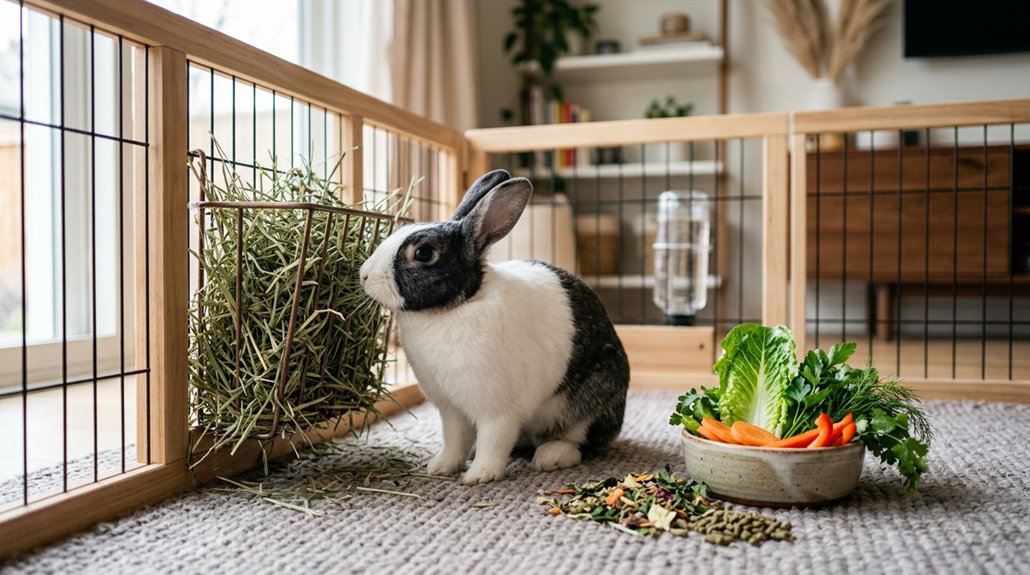
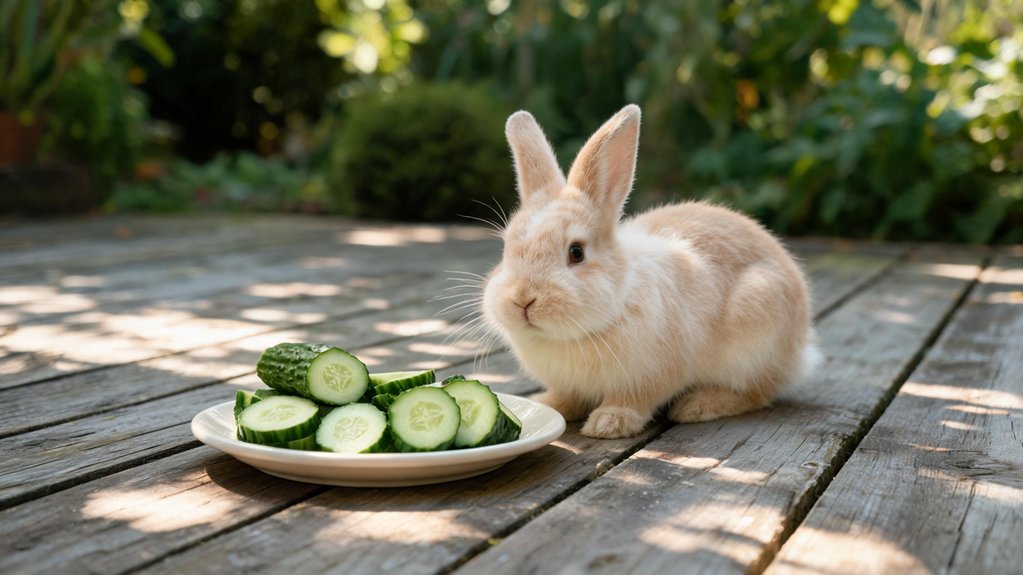
Yes, you can feed your rabbit cucumber, but keep it small and plain. Wash it under cool water, then offer 1 thin slice at first as a test, no mixed foods. For most adult rabbits, 2–3 thin slices, up to 2–3 times per week, works well. Cucumber is mostly water and low fiber, so too much can cause soft stools. Watch droppings and cecotropes for 24 hours, and stop at diarrhea, bloating, or lethargy—then you’ll want the next tips.
Swift Summary
- Rabbits can eat fresh, plain cucumber as an occasional treat in small portions.
- Offer only 1 thin slice at first, then typically 2–3 thin slices for healthy adult rabbits.
- Feed cucumber about 1–3 times per week, and skip for rabbits under 12 weeks.
- Avoid old, moldy, bitter, pickled, or salted cucumber, and wash before serving.
- Too much cucumber can cause soft stools or diarrhea due to its high water and low fiber; stop and contact a vet if symptoms persist.
Can Rabbits Eat Cucumbers Safely?
Yes—cucumbers are generally safe for rabbits, and you can usually offer them as an occasional treat as long as you keep portion size small.
If you’re asking, can rabbits eat cucumbers, the answer is yes, with limits.
You can give them cucumbers for hydration because they contain a very high amount of water, but you still need to keep the serving small to avoid stomach upset.
Will rabbits eat cucumbers? Many will, so you can tempt them gently.
Offer fresh, washed cucumber, and feed only 2–3 thin slices for an adult.
Give it once to three times a week, or even just a small sliver once weekly for sensitive bunnies.
Never serve old, moldy, bitter, pickled, or salted cucumber.
After their treat, watch for soft stools.
Nutrition and Benefits of Cucumber for Rabbits
Cucumber isn’t just a fun, crunchy snack—you can think of it as a small, water-rich treat that still fits into a rabbit’s overall diet. With about 95–96% water, it helps support hydration, especially on warm days when your rabbit may drink less from the bowl.
95–96% water It’s also very low calorie, so you can offer it occasionally without pushing weight up. You’ll get modest vitamins and minerals, like vitamin K, vitamin C, potassium, and a little magnesium.
Leave some skin on for extra fiber, which helps chewing and gut motility. Serve small slices, and keep leafy greens primary.
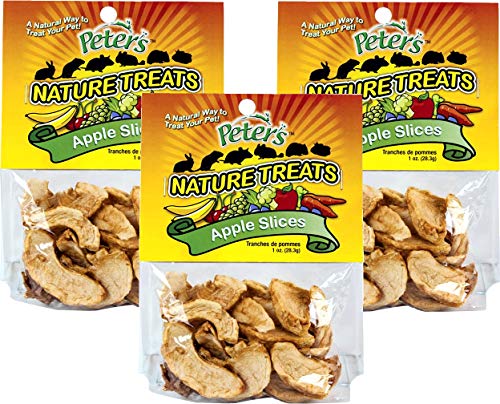
Nature Treats Apple Slices 1 oz., 3 pack (3 oz. total)
Natural Ingredients: This papaya rabbit chew treats crafted from organic green papaya fruit, rich in vitamins and natural enzymes to support digestion, dried papaya shredded treat for rabbit, chinchillas, guinea pigs and other rodents

Natural & Healthy Herbivore Treats, Tailored for Pets: Our carrot slices and pea flakes are sourced from nature, with no artificial additives, making them perfect rabbit food and chinchilla food options. The carrot slices are carefully dried, while the pea flakes are physically pressed, preserving the original nutrients and flavor of the ingredients. They are ideal healthy treats tailored for your herbivorous pets
Risks of Diarrhea and Gut Upset From Too Much Cucumber
Too much cucumber can quietly set off tummy trouble for your rabbit, and the main reason is simple: it’s mostly water, with very little fiber. low fibre intake helps explain why cucumber can soften droppings when it’s offered in generous amounts or too often. Fiber helps move food through their gut, and it also adds “bulk” from hay. When cucumber crowds out hay, their stool can soften into mushy, or even runny, diarrhea. And if you suddenly boost watery greens, you can upset gut bacteria, causing cecal dysbiosis (a microbiome imbalance). Watch for soft pellets first, then gas, bloating, less appetite, and lethargy. If diarrhea persists beyond a few hours, call your rabbit-savvy vet. Also, phase greens in slowly.


SUPPORTS DIGESTIVE HEALTH IN RABBITS & GUINEA PIGS: Helps maintain healthy digestion in rabbits & guinea pigs; ideal for pets with sensitive stomachs or prone to GI stasis, promoting better gut motility, nutrient absorption, & overall digestive wellness

PREMIUM INGREDIENTS: This high-fiber supplement is formulated with stabilized Vitamin C and other vital ingredients to support the health of your guinea pig, rabbits, and other small pets; A perfect addition to guinea pig food and pet vitamins
How Much Cucumber Can a Rabbit Eat by Weight?
You can feed cucumber by your rabbit’s weight, but you should keep it “few thin slices” as a treat, not a daily staple.
Start with 1–2 thin slices for smaller rabbits, 3–4 for medium, and up to about 5–6 thin slices for larger rabbits if their gut tolerates it.
For younger rabbits (around 7 months to 1 year), cut that back to about 1–2 oz (30–60 g) per 6 lb body weight, and offer it slowly, less often.
Then stick to frequency limits: for most healthy adults, offer cucumber about 2–3 times per week, but if your rabbit seems sensitive or has had diarrhea, use smaller portions or skip it.


Delicious Pie-Shaped Treat For Small Pets.

A Gentle Friendly Treat Crafted with Care: Bring a touch of freshness to your pet's day with delicately prepared freeze-dried cucumber, one wholesome small animal treats. Light, crunchy, and flavorful, these premium hamster treats turn feeding into a moment of calm happy and curiosity
Weight-Based Cucumber Portions
When you’re thinking about portions, start with your rabbit’s weight, because cucumber is a safe snack only in small amounts. You’ll measure thin slices, not big chunks.
For 1–3 lb dwarf rabbits, offer about 1 thin slice, roughly 1 teaspoon, per treat session.
For 4–6 lb rabbits, give 1–2 thin slices, about 1–2 tablespoons.
For 7–9 lb, aim for 2–3 slices, and for 9–12 lb, 3–4 slices.
Giant rabbits can have about 3–5 slices, up to roughly 3 tablespoons at once.
Offer a few times weekly.
Keep hay and leafy greens first.
Adult Vs Baby Rabbit Amounts
Now that you’ve thought about cucumber portions by weight, age matters just as much, because a baby’s gut (its “microbiome,” the helpful bacteria that help digest food) isn’t ready for watery veggies yet.
For babies under 12 weeks, you shouldn’t offer cucumber at all. They need mother’s milk and alfalfa hay, first.
Between 7 and 12 weeks, avoid all fruits and vegetables, too, since GI trouble can get severe.
Once you reach about 5 months, start cautiously only after leafy greens go well.
For adults, you can serve small cucumber occasionally, inside your normal veggie plan.
Frequency Limits By Body Condition
If your rabbit’s body condition runs on the heavier side, you’ll want to treat cucumber as a rare, tiny “extra,” not a daily snack. For an overweight 4 lb rabbit, keep cucumber at the lower end of non-leafy veg, about 1–2 tbsp/day, and offer it only 1–2x/week.
For 5–8 lb overweight rabbits, aim for 2–3 thin slices, 2–3x/week, while hay stays most of the diet.
If your rabbit is leaner, you can use the normal safe routine: small slices, about 2–3x/week, still dominated by unlimited grass hay and daily leafy greens.
How Often Should You Feed Cucumber to a Rabbit?
You can feed cucumber to your rabbit occasionally, but don’t make it a daily habit. For adult rabbits, offer cucumber as a small treat, about 2–3 times per week at most.
If you prefer, use up to two thin slices each time, 3–4 days per week. Conservative plans are even safer: 1–2 times weekly, with dry “non-cucumber” days in between.
The goal is simple, protect digestion and keep hay primary. Start with a couple of thin slices, then watch droppings for 24 hours.
If you see soft stools, stop and ask your vet. Rabbits under 12 weeks should skip it.

FROM OUR HEART TO YOUR PET’S BOWL: Fresh Is Best freeze dried rabbit for dogs and cats are crafted from 100% USDA rabbit meat, ensuring your pet gets the premium protein; our meat is human-grade, cage-free, antibiotic-free, and wild-harvested, making these rabbit treats for dogs and cats a gentle option

NATURAL SNACK made with a limited number of whole ingredients

✔ HEALTHY - Nutritious blend of pea flakes and carrots ideal for Chinchillas, Rabbits, Guinea Pigs, Prairie Dogs, Degus, and other herbivores
Which Cucumber Parts Are Safe for Rabbits?
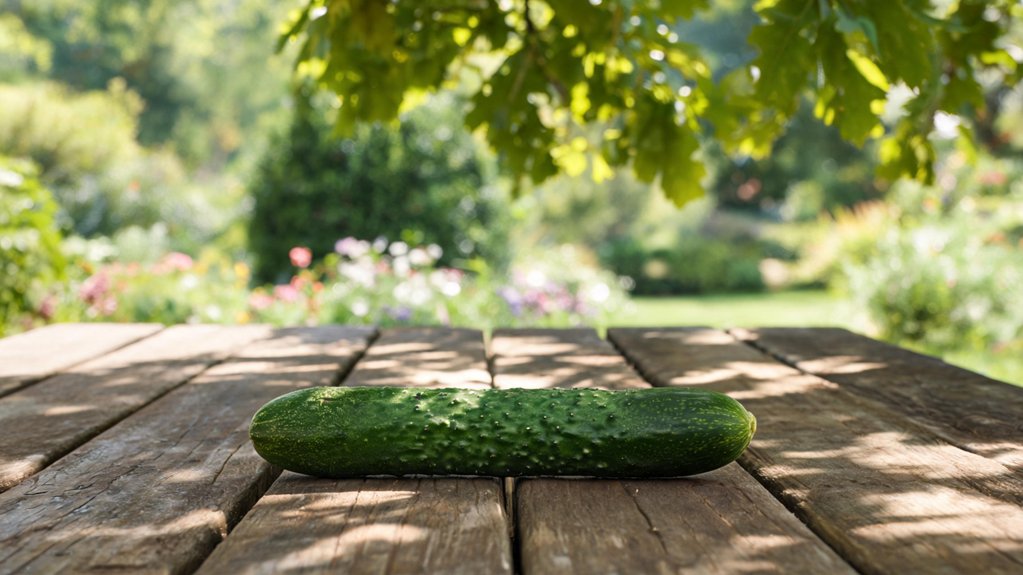
You can share cucumber with your rabbit, and the safest parts are the washed skin and the inner flesh in small, bite-size pieces.
Keep the seed and soft center portions minimal, because bigger seed-heavy servings can trigger soft stools, so aim for a few slices, then stop.
Choose fresh, crisp cucumbers, wash them well (or use organic), and skip pickled or seasoned cucumbers since added salt, vinegar, and spices aren’t rabbit food.
Safe Skin And Flesh Portions
Both the cucumber skin and the pale inner flesh are safe for rabbits to eat, as long as you serve them plain, washed, and raw in small amounts.
And because cucumber is mostly water and fiber, you treat it like a little side, not a meal.
Offer 1–2 thin slices at first, then you can go up to about 2–3 thin slices per serving.
Serve it 2–3 times a week max.
Always remove anything spoiled, bitter, or moldy.
Wash well to reduce wax and pesticide.
Watch droppings, if they get soft, cut back.
Seed And Soft Center Notes
Cucumber skin and inner flesh are okay when you serve them plain, washed, and raw in small amounts, and now it’s time to talk about the seed area and the soft center.
Seeds are usually safe, and many guides say you don’t need to remove them from a normal thin slice.
Still, for baby rabbits under six months, skip seeds.
For adults, keep it around five seeds per treat portion.
For seniors over five years, it’s safer to avoid seeds.
The soft white core is very watery, too much can cause soft stools.
Start tiny, offer 2–3 thin slices a few times weekly, and watch droppings.
Freshly Washed Crisp Choice
Before you slice anything up, go for the parts that give your rabbit the best “crunch-to-juice” balance.
Serve washed cucumber peel first, because it holds more fiber and nutrients than the watery inside.
Slice thin rounds, or small end pieces, then start with 2–3 slices.
If stools stay normal, offer a few more, only several times per week.
Flesh is fine in small portions too, but too much watery flesh can cause soft stools.
Always skip bruised, yellow, moldy, or tough spots, and remove any wax or heavy residue.
How to Introduce Cucumber and Watch for Trouble?
To introduce cucumber safely, start with one thin slice of plain, fresh, raw cucumber for your healthy adult rabbit, and treat it like a small “test.” Wash it well under cool running water, then scrub off any dirt and residues, and cut it into very small, rabbit-sized pieces to lower choking risk from slippery chunks.
Offer only cucumber today, not other new foods. Watch closely for two hours, then remove any uneaten pieces after a couple of hours.
For the next 24 hours, check droppings and cecotropes (soft nutrient pellets). Stop cucumber if you see soft, watery, shiny, clusters, or no droppings 4+ hours. Also stop if hay drops, bloating, gurgling, lethargy, tooth grinding.
Frequently Asked Questions
Will My Rabbit Eat Cucumber if I Offer It?
Yes—you can offer a thin washed cucumber round as a small treat, and many rabbits will nibble it right away. Start with a tiny piece, watch droppings and appetite, and stop if you see soft stool or gas.
Can Baby Rabbits Have Cucumber, or Is It Unsafe?
Yes, but for baby rabbits it’s risky—like tempting their guts to flip out. For under 12 weeks, skip cucumber (too watery). When older, offer tiny chopped pieces as a rare treat and watch droppings closely.
Are Cucumber Seeds Okay, or Should I Remove Them?
Cucumber seeds are usually okay in small amounts for healthy adult rabbits, but you should cut fresh cucumber into tiny pieces. For babies, seniors, or sick rabbits, remove seeds to reduce digestive upset risk.
What Should I Do if My Rabbit Gets Diarrhea After Cucumber?
Like a warning siren, diarrhea after cucumber means act fast: stop the cucumber, give unlimited grass hay, remove most veggies and pellets briefly, keep water available. Watch for blood, no appetite, bloating, or weakness—call a rabbit-savvy vet ASAP.
Is Frozen Cucumber Safe, or Only Fresh Ones?
Frozen cucumber’s safest in very thin slices, briefly frozen, then thawed to cool room temp before feeding. Fresh, plain cucumber is best. Avoid pickled, salty, or seasoned cucumber, and watch droppings for 24 hours.