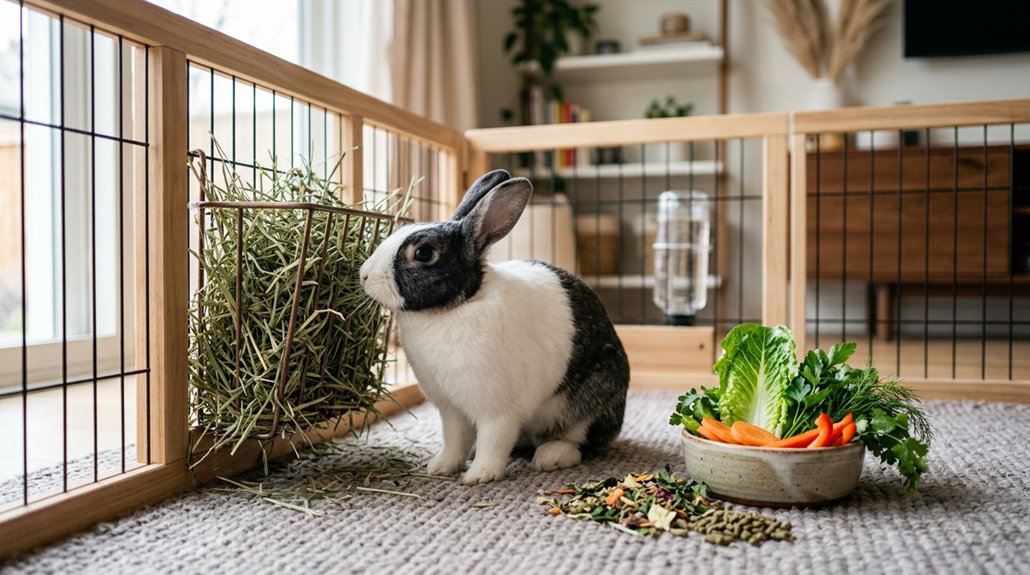
Yes, you can feed your rabbit cabbage, but only as an occasional treat—about once or twice a week, not daily. Small portions help, like 1–2 small leaves for a typical rabbit (or ~1/4–1/2 cup chopped, depending on size). The gas risk comes from fermentable sugars like raffinose, which can upset gut balance and cause bloating. Serve raw, washed, and skip the tough stem/core. Watch droppings and appetite closely, and stop if stools get soft. Keep going, and you’ll pick up more tips.
Swift Summary
- Rabbits can eat cabbage, but only occasionally—typically once or twice per week.
- Cabbage can cause gas because raffinose ferments in a rabbit’s hindgut.
- Keep portions small: about 1–2 small leaves for a typical rabbit, and cut thick stems/core.
- Serve raw, washed, and unseasoned; avoid coleslaw, kimchi, sauerkraut, and salty or oily toppings.
- Watch for bloating, fewer droppings, or soft stool; stop cabbage and contact a vet if symptoms persist.
Can Rabbits Eat Cabbage? Safety Quick Answer?
Yes, you can feed your rabbit cabbage, as long as you do it the right way.
So, can rabbits eat cabbage? Yes, in moderation.
Should rabbits eat cabbage every day? No—think occasional, like once or twice a week.
You can offer 1–2 small leaves for an average-sized rabbit, and treat cabbage like a “bonus” green, not a staple.
Why can’t rabbits eat cabbage freely? Cabbage is non-toxic, but some rabbits get upset bellies from brassicas, and tolerance varies.
If you notice any changes in stool (especially softness or diarrhea), stop feeding cabbage right away and contact your vet for guidance.
Wash it well, serve it raw, and watch stool and appetite.
If anything changes, stop and ask your vet.
What Gas Risks Come From Cabbage?
Cabbage can be safe for rabbits in small amounts, but it can also cause gas—that trapped, uncomfortable buildup inside their gut—especially when you overdo it or your rabbit is sensitive.
Cabbage contains raffinose, a complex sugar. Rabbits don’t digest it well, so it ferments in the hindgut, which makes more gas.
Most rabbits can eat cabbage—but they should still get only a small portion to avoid gas buildup.
That extra fermentable carbohydrate can also upset your rabbit’s helpful gut bacteria and slow digestion.
Watch for a bloated, firm belly, hunched posture, lethargy, or fewer droppings. You may also see reduced appetite, even refusal.
If you notice softer stools or signs of “gassy” discomfort, stop cabbage and call your vet.
Cabbage Portions by Rabbit Weight
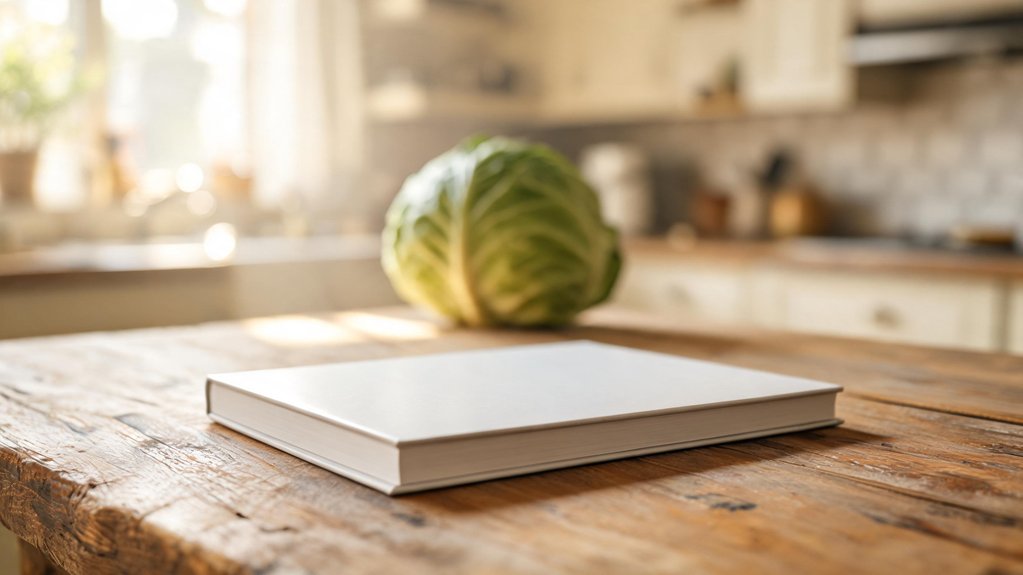
When you give cabbage, you’ll want to think “small and careful,” not “big and often.” Cabbage should stay a tiny part of your rabbit’s daily leafy greens, because too much can lead to gas and gut upset. Cabbage can cause gas and bloating if given in large quantities, so offer only small amounts and monitor closely when you first try it.
Start by matching the serving to body weight, and keep cabbage under about 10% of total leafy greens.
Start by matching the serving to your rabbit’s body weight, and keep cabbage under about 10% of total leafy greens.
For under 4 lb, offer 1–2 small leaves, or up to 1/4 cup chopped. For 4–8 lb, give 2–3 leaves, or up to 1/2 cup. For over 8 lb, use 3–4 leaves, or up to 3/4 cup.
Keep first pieces thumbnail-size.

【Easy Eating】: Our hay feeder is perfect for small animals like rabbits, guinea pigs and chinchillas, making eating easy. Size:6.9 inches long x 4.7 inches wide x 6.6 inches high

PERFECT FOR RABBITS AND OTHER SMALL ANIMALS - This rabbit and small animal feeder is perfect for many different types of small animals, it's easy to use, clean and is compatible with most wire cage types.

Adjustable Outlet: Our pet feeder boasts an adjustable outlet, allowing for versatile food options, ensuring compatibility with the majority of bird, rabbit, guinea pig, cat, and dog feeds commonly available on the market.
How Often Can Rabbits Eat Cabbage?
You can feed your rabbit cabbage, but only as an occasional veggie, usually about once or twice a week, not every day.
Keep portions small, and treat it as just one part of their leafy greens “mix” (hay stays unlimited, pellets stay a small daily amount), because brassicas like cabbage can trigger gas and upset tummies when they’re frequent.
If your rabbit’s a youngster, has a history of soft stools or stasis, or seems sensitive, you should either cut cabbage back even more or skip it and watch droppings after you try it.

Perfect as a hay topper, forage treat, or for its herbal properties
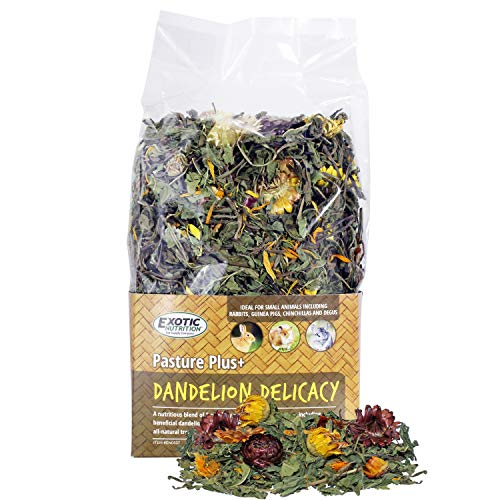
✔ HEALTHY - Rich in essentials minerals and oils, this tasty all-natural treat is a favorite among herbivores.

How Often To Serve
Most pet rabbits shouldn’t get cabbage every day—think “occasional veggie,” not a staple.
For most healthy adult rabbits, serve cabbage only once or twice per week, and rotate it with other safer leafy greens like romaine or herbs.
That keeps their digestion steady, because cabbage can trigger painful gas more when you feed it too often.
And when you’re building today’s salad, give daily leafy greens as usual, then swap in a small cabbage portion just one designated day.
If your rabbit is young, gassy, or has soft stool, ask your vet and go even rarer.
Portion Size And Limits
Cabbage can be a tasty occasional add-on, but portion size matters because some rabbits get painful gas if they overdo it.
Start small: offer one small cabbage leaf piece, or about 1–2 teaspoons chopped.
For many adult rabbits, keep it to 1–2 small leaves per serving.
If you have a dwarf rabbit, use 1–2 small leaves or about 1/4 cup chopped.
Medium rabbits: 2–3 leaves or 1/2 cup.
Large rabbits: 3–4 leaves or 3/4 cup.
As a treat, cabbage should take only a small slice of the daily leafy-greens portion.
Which Cabbage Parts Are Rabbit-Safe?
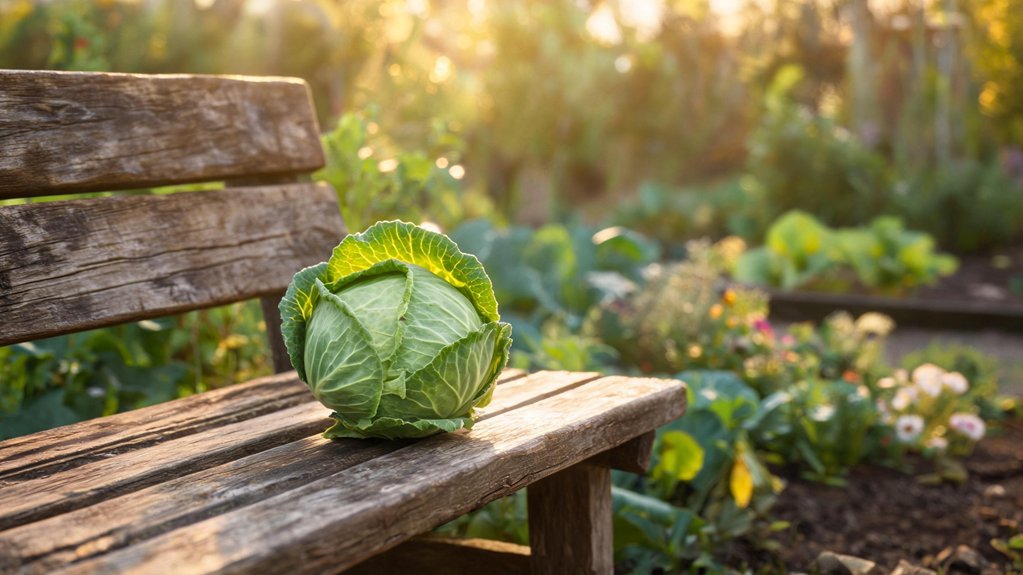
Stick to dark leafy outer cabbage leaves, the crisp kind, and wash them well before you feed them.
But skip the tough white stems and the inner core, because they’re harder to digest and can raise the odds of gas and bloating in your rabbit.
To make it easier and safer, tear the leaves into small, bite-sized pieces and offer only a small amount as part of a varied daily greens routine.
Dark Leafy Outer Leaves Only
If you’re offering cabbage at all, you’ll do best with the dark leafy outer parts, not the pale inner leaves.
Rinse, then pick the crisp, dark-green (or red/savoy) outer leaves.
These give your rabbit good fiber for healthy gut movement, plus helpful vitamins and minerals.
But cabbage is a brassica, and it can cause gas, bloating, and tummy pain in some rabbits.
Serve it as an occasional, small treat.
Try about 1 tablespoon per 2 pounds of body weight, max, and introduce gradually.
Offer fresh greens daily, and keep cabbage in rotation, not every day.
Avoid Stems And Core
After you’ve picked the dark leafy outer parts, it’s smart to skip most of the stem and the core. When you serve cabbage, you’re trying to offer soft, chewable leaf blades, not tough ribs. Stems and the solid head base resist breakdown, and that can raise gas risk.
They also carry stronger plant compounds and higher sulfur, which may upset digestion. But if you really want to use a little, finely chop a tiny pinch, mix it with plenty of leaf, and watch droppings and appetite closely for any change.
Keep cabbage as occasional leafy greens, not a staple.
Outer Leaves vs Inner Leaves for Rabbits
When you offer cabbage to your rabbit, the leaf you pick matters, because outer leaves and inner leaves don’t behave the same in their gut. Choose dark green outer leaves first. They’re more nutrient-dense, firmer, and provide more structural fiber, which supports steady digestion.
Pale inner leaves sit softer and contain more water, so they’re less fibrous and can ferment faster if you overdo it.
Feed cabbage as a small add-on, not a main. Offer 1–2 small leaves once or twice a week, then watch stools. If gas or soft poop shows up, stop.
Best Way to Wash and Prep Cabbage
Wash your hands first, then cut the cabbage into halves or quarters and rinse it under cold running water for about 10–20 seconds, gently opening the layers to knock loose dirt.
Skip soap and fancy “produce washes,” and if you soak it, do a brief cold-water soak to loosen grime, then rinse again and dry it well.
Next, prep it for your rabbit by cutting raw cabbage into small shreds or thin slices, then serve it fresh so it’s clean, not soggy.
Wash Thoroughly, Remove Dirt
Before you serve cabbage to your rabbit, take a few extra minutes to prep it well, because messy leaves can bring in dirt or germs your bunny doesn’t need.
First, select fresh, crisp heads, then trim off loose, torn, or heavily soiled outer leaves. Toss any discolored, slimy, or insect-damaged bits.
Next, rinse each leaf under cool running water, rubbing gently between the folds, for at least 30 seconds per batch.
For extra grit, soak briefly in cool water until sand sinks, then rinse again.
Finally, drain well and air-dry so leaves aren’t dripping.
Feed Raw, Slice Small
Serve cabbage raw and plain, and you’ll set your rabbit up for the best chance of an easy digestion. Pick fresh, crisp heads, and toss damaged outer leaves. Skip seasonings too—no coleslaw, kimchi, sauerkraut, or anything salty, vinegary, oily, or dressed.
Next, cut it small. Remove the tough outer layers and the thick core, then offer tender inner leaf.
Start with one small leaf, about a 2–3 cm square piece. Keep it separate from other new foods, then watch for 24 hours.
If stools soften or appetite drops, stop and contact a vet. Offer room-temp, not fridge-cold.
How to Introduce Cabbage Without Diarrhea
To help you introduce cabbage without diarrhea, start small—and then let your rabbit’s gut tell you what it likes.
Offer a thumb-sized raw leaf piece, or 1–2 teaspoons chopped cabbage, on day one.
Keep your hay and pellets the same, then watch for at least 24 hours before trying again.
On non-consecutive days, use cabbage as only part of your daily leafy-greens mix, topping out around 1–2 small leaves once or twice weekly.
Check droppings, appetite, and gas twice daily.
If you see soft, runny stool, fewer droppings, or belly pressing, stop and call your vet.


Suitable Size: The size of snuffle mat for rabbits is 11.8 inches × 11.8 inches (about 30 cm × 30 cm), and appropriate in size, which is ideal for rabbits, hedgehogs, Guinea pigs, hamsters, chinchillas, ferrets, kittens, puppies and other small pets. Whether placed in a cage, in a fence or on the ground, rabbit snuffle mat can be easily integrated into the living space of pets and become a good helper for daily feeding and playing

✔ HEALTHY - Nutritious blend of pea flakes and carrots ideal for Chinchillas, Rabbits, Guinea Pigs, Prairie Dogs, Degus, and other herbivores
Nutrition in Cabbage for Rabbits (Fiber & More)
Cabbage brings a mix of water, fiber, and vitamins to your rabbit’s bowl, but it also comes with a “fermentable” (gut-microbe food) side that matters for gas risk. You can think of it as supportive roughage, not a hay replacement.
Raw cabbage has moderate fiber, about 2.5–3.1 g per 100 g, and more carbs than grass hay. It’s also water-rich, so it feels filling.
Since its sugars and fermentable carbs feed cecal microbes, big servings can increase gas. Feed cabbage only occasionally in a mixed leafy-vegetable portion.
Benefits of Cabbage in Small Amounts
You can use cabbage as a small nutrient boost for your rabbit, as long as it’s only a little and only a few times per week, with leafy greens making up the daily 10%.
The leaves are also great for hydration, because they’re full of water, which helps keep the gut content moving smoothly.
Just remember, moderation matters—too much cabbage (like other brassicas) can increase gas, so keep it small and rotate with other safe greens.
Nutrient Boost In Moderation
When you give cabbage in small amounts, it can be a nice little nutrient boost alongside your rabbit’s usual menu. Offer dark green cabbage as an occasional part of the daily veggie mix.
You’ll add vitamin C, plus vitamin B6 for food use, and minerals like magnesium and potassium for variety.
The fiber helps gut movement, but it’s fermentable, so keep portions tiny.
Aim for about 1–2 cups of total leafy greens daily, then give cabbage only a small fraction, roughly 10% of that.
Keep pieces bite-size. Watch for soft poop, then scale back.
Hydration From Leafy Greens
Leafy greens help keep your rabbit hydrated, and cabbage can add to that—just not in big, bloaty portions. Leafy greens are mostly water, so they top up fluids when bowls aren’t fully used.
When you feed small amounts of cabbage with other greens, the water and fiber help keep digestion moving. Offer about a tablespoon or two per 2 lb of body weight, then adjust based on stool.
And yes, serve fresh, not wilted, and always keep unlimited grass hay as the main diet. Watch for loose stool, then cut back.
What to Avoid With Cabbage for Rabbits
To keep cabbage safe for your rabbit, think “small amounts, slow pace,” not “big salads every day.” Cabbage is a brassica, and that matters because eating too much or too often can upset your rabbit’s digestion, leading to gas or diarrhea, and it may also affect the thyroid over time.
Avoid using cabbage as a hay replacement, keep hay near 80%. Don’t feed it daily, and don’t offer big portions.
Start with thumbnail-size or 1–2 teaspoons, then only small servings, about 1–2 leaves or 1–2 tablespoons per 2 lb body weight, no more than once or twice weekly.
Skip giving multiple brassicas in one meal.
Signs of Gas or GI Trouble After Cabbage
After you give cabbage, watch for early tummy trouble right away, because gas and slowed digestion (GI stasis means the gut slows down or stops moving) can start fast in rabbits.
After cabbage, watch immediately for tummy trouble—gas and slowed digestion can start fast in rabbits.
If your bunny seems less interested in hay, greens, pellets, or even water, take it seriously.
Watch droppings too: fewer pellets, no poops, small or misshapen stools, or diarrhea can show slowed gut movement.
You might also see a puffy, rounded belly, a hard or tight abdomen, hunched posture, restlessness, or teeth grinding.
If you notice uneaten cecotrophs, that’s another warning sign.
When to Stop Cabbage and Call a Vet
If your rabbit shows any tummy changes after eating cabbage, stop right away.
Remove the cabbage, and watch closely.
If they’re not eating or you notice no fecal pellets for 8 hours, call a rabbit-savvy vet.
If eating stops or poop stops for 12 hours, treat it as an emergency for possible GI stasis, a gut slowdown.
Look for bloating with a firm, taut belly, loud gurgling, or clear discomfort.
Also call immediately if you see hunching, teeth grinding, repeated stretching, sudden weakness, or collapse.
Even after home care, get help if there’s no improvement in 24–48 hours.
Who Should Avoid Cabbage Altogether?
Some rabbits just shouldn’t touch cabbage, even as an occasional “leafy green.”
If you’re caring for a baby or juvenile rabbit, or your rabbit has ever had GI stasis, recurrent gas, bloating, or soft stools, treat cabbage as a no-go food unless a rabbit-savvy vet specifically says otherwise.
And if your rabbit has chronic motility problems, cabbage’s gas can add painful pressure, and that can slow the gut even more.
But you should also skip cabbage when your rabbit seems brassica-intolerant.
Remove it, watch stool and appetite closely, and call your vet if anything acts off.
Cabbage vs Other Leafy Greens: What’s Best?
Cabbage can fit into your rabbit’s veggie rotation, but it works best when you compare it to the other leafy greens first. Choose non-brassica greens most days, like romaine, dandelion greens, carrot tops, and herbs.
Brassicas (cabbage, kale, broccoli) can trigger more gas and bloating, especially in larger portions. For daily feeding, aim for hay/grass as the base, then leafy greens each day, about 1–2 cups of mixed veg per 4 lb body weight.
Add cabbage only occasionally, keep portions small, introduce slowly, and watch for soft stools or diarrhea.

Break Monotony in Daily Feeding:Many rabbits lose interest when fed only hay for rabbits and rabbit pellets, this rabbit forage mix is designed to upgrade everyday rabbit food by adding natural foraging variety without replacing essential rabbit hay

Three Forage Blends: Includes Herb, Flower, and Dandelion Mix for variety.

Seed mix contains oats, barley, winter wheat, triticale & rye cereal grain berry crop plants.
Frequently Asked Questions
Is Cabbage Safe for Rabbits if They Already Get Daily Leafy Greens?
Yes, cabbage can be safe if it’s only an occasional tiny leaf. Even with daily leafy greens, you should start small, wait, and watch poops and appetite—because too much cabbage can cause gas and tummy trouble, fast, seriously.
Why Does Cabbage Cause Gas and Bloating in Some Rabbits?
Cabbage can cause gas and bloating because rabbits can’t digest certain fermentable carbs well; gut bacteria ferment them in the cecum, building gas. If you feed too much or too fast, fermentation overwhelms digestion. Sensitive rabbits feel it more.
How Much Cabbage Should I Offer—One Leaf or Just a Few Bites?
Offer just a few bites: start with a thumb- or thumbnail-size piece (about 1–2 teaspoons chopped) no more than once or twice weekly. Use leafy greens daily for variety, and stop if you see soft stools or bloating.
Should Rabbits Ever Eat Cooked or Pickled Cabbage Like Sauerkraut?
No—you shouldn’t ever feed cooked cabbage or pickled cabbage like sauerkraut to rabbits. Serve only small amounts of raw leafy greens. Cooking and added salt/seasonings raise gas and stasis risks. Stick to unlimited hay daily.
Who Should Completely Avoid Cabbage, and When Should I Call a Vet?
You should completely avoid cabbage for young kits, rabbits with prior gas/soft stool from crucifers, chronic GI disease, underweight or ill rabbits, or if stools turn watery/soft, you see bloating, pain, or appetite drops. Call a vet urgently.