Best rabbit pet insurance in the US usually starts with Nationwide’s Avian & Exotic plan, because it covers both accidents and illnesses, plus vet exams, diagnostics, surgeries, and hospitalization—then reimburses a big chunk (often 50%–90%) after you meet your deductible. MetLife can work too, but it’s only in select states. Typical premiums run mid-teens to low 40s monthly. It’s “worth it” when bills exceed your saved premiums, especially for emergencies—so keep going and you’ll see how to compare caps and limits.
Swift Summary
- Compare rabbit policies by covered conditions (accidents, illnesses, hospital care) and verify exams, diagnostics, treatments, and medications are included.
- Check reimbursement structure—often deductible first, then a set percentage (e.g., 50%–90%)—and confirm annual caps or per-condition maximums.
- Evaluate deductible and premium tradeoffs to see if expected bills exceed saved premium costs, especially for dental/GI stasis emergencies.
- Prefer plans with broad state availability and clear emergency/after-hours coverage that counts under accident or illness claims.
- Use add-on or sub-limit details (e.g., boarding or euthanasia) to avoid surprises when a large bill triggers limits.
Best Rabbit Pet Insurance in the US (Top Picks)
If you’re looking for the best rabbit pet insurance in the US, start with the two “real” options that actually cover rabbits: Nationwide and MetLife.
Nationwide Avian & Exotic Pet Plan is the most broadly available choice since it offers coverage in all 50 states. This rabbit pet insurance comparison makes it easier to answer can you get rabbit pet insurance where you live.
Nationwide often includes accident-and-illness coverage like broken bones, sprains, poisoning, and dental issues. It typically uses an about $250 deductible and limits near $10,000.
MetLife can reimburse 50% to 90%, but only in select states.
Rabbit Insurance vs Discount Plans: Key Differences
Now that you’ve seen the two main real rabbit insurance options, it’s worth comparing rabbit insurance with discount plans, because they work in totally different ways.
Do rabbits need insurance? If you want coverage for accidents, injuries, illnesses, and hospital care, rabbit insurance usually fits best. Taking a proactive approach by considering a pet insurance policy before rabbit health issues occur. You pay a monthly premium, then you meet a deductible, then get reimbursed by a set percent, often with per-condition caps.
But wellness plans and discount plans mainly help with routine care, vaccinations, and exams. Discount plans cut prices at the clinic. They usually don’t reimburse claims, so ask: is rabbit insurance worth it for your budget?
How to Compare Rabbit Pet Insurance Coverage and Limits

When you compare rabbit pet insurance, start by lining up three big numbers: what’s covered, how much they’ll pay, and how often you have to pay out of pocket first (your deductible). Then check limits, too. Look for an annual cap, or a per-condition maximum, so one diagnosis doesn’t burn through your budget. Also, many rabbit policies can reimburse costs for exams, diagnostics, treatments, and medications—often up to 90% after you meet the deductible. Next, review the reimbursement rate, usually after the deductible, often mid-range like 70–90%. Also note sub-limits for extras like boarding or euthanasia. Confirm emergency care and after-hours visits count as accident/illness claims. Finally, read exclusions for cosmetic care, always.
Nationwide Avian & Exotic Plan: What’s Covered
Nationwide’s Avian & Exotic plan can cover a lot of what can go wrong with rabbits, because it includes both accidents and illnesses under one policy.
You can benefit from vet exams, including specialty and emergency visits, plus hospitalization and surgeries.
You’re also covered for diagnostics like X-rays, MRI/CT scans, ultrasounds, bloodwork, cultures, and titers.
If your rabbit needs prescriptions or eligible holistic care, that can count too.
Parasite-caused diseases are listed as covered.
Rabbits are eligible, if you apply when they’re at least 8 weeks old.
Covered rabbit issues include overgrown teeth, obstructions, broken bones, sprains, lacerations, poisoning, allergies, ear infections, arthritis, and cancer.
Owners of senior rabbits may also consider mobility and digestion supplements, since aging rabbits often face joint and gut issues.
Rabbit Insurance Costs, Deductibles, and Claim Examples
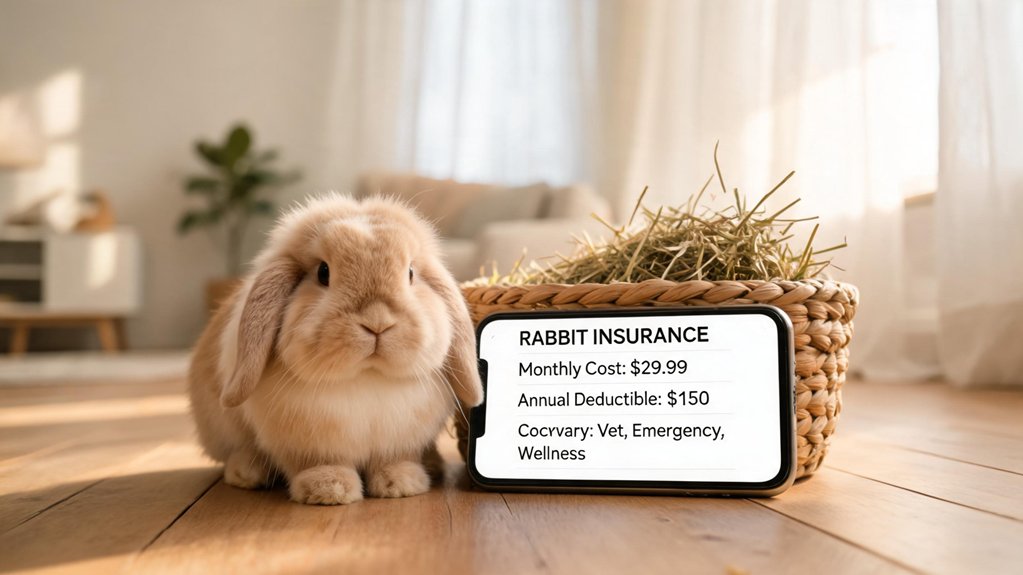
Before you buy rabbit insurance, it helps to know what the numbers usually look like, because they shape your out-of-pocket cost fast. In the US, monthly premiums often land in the mid-teens to low 40s. You’ll usually choose a deductible, the amount you pay first, from $0 up to about $2,500.
Many plans use annual deductibles like $250, or per-incident options like $50, then pay 50%–90% of covered vet bills. Example claims can cut big emergencies by hundreds or thousands, depending on your billed charges, deductible, and annual cap.
Choose coverage that fits your bunny’s risk and budget.
Is Rabbit Pet Insurance Worth It When It Pays Off?
If your rabbit’s vet bills could easily top what you’ve saved—think dental work or a gut-stasis emergency—then rabbit insurance can pay off when the premium beats your real-world costs.
But before you get hopeful, you’ve got to check reimbursement rules like deductibles, limits (the most they’ll pay), and exclusions (things they won’t cover), because those can turn a “win” into a shortfall.
And if you’re considering coverage for both emergencies and ongoing care, you’re more likely to come out ahead—especially if you catch symptoms early and get treatment the same day.
When Premium Beats Vet Bills
When rabbit care goes sideways, insurance can feel like a lifesaver, not a waste of money. If you’re paying roughly $10–$42 a month, that’s about $120–$500 a year, so one serious bill matters.
Think GI stasis, dental disease, or a neurological issue. These often land around $1,200–$3,200 at an exotic clinic, and severe obstruction can hit thousands.
If reimbursement applies after your deductible, one four-figure emergency can erase years of premiums. For households with limited savings, that predictable monthly cost helps you say yes to needed diagnostics.
Enroll early, so future risks have a fair shot.
Reimbursement, Limits, And Exclusions
Reimbursement rules, limits, and exclusions decide whether rabbit insurance actually pays off, not just whether you have coverage.
Most plans reimburse about 50%–90% of eligible vet bills, sometimes up to 100%, but you usually pay the vet first, then file a claim.
Check the deductible, often $0–$2,500, and common limits like $10,000 per year or lower banded caps.
Watch waiting periods: illness often starts around 14 days, some accidents may begin after about 3 days.
Finally, look for exclusions like pre-existing chronic GI issues.
If you want peace of mind, read these terms before you buy.
Frequently Asked Questions
Do Rabbits Really Need Insurance, or Is Saving for Emergencies Enough?
Yes, you should consider insurance, but saving for emergencies can work if you can cover surprise GI stasis or dental care quickly. Rabbits need fast treatment and meds, so you’ll sleep better with either option.
Can I Get Rabbit Pet Insurance in the US for More Than One Rabbit?
Yes, you can get rabbit pet insurance in the US for more than one rabbit. Nationwide covers rabbits nationwide; MetLife covers some states only. Enroll each rabbit under one multi-pet plan for shared or per-rabbit deductibles.
What Rabbit-Specific Issues Should Be Covered, Like GI Stasis or Dental Disease?
You should cover rabbit-specific issues: dental disease (overgrown teeth, abscesses), GI stasis/enteritis (fluids, meds, feeding), snuffles, parasites, uterine problems, pododermatitis, and pain-related triggers. Make sure plans reimburse exams and diagnostics.
Does Rabbit Insurance Cover Pre-Existing Conditions and Routine Vet Exams?
Rabbit insurance usually doesn’t cover pre-existing conditions—anything treated, advised, or symptomatic before your policy starts. It also typically won’t pay for routine vet exams or wellness care; most plans cover new injuries or illnesses after waiting periods.
How Do I Choose Coverage Limits and Deductibles Without Overpaying?
Choose your coverage limits and deductibles like a smart helper: start with a realistic annual cap ($3k–$7.5k), pick a deductible you can afford ($250-ish), then compare reimbursement percentages—don’t pay higher premiums for unused coverage.