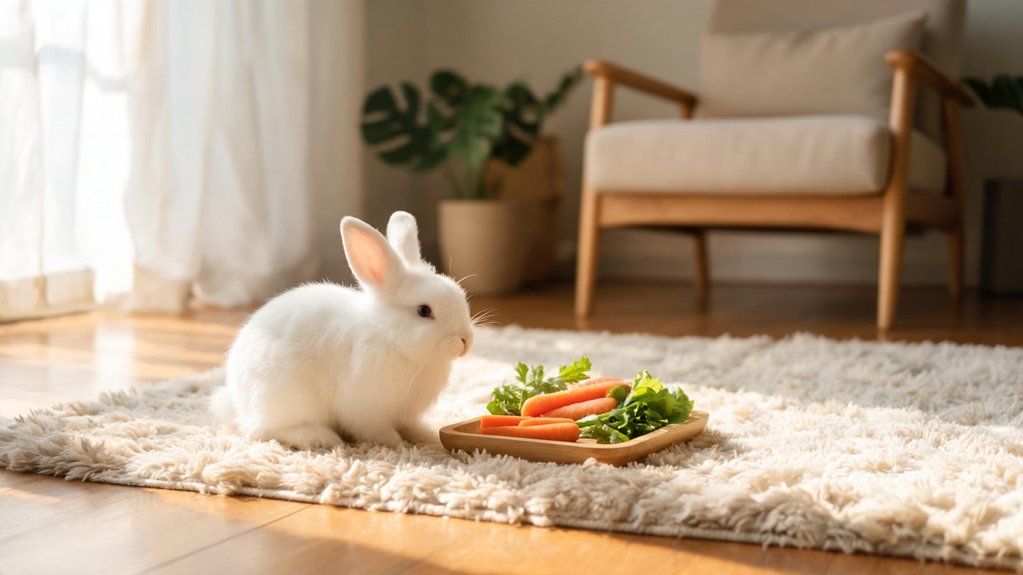
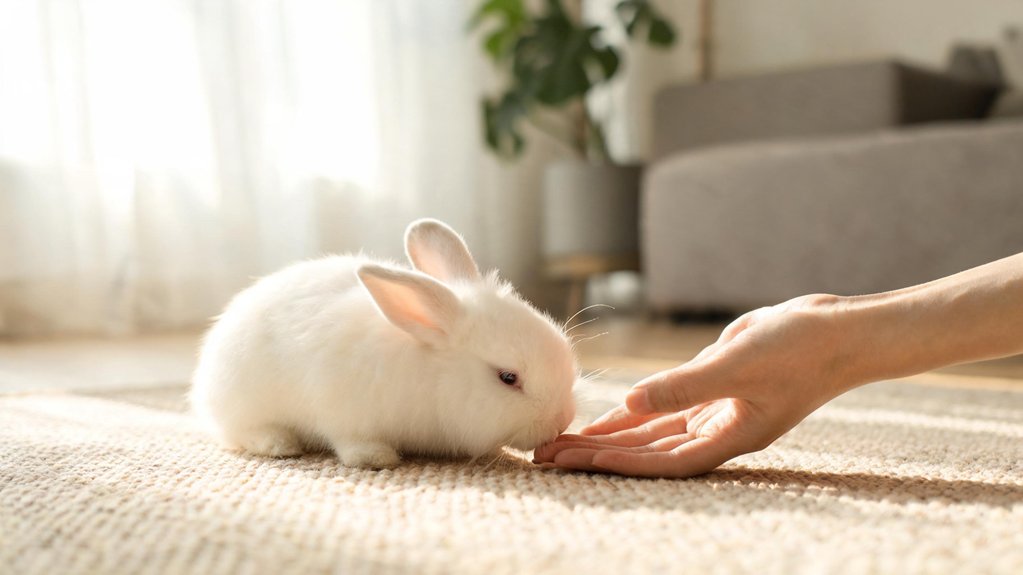
You’ve got several Angora types to choose from, and each one needs its own rhythm. English rabbits need near-daily combing once wool hits ~1 inch. French and Satin still tangle easily, so brush every few days, and clip every 3–4 months. Giant often needs sessions every 2–3 days. German Angora is free-falling, no shed, but you’ll shear about every 90 days, with mid-cycle trims around day 45. Clean, 3–7 cm staple, unsoiled wool sells roughly $8–$12/oz. Keep going to nail your schedule and pricing.
Swift Summary
- Cover the main angora types (English, French, Satin, Giant, German) and how their fiber structures affect wool look and processing.
- Explain wool growth timing: ~1 inch/month with harvests every 3–4 months and typical annual yields around 10–16 ounces.
- Summarize wool care differences: English needs daily combing; Satin often requires near-daily brushing during coat growth/shedding.
- Detail German Angora clipping cycle: shear about every 90 days, with mid-cycle trims around day 45 to prevent mats.
- Address matting and health risk, especially long-hair impaction/blockage concerns and preventive trimming in high-risk areas.
Quick Angora Facts for Fiber Growers
If you’re raising angora bunnies for fiber, you’ll be happy to know they actually have a pretty reliable growth rhythm. Expect about 1 inch of wool growth per month, driven by a genetic fast-fur trait. Angora wool is much more airy and thermally insulating than lambswool, which can be a big reason growers and buyers value it for finished garments. You’ll plan harvests every 3–4 months, so you usually get 3 or 4 clips or plucks per year. For angora rabbit fiber yield, many flocks average roughly 10–16 ounces yearly, though top adults can do more. Start with a first harvest around 6–8 weeks, then pluck near 100 days. Keep wool 3–5 inches long, groom daily, and manage mats. This also helps your angora rabbit price.
Compare English vs French vs Satin vs Giant
When you compare English vs French vs Satin vs Giant Angoras, you’re basically comparing *how they’ll look, how hard they’ll be to keep beautiful, and what kind of fiber you’ll get*.
The English angora rabbit looks like a fluffy cloud, with long wool on the body, face, and ear tufts, but it needs daily combing to prevent mats.
French angora rabbit has dense, silky fiber with guard hairs, so you groom several times weekly.
Satin gives lustrous, smooth fleece.
Giant targets production, with dense, wavy wool.
For reliable angora rabbit for sale choices, pick your workload first, then your spinning goal.

Controls Shedding: Easily and quickly takes care of shedding, molting and everyday grooming needs. The HairBuster is an excellent remover of any thick, matted fur as well as quick combings in thin, short fur in need of a touch up. Tines gently massage skin to evenly distribute oils through hair for a shiny coat while preventing hairball issues.

【8 Pieces Pet Grooming Kit】 The set contains pet nail clipper and file, flea comb*2, pet shampoo bath brush , pet shedding slicker brush, bath massage glove, small cleaning comb.

7-in-1 Rabbit Grooming Kit: Not only gentle and safe for small animals, such as rabbit, hamster, guinea pig, and chinchilla; but also work great for larger animals like cats and dogs. Soft silicone small animal massage comb can help you protect your pet's skin and effectively keep their fur clean, healthly.
Compare German Angora Vs the Other 5 Breeds
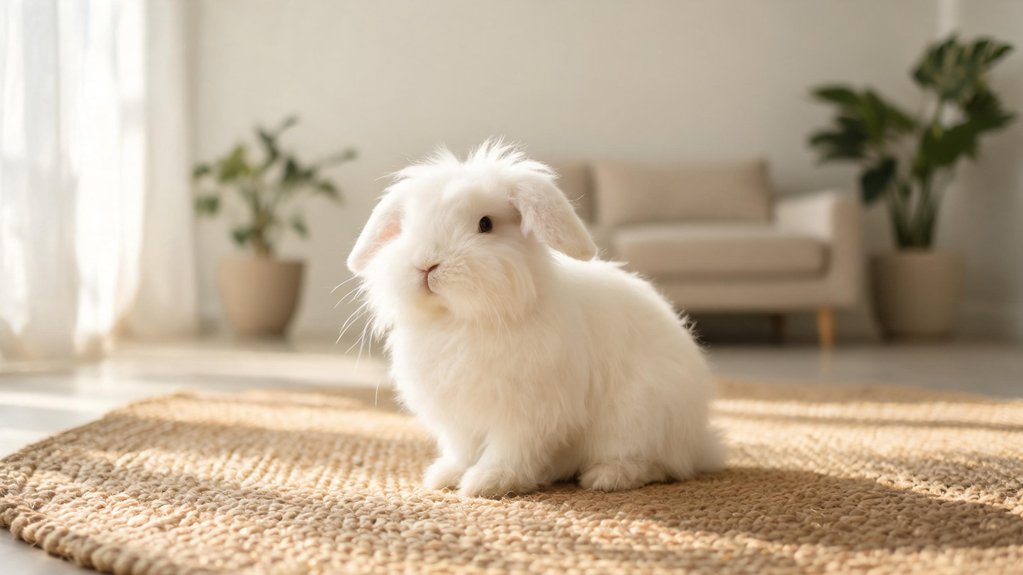
When you compare German Angora to the other Angora breeds, focus on fiber structure first, because German wool is bred for heavy, repeatable wool growth and it’s built to be sheared often. Next, look at grooming needs: you’ll usually spend more regular time on a German’s fuller wool “furnishings” on the forehead, ears, cheeks, and feet so you don’t let mats (tangled clumps) build up. Plan on a quick check at least a few times a week, and if you’re aiming for that top-quality wool feel, keep shearing on a steady schedule instead of waiting for a big shed. Make sure you also account for the risk of wool block, a potentially lethal digestive blockage caused by long hair and impaction.

【Premium Material】This rabbit hair brush, made of silicone, is a great choice for your beloved rabbit grooming kit. This safe rabbit hair brush is designed to provide gentle yet effective grooming, protecting your pet's delicate skin while effectively keeping their fur clean and healthy. Cleaning is also very easy; simply rinse with water and air dry to maintain hygiene and ensure your pet's grooming tools are always clean and safe.

Clean Pets, Clean House: Depets cat & dog brush for shedding can easily remove loose hair, shedding mats, dander and dirt of your pet, which not only keep your pet clean, but also provide you with a clean and hygienic home environment

7-in-1 Rabbit Grooming Kit: Not only gentle and safe for small animals, such as rabbit, hamster, guinea pig, and chinchilla; but also work great for larger animals like cats and dogs. Soft silicone small animal massage comb can help you protect your pet's skin and effectively keep their fur clean, healthly.
German Angora Fiber Structure
German Angora’s fiber structure feels “built for wool work,” so you’ll notice the difference the moment you compare it to the other Angora breeds.
In your angora rabbit, the german angora fiber structure is undercoat plus awn fluff plus awn hairs, a three-type setup made for mill processing, not just cozy looks.
You’ll also feel its dense coat, with long guard hairs that boost production and help the fiber stay “silky.”
That’s why angora rabbit vs angora goat matters—goat fiber behaves differently, but German Angora stays lofty, with a strong halo from fine, thin fibers that clip regularly.
German Vs Breed Grooming Needs
You can feel the difference between Angora types the moment you look at their coats, because grooming isn’t just “more or less,” it’s a planned schedule based on how the wool grows and tangles.
If you’re wondering where are angora rabbit from, German Angoras came from Germany, and their grooming stays lighter.
You clip every 90 days, and in well-bred lines the coat stays free-falling, largely mat-free.
That makes “is angora rabbit” a great choice if you want steady care.
Compare this with English, French, Satin, and Giant: they usually need more frequent brushing, and Giant often needs sessions every two to three days.
When you ask how much is an angora rabbit, remember grooming time counts too.
English Angora (ARBA): Coat + Fiber Basics
English Angora is famous for its fully furnished look—its wool covers the whole body, plus the face, ears, and even the feet.
You’ll notice tufts around the nose and eyes, and they can hide the rabbit’s shape if the coat stays too long.
And those ear “pom-poms” and foot tufts help create that rounded, ball-of-fiber silhouette.
The wool itself is soft and fine, with underwool crimp (wavy loft) that feels cloud-like.
Many kept in full coat can reach 3+ inches.
For ARBA, English Angora comes in white and colored varieties like pointed white and chinchilla.
French Angora: Grooming Load and Pricing Impact
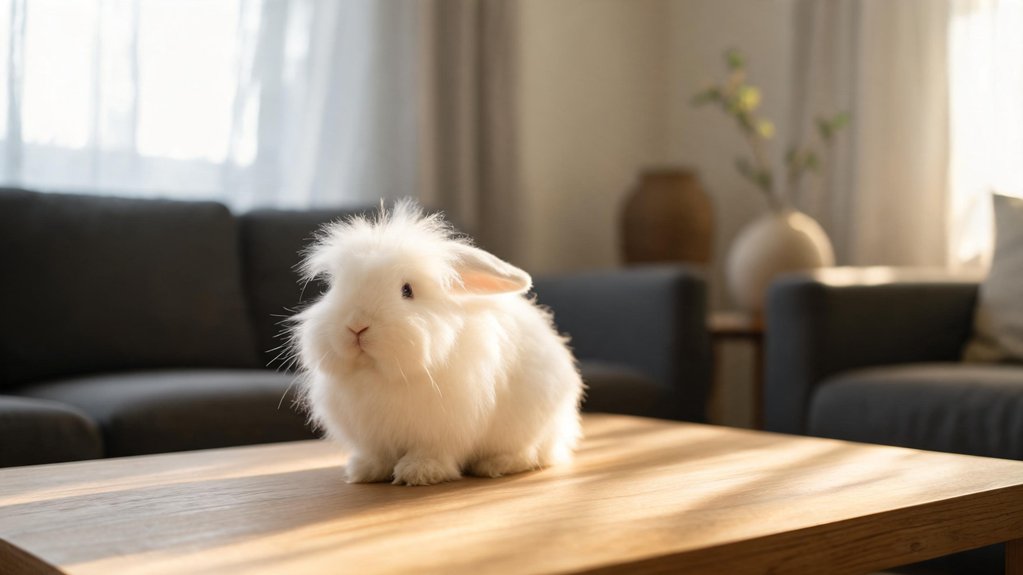
With French Angora, you’ll still need steady grooming because their dense body wool and self-grooming make mats easier to form if you slack off.
Plan on brushing every few days, using a slicker brush and wide-tooth comb, and keep an eye on tricky spots like behind the ears and the chin, so you don’t end up with felted (fuzzy, tangled) wool that’s hard to fix.
When you shear or pluck every 3–4 months and prepare the fiber right, you protect staple length for spinning, and that’s what helps your roving and yarn price stay in the “premium” range.
Grooming Intensity And Mats
French Angoras don’t just “shed”—they build up soft wool all the time, so you’ll need steady grooming to stay ahead of mats (tight felt-like clumps).
Plan for weekly brushing, and often twice-weekly.
During spring and fall, brush every other day, even daily, because loose fiber tangles fast.
A full coat session usually takes 20–30 minutes, rear to head, part by part.
Focus on skirt, belly, flanks, and hindquarters, especially if bedding rubs.
Mats trap moisture, raise skin irritation and flystrike risk, and can hide wounds.
Use a slicker, comb, and regular blower.
Wool Preparation And Price Impact
Once you’ve dialed in grooming, you’ll feel the real difference during wool prep, because every extra mat you prevent saves time later.
You harvest French Angora about every 3–4 months, often 2–3 major clips or plucks per year.
Plan on 20–30 minutes of section-by-section work each time, brushing and removing loose fiber before collection.
When you blow and brush well, the wool stays cleaner, so washing and extra debris work drops.
Hand-plucking during molt can also protect staple (fiber) structure.
Better prep means smoother blending, less breakage, and fairer per-ounce pricing.
Satin Angora: Sheen, Color, and Matting Risk
Satin Angora gets its name from the wool’s distinct, glistening sheen, and if you’ve ever seen one in good light, you know exactly what that means. The fine, semi-transparent fibers reflect light, so you get a smooth, silky look from nose to tail.
You’ll see many ARBA-recognized colors: White, Self, Agouti, Shaded, Tortoiseshell, Ticked, Wide Band, and Broken, including blue-eyed and red-eyed white types.
But that same slippery wool mats easily. During the first full adult coat, comb daily, focus on belly, armpits, and rear. Brush 2–3 times weekly, more in shedding. A gentle rabbit brush can lift loose fur from the coat before it tangles into mats, making routine grooming easier between combing sessions.
Giant Angora: Three-Part Coat and Housing Needs
Giant Angora isn’t just “more wool,” it’s a whole different kind of coat job.
Your Giant Angora has a three-part coat: underwool, awn fluff, and awn hair.
Underwool is the soft, dominant bulk.
Awn fluff adds crimp and loft, and awn hair sticks up like strong guard fiber, helping the coat keep its shape.
Because this dense fiber acts like insulation, you must house your rabbit in spacious, solid-floored, climate-controlled space.
Plan at least 6 square feet per rabbit, up to about 4×6 feet or more, and give enough height so ears won’t touch the ceiling.
German Angora: Free-Falling Coat and Clip Cycle
German Angora comes with a non-molting, free-falling wool coat, so you won’t “brush out” shed fur the way you might with molting breeds. Instead, you clip on a schedule.
Aim for a 90-day shearing cycle, about 3 months, for roughly four clips per year.
Keep things clean, because at around day 90 the wool loosens, webby fibers can start, and mats can form if you wait too long.
About day 45, do a careful mid-cycle trim on cheeks and facial furnishings, and shorten wool under the tail and between rear legs.
You’ll help comfort, prevent wool block, and plan confidently.
Pick the Best Angora for Your Time and Space
Choosing the best Angora for your time and space is mostly about matching the rabbit’s size and coat needs to your daily routine—so you don’t end up overwhelmed.
First, match breed size to your footprint. English Angoras usually weigh 5–7 lb, good for medium cages. French Angoras (7.5–10.5 lb) need larger space. Giants, around 9.5 lb or more, need roomy hutches. Jersey Woolies can be under 3.5 lb, ideal for compact homes.
Next, choose by grooming time. English needs 2–3 thorough grooms weekly. French needs 2–3 too. Satin often requires daily combing. Giants fit 2–3 grooms between clips.
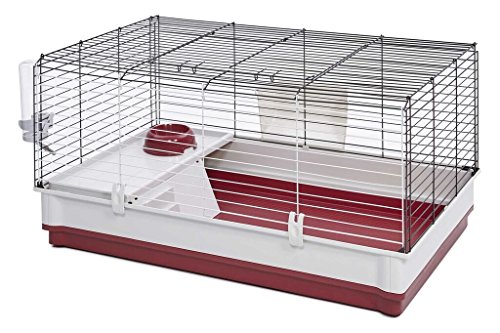
Rabbit Cage includes FREE hay feeder, water bottle, feeding bowl & elevated feeding area | Ideal for Rabbits, Guinea Pigs & Chinchillas

Rabbit Cage includes FREE hay feeder, water bottle, feeding bowl & elevated feeding area | Ideal for Rabbits, Guinea Pigs & Chinchillas

Protective Liner – This guinea pig cage is designed with a waterproof liner placed outside the frame, effectively preventing pets from chewing and ensuring long-lasting use.
Set a Breed-Based Grooming Schedule to Prevent Mats
To keep your angora bunny comfy and mat-free, you need a grooming schedule that matches how fast that wool grows and how easily it tangles. For English Angora, groom daily or near-daily once wool hits about one inch.
From 4–5 months, do it every 4–5 days, focusing on feet, belly, and face.
From 4–5 months, groom every 4–5 days, focusing on the feet, belly, and face to prevent matting early.
From 5–10 months, groom twice weekly.
Check adult mats around eyes, chin, ears, and rear.
For French, German, Giant, and Satin, plan 2–3 sessions weekly once wool reaches one inch.
During seasonal molts, go every other day or daily.
Tools That Work: Combs, Brushes, and Blowers
Start with the right tools, and grooming gets way easier—most people skip that part and then fight mats.
Use a wide-toothed metal comb first, to separate main wool locks and break early tangles.
Then switch to a fine-toothed comb, so each stroke reaches toward the skin and smooths minor tangles.
For dense coats, a roller-tooth comb glides through with less snagging.
Grab a precision comb for face, feet, and under-legs.
For the “heavy lifting,” use a pet grooming blower first, on low-medium, to open the coat, clear dust, and let you inspect skin.
Use a slicker brush only lightly; too much can thin wool.

EVERYDAY DOG COMB : Fresh Ultra Wide XL Metal Comb for dog grooming is 9.75" in length. The low tension, tapered, anti-static teeth make it a great addition for your metal dog comb collection!

DURABLE CONSTRUCTION: Made from high-quality aluminum with smooth polished surface for long-lasting performance and rust resistance

EASY DEMATTING & DETANGLING: Our dog grooming comb features extra-long stainless-steel teeth that glide through tough knots, mats, and tangles with ease, making grooming faster, smoother, and more comfortable for your pet
Harvest Wool Safely: Clipping Cycles and Technique
For safe, smooth Angora harvesting, keep a simple schedule and clip only when the wool is ready.
Plan on every three to four months.
German Angoras grow continuously, and you clip once the wool reaches about 7 cm after roughly three months.
English and French Angoras shed naturally on a three-to-four-month cycle, so you pluck or strip loose fibers.
Start young with cautious timing, like 8–9 weeks for first shearing, then about every three months.
Clipters: use calm handling, low noise, and a stable turntable.
Begin at head and shoulders, work toward the tail, then the underside.
Remove mats first with a comb.
Discard belly, feet, and legs.

【Specially Designed Blade-Tip】Sharp, easily to reach livestock's fur. R-shaped edge design prevents accidental cuts to your pet's skin.

SAFETY - The dog clipper is made of Stainless steel 6 CR13 Titanium & Zirconium ceramic with perfect combination of 35 titanium teeth and 30 zirconium ceramic teeth. The mahogany wood handle of dog clippers is insulated up to 5 layers to ensure safe use. And less overheating of the cutting head and body after long-term use, to reduce harm to your pet's skin.
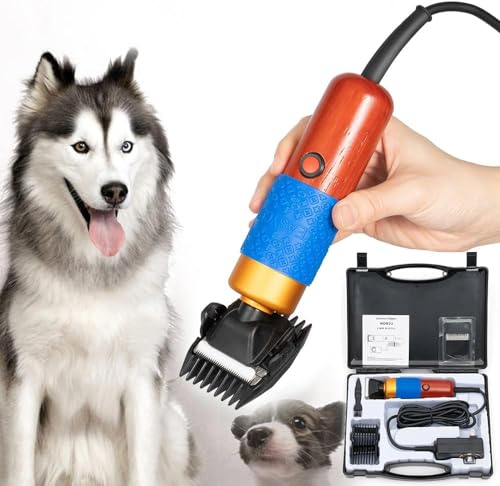
【Quiet Operation】: The handle has the advantages of shock absorption and sound insulation. In addition, the copper motor has low noise during operation (≤ 60dB), allaying your pet's fear of trimming.
Grade Angora Quality: Staple Length, Cleanliness, Prep
Start by grading your angora first on staple length, because longer fibres spin more consistently—many systems aim for roughly 3–7 cm, with shorter than that often downgraded for felting or stuffing.
Next, check cleanliness closely: you want white, unfelted down with no hay, vegetable matter, stains, or second cuts, since any dirt or clumps usually mean a lower grade. A healthy skin and coat, which can be supported by skin and coat supplements alongside a balanced diet, also makes it easier to keep fibre clean and free of debris.
Then prep it well, by sorting by body area (back and upper sides usually come first), keeping it clean and unfelted, and gently shaking out debris right after harvesting.
Staple Length Grading Factors
Staple length is one of the biggest “grading tells” for Angora wool, because it’s simply the measured length of each fiber strand. You’ll see grading systems reward mid-range staples, since they process efficiently, and they spin into stable yarn.
Many world-market scales use a 5-point range, often from 7 cm down to 3 cm, with about 3–6 cm doing well. In show rings, aim near 2.5 in (6.35 cm), with a minimum of 1.75 in (4.44 cm).
If staples go below ~3 in, they can fly off during carding and reduce yield. For longer wool, keep it workable, around 3–4.5 in.
Cleanliness And Fiber Prep
Cleanliness and fiber prep are what turn your Angora fleece from “nice wool” into yarn or felt that performs well. If you leave dirt, burrs, or mats, your grade drops, and so does your value.
Keep coat cleanliness before shearing, and remove stained sections as you go. Then, sort and skirt: remove clumps and worst faults, and keep the clean, free fiber.
For spinning, decompress locks by carding or combing, then flick, back-card, or roll into puni-style prep. For felting, keep batches separate, and pick out neps and second cuts.
You’re doing more than prepping—you’re serving quality.
Angora Pricing Per Ounce: What Buyers Pay For
When you’re shopping for an angora bunny *and* you also want to buy the wool, the price you see per ounce can swing a lot.
Raw fiber usually runs about $4.50 to $16.00 per ounce on artisan marketplaces. Many standard offerings cluster around $8.00 to $12.00 per ounce, so plan around that range.
If you’re buying prepared wool, costs rise: small-farm batts often sit near $9.50 to $10.00, and combed top roving commonly lands near $9.75 to $10.22.
Giant Angora prime often fetches around $10.00, while ultra-prime English or Satin can reach near $15.00.
Budget Your Yarn Cost From Fiber Yield and Clips
To budget your yarn cost, start with something you can measure: how much usable wool you’ll actually get from your angora over the year, not just the “price per ounce” you see online.
You harvest 3–4 times yearly, about every 90–100 days. First clips often include “nest hair,” lower value. Next clips usually give longer, smoother fiber.
Add up typical annual fibre per type—English or French or Satin differ—and then subtract processing loss, commonly 20–30% for cleaning and dehairing waste.
If your rabbit yields 400 g raw yearly, plan less usable weight for spinnable yarn.
Feed, season, and clip timing change results too.
Frequently Asked Questions
How Much Does an Angora Rabbit Cost in the US?
In the US, you’ll usually pay about $100–$225 for an Angora rabbit from U.S. breeders, while some listings range roughly $40–$750 depending on breed, age, quality, and whether it’s pet, wool, or show.
Is an Angora Rabbit a Real Breed or Just a Wool Type?
Yes, an Angora rabbit is a real breed group, not just a wool type. You’ll find specific recognized breeds like English, French, Giant, and Satin, each with its own standards and coat characteristics.
Where Are Angora Rabbits From Originally?
Angora rabbits originally trace back, most commonly, to Ankara (Angora), Turkey, where long-haired rabbits were linked with the region. Some records place Angora-type rabbits in Europe by Roman times, but Ankara remains the leading origin theory.
Which ARBA Angora Breeds Are Recognized in the United States?
In the United States, ARBA recognizes four Angora rabbit breeds: English Angora, French Angora, Giant Angora, and Satin Angora. You can use these ARBA listings to make sure you’re looking at the right breed.
How Often Should I Clip or Harvest Angora Wool for Best Quality?
Clip or harvest Angora wool every 3–4 months (about 4 times yearly). If your rabbit mats easily, clip earlier at 2–2.5 inches. Don’t wait past ~6 months of regrowth, since fiber quality drops.