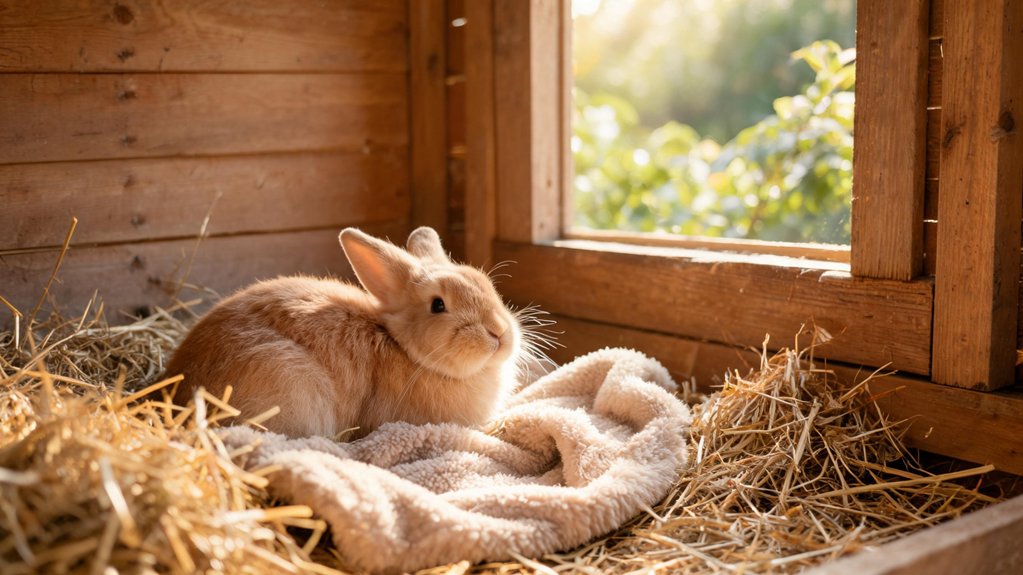
Yes, you can often help a cat and rabbit live together safely, but only with smart prep. First, check age and fix status, since rabbits mature around 4–6 months and both pets need to be spayed/neutered for best safety. Next, set up secure barriers before introductions—two layers like a closed door plus a tall gate, with predator-proof sides and small bar spacing. Swap scents for several days, then do 2–5 minute, supervised meetings with a harness and leash. Keep watch for stalking or fear signs—there’s more to learn.
Swift Summary
- Rabbits and cats can live together only with secure, predator-proof enclosures and multiple barriers to prevent pawing and escapes.
- Confirm both animals are age-appropriate and fixed; untreated cats may show higher prey drive, especially unneutered males.
- Do safety-first zoning with closed doors and gates, separating resources until temperament is clearly calm and non-predatory.
- Use several days of scent swapping and short, neutral visual-only sessions before any brief meet-and-leash introduction.
- Always supervise every interaction, watch for stalking or freezing, and interrupt immediately to revert to separation if predatory focus appears.
Can Cats and Rabbits Live Together Safely?
Keep rabbits in secure spaces, with sturdy bars, hiding boxes, and at least two barriers—like a closed door plus a baby gate. Cats and rabbits should not be kept together at home without separation, because a cat can see a rabbit as prey and move quickly. First, use scent and sound, then short neutral meetings in clear light. Watch for stalking or panic. If it happens, separate fast.

【Spacious Rabbit Hutch for 2–4 Rabbits】This large indoor rabbit hutch measures 62"L x 22.6"W x 33.5"H, spacious enough for 2–4 rabbits, guinea pigs or other small pets. Sturdy mesh panels boost airflow and keep pets enclosed safely for year-round use

【3 Leak-Proof Pull-Out Trays】 Includes 3 separate deep trays that are completely waterproof. Designed with seamless one-piece molding to prevent any leaks. The smooth plastic surface can be wiped clean in seconds for ultimate ease.

[Premium Material & Sturdy Structure]: Our plastic bunny hutch outdoor is made of double-layer thick HDPE material, more sturdy than ordinary plastic and wood, designed to withstand chewing from rabbits and small pets, guaranteeing long-term durability and a secure space for your pet.
Pre-Check: Age, Fix Status, and Prey Drive
Before you ever set up a first introduction, do a quick “pre-check” on three big things—age, spay/neuter status, and prey drive—because these decide how safe things feel for both animals. Start with age. Kittens and young rabbits usually settle better, but big age gaps can cause chasing. Next, confirm spay/neuter. Most rabbits mature around 4–6 months, so fix non-breeding rabbits soon after, and wait weeks after surgery to fully heal. Finally, judge prey drive in your cat. Unneutered males often hunt more, so answer: can you get a rabbit if you have a cat? Yes, but only if both are fixed and you pick calm matches. Choose a spill-resistant rabbit waterer mounted inside the enclosure so the cat cannot reach or contaminate your rabbit’s water.
Because prey drive can escalate quickly into chasing or injury, especially with unaltered cats, aim to introduce only after both animals are safely settled and their risk factors are minimized.

NEW DESIGN SMALL PET DOOR: The upgraded 7" x 5.8" cat door features 3 adjustable settings for controlled access. It stays securely in place while giving cats a convenient way to roam freely and helping keep larger pets in their designated space.

*Measure your target spot before placing your order. Be sure to choose the proper size variant to fit your real‑world space. Exact measurements are listed on product images for your reference.

Small Pet Door Design : Our retractable baby gates has a cat door, the size of the cat door is 6*7. It can separate your dog from the cat and prevent your babies from eating the cat's food. Perfect for families with children and multiple pets.
Set Up Barriers Before You Start Introductions
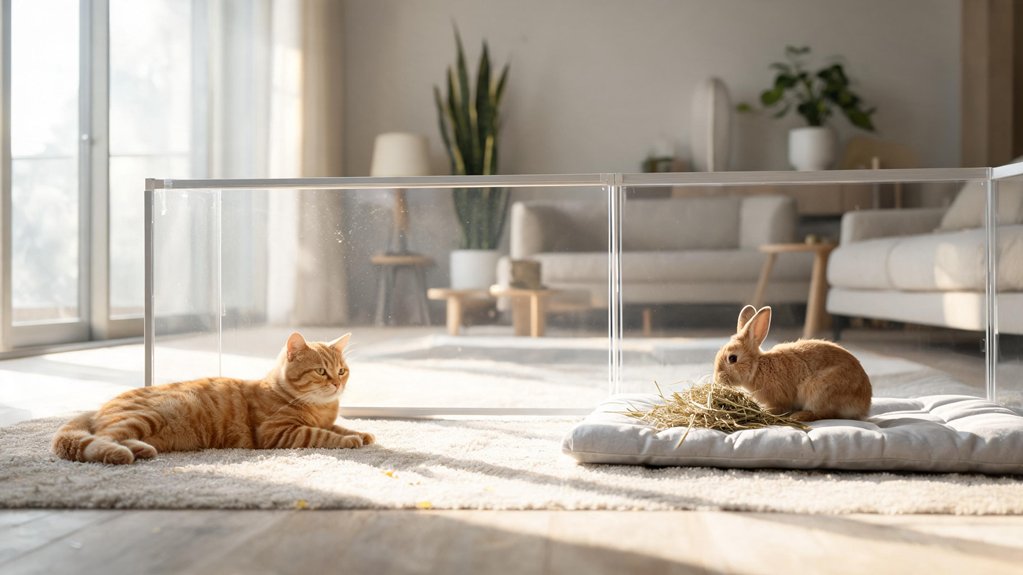
Once you’ve done the age, fix-status, and prey-drive pre-check, set up your barriers right away.
If you can you have a rabbit with a cat, your first job is safety, not bonding.
Start with a sturdy rabbit enclosure, predator-proof sides and top, and small bar spacing so cat paws can’t reach in cat paws can’t reach in.
Add a hide box inside, so your rabbit can retreat fast.
Then create room-level zoning, with closed doors and separate resources.
Use a tall pet gate flush with the floor, plus a second barrier like an x-pen.
Offer brief visual-only sessions, keeping distance steady.
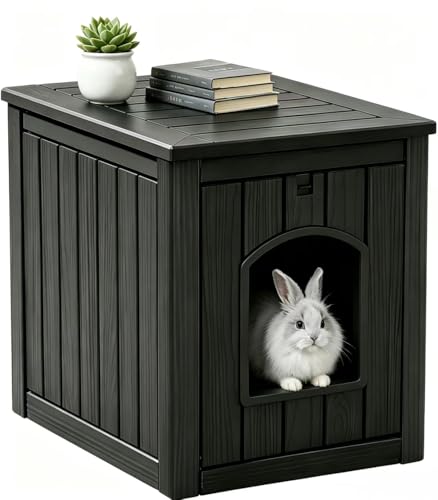
【Premium Solid Resin Build | Durable & Long-Lasting Structure】 Made of premium solid resin, this small animal shelter outperforms ordinary wood rabbit houses that easily grow mildew, crack or produce sharp burrs. Featuring refined black grain textured surface, the piece boasts waterproof & stain-resistant performance and can be wiped down effortlessly. It creates a scratch-free secure resting nest ideal for mature bunnies, guinea pigs and assorted tiny companion pets to hide away and enjoy playful downtime.

COZY HIDEAWAY: Versatile hideout designed for use inside the home or outdoors, providing a safe, enclosed space for rest, retreat, and relaxation

【Furniture style for more usage】:The black frame and greige wood panel is designed to perfectly match the decor. It is not only a cat litter box enclosure, but also can be used as a cat house . Meantime, you can use this furniture as an end table or coffee table next to the sofa because of its' fashionable furniture style.
How to Introduce a Cat to a Rabbit Safely
After you’ve set up strong barriers for safety, it’s time to introduce your cat to your rabbit the right way, on purpose.
Start by checking temperament. You want a calm, non-predatory cat, and ideally similar body size, so a cat and rabbit conflict won’t cause severe injury.
Skip direct meetings if your cat hunts, attacks small animals, or has high prey drive.
Next, do scent swapping for several days. Trade bedding or toys, and feed near a barrier while both smell each other.
Then, meet in a neutral, well-lit room after feeding, for just 2–5 minutes. During each session, keep your rabbit on a properly fitted harness and leash so you can calmly remove it from the room if tension rises.
Repeat short sessions, and only progress to brief contact when stalking, hiding, and thumping stop.

PREMIUM QUALITY: Lixit water bottles have been a standard for over 35 years. It features a thick high quality water bottle that is BPA free.
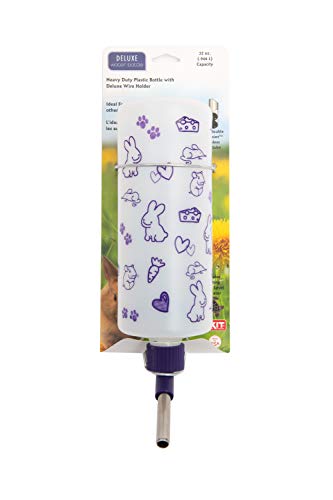
THE PEFECT SIZE: The Lixit Heavy Duty 32oz bottle is perfect for Rabbits, Ferrets, Cats’ other small animals.

Happy pets: gravity feeder is perfect for rabbits, ferrets, chinchillas, guinea pigs, or sugar gliders, always providing a steady supply of food or water to keep them satisfied
Long-Term Rules: Supervision, Signs, and Triggers
Even if your cat seems friendly, you still need to treat “cat + rabbit time” like it’s always a safety check.
Treat every cat-and-rabbit meeting as a safety check—friendly cats still need constant supervision and no unsupervised contact.
Keep direct contact under constant supervision, no unsupervised minutes.
Use gates or separate rooms when you step away.
When you bring a new animal in, confine it to a cage or one room first, then expand access only after calm behavior.
During out-of-cage time, interrupt any chasing, stalking, or pouncing fast.
Learn signs: fear posture, freezing, thumping, rapid breathing, appetite dips, wide-eyed staring.
If your cat shows persistent predatory focus, or you’re wondering are rabbits harder than cats, switch to long-term separation with clear cat-free zones.

Escape-proof Cat Harness for Small to Average Cats: Securely fits neck 8.5-11" and chest 13.5-16"—please confirm your pet's measurements using the size chart for a purrfect match. A minumium head circumference of 8.9" helps prevent slipping out. Package includes: 1 x Harness and 1 x 4.9ft Leash

Perfect for Large to XL Cats: Securely fits neck 15" -19" and chest 21"- 25" – confirm your pet's measurements using the size chart for a purrfect match. Essential head circumference at least 15.4" ensures escape-proof adventures. Package includes: 1 x Harness and 1 x 4.9ft Leash

[Easy to Put On, No Overhead Struggle] Designed with quick-release buckles on both the neck and chest, this cat harness is easy to put on and take off without going over your cat's head. The no-overhead design helps reduce resistance, making dressing easier for cats and more convenient for owners during daily walks, training, vet visits, or outdoor adventures.
Frequently Asked Questions

Solid Construction: The rabbit hutch is made with solid fir wood and a metal frame for a stable structure. Keep your furry friends comfortable and dry with the asphalt roof to protect against sun and rain.

【Premium HDPE Plastic—Durable, Waterproof, and Chew-Resistant】This rabbit cage is made from premium HDPE plastic, more waterproof, Moisture-Resistant, Long-Lasting and chew-resistant than wooden cages. Plastic Bunny Hutch does not absorb moisture or odors, making it ideal for long-term use.

Large Space: The bunny cage with a run has overall dimensions of 25.6" L x 20.1" W x 27.2" H.recommend for guinea pigs, rabbits, baby chicks, hedgehog, ferret other small animals
Are Rabbits Similar to Cats in Behavior and Care Needs?
You can’t treat rabbits like cats behavior-wise: rabbits stay vigilant, thump, and freeze as prey animals, needing more supervision, rabbit-proofing, hay-heavy diets, and daily social contact. Cats roam and play differently, with less structured care.
Can You Have a Rabbit and Cat if the Cat Isn’T Fixed?
Yes, you can have a rabbit and a cat that isn’t fixed, but it’s a risky gamble—especially with stalking instincts. Keep them fully separated, introduce super slowly, and supervise every second; consider neutering for safety.
Will Rabbits Get Along With a Cat They’Ve Never Met Before?
Yes, but only if you introduce your rabbit and cat slowly. Start with scent and visual barriers, then short supervised sessions. Watch for chasing, stress, or hiding. Never force contact, especially if either animal shows prey-driven behavior.
How Do You Tell if the Rabbit Is Stressed or Being Hunted?
You’ll tell by behavior: freezing tight and flat, bulging eyes, ears back, and thumping mean it feels hunted. Ongoing stress shows repeated hiding, lethargy, appetite or grooming changes, hunched sitting, and pacing or bar-chewing.
Can You Introduce a Baby Rabbit to a Resident Cat Safely?
Yes—you can introduce a baby rabbit to a resident cat safely; when you do it slowly, you protect your rabbit’s safety. Use secure barriers first, swap scents, supervise every meeting, and separate fast if the cat pounces or chases.