You’ve got a real “constant-work” dental system on your hands: most adult rabbits have 28 teeth total—6 incisors for nibbling, and 22 cheek teeth for grinding. Keep teeth healthy by feeding unlimited grass hay, since rabbits need constant wear. Incisors grow fast and overgrow if they don’t wear, so watch for drooling, curling, or “Y” teeth. If your rabbit won’t eat or poop for 12 hours, it’s an emergency vet visit—and there’s more you can do.
Swift Summary
- Most adult rabbits have 28 teeth total: 6 incisors and 22 cheek teeth.
- Upper jaws typically hold 16 teeth, lower jaws 12, including continuously growing incisors and cheek teeth.
- Teeth grow continuously (~2 mm/week), so wear from chewing must match growth.
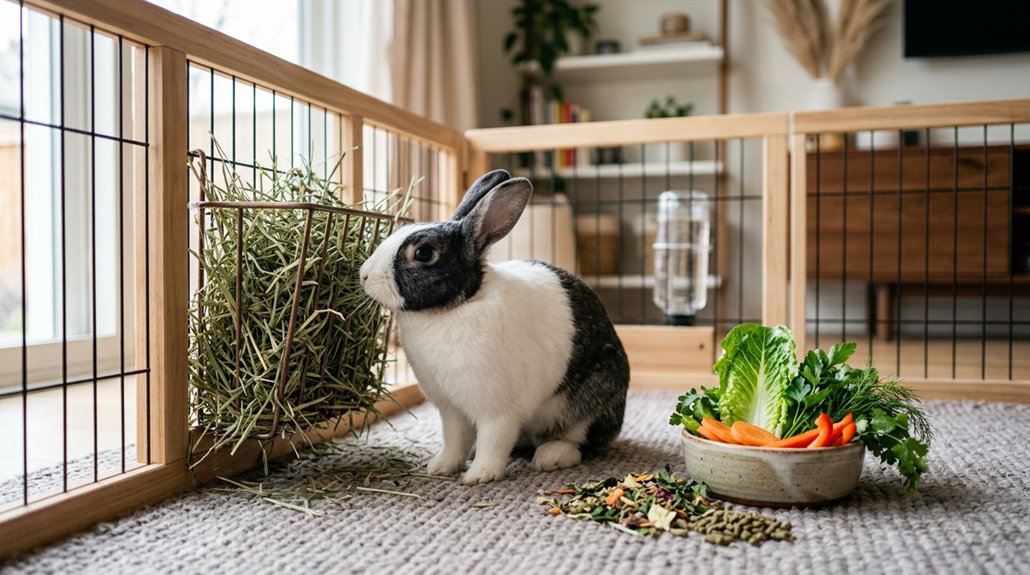
- Provide unlimited quality grass hay (about 70–85% of intake) to promote side-to-side grinding and prevent spurs.
- Watch for dental signs like reduced appetite, fewer poops, drooling, curling incisors, and see a rabbit-savvy vet promptly.
How Many Teeth Do Rabbits Have Exactly?
Most adult domestic rabbits have 28 teeth total in their mouths—and no, they don’t have canine “fang” teeth like some other animals. When you check rabbit teeth, aim to understand what should rabbit teeth look like. You should count 6 incisors, the front teeth for nibbling, and 22 cheek teeth, premolars and molars used for grinding. In most rabbits, the upper jaw holds 16 teeth, and the lower jaw holds 12. Regular teeth checks help catch problems early, especially since rabbit dental disease is common. If you notice missing peg teeth or extra, odd-looking teeth, don’t ignore it—schedule a rabbit-savvy exotics vet exam.
What Rabbit Incisors Do and Why They Overgrow?
Rabbit incisors help you understand a lot about your rabbit’s health—because they’re made to grow and wear down all the time.
You need them to cut hay and grass, grab stems firmly, and even help with grooming, like removing loose fur.
The teeth are open-rooted and hypsodont, meaning they keep erupting (growing up) to replace worn edges.
So when they overgrow, it’s usually because wear stops.
Common causes include jaw misalignment, poor-quality hay, soft muesli diets, trauma or infection, or low UV exposure.
Excessive drooling can also occur when incisors overgrow and interfere with normal mouth function.
Watch for curling, “Y” shape, or trouble eating.
See an exotics vet.
If your rabbit won’t eat or poop for 12 hours, treat it as an emergency.
How Cheek Teeth Grind Hay and Veg?
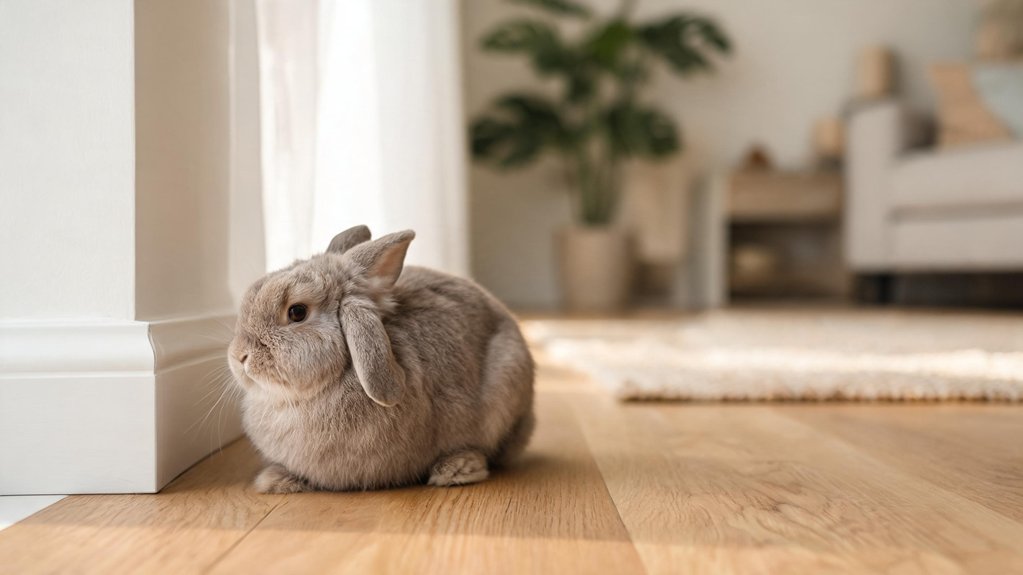
When you watch your rabbit eat, notice those cheek teeth do the real “grind work” on hay and veggies, using side-to-side chewing that crushes and shears fibrous strands into tiny bits before swallowing.
And because long-stem grass hay takes more slow, repeated chewing strokes, it keeps the chewing surfaces evenly worn, which helps prevent sharp overgrowths.
But if you feed mostly pellets, the less-abrasive, shorter particles can mean less cheek-tooth wear, so it’s smart to switch to plenty of quality grass hay and monitor for signs of dental trouble (like a reduced appetite or fewer poops).
Lateral Grinding Motion
As you watch your rabbit munch, you’ll notice a special kind of “cheek grinding” that’s built for tough, fibrous foods like hay and long strands of veggies.
During chewing, your rabbit moves the jaw side to side.
The lower and upper molars meet one side at a time, then shift laterally, slicing and grinding along the cheek teeth’s angled wear surface.
This wide side-to-side stroke helps long hay stay the right length, and it supports even tooth wear.
If chewing slows, or your rabbit stops eating or pooping for 12 hours, treat it as an emergency—call a rabbit-savvy exotics vet.
Fiber Processing With Cheek
Think about your rabbit’s cheek teeth as the built-in “hay mill” that turns tough fiber into swallowable bites. Cheek teeth are high-crowned, so they keep grinding for life.
When you feed long-strand hay, your rabbit’s premolars and molars use enamel ridges, like cutting edges, to shred stems and leafy bits. Upper teeth sit slightly wider, so chewing slices and shears as jaws meet.
Small enamel folds and grooves interlock, holding fragments, then breaking them down more.
You’ll see good chewing behavior daily, because it helps your rabbit eat, digest, and stay comfy. Avoid letting pellets replace hay.
Hay And Veg Wear
Your rabbit’s cheek teeth are the real workhorses that grind hay and fibrous greens into swallowable bits, day after day.
Grass hay uses rough, stiff fibers, so you’ll see cheek teeth grind with more side-to-side motion, and more chewing time.
You also cut food first with incisors, then cheek teeth crush and shear it, like a pestle-and-mortar system.
When you provide free-choice long-strand hay, you help even wear, so sharp enamel spurs don’t form.
Veggie fiber helps too, but pellets get crushed fast, with less lateral grinding.
If your rabbit stops eating, call a rabbit-savvy exotics vet now.
Also, no eating or pooping for 12 hours is an emergency.
Why Rabbit Teeth Need Wear to Prevent Spurs?
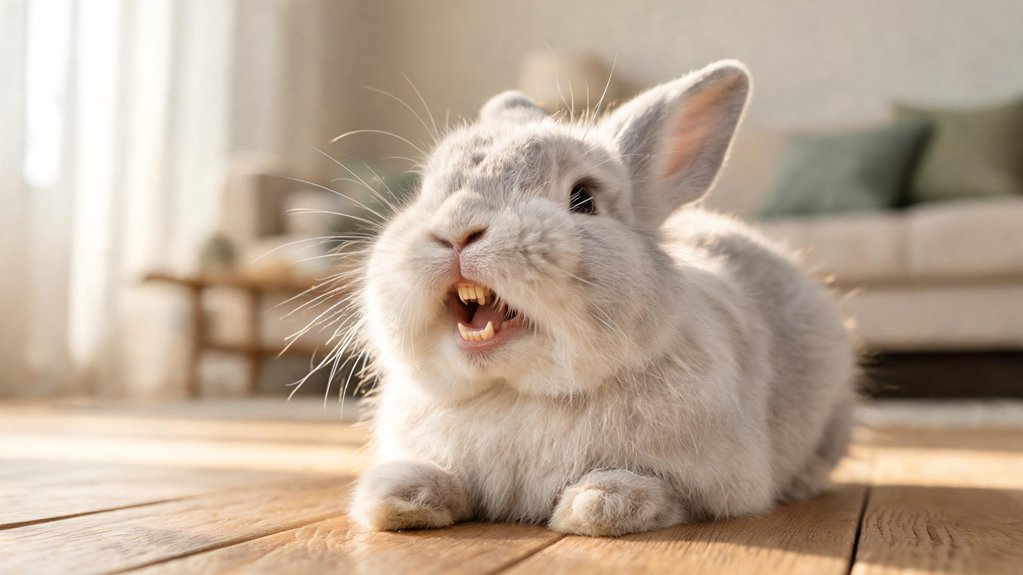
You need to help your rabbit wear down those teeth, because uneven wear lets sharp “spurs” (tiny enamel/dentin points) form on the cheek teeth where the teeth don’t grind evenly.
But the best prevention is simple: feed lots of high‑fiber grass hay and keep long, leafy plants in the mix so side‑to‑side chewing does the grinding for you, matching the way teeth continuously grow.
If your rabbit’s teeth look overlong, or you notice chewing changes, contact a rabbit‑savvy exotics vet ASAP, and remember that a rabbit not eating or pooping for 12 hours is an emergency.
Uneven Wear Causes Spurs
When rabbit cheek teeth don’t wear down evenly, spurs (sharp points of enamel that can poke the inside of the mouth) often start to form.
You’ll see this when teeth keep growing, but contact isn’t smooth.
Some spots get heavy chewing pressure, other spots barely touch.
That imbalance lets molar ridges turn into discrete sharp points.
Misalignment and anisognathism, where the upper jaw is wider, can shift load to the tongue-side or cheek-side.
Pellets, grains, and reduced jaw side-to-side motion can worsen it.
If you notice rough spots, stop and call a rabbit-savvy exotics vet.
If your rabbit won’t eat or poop for 12 hours, it’s an emergency.
Fiber Diet Supports Grinding
Because rabbit teeth keep growing, fiber isn’t just “good for digestion”—it’s how you help them grind down safely. Their incisors and cheek teeth grow nonstop, with continuous wear needed to prevent overgrowth.
Offer unlimited grass hay, like timothy, meadow, or orchard grass, so they chew daily. Aim for about 70–85% of intake from hay. Long-fiber, rough first-cut hay keeps chewing time high, and that extra side-to-side grinding helps tooth surfaces wear evenly.
Feed pellets and muesli only as a small part. Include fibrous greens, too.
And if your rabbit stops eating or pooping for 12 hours, treat it as an emergency. See a rabbit-savvy exotics vet.
Spot Early Dental Problems and Know When to Call a Vet?
Spotting rabbit dental problems early can make a huge difference, so keep a close eye on their mouth and day-to-day habits.
Spotting rabbit dental problems early can make a huge difference—so watch their mouth and daily habits closely for warning signs.
Check incisors for overlap, uneven wear, and sharp cheek-tooth spurs.
Look for horizontal ridges, broken teeth, or a “stinky” breath.
Also watch their habits: eating slower, dropping food, preferring softer bites, or refusing hay.
You should also notice drooling, wet fur, less grooming, clicking while chewing, weepy eyes, jaw swelling, or weight loss.
If your rabbit won’t eat or won’t poop for 12 hours, that’s an emergency—call a rabbit-savvy exotics vet now.
Build a High-Fibre Rabbit Diet for Daily Tooth Wear?
After you learn what warning signs to watch for in rabbit teeth, the next big step is building a high-fibre diet that helps your rabbit wear those teeth down every day.
Rabbits’ teeth grow continuously, so they must chew all day.
Start with unlimited, free-choice grass hay. Choose rougher, first-cut hay, since it grinds teeth better.
Then offer 3 different leafy greens daily—romaine, bok choy, basil, and carrot tops work well.
Feed about 85–90% hay, ~10% greens, and keep pellets to ~5%: roughly 1/4 cup timothy pellets per 5 lb body weight. This keeps teeth aligned.
Always ask a rabbit-savvy exotics vet if unsure.
Choose Safe Chew Toys That Keep Teeth Worn Down
Choosing the right chew toys can make a real difference in how well your rabbit keeps its teeth worn down, especially since rabbit teeth grow nonstop. Offer untreated, digestible options for natural gnawing, because hay alone won’t do all the work.
Pick safe hardwoods like apple, willow, aspen, kiln-dried pine, or balsa. Try willow balls, hay wreaths, timothy hay cubes, or tough grass balls for steady wear.
You can also give sisal, jute, bamboo, seagrass twists, coconut shell pieces, or woven grass mats.
Use plain cardboard tubes and boxes for easy chewing time.
But skip cedar, painted items, metal, soft rubber, and hard plastic, and always supervise.
If eating stops, call your rabbit-savvy exotics vet.
Avoid Feeding Mistakes That Cause Rabbit Tooth Overgrowth
To help prevent rabbit tooth overgrowth, you’ve got to set up their day so they’re always chewing the “right stuff” for long, steady wear.
Don’t make hay-and-grass optional. Aim for about 80% high-fiber grass hay daily, and keep long-stem hay available so they chew in a natural circle.
Skip pellet-only or pellet-heavy meals, because soft crumbles mean less grinding.
For adult rabbits, limit Timothy pellets to about 1/4 cup per 5 lb body weight, then refill unlimited hay.
Also avoid muesli mixes, grains, seeds, and sugary treats, plus too many short, processed bites.
If your rabbit won’t eat or poop for 12 hours, treat it as an emergency, call a rabbit-savvy exotics vet.
What Happens at a Vet Dental Exam and Imaging?
Once you’ve set up feeding to prevent tooth overgrowth, the next step is figuring out what’s going on in your rabbit’s mouth—because teeth problems can be sneaky.
A rabbit-savvy exotics vet starts with history, appetite changes, and weight loss.
Next, you’ll see an awake exam: facial symmetry, nasal or eye issues, drooling, and gentle jaw feel.
They then check incisors and the front cheek teeth, but far-back teeth need help.
For a full look, they often use sedation or anesthesia, with a scope.
Then imaging follows: skull X-rays, and sometimes CT scans, to judge roots, bone, and hidden abscesses.
If your rabbit won’t eat or poop for 12 hours, it’s an emergency.
FAQs About Rabbit Teeth, Growth, and Overgrowth
Rabbit teeth keep growing in an almost “always on” way, and you may notice changes as soon as weeks—so you should check them weekly for excessive length or uneven wear.
Overgrowth usually happens when teeth can’t rub together normally, often linked to jaw alignment issues or a diet short on coarse grass hay, so feed mostly hay and limit pellets.
But if your rabbit stops eating or pooping for 12 hours, treat it like an emergency and call a rabbit-savvy exotics vet right away, because dental pain can snowball fast.
Teeth Grow Continuously Weekly
Rabbit teeth grow steadily, about 2 mm per week, because they’re open-rooted (their tooth structure keeps growing from the inside, starting at the apex) and they erupt continuously into your rabbit’s mouth.
That means you can’t “set it and forget it.”
You should expect normal weekly change in both incisors and cheek teeth as wear keeps pace.
When wear and growth stay balanced, teeth look even and align correctly.
But if you notice crooked incisors, spurs, or a rabbit refusing food, contact a rabbit-savvy exotics vet right away.
And remember: no eating or pooping for 12 hours is an emergency.
Overgrowth Causes And Prevention
Dental overgrowth usually happens when your rabbit’s teeth can’t line up and rub the way they’re supposed to, so the teeth keep growing longer and longer.
Malocclusion—that’s imperfect tooth positioning when the jaws close—can come from genetics (you’ll hear it more in some dwarf and lop-eared rabbits), from injury to a tooth or jaw, or from illness that changes how the mouth works.
And diet matters: feed mostly grass hay, with pellets limited to about 1/8 cup once or twice daily.
But if your rabbit lacks fibrous chewing, cheek teeth can elongate, especially with age.
Also, prevent cage biting, and ask a rabbit-savvy exotics vet for checks.
If your rabbit isn’t eating or pooping for 12 hours, treat it as an emergency.
Frequently Asked Questions
What Should Normal Rabbit Incisor Wear Look Like at Home?
You’ll want to “read the room”: healthy incisors look white, smooth, and chisel-edged, with vertical enamel lines, even length, and neat closure. Inspect for intact enamel, no fractures, no splaying, no protrusion, and a firm, pink gum line.
How Can I Tell if My Rabbit’s Cheek Teeth Are Misaligned?
You can tell by watching for appetite loss, drooling, tooth grinding, trouble chewing or dropping food, weight loss, wet chin, facial/jaw swelling, weepy eyes, nasal discharge, or abnormal stool—see a rabbit-savvy exotics vet promptly.
Do Baby Rabbits’ Teeth Change, and When Do They Start Growing?
Do baby rabbits’ teeth change? Yes—right after birth, they shed early teeth and permanent ones erupt fast. You’ll see most permanent teeth by 3–5 weeks, so monitor eating; not eating or pooping 12 hours is urgent.
Can Stress or Pain Stop Tooth Wear and Worsen Dental Spurs?
Yes—stress or dental pain can stop normal chewing and tooth wear. When you notice a rabbit eating less, it triggers GI stasis, worsens spurs, and increases ulceration. For “no eating or poop 12 hours,” call a rabbit-savvy exotics vet now.
When Is “Not Eating” a Dental Emergency for Rabbits?
If your rabbit stops eating, it’s a dental emergency—contact a rabbit-savvy exotics vet right away. If they don’t eat and don’t poop for ~12 hours, treat it as an emergency and go immediately.