If you’ve got a lop-eared rabbit, you’ve got extra ear risk because their narrower, droopier ear canals trap moisture and debris. Check weekly, and especially the folds by the bedding, for crusts, odor, redness, discharge, or lots of head shaking. Keep housing dry and well-ventilated—aim for under 60% humidity, use dry bedding, and swap it fast if it gets damp. Feed mostly grass hay (about 85%), limit pellets, and cut stress. Spot trouble early, and you’ll know next steps.
Swift Summary
- Lop-eared rabbits need close ear monitoring because narrower canals increase risk of otitis externa, media, and interna.
- Know breed differences (English/French/Holland/Mini Lops) since droopy anatomy complicates visualization and examination.
- Support dry, ventilated housing: use dry bedding, aim for under 60% humidity, and ensure gentle cross-ventilation.
- At home, do gentle weekly checks for crusts, redness, odor, discharge, or ear color changes; avoid Q-tips and ear cleaning.
- If infection is suspected, vets typically start with otoscopy, may use cytology/culture, and use CT when bulla involvement is possible.
Lop-Eared Rabbit Ear Infection: What to Do First
First, take ear problems seriously in lop-eared rabbits—because their ear canals are narrower, they’re more prone to otitis externa (outer ear inflammation), media (middle ear), and even interna (inner ear).
First, take ear problems seriously in lop-eared rabbits—narrower canals make otitis externa, media, and even interna more likely.
If you have a dutch lop or any lop eared bunny, watch for early signs: scratching, head shaking, and avoiding ear touch.
Also look for discharge, crusts, odor, or a changed ear color.
If you notice pain, lethargy, reduced appetite, hearing loss, or head tilt, get urgent rabbit-experienced vet care today.
Before your visit, keep things calm, avoid ear cleaning, don’t use Q-tips or meds.
Call first.
Common Lop-Eared Breeds and Their Ear Traits
When you own a lop-eared rabbit, the ear look isn’t just “cute,” it affects what you should watch for every day—because droopy ears come with narrower ear canals and a harder time keeping the inside of the ear clear.
As you care for a lop bunny, learn each breed’s shape. The English Lop, the “King of the Fancy,” has extra-long ears that often trail and can’t lift much.
A french lop carries heavy, broad ears hanging laterally.
Holland Lop ears lie close to the face, while Mini Lop ears flop short.
Check cleanliness daily, especially where folds touch bedding.
In lop rabbits, the ear canal includes a kink that narrows the passage and limits sound traveling to the eardrum.

7-in-1 Rabbit Grooming Kit: Not only gentle and safe for small animals, such as rabbit, hamster, guinea pig, and chinchilla; but also work great for larger animals like cats and dogs. Soft silicone small animal massage comb can help you protect your pet's skin and effectively keep their fur clean, healthly.

Complete Pet Ear Care Kit for Dogs & Cats – This all-in-one pet ear cleaning kit includes stainless steel tweezers, rounded safety scissors, silicone ear cleaner stick, cleaning cloth, spray bottle, and cotton swabs—everything you need for safe, gentle ear wax removal and everyday pet ear hygiene at home

7-Piece Rabbit Grooming Kit: Includes a rounded-pin shedding brush, grooming glove, long and short fine-tooth combs, nail clipper, nail file and dematting tool for an organized small-pet care routine
Why Lop Rabbits Get Ear Infections More Often
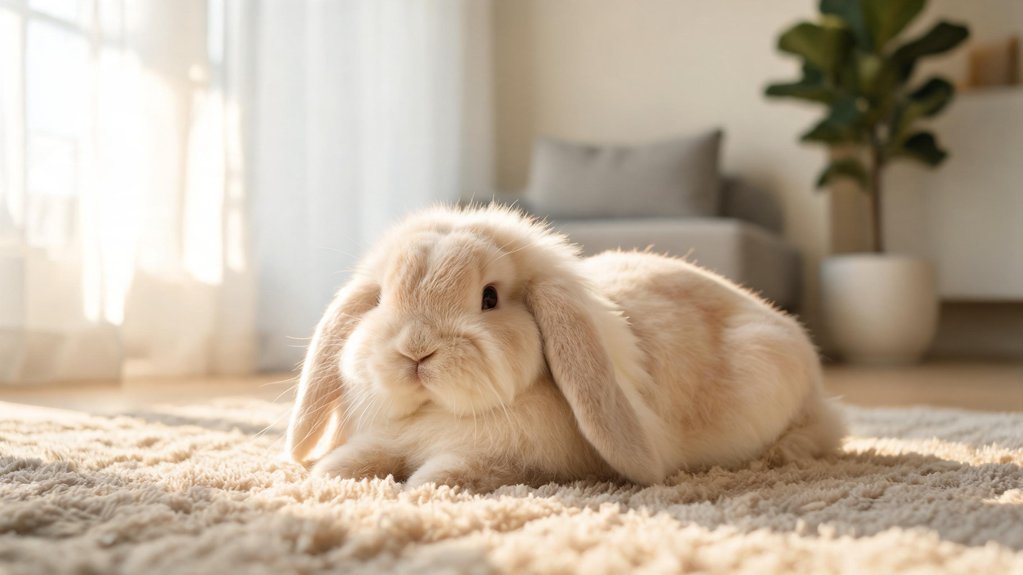
Because lop-eared rabbits have a narrower, less ventilated ear canal, they’re more likely to develop ear infections than erect-eared rabbits.
For your floppy eared bunny, that means you should check ears more often.
With drooping pinnae, airflow drops, moisture and irritants hang around.
Ear canal stenosis, or narrowing, also blocks normal clearing.
You’ll often see wax and debris build up, and that material can feed germs.
In a “big rabbit with floppy ears,” the risk can stay chronic, because self-cleaning fails.
If you spot ear canal narrowing, wet discharge, crusting, or smell, call your vet promptly.
Set Up Housing for Dry, Well-Ventilated Ears
To help your dutch lop’s ear canals stay dry, start with dry bedding and keep humidity on the low side—think under about 60% relative humidity. Use a cage or pen with wire/mesh sides and openings placed across from each other, so fresh air moves through without blasting your rabbit at floor level. When comparing an indoor rabbit hutch, look for practical features such as removable trays and mesh panels that make airflow easy to control.
Then clean soiled areas right away, and swap bedding often, because damp bedding can turn into ammonia and moisture right where those floppy ears rest.

ODOR CONTROL for long-lasting freshness, Kaytee Clean & Cozy can be used with any type of habitat for a fresh animal home

ODOR CONTROL for long-lasting freshness. Kaytee Clean & Cozy can be used with any type of habitat for a fresh animal home.

ODOR CONTROL for long-lasting freshness. Kaytee Clean & Cozy can be used with any type of habitat for a fresh animal home.
Dry Bedding And Low Humidity
Regularly keep your lop’s ears dry and well-aired, because excess environmental humidity can help bacteria and yeast grow in the ear canal, and that raises the risk of external ear infections.
When you shop lop bunnies for sale, ask for a health-first setup plan too.
Aim for indoor relative humidity about 40–60%, and avoid damp, clammy air.
Choose dry, moisture-absorbing bedding, like paper-based products, kiln-dried pine, hemp mats, or wood pellets.
Spot-clean daily, replace bedding on a schedule, and change absorbent litter.
If you use fleece, wash and fully dry it, then layer over something absorbent.
Keep simple humidity gauges nearby.
Ventilation Around Ear Canals
When your lop’s ears fold down, you’ll want to set up housing so air can move around those ear canal openings, not just sit there.
Lop ears trap moisture and debris, and that can lead to wax build-up, pain, and repeat infections.
Choose a hutch with mesh panels, vents, or windows that create gentle cross-ventilation, like openings on opposite sides.
Use solid sides on three surfaces if you need protection, but keep a mesh front for airflow at ear height.
Elevate the hutch on slats or wire, not solid walls near the ground.
Also, place it in cool, well-ventilated spots, away from drafts and damp.
Diet, Stress, and Exercise That Support Ear Health
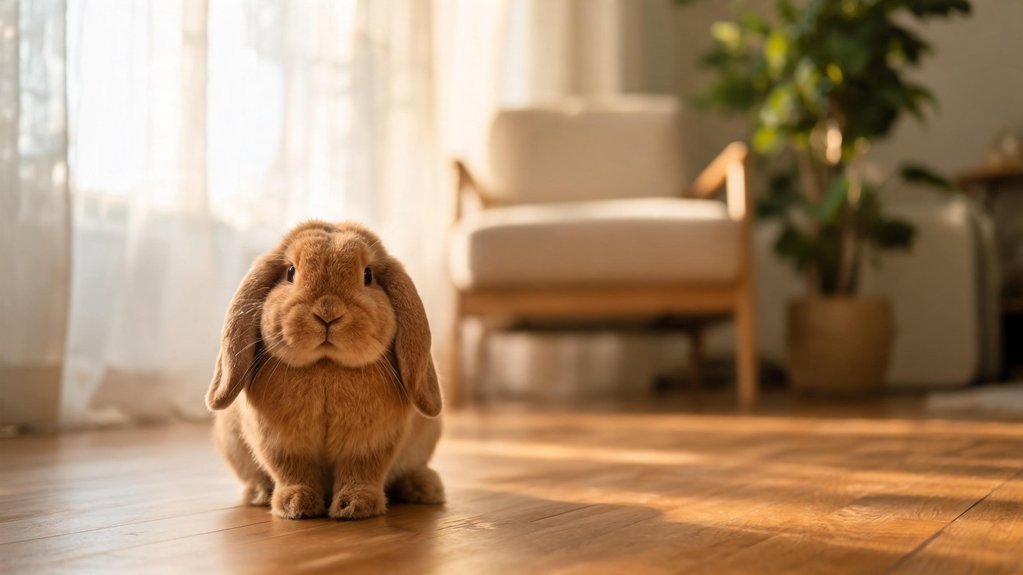
A solid diet and a calm routine work together to keep your lop’s ears healthier, because gut health, body condition, and stress levels all affect the immune system.
Feed unlimited grass hay, like timothy, orchard, or meadow hay, as the base.
Aim roughly for 85% hay or grass, plus 10% safe plants and veggies, and only about 5% pellets.
Offer plain, high-fiber pellets in measured amounts, and keep fresh water available.
And manage stress—avoid overcrowding, loud noise, and rough handling.
Give daily gentle playtime for exercise, and help your friend stay trim.

HAND-SELECTED TIMOTHY HAY is the first ingredient of this nutritious diet developed by a small animal nutrition expert

ESSENTIAL INGREDIENTS FOR A HEALTHY, ACTIVE LIFESTYLE: Made with high fiber Oxbow Timothy Hay to support healthy digestion

DAILY BUNNY PELLETS: Formulated with 100% of your pet’s daily recommended vitamins and minerals, this balanced rabbit food supports whole-body health, including strong immunity, healthy growth, and vibrant energy levels for rabbits
Early Signs of Lop Rabbit Ear Problems
Even before your lop’s ear looks “bad,” you might notice smaller changes that deserve your attention. Watch for head shaking that’s more than normal grooming, scratching at the ear base more often, and new grumpiness when you handle your rabbit.
Even before a lop’s ear looks bad, watch for extra head shaking, more scratching at the base, and sudden grumpiness.
Also, keep an eye on one ear getting constant attention, like rubbing on cage bars or the floor.
Next, check the ear canal and pinna (the floppy ear flap). Look for extra wax, brown crust, white discharge, warmth, swelling, or a bad smell.
Then notice balance: a mild head tilt, stumbling, or facial asymmetry.
Also, monitor appetite, gut stasis, and quiet withdrawal.
Otitis Externa vs Media in Lop Rabbits (Basics)
Lop-eared rabbits can get ear infections in two different “layers,” and knowing which one you’re dealing with helps you act faster. First, you’ll most often see otitis externa, the outer ear canal.
Drooping ears create a narrow, warm space where wax and debris build up. That trapped moisture breeds bacteria and yeast, and the canal can even swell shut.
If the infection or inflammation reaches the eardrum, it becomes otitis media, the middle ear. That can lead to a ruptured eardrum, abscesses near the ear bulla, and nerve signs like facial weakness or Horner’s. Loose fur from heavy molting can also collect around the ears, so brushing regularly and using coat health supplements during shedding season may support a healthier coat, though they will not replace regular ear checks.
How Vets Diagnose Lop Rabbit Ear Disease
When you bring your Dutch lop in for ear problems, your vet starts with otoscopy, checking the canal and eardrum (when possible) for wax, discharge, swelling, or any stenosis, the narrowing that makes these rabbits tricky to view.
Then they take a swab for cytology, a quick microscope look at cells, and for culture, so they can identify the germs and choose the right medicine based on an antibiogram.
If bulla involvement is a concern, meaning deeper infection in the bony ear area, they’ll usually move to CT as the main imaging test, with other scans only if needed.
Otoscopy And Canal Assessment
Getting a clear view inside your lop rabbit’s ear starts with otoscopy, a vet’s look into the ear canal with a lighted scope, and it matters because their ear canals often narrow and get packed with wax and gunk.
And because those canals can pinch shut, your vet may use gentle pinna traction, and a correct speculum size, to straighten the path.
But lop-eared anatomy makes it tricky, so they may choose video-otoscopy for a magnified view.
You’ll hear them check for stenosis, redness, erosions, and exudate, then plan care, flushing, or surgery if needed.
Sedation helps keep everything still.
Cytology And Culture Testing
To figure out what’s going on inside your lop rabbit’s ear canal, your vet often starts with two lab tests: cytology and culture.
First, cytology.
You’ll see the clinician swab the horizontal canal, then roll it onto glass slides in a thin layer. They air-dry the slides, no heat. One slide stays unstained and gets checked at 100–400x to look for parasites.
The second slide gets a Romanowsky-type stain, then is read at 100–400x and 1000x. It shows purulent material, neutrophils (white blood cells), bacteria, yeasts, and even fungus.
Next, culture grows germs from samples for targeted antibiotic choices.
Imaging For Bulla Involvement
Imaging helps your vet figure out whether your lop rabbit’s middle ear (inside the skull) is involved, especially when the ear canal is narrow and hard to see with a scope.
And since canal stenosis hides trouble, you’ll want a clear look at the tympanic bullae.
CT is usually the best choice.
It shows bony changes, and it can spot otitis media by finding soft tissue or material in the bulla where gas should be.
Your vet typically uses heavy sedation, and often no contrast is needed.
If CT isn’t available, skull X-rays help, especially dorsoventral views.
But X-rays may miss early disease.
Safe Home Ear Checks: What to Clean vs Avoid
Because lop-eared rabbits tend to trap more wax and debris in their ear folds, you should treat home ear checks as your “early warning system,” not a deep cleaning project.
Do a gentle check weekly, or every 1–2 weeks if your rabbit stays clean, adjusting based on history.
Look at the outer flap and base for dirt, crusting, redness, scabs, swelling, or bleeding.
Use a penlight to peek at the canal entrance only.
A little pale yellow wax can be normal, but dark, crumbly debris, moisture, or foul odor isn’t.
Clean outer folds with a lukewarm damp cloth.
Avoid cotton swabs inside, oils, peroxide, vinegar, and DIY drops.
Medical Treatment for Lop Rabbit Otitis (And Relapse)
When your lop-eared rabbit gets otitis (an ear infection, usually involving the outer ear canal at first), treatment has to be bold, organized, and long enough to actually clear the mess—not just calm it down for a few days.
Clean debris with sterile saline or tris-EDTA, often several times weekly. Soften thick wax with ceruminolytics like carbamide peroxide or DSS, then irrigate, then dry well.
Place antibiotic-soaked ear wicks in the canal, replacing about every 5–7 days. Avoid steroid ear drops. If infection reaches the middle ear, expect prolonged systemic antibiotics, often ~6+ weeks, like enrofloxacin, or alternatives.
Always control pain with an NSAID. Recheck quickly, because relapse happens.

Developed in Collaboration with Veterinary Dermatologists: Recommended for the routine cleansing of sensitive ears in dogs, cats, puppies, and kittens of any age.

PET EAR CLEANING SOLUTION: Clean your pet's ears a few times daily with Vetericyn Plus Antimicrobial Ear Rinse to buildup that causes bad odor and potential ear infections in dogs and cats.

PET EAR CLEANING SOLUTION: Best pet ear drops for dogs, cats, rabbits, gerbils, hamsters & other small animals. Performs as an unclogging solution, healing ointment, drying liquid & infection treatment.
When Surgery Helps: LECR/LECA/LECARBOM
When meds aren’t cutting it for your lop’s chronic ear disease, you’ll need to talk surgery, because it can finally fix the blocked canal problem.
If the outer ear canal is stenotic and keeps relapsing, LECR (lateral ear canal resection) can create a permanent drainage stoma, basically a new outlet so debris can leave and topical meds can work better.
For soft tissue or cerumen masses, LECA (lateral ear canal ablation) opens the canal for flushing and airflow, and if there’s otitis media too, LECARBOM gives the surgeon access to the middle ear to remove pus and clean the tympanic cavity.
When Medical Therapy Fails
If you’ve already tried both topical drops and systemic meds, and your lop-eared rabbit still has persistent ear pain, discharge, and a canal that stays blocked, it’s time to talk surgery.
Persistent otitis externa after prolonged treatment means healing isn’t happening.
On exam or imaging, you may see soft tissue swelling or cerumen (wax plug) packing the canal, keeping infection trapped.
If CT or X-ray confirms otitis media, with tympanic bullae changes or an abscess, you can’t ignore the source.
You’ll still choose procedures that open, drain, and stabilize, protecting your rabbit’s comfort and welfare.
Best Options For Lop Cases
So, if your lop’s ear disease keeps coming back, or it turns severe—especially after you’ve already done the usual meds—surgery can finally break the cycle.
When you see chronic, recurrent, or structural canal changes, plus middle-ear trouble in the bulla (the middle-ear chamber), ask your rabbit vet about the right option.
For soft, tissue-filled outer canals, you may need LECA, lateral ear canal ablation, which leaves a permanently open entrance for drainage.
For “middle-ear” pus in the bulla, choose LECR-BO: lateral ear canal resection plus bulla osteotomy, so they can drain it.
With outer plus middle disease, TECABO-type combined surgery often helps most.
Prevent Yeast, Mites, and Bacteria in Lop Ears
To keep lop ears comfortable and healthy, you’ll want to prevent yeast, mites, and bacteria before they take hold—because lop rabbits can trap moisture and wax more easily in those folds.
Check ears weekly for wax buildup, debris, bad odor, redness, crusting, or head shaking.
Look at the inner flap and canal entrance for discharge, brown material, swelling, or pus.
Clean only outer areas gently, with a soft cloth and lukewarm water or rabbit-safe solution.
Avoid cotton swabs, and never let water run inside.
Keep housing dry and well-ventilated.
Quarantine new rabbits, disinfect gear, and if anything is deep or stubborn, call a rabbit-savvy vet.
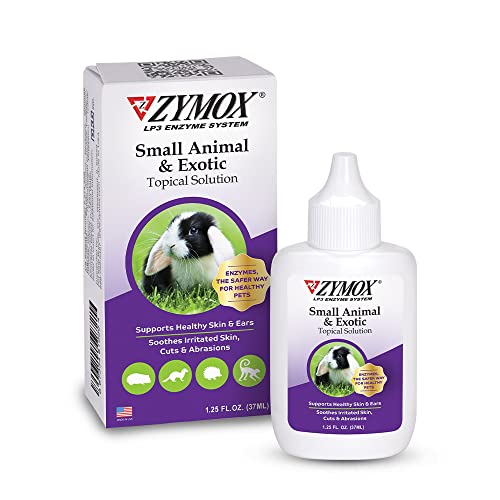
ZYMOX Small Animal & Exotic Topical Solution supports healthy skin & ears while soothing dry skin

Ear & Skin Care: Specially formulated for rabbits, guinea pigs, hamsters, ferrets, and all exotics. This solution quickly and effectively relieves ear and skin infections, soothes itching and significantly speeds up wound healing

Ear & Skin Care: Specially formulated for rabbits, guinea pigs, hamsters, ferrets, and all exotics. This solution quickly and effectively relieves ear and skin infections, soothes itching and significantly speeds up wound healing
Watching Hearing Loss and Balance Changes in Lops
Watch for hearing and balance changes in your lop—because those droopy ears can make ear trouble easier to miss, and problems can build up over time.
Watch for hearing and balance changes in your lop—droopy ears can hide trouble, letting it worsen over time.
Check daily, especially if you see ear wax, crusts, or scaling, or if your rabbit hurts during ear exams.
If your lop startles less to sudden noises, can’t find sounds, or seems unresponsive to familiar cues, treat it as possible hearing loss.
Also watch for head tilt, wobbling, circling, rolling, or nystagmus—wobbling eyes.
Those can mean inner-ear infection.
Call an avian vet quickly.
Frequently Asked Questions
What’s the Safest First Step if My Dutch Lop Won’T Let Me Touch Ears?
Stop touching their ears right now; sudden resistance often signals pain. Minimize head contact and observe for discharge, odor, appetite loss, shaking, or balance issues. Arrange a prompt exam with a rabbit-experienced vet instead of home drops or restraint.
How Can I Tell Ear Mites Versus Bacterial or Yeast Problems in Lops?
Spot it fast—your dutch lop can look like it’s wearing a horror-movie crust! Check: mites cause dry, tan/brown layered crusts and heavy itch/head shaking; bacteria/yeast cause creamy white exudate, lots of wax, redness/swelling, often pain.
Should I Use Ear Drops or Flush the Ear at Home for Dutch Lops?
You shouldn’t flush or use ear drops at home for Dutch lops. Instead, gently clean only the visible outer ear, then see a rabbit-savvy vet promptly. Odor, discharge, redness, pain, or head tilt means urgent exam.
When Do Dutch Lops With Recurrent Otitis Need Imaging or Culture Testing?
When your Dutch Lop’s otitis keeps coming back or won’t clear, get imaging; if you see stenosis, proliferative tissue, head tilt or facial signs, or middle-ear clues, request skull radiographs/CT and ear cytology plus culture.
Do ARBA Weight and Age Change How Quickly Dutch Lop Ear Disease Worsens?
Yes—older, heavier Dutch Lops often worsen faster, but ear conformation and daily management matter most. Think “slow fire”: age and larger size correlate with more severe otitis and sensitivity. You’ll monitor closely and act early.