You see German Shepherds evolve from black puppy coats to silver, gold, red, or brindle patterns as genes unfold. Silver shows banded hairs, while sable and red feature dark tips over lighter bases. Brindle adds tiger stripes only on reddish zones. Most colors stabilize by 18 months. Keep tracking those subtle shifts, and you’ll discover how genetics, environment, and timing shape your dog’s unique adult coat.
Swift Summary
- Silver German Shepherds have banded hairs with pale bases and black tips, creating a metallic sheen from diluted pigments.
- Golden sable coats feature lighter bases with darker banding and black tips, producing a dynamic, wolf-like appearance as the dog moves.
- Red and red sable patterns display deep mahogany tones with black banding, where puppy coats darken and develop distinctive tips with age.
- Brindle Shepherds exhibit tiger-like striping on reddish zones due to a rare Kbr allele, often considered a fault in show standards.
- Coat colors evolve significantly during the first 18 to 24 months as guard hairs and undercoat mature and shed through growth cycles.
Meet the Silver German Shepherd Coat Pattern
If you’re drawn to the striking visual contrast of German Shepherd coats, the silver pattern offers a uniquely elegant take on the breed’s classic markings. You’ll notice how this light colored german shepherd features banded hairs with pale bases and black tips, creating a soft metallic sheen.
Unlike a red german shepherd or dark german german shepherd, the silver german shepherd puppies result from diluted pigments, not true metallic color. You might also see a german shepherd grey or blonde german shepherd in similar litters. Owners of a silver German Shepherd should choose a collar that offers daily comfort and control while staying easy to clean, since light coats show dirt quickly.
When searching for silver german shepherd puppies for sale, consider that do german shepherds change color as they mature. Understanding what color will my german shepherd be helps you serve potential owners better. This variation occurs because coat color is primarily cosmetic trait that does not influence the dog’s health or temperament.
Whether it’s a grey german shepherd puppy or a blond german shepherd, genetics drive these beautiful variations.
What Makes the Golden Sable German Unique?
As you explore the golden sable German Shepherd, you’ll notice its striking visual blend of pale tan or yellow base coats with black points, creating an overall metallic golden appearance. Individual hairs feature lighter golden bases with darker banding and black tips, producing multi-toned shading that shifts with light and movement. This layered pigmentation gives the coat depth and a wild, wolf-like look reminiscent of ancestral canids.
When you serve these dogs, remember their sable pattern stems from a dominant genetic trait, meaning only one parent needs the gene for offspring to express it. The beautiful golden tones arise from pheomelanin bases combined with eumelanin dark tipping.
While these coats are formally recognized, true golden sables remain relatively rare. Owners who take these energetic dogs on long hikes sometimes compare options such as dog backpack carriers for smaller companions, though adult German Shepherds usually need a sturdy harness instead. You’ll often see puppies born darker, gradually revealing their signature lighter golden bases as they mature through their developing double coats.
This variation is distinct because the sable coat is dominant, ensuring the trait appears whenever a single parent carries the gene.
Understanding Red and Red Sable Patterns
While exploring red and red sable German Shepherds, you’ll find that red typically refers to a black-and-red saddle where deep mahogany tones replace the standard tan areas. You see black and-red patterns follow the familiar saddle layout but with rich red on the chest, head, and tail.
For red sable coats, you notice dark banding overlays a red undercolor, creating a diffuse, peppered look rather than sharp edges. Each hair shows light red bases with black tips, so no two coats look identical. Owners who want to keep the neck coat visible can choose a padded collar liner that protects the skin without hiding the dog’s natural markings.
The agouti gene drives this banding while phaeomelanin sets the red intensity. As these dogs grow, their puppy coats darken and black tipping increases.
Serving others means understanding how these unique patterns develop and vary across individuals. This is because sable is the original color of the breed, with puppies born mostly tan and developing their distinctive black tips as they mature.
The Rare and Striking Brindle German Color
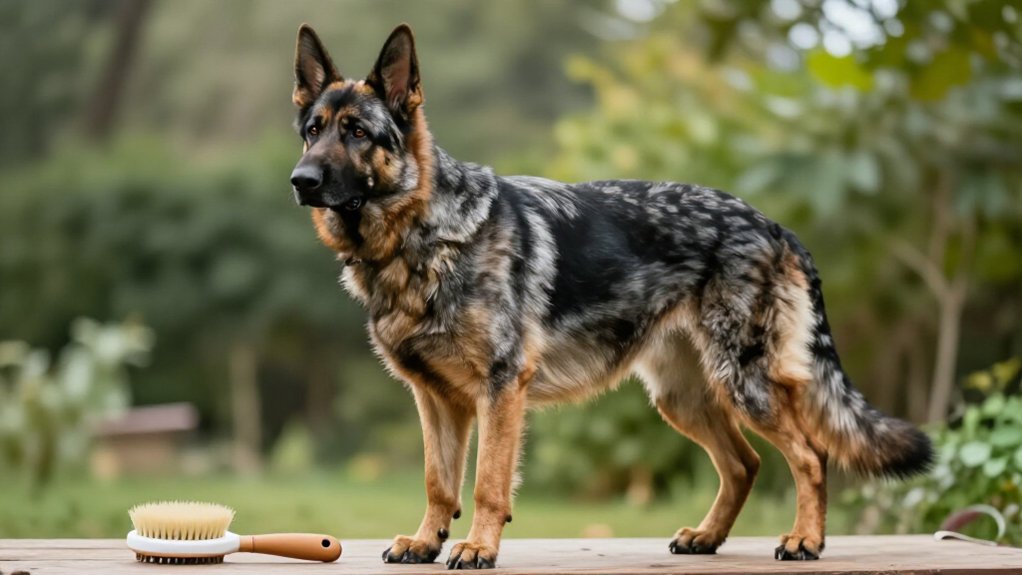
Once you look beyond the classic black-and-tan, you’ll find the rare and striking brindle German Shepherd. Early breeders documented these striped coats as original variation, with influential stud Beowulf carrying the pattern. Though later labeled non-standard and bred out, the genetic potential persists in limited bloodlines today. Owners who transport these dogs often rely on protective car covers to keep seats free of dog hair, dirt, and mess.
You’ll notice tiger-like striping where dark and light hairs alternate over base colors like black, tan, or silver. This pattern appears only on reddish zones, leaving black regions solid. The Kbr allele at the K locus creates this effect when not masked by dominant black.
Because inheritance is dominant, removing it proved straightforward for standardization. Today, few register brindle Shepherds, yet you can still discover these lost gems in select lines serving others through rare breed preservation work and educational outreach about diverse coat genetics. This pattern is considered a serious fault by the AKC.
Comparing Sable and Standard German Patterns
When you compare sable and standard German Shepherd patterns, the differences in hair structure and color placement become immediately clear.
Sable coats feature banded hairs with dark tips over lighter bases, creating a salt-and-pepper or wolf-like look. You’ll notice these individual strands produce soft, shaded gradations rather than hard edges.
In contrast, standard black and tan dogs display solid color blocks with distinct boundaries. Their classic black saddle sits sharply against tan legs and chest.
While standard patterns remain mostly static, sable coats often shift appearance with light and movement. You see varying shades like silver, red, or cream mixed throughout.
Serving others requires understanding that sable offers natural, unpredictable mottling. Standard types provide the iconic, high-contrast silhouette most people recognize instantly. The sable pattern is a phenotype, not a breed, distinguishing it from separate classifications.
Both styles create beautiful German Shepherd looks today. Whichever pattern your dog wears, a sturdy dog carriers option helps keep its coat clean and its travels safe.
Exploring the Genetics Behind German Pigments
To truly understand the stunning variety of German Shepherd coat colors, you need to look at how two main pigments interact with multiple genes. You’ll find black-based eumelanin and red-based phaeomelanin form the foundation.
The Extension gene acts as a master switch, controlling which pigment your dog produces. At the Agouti locus, specific alleles determine banding and tan points.
The Brown locus converts black to brown, creating liver coats. Meanwhile, the Dilution locus softens dark colors into gray.
You might notice how modifiers adjust gold intensity from pale cream to rich tan. These genetic interactions explain why puppies often change color as they mature.
Understanding these mechanisms helps you serve breeders and owners better by predicting outcomes. It empowers you to explain coat variations clearly and accurately to those seeking guidance. When a puppy must travel to meet its new owner or a breeder for color evaluation, choose airline-approved dog carriers that meet the airline’s size and ventilation requirements.
How to Distinguish Blue and Liver Colors
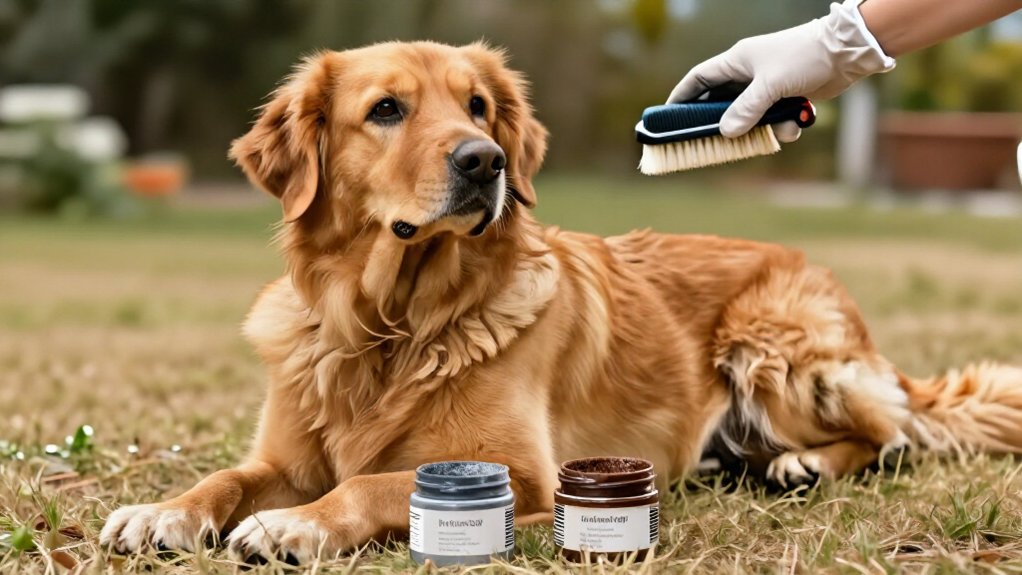
To distinguish these coats, look for cool gray tones in blue Shepherds versus warm chocolate shades in liver ones.
You’ll spot the key giveaway in the nose: slate-gray for blue and rich brown for liver.
Dilution genetics drive these shifts, softening black pigment into gray or warm it into brown.
When you check a Shepherd’s nose and coat during walks in busy areas, keeping the dog under close control with a short leash makes it easier to observe the color in good light.
Blue Versus Liver Hues
Because both Blue and Liver German Shepherds lack standard black pigment, distinguishing them requires focusing on whether the diluted tones lean cool or warm.
Look closely at the nose leather; you’ll see slate gray on Blues and warm brown on Livers. Check the paw pads too, since they match these tones exactly.
When examining the coat, note how black areas become steel-gray or slate on Blues, while Livers show rich chocolate or light brown everywhere black normally appears.
Observe eye rims carefully because they align with these pigmentation shifts. Blue dogs present a cool, smoky facial impression, whereas Liver dogs offer a warm, chocolate-toned look.
These visual cues help you serve owners seeking accurate identification and informed care decisions for their unique dogs effectively.
Dilution Genetics Impact
How do you actually tell blue and liver apart beyond just guessing? You need to spot uniform pigment changes across nose, eyes, and coat.
Liver dogs consistently display brown nose leather and amber irises because the b allele shifts their eumelanin to brown.
Blue coats stem from black eumelanin, so they feature slate gray noses and matching eye rims.
Dilution lightens both types, making eyes look brighter and coats paler overall.
If you see a diluted liver with a reddish-brown nose, that’s isabella. This genetic mix combines both recessive traits.
To serve breeders well, check nose color first—it reveals the base pigment instantly.
Confirm your visual findings with genetic testing on B and D loci for complete accuracy.
How Coat Colors Evolve During Puppy Growth
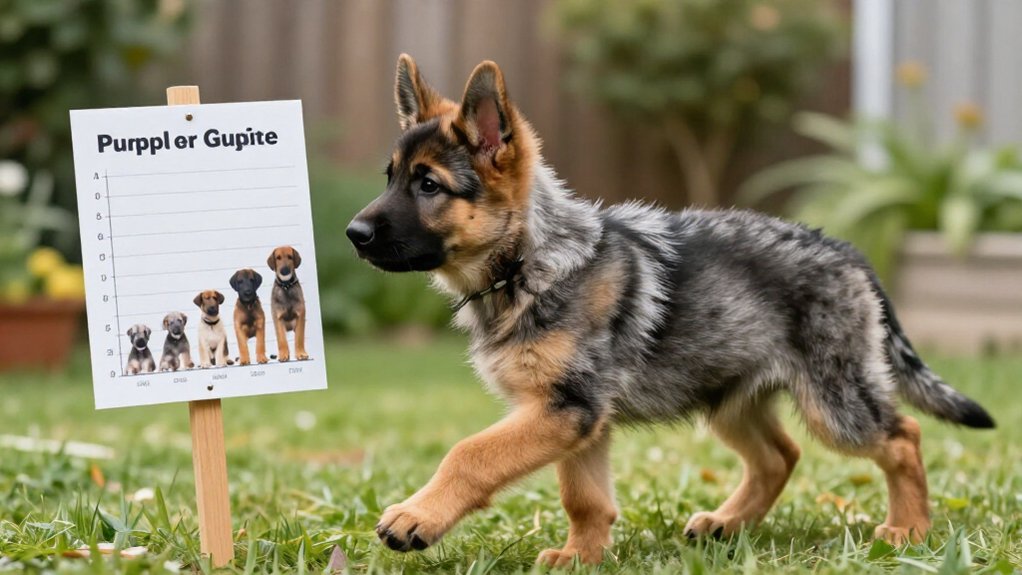
As your German Shepherd puppy grows, you’ll watch pigment development unfold in distinct stages, with the most dramatic shifts happening between three and six months.
If you have a sable puppy, notice how its coat transforms from a dark initial hue to a rich, banded pattern as it matures. During these growing months, a lightweight soft-sided dog carrier can make trips to the groomer or vet more comfortable for your puppy.
Pigment Development Timeline
Although a German Shepherd’s base coat color is genetically fixed at birth, you’ll witness how the distribution of dark and light pigments shifts dramatically as your puppy grows. Initially, newborns appear mostly dark with small tan spots.
By eight weeks, light patches expand, creating a two-tone look. During three to seven months, puppies shed their soft coat, revealing clearer adult patterns. Watch as front paws lighten while backs darken.
Between six and eighteen months, colors intensify and stabilize. Dark regions deepen, while tan areas grow richer. These changes reflect your puppy’s unique genetic framework.
As caretakers, observe these stages to understand your dog’s final appearance. Knowing this timeline helps you prepare others for their pet’s evolving look. Serve them by sharing accurate insights during this transformative period.
Sable Coat Shifts
While your German Shepherd puppy may start life looking dark and muddied, their true sable pattern emerges through multiple coat cycles as the banded hairs fully develop. You’ll notice lighter patches expanding on the chest, neck, and legs as black coverage recedes across the torso and hindquarters.
Some puppies lighten considerably from their initial muddy coat, while others deepen as dark tipping intensifies over time. Seasonal sheds further alter how the coat appears, shifting the balance between guard hairs and undercoat.
These changes unfold gradually over two to three years, so don’t rush to judge your pup’s final look. Observing these shifts helps you understand their unique development and better support their care as they grow into their adult coloring and temperament.
Adult Coat Stabilization
Once your German Shepherd puppy passes the 3-to-7-month mark, you’ll see their coat shift from soft baby fur to the adult texture and pattern that define their final look.
As you care for them, note that their base color sets at birth, but contrast sharpens over the first two years. Darkening or lightening often starts early, with major changes peaking during this shedding phase.
You’ll likely observe their back darkening while their belly lightens, revealing clear mask and saddle regions.
Most puppies stabilize by five to eight months, though subtle refinements continue until eighteen to twenty-four months.
To best serve these animals, recognize that genetics dictate their ultimate hue, while environmental factors influence tone intensity during growth.
Patience guarantees you witness their true adult coat emerge.
When Adult Coat Color Stabilizes Over Time
You should expect your German Shepherd’s coat color to mostly settle between 18 and 24 months, though some dogs finish as early as 8 months or take up to 3 years. While the base coat exists at birth, the balance between dark and light areas keeps shifting through the first two years.
You’ll notice the most dramatic changes between three and six months, followed by another phase through eighteen months. By that mark, the permanent adult coloration usually appears.
Keep in mind that sable coats often show greater variation before clarifying. Silver pigmentation and black-and-tan patterns might look muted initially. The colors then intensify and sharpen as pigment matures.
Once stabilized, you won’t see major shifts, just subtle graying or fading from sun and aging. Understanding this timeline helps you serve your dog by avoiding unnecessary worry during these natural progressions. Setting up an indoor dog playpen gives your growing puppy a contained space to rest and play while you easily observe these coat changes over time.
Why Puppy Coat Colors Change Slowly
You’ll see that pigment development follows a slow timeline as melanocytes mature over many cycles.
Each new hair growth cycle introduces slight color shifts, so changes happen gradually rather than all at once.
This extended process means the adult color stabilizes only after months of progressive replacement.
Owners who photograph their puppy on regular outdoor walks with a hands-free dog walking belt can keep both hands free to capture consistent images that make these gradual shifts easier to track.
Pigment Development Timeline
When you first welcome a German Shepherd puppy home, their coat color may not reveal its true adult pattern because pigment development unfolds gradually over time. In the first eight weeks, base genetics manifest as visible spots and shades.
Tan or red areas intensify rapidly, while liver spots emerge around two weeks. By eight weeks, your puppy’s core pattern appears, though it remains soft.
Between three and six months, colors deepen markedly. Dark and light regions separate clearly. Tan zones grow more visible against black fur. Sable pups shift from sand tones to complex mixtures.
After six months, changes slow but continue until two years. Guard hairs and undercoat differ in shade. By eighteen months, permanent adult coloration typically expresses.
Your patient care guarantees you witness this beautiful evolution fully.
Hair Growth Cycle Influence
Because individual hair follicles operate on independent timelines, the coat color shifts you observe in your German Shepherd puppy happen gradually rather than all at once. You’ll see staggered waves of replacement as hairs move through growth, rest, and shedding on different schedules.
The long guard hairs can stay in growth for up to 18 months while undercoat cycles finish in 3–6 months. This means older surface colors persist while new pigments emerge slowly.
As puppy fur falls out faster than adult hair grows, you notice patchy textures and uneven shades during the 4–6 month molt. Serving others means explaining why patience is key.
Your dog isn’t stuck; it’s simply cycling through multiple phases. Each follicle completes its own journey, so visible transformation takes months as adult and puppy hairs blend together.
Adult Color Stabilization Period
As each follicle follows its own timeline, the coat settles into adult coloration over many months. You’ll notice agouti banding gradually emerges, shifting puppy coats from solid to patterned. Genes at E and C loci extend this adjustment, with black tipping building over years.
During the 3 to 7-month shed, distinct regions clarify. By 5 to 8 months, main patterns establish, though refinement continues. Sable puppies often lighten then darken again.
Black-and-tan tans expand and sharpen. Silver may remain subtle until 4 months, sometimes not full until 18.
Quick Guide to Rare vs. Standard Colors
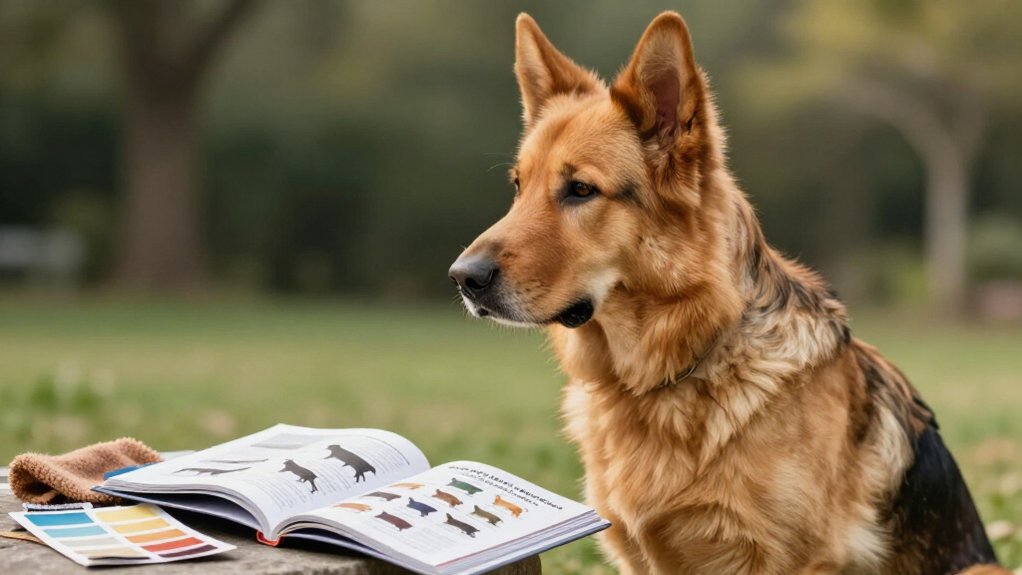
Although the American Kennel Club accepts a wide palette, you’ll find that classic black-and-tan remains the most iconic standard. You should recognize that rich pigments like deep red or solid black often perform best in conformation rings.
While silver, cream, and gray points remain acceptable standard variants, you must note that pale or washed-out shades are less desirable. When guiding others, distinguish clearly between these standard acceptable colors and rare ones like blue, liver, or isabella.
Although registrable, these rare dilutions carry serious fault penalties in shows. You’ll also encounter uncommon but standard patterns like bi-color or specific sable variants.
Predicting Your German’s Final Coat Color
To predict your German Shepherd’s final look, you’ll need to understand how dominant sable traits and recessive genes shape pigment patterns from birth.
You can track these changes by watching how puppy coats shed and shift over the first two years as the adult fur emerges.
Predict Puppy Pigment Patterns
Once you understand the key pigment genes at play, you can predict your German Shepherd puppy’s final coat color with greater accuracy. Look closely at both parents to identify their alleles. Dominant sable or black genes usually appear in offspring, but hidden recessives may emerge if both parents carry them.
When parents share recessive traits like liver, blue, or cream, you’ll often see those patterns in puppies. You must also evaluate phaeomelanin intensity for tan and red shades, since modifiers cause littermates to vary.
Breed dogs with rich pigment over generations to strengthen those colors. By tracking these genetic interactions carefully, you serve future owners by setting realistic expectations before the puppies even leave your care.
Track Coat Color Changes
Understanding your puppy’s genes sets the stage, but tracking physical changes helps confirm the final look. You’ll observe distinct progressions during the first two years.
Start by noting the neonatal coat, usually black with tan socks, indicating base pigment. As your German sheds soft puppy fur between three and seven months, watch for emerging adult shades.
Your dog might appear darker at birth, then lighten progressively as the adult coat grows in. By twelve to eighteen months, major shifts slow while shades refine.
Expect near-final coloration by eighteen to twenty-four months. Remember that seasonal shedding and sun exposure can subtly alter perception.
Keep records of these milestones to better predict how your dog’s colors will stabilize for its permanent adult appearance.
Identify Dominant Sable Traits
Because the dominant sable gene is so common in the breed, you’ll likely notice these traits if your puppy carries the Ay or aw allele at the Agouti locus.
Look for banded hairs with lighter bases and dark tips covering most of the body. You’ll see black-tipped guard hairs along the back, neck, and shoulders.
If you lack a clear saddle outline, expect a full-body sable pattern.
Modifier genes shape the final shade. Light sable keeps cream or silver tones, while dark sable appears nearly solid black when grown.
Strong early black over the head and tail usually predicts a darker outcome.
Since this gene dominates tan points and recessive black, your breeding choices will consistently produce sable puppies regardless of your partner’s visible coat color.
How to Choose the Right Coat Color?
When you’re choosing the right coat color for a German Shepherd, focus first on health and lifestyle rather than looks.
You’ll want to skip dilute blues and livers due to alopecia risks. Instead, prioritize breeders who screen for hips and degenerative myelopathy.
If you serve others through working lines, pick standard colors like black and tan to avoid disqualification.
For home service, any color works as long as health comes first.
Remember that dark coats hide dirt but show shed hair on light furniture.
Lighter shades stain easily and might need extra grooming in sunny climates.
Think about your interior décor too; matching coat shades to your home reduces visible shedding.
Your mission is to serve well, so choose a healthy, well-matched companion over rare, risky colors.
Common Misconceptions About German Coat Genetics
Picking the right coat color brings up many myths about genetics. You might think coat color predicts health, temperament, or working ability, but pigment genes don’t control behavior or drive. Rare colors like silver or white aren’t inherently linked to genetic disorders; poor breeding practices cause most health issues.
Many believe one simple gene controls coat color. Actually, multiple loci interact to create shades, with black and red pigments managed by separate gene combinations. You shouldn’t assume unusual colors mean mixed breeding either. Purebred German Shepherds can naturally display white, blue, or liver coats through recessive alleles.
Finally, don’t assume puppy coat color stays the same for life. Puppies often undergo significant color shifts as adult coats develop, especially in sable and black-and-tan patterns. Understanding these genetic realities helps you serve others by offering accurate, responsible guidance about this beloved breed’s appearance.
Factors That Influence German Coat Development
While genetics provide the primary blueprint for your German Shepherd’s coat, age, hormones, and environment also shape its development. You’ll see puppies start dark, with patterns clarifying as they mature. Between three and seven months, puppy fur sheds for adult patches. Tans brighten by six months, while sables shift until two years. Full color often settles by 18 to 24 months, though subtle graying continues.
Hormones trigger pigment changes during maturation. Guard hairs and undercoat shift independently, creating visible progressions. Sunlight fades dark pigments, while relocation to warm climates encourages lighter tones. Stressors like harsh chemicals dull color clarity.
Water-repellent guard hairs protect skin, but surface fading still happens. Understanding these factors helps you serve your dog better by managing expectations and care routines through each growth stage. You guarantee their coat stays vibrant and healthy.
Frequently Asked Questions
Are Silver German Shepherds Born With Fully Developed Adult Coat Colors?
No, you’ll find Silver German Shepherds aren’t born with fully developed adult coat colors. Their silver tones gradually emerge over the first 12 to 24 months as their adult coats replace puppy fur.
Does Grooming Frequency Influence the Vibrancy of Gold Sable Coat Pigments?
Yes, grooming frequency influences vibrancy. Brush your gold sable German Shepherd two to four times weekly to distribute natural oils, remove dead hair, and preserve pigment depth for a crisp, healthy coat that serves your companion well.
Do Brindle German Shepherds Display Striping Patterns on Their Nose Leather?
You won’t see stripes on their noses like on their coats. Your service dog’s nose stays solid black. The brindle pattern dances only on the fur, helping you maintain breed standards for your working shepherd.
Can Coat Color Genetics Predict a German Shepherd’s Susceptibility to Skin Issues?
Yes, coat color genetics predict skin issue susceptibility. Dilute colors like blue or fawn increase alopecia risk. You can identify these risks early by checking the dog’s genetic profile to prepare better care.
At What Age Does a German Shepherd’s Coat Color Cease Changing?
Like a settling storm, your German shepherd’s coat color stabilizes between 18 and 24 months. By this age, their fur has reached its final hue. Understanding this timeline guarantees you serve your dog’s well-being by preparing for their mature appearance accurately.