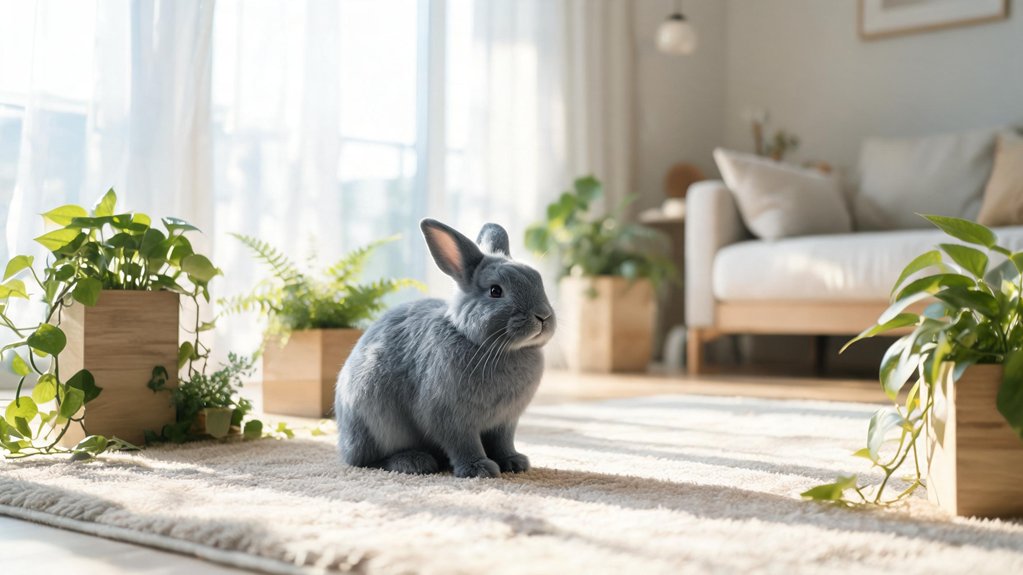
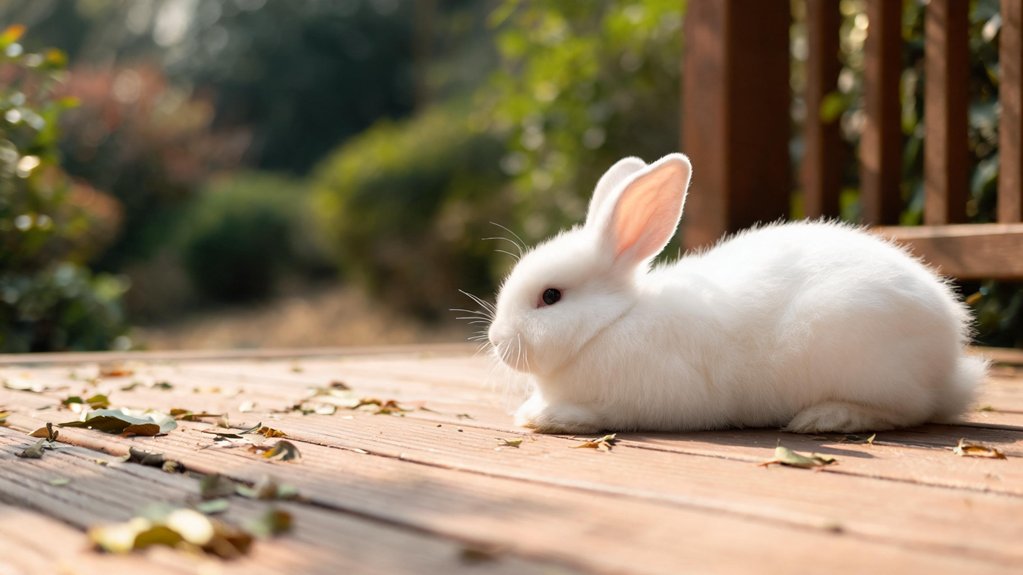
If you’re choosing German rabbits, start with your space and coat duty. German Giants are “gentle giants,” but you’ll need lots of room for calm free movement. German Lops are medium, very cobby, and virtually neckless, with short glossy rollback fur, so plan weekly brushing. German Angoras are wool-built, so expect daily brushing, blow-outs every 1–2 weeks, and extra mat checks. For most families, Lops fit best—keep going to see housing and care tips.
Swift Summary
- German Giant rabbits are gentle “heavyweight” meat-type rabbits needing large, free-movement space to prevent apathy.
- German Lops are medium, very cobby, nearly neckless rabbits with dense rollback fur and weekly brushing, heavier during molts.
- German Angoras are wool-focused rabbits with dense fibers requiring daily or several-times-weekly grooming to prevent painful mats.
- Angora housing needs zoned, rabbit-proof exercise areas and flooring that’s gentle on wool, with bedding kept away from the coat.
- All three benefit from early daily bonding, with Giants often preferring rabbit company and calm, patient handling cues.
German Giants vs Lops vs Angoras: Key Differences
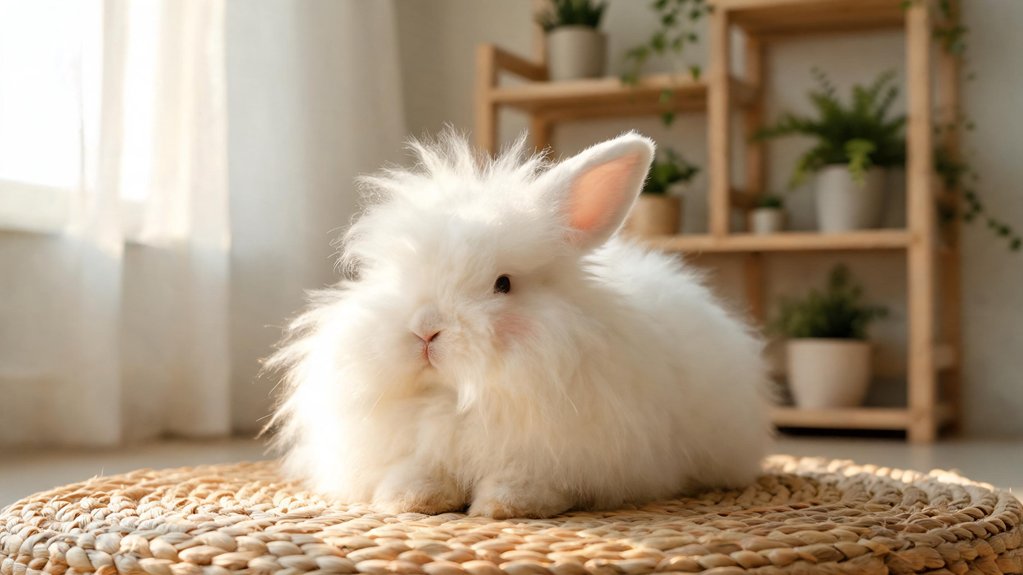
When you’re comparing German Giants vs German Lops vs German Angoras**, the easiest way is to look at three things first: size, body shape, and coat**.
As a german rabbit owner, you’ll appreciate the differences.
German Giant is the heavyweight, a meat-type giant.
German Lop lands medium, “very cobby,” with a no-neck look, broad shoulders, and thick legs, plus short stout rump. very thick body type helps create that chunky, meaty appearance.
German Angora is large-ish too, but built for wool, with a sturdy frame that looks rounder from dense fiber.
Coat drives daily care: Lop has short glossy rollback fur, Angora needs intensive grooming to prevent mats.
Pick a German Rabbit by Space and Activity
Start by matching your German rabbit’s activity level to the space you can realistically give every day, because a big enclosure that’s barely used won’t do much for their body or mind. For a German Lop, plan 3–4 hours of supervised space daily, plus a calm home base. They’re most lively at dawn and dusk, so timing helps. Keep fresh water within easy reach during these sessions, and choose a rabbit waterer that suits the enclosure. For German Angoras, you’ll want zoned housing and 2–3 hours per day in a rabbit-proofed area, with more strongly beneficial. With limited floor space, choose tall, multi-level setups. Aim for at least 12 sq ft, plus extra exercise room. provide extra bedding or shelter in cold conditions to help them stay comfortable and safe.
German Giants: Calm Temperament and Space Needs
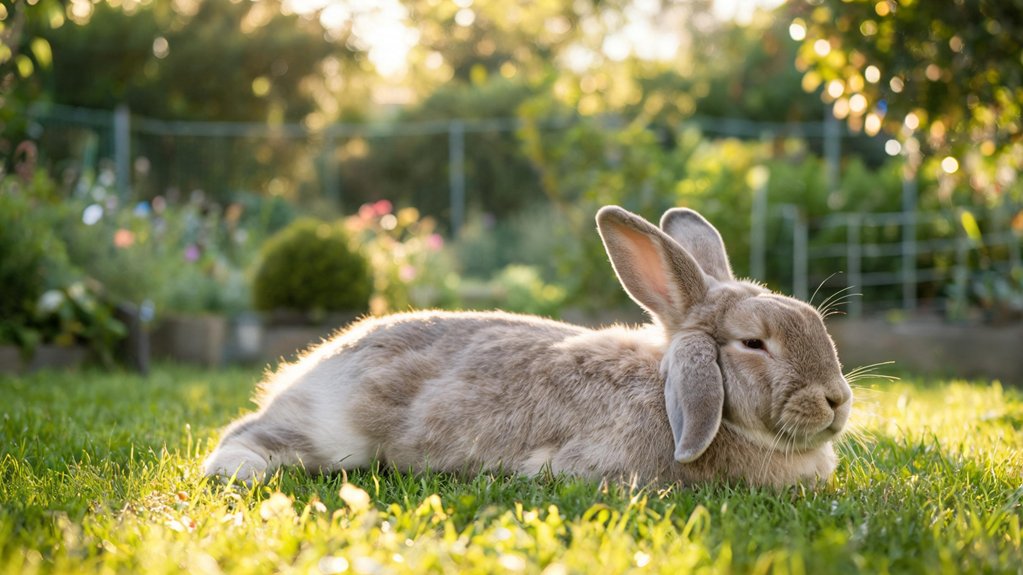
German Giants have a “gentle giant” reputation, and once you understand that temperament, choosing their setup gets a lot easier. You’ll find them calm, well-balanced, and very trusting, both bucks and does. Most stay peaceful and curious, not aggressive. They bond with you fast when you handle them respectfully from a young age. They also do best with rabbit company, not as a lone pet. (they’re not actually hares)
But here’s the key. Provide very high space for free movement, or they can become apathetic. Use a spacious indoor pen or large outdoor run, with a sheltered resting area. Keep noise low. If you see thumping or tense body posture, slow down.
German Lops: Weight, Body Type, and Ear Length
When you picture a German Lop, start with the weight: for show standards, you’ll want an adult between 2.95 and 3.85 kg (6.5–8.5 lb), because going under or over can disqualify you.
Next, look at body type—this breed is very cobby, meaning thick, compact, and muscular, with a strong rounded shape and a neck that mostly disappears into the shoulders.
Then check the ears: aim for a broad lop ear “frame” with an ear span often around 11–14 inches across the skull, measured tip to tip when you can, so you know you’ve got the real deal.
Ideal Weight Range
For a German Lop, aiming for the right adult weight helps you get that healthy, show-type “chunky” look without pushing things too far.
For show purposes, target the breed-standard adult range of 2.95–3.85 kg, or 6.5–8.5 lb.
If your adult weighs over 8.5 lb, BRC show rules classify it as overweight and you risk disqualification.
If it’s under 6.5 lb and you’re showing a rabbit younger than 5 months, that also falls outside standard.
In pets, many land around 3–4 kg, staying within healthy body condition.
Ear Length Standards
If you want a true German Lop look, start with ear length and how those ears sit on the head, because the ears and the compact body have to “fit” together. Measure across the skull, tip to tip. Aim for 27.96–35.5 cm, about 11–14 inches.
Next, check carriage. You want thick, broad lopped ears rising from a strong crown ridge, carried close to the cheeks. Ear openings turn inward, and the ears hang straight down just behind the eyes, no tilt.
A tight crown or ears that flick forward counts as a conformation fault.
German Lops: Manageable Size for Most Homes
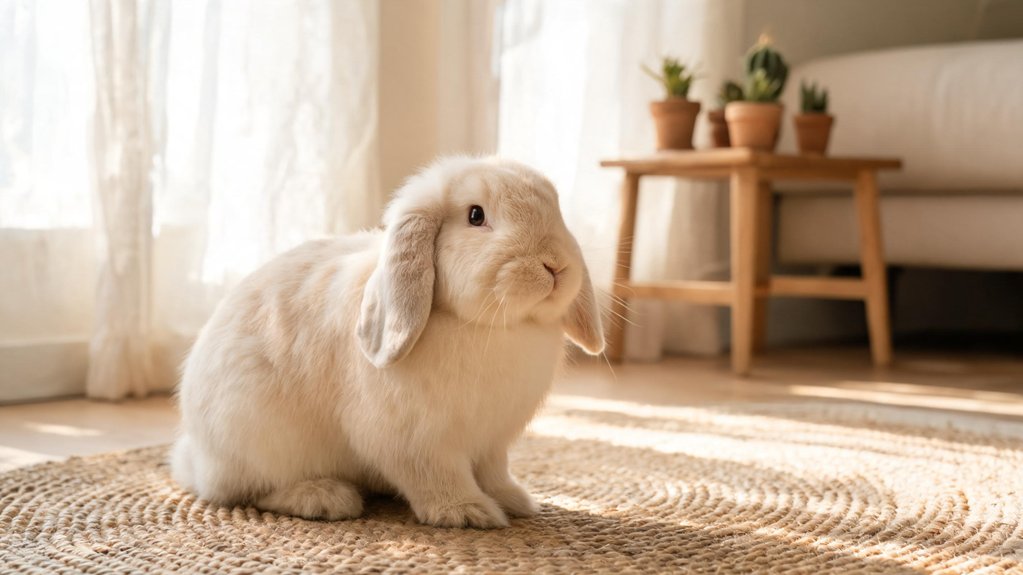
You’ll like how German Lops stay manageable in most homes, thanks to that compact cobby, stocky build and their medium-large weight range.
Since their coat is straightforward, you can keep grooming simple with a regular brushing routine, plus a quick check for matting and loose fur so their coat stays neat.
And remember, even though they’re not giant-sized, you still plan on plenty of floor time—about 3 to 4 hours a day outside the enclosure with supervision.
Compact Cobby Body Type
That compact “cobby” look is one of the best parts about the German Lop, and it’s also why many U.S. homes find them so manageable.
“Cobby” means thick, dense, and blocky, with a short, sturdy body—not long or rangy.
You’ll notice a virtually neckless silhouette, a slightly curved topline, and a short rounded rump.
And because the German Lop is “very cobby, massive and muscular,” you get strength in a tight shape.
Next, keep an eye on proportions: thick short legs, feet that don’t jut, plus a broad head, wide between the eyes.
At shows, weight must stay within BRC limits.
Easy Grooming Routine Care
With a German Lop’s dense rollback coat, keeping them looking great doesn’t have to be hard. You brush weekly with a slicker brush or soft mitt, to pull loose fur without ruining the plush feel. During heavy molts, brush several times weekly, and use damp hands once or twice weekly to pick up stray hairs.
This helps you lower the chance of swallowed fur slowing gut movement. While you groom, check ears for odor or discharge, trim nails every 4–6 weeks, and wipe the eye area and rear underside.
Spot-clean soiled spots to reduce flystrike risk. Also check the whole body for mats, debris, or minor bumps.
German Lop Coat: Rollback Fur and Basic Brushing
Meet the German Lop’s “rollback” coat, and you’ll see why people call it so special right away. This rabbit wears normal-length, very dense rollback fur with strong guard hairs. Rollback fur means it returns slowly or smoothly to its original position after you stroke it against the grain, tail toward head.
You’ll feel the thickness, too—dense fibers, a thick undercoat, and heavy guard hairs. That combo keeps the coat soft, yet structured.
Now brush. Once a week, use a soft slicker or pin brush, and go gently. Stroke in the hair direction, then check for mats. If you find one, loosen it slowly.
German Angoras: How Coat Growth Works
Even if you’ve never owned an Angora before, you can get ahead fast once you understand the German Angora coat schedule.
You’ll plan on about 14 weeks of active growth, because their follicles stay working roughly 90–100 days.
Next, remember they don’t moult, so you must clip or shear, not wait for shedding.
Start with a first shearing at 6–8 weeks to remove nest hair.
Then harvest every ~100 days.
Wool is ready when staple length reaches about 3–5 inches.
German fibers grow in clustered follicles, and more underwool fibers mean more coat density.
German Angora Grooming: Stop Mats Before They Start
To stop mats before they start, you’ll brush your German Angora daily, or at least several times a week, focusing on common trouble spots like behind the ears, under the chin, armpits, belly, and the rump above the tail.
Use a gentle brush, because mats form when loose fibers tangle and start felting (clumping into tight felt) close to the skin, and daily sessions prevent that job from turning into a stressful detangling.
And between shearings, blow out loose wool every one to two weeks with low power, so stray fibers don’t keep re-entering the coat and building new tangles.
Daily Coat Brushing Routine
Daily brushing keeps your German Angora coat soft, clean, and mat-free before trouble starts. Brush once daily, and never less than two to three times a week.
Aim for 15–30 minutes per rabbit, longer—up to 45–60—during heavy moulting.
Start at the feet and legs, then do the underside and belly, work outward to back and sides, and finish with face and ears.
Part fur into sections, brush in the direction of growth, and comb down to the skin with short strokes.
Use a wide-tooth comb and a soft wool brush, plus a cool blower.
Focus extra on belly, base of tail, and behind ears.
Preventing Mats With Care
Mats don’t show up out of nowhere in a German Angora—they usually start as tiny tangles that grow fast once wool rubs on bedding or litter. You prevent them by controlling coat length. Aim for wool harvested about every 90 days, then trim any overly long wool to about 1 inch or less.
Around day 45, trim cheeks and the wool between rear legs to cut friction mats. Focus on belly, legs, tail base, and under-ear areas first.
Keep cages very clean, use a hay rack, and sweep stray hay.
Brush with wide-tooth combs, work from tips to skin, and blow out often with a cool setting.
Temperament Differences: Giants vs Lops vs Angoras
When you’re choosing a German Rabbit for your home, temperament differences between Giants, Lops, and Angoras matter just as much as looks.
Giants often act like friendly “extroverts,” curious and sociable, so they’ll seek attention—still, you’ll guide them gently during grooming.
German Lops are calm, docile, and affectionate, usually handling and grooming easily, especially with support and a calm, low-to-the-ground setup.
Angoras are sweet-natured and gentle, and they often accept regular brushing, when you start touch early.
But giant-type rabbits may fidget more, so plan longer, patient sessions.
Bonding starts with daily contact.
German Rabbit Lifespans: What to Realistically Expect
So, what lifespan can you realistically expect from a German Rabbit—and what changes if you’re bringing home a German Lop or German Angora instead of a larger type?
Domestic rabbits often live about 5–10 years, though one large UK dataset put the median closer to 4.3.
With good care, many guides say 8–12 years, and some reach early teens.
Medium German breeds usually age slower than giants, while large/giant types tend toward 5–8 years.
German Lops are commonly listed around 8–13 years.
German Angoras often land around 7–12 years.
Keep up vet checkups, diet, and gentle handling.
Housing by Ear Type and Activity Level
When you house a German rabbit, you need to match the space to its ear type and how busy it is—because “a little room” often turns into sore hocks, dirty coats, and stressed bunnies fast.
Give small lops room to stand up without ear rubs, and plan for at least three full hops in any direction, plus time for daily out-of-pen exercise in a bunny-proofed area.
With angoras, add grooming to your plan, too—those long coats need extra clean, dry ventilation, and wire-friendly setups, so wool stays off wet bedding and mats don’t start.
Space Needs By Ear Type
Let’s match your rabbit’s housing space to its ear type, because ears go hand-in-hand with how much room they need to move comfortably.
For upright-eared German giants, give at least 12 sq ft of floor, like 30×36 to 36×48 inches indoors, and favor multiple rooms.
A pair may need continuous access, not a single pen.
For lop-eared German types, use compact-but-not-cramped setups, often around 24x24x16 inches, or at least 4x2x4 feet for safe ear carriage.
For German Angoras, prioritize wool-safe space: plan 30x36x24 inches for one, with solid resting boards.
Then, make certain over two strides even after litter and bowls.
Exercise Level And Stimulation
To keep your German-type rabbit healthy and happy, plan exercise like it’s part of the daily routine, not an extra. For giant and German Angoras, give several hours in a metal exercise or dog pen, plus 3–4 hours supervised free-roam in rabbit-proofed space.
Use shaded outdoor yards or roomy indoor zones to help prevent obesity, and to keep gut movement steady, which supports digestion. Lops are crepuscular, so you’ll see more action early morning and late evening.
Provide 3–4 hours free-roaming then. For Angoras, add tunnels, platforms, cardboard hides, and chew toys, not constant intensity. Rotate play zones.
Grooming Impact On Housing
Grooming affects your rabbit’s housing more than most people realize, because coat contact, moisture, and dirty spots all feed straight into matting and skin problems.
For Angoras and Giant Angoras, use all-wire cages or fleece-lined smooth floors, keep bedding away from the coat, and give room to move, like a 30×30-inch minimum for Angoras.
Giant Angoras need solid, clean flooring, wire snags wool fibers.
For lops, choose dry, smooth, grippy floors without loops, then do weekly ear checks.
Mini Lops need space to sprint upright.
Keep indoor temperatures steady for safety.
Colors & Patterns: What to Expect When Buying
When you’re shopping for a German Giant, German Lop, or German Angora, color and pattern can be almost as exciting as the personality—you just need to know what’s actually “allowed.” Start by looking at the coat type in front of you: is it a solid self color (one uniform shade), an agouti pattern (banded hairs with an “eye ring” look), a chinchilla-style ticked pattern (silvery-looking, speckled texture), or a named pattern like butterfly or shaded? Next, compare to ARBA-style expectations.
German Angoras exclude bi-colored coats. German Lops can be butterfly, but they disqualify broken patterns and random white patches on colored rabbits.
UK vs US Recognition: German Rabbit Standards
Once you start shopping for a “German” rabbit, the tricky part isn’t just how they look—it’s whether the breed even shows up in the official show systems in your area. For German Lop, the UK’s BRC recognizes it, with a clear standard, for type, head, ears, and coat, describing a very cobby, muscular, stocky lop.
But ARBA doesn’t list German Lop, so you can’t use ARBA-sanctioned breed classes in the US.
For German Angora, you’ll find it missing from both ARBA and BRC lists too. Use IAGARB guides instead.
Which German Rabbit Should Your Family Pick?
So you’ve checked which “German” rabbits show up in the big show worlds, and now you’re ready to match the right kind to your home.
First, consider space. If you pick a Continental or German Giant, plan for big enclosures and safe roaming, because they commonly weigh 12–16 lb.
Next, German Lops are a friendly, steady choice, medium–large around 3 kg, and they usually handle lifting best with firm support.
If you want wool, German Angoras are active, need daily exercise, and you shear about every three months, plus brushing and dental checks.
Choose your comfort, then serve them well.
Frequently Asked Questions
Are German Lop Rabbits Recognized by ARBA, and What’s Their Official Name in the U.S.?
Yes, you’ll find German Lop isn’t recognized by ARBA for official show or registration. In the U.S., you’ll still call it “German Lop,” but its traditional name is “Deutsche Widder.”
What Lifespan Range Should German Angora Owners Realistically Plan for With Grooming Needs?
Plan on 7–12 years for German Angora rabbits with excellent care. You’ll manage daily coat checks and frequent brushing for wool block prevention, and you should expect lifelong grooming demands to support the upper end.
Do German Giants, Lops, and Angoras Share Similar Diet and Hay Requirements?
Yes—you’ll see the same hay-first foundation across German giants, lops, and angoras: grass hay should make up most daily intake and stay available nonstop. Feed pellets and greens only in measured amounts; angoras need especially high fiber for wool flow.
Which German Rabbit Breed Most Needs Daily Brushing to Prevent Mats?
You should brush German Angora rabbits daily (or near-daily) to prevent mats, since their dense, non-shedding wool tangles fast as it grows and picks up dirt. Check high-risk areas like cheeks, belly, armpits, and behind ears.
Are All German Rabbit Coat Colors and Patterns Standardized the Same in the U.S.?
No, they aren’t standardized the same in the U.S. ARBA sets coat color and pattern rules for its recognized breeds, but German-type giants/lops/angoras often follow British/IAGARB standards instead.