You’ll find that blue German Shepherds carry a recessive dilute gene that lightens black pigment to slate gray without creating true blue eyes. Their irises typically settle on amber, while their noses and paw pads fade to cool blue-gray tones. While this cosmetic change rarely affects lifespan, it can bring skin challenges like Color Dilution Alopecia. Explore how breeders manage these traits.
Swift Summary
- The dilute gene transforms black pigment into blue-gray by disrupting melanosome transport in German Shepherds.
- True blue eyes are rare and usually indicate a merle pattern rather than simple dilution genetics.
- Most blue German Shepherds develop amber or brown eyes as melanin levels increase during puppyhood.
- The dilute gene can be associated with Color Dilution Alopecia, a skin condition causing hair loss.
- Major kennel clubs classify blue coats as faults, prioritizing breed standards over cosmetic color variations.
The Blue German Shepherd Dilute Gene
To understand what makes a Blue German Shepherd unique, you first need to look at its genetics. You must recognize that a recessive dilute gene at the D locus creates this striking steel blue German shepherd coat. Variants in the MLPH gene disrupt melanosome transport to cause this dilution.
When you search for blue german shepherd puppies for sale, check if blue german shepherd breeders test for this trait.
Many ask how much is a blue german german shepherd, but you should focus on health risks like alopecia before buying a blue german shepherd for sale. Once you bring one home, a well-fitted collar provides everyday comfort and control during walks and training.
Avoid confusing a blue sable german shepherd with a blue merle german shepherd.
While some seek a blue eyed german shepherd, true blue eyes often mean a merle german shepherd, not just a dilute gene.
Always verify the blue german shepherd price against health clearances.
How the Dilute Gene Creates Blue Coat
You see how the dilute gene turns melanin into slate gray when your shepherd has two copies of the recessive allele.
This same gene also lightens the pigment in their nose and eye rims, giving them a cool, blue-gray look.
Together, these changes create the unique coat and features that define blue German Shepherds. The recessive dilution gene causes black pigment to appear blue-gray, which is known as color dilution.
Dilutes Melanin To Slate
When a German Shepherd carries two copies of the recessive dilute allele at the D locus, you’ll see its black pigment fade into a cool slate tone. You know this gene, MLPH, disrupts how cells transport melanin granules.
As hair grows, the pigment distributes unevenly, thinning the dense black. This dilution transforms deep black into soft steel-gray or bluish-gray shades. You won’t find true blue pigment here; instead, you observe gray overtones creating the “blue” effect.
The pattern remains identical to traditional blacks—just muted. Whether you’re serving breeders or caring for these dogs, understand this color stems from genetic modification, not new pigment creation.
This process affects eumelanin lightening, leaving pheomelanin largely unchanged.
Recognizing how this works helps you make informed decisions and appreciate the unique beauty of these magnificent animals.
Dilutes Skin Pigment Noses
Since the dilute gene sits at the D locus, you’ll see its effect on skin pigment when a German Shepherd inherits two recessive copies. This genetic mutation disrupts melanin transport in the nose leather, turning standard black into soft steel-gray or slate tones.
You’ll notice matching diluted colors on eye rims and paw pads, reflecting reduced pigment intensity across all exposed skin points. These cool, muted tones help distinguish blue Shepherds from liver variants, which display warm brown noses instead.
While breed standards specify black noses, understanding this dilution helps you serve prospective owners by accurately identifying non-standard color variations.
When both parents carry the recessive allele, they can produce puppies with these distinctive grey noses. You should check skin points carefully, as nose color often reveals the genetic makeup even when coat appearance is ambiguous.
Mutations in the MLPH gene cause improper distribution of melanin cells.
Why Blue German Shepherds Have Amber Eyes
You’ll notice that the dilute pigment affecting their coat also lightens their eyes to an amber hue. As these dogs grow, the melanin levels in their irises can shift, causing the amber color to fade or change. Owners who want their dog to be easy to identify can also add identification tags and other accessories that improve comfort.
This loss of pigment creates lighter irises, directly tying their eye color to the same gene that produces their blue coat. The dilution gene responsible for their blue coat also affects eye pigmentation.
Eyes Dilute Pigment
While the dilution gene softens a Blue German Shepherd’s coat to steel gray, it also lightens the pigment in their eyes, turning deep brown into striking amber. You see this gene reduces melanin density within the iris stroma and epithelium, creating lighter hues through increased light scattering.
When serving these dogs, expect their irises to reflect yellow-brown tones rather than vivid blue, as true blue eyes require different genetic factors. The dilution gene consistently affects all pigmented tissues together, so notice how their nose leather and paw pads match their lighter eye color.
Amber Eyes Fade Over Time
When you first meet a Blue German Shepherd puppy, their eyes may start as a pale blue or gray before shifting into amber. You see this change because melanin accumulates as they grow.
The bright amber you notice early on isn’t actually fading; it’s deepening into richer tones. As your puppy matures between eight and sixteen weeks, their iris melanin increases markedly. This natural development transforms light amber into darker, warm hues.
You might notice subtle shifts continuing up to six months of age. The dilute gene causes these unique eye colors, but aging enhances them.
Serving these dogs means understanding their unique genetic journey. Recognize that what looks like fading is actually their beautiful eyes settling into their final, stunning color. Your care helps them thrive throughout this fascinating developmental process.
Lighter Irises Due To Color Loss
Since the dilute gene at the D locus lightens eumelanin across the body, your blue German Shepherd’s irises lose pigment density compared to typical dark brown eyes.
When you serve these dogs, recognize that this genetic shift turns black pigment into steel-gray coats while simultaneously lightening the iris layers. You’ll see reduced eumelanin concentrations transform dark eyes into lighter brown, amber, or golden tones.
Dilute German Shepherds typically carry homozygous recessive genotypes, producing strong pigment reduction affecting both coat and eyes. Unlike merle patterns, this dilution rarely creates fully blue irises, primarily shifting existing brown pigment toward amber or greenish hues instead.
You’ll observe that lighter irises increase visual contrast against charcoal coats, enhancing the distinctive appearance you showcase. Understanding this connection helps you educate others about why these dogs display striking amber eyes rather than expected dark brown ones.
Health Risks of the Dilute Gene
You’ll find that the dilute gene in blue German Shepherds primarily affects coat color without causing systemic disease. You see these dogs share typical breed lifespans of seven to ten years like standard variants. Dilution remains cosmetic without evidence of additional internal burdens. Veterinary references confirm it doesn’t harm overall health status except for skin issues. Breed color rarely causes problems unless double merle patterns appear.
You notice the dilute allele alters melanin distribution along hair shafts directly. While genetic testing helps manage risks, wide gene pools matter most. You prioritize sound structure and working ability over chasing rare blue coats. Dilute-coated dogs need the same extensive health selections including temperament checks.
You understand permanent blue eyes are rare conformation faults but not linked to vision loss. Standard eye monitoring applies equally without unique dilute-specific disorders. You prepare for potential hair breakage and texture changes due to weaker shafts. Skin scaling and bacterial infections may surface as secondary issues requiring topical care.
You serve these dogs best by maintaining rigorous breeding standards. Owners who exercise these dogs regularly often find that a hands-free dog walking belt keeps leash handling comfortable and secure.
Color Dilution Alopecia Risks
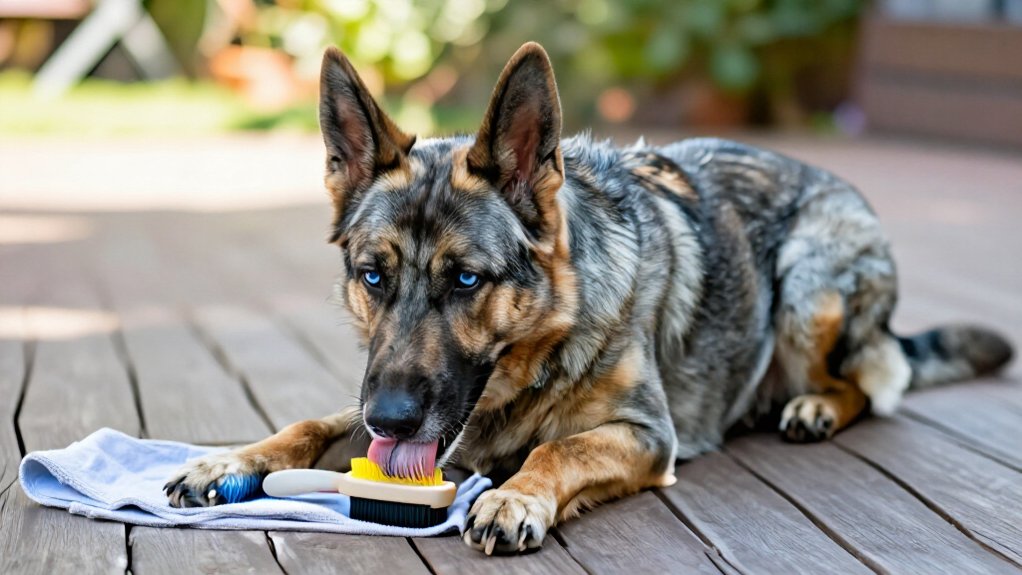
Although the dilute gene primarily changes coat color, it carries a specific risk for color dilution alopecia (CDA), a hereditary condition linked to an MLPH gene variant. You’ll notice this condition typically emerges between three months and three years.
As a shepherd, you should observe dilute areas for dry, dull hair before significant loss occurs. Because stronger dilution links to earlier onset, watch very light gray coats closely.
The hair weakens and breaks, often leaving patchy loss on the trunk while non-dilute regions stay preserved. This chronic condition frequently brings flaky skin and itching, increasing infection risks. Dogs with CDA who travel often should ride in a well-ventilated travel crate lined with soft bedding, since frequent scratching and irritated skin can make long trips uncomfortable.
You can confirm diagnosis through microscopic hair exams or biopsies. Managing CDA demands lifelong dermatologic care to maintain your dog’s skin comfort and coat integrity.
While rare in German Shepherds, vigilance ensures you catch issues early.
Why Blue German Shepherds Are a Fault
While German Shepherds come in many shades, major kennel clubs classify blue as a fault because it departs from the breed’s ideal strong, rich coloration. When you serve others through breeding, you must adhere to these standards.
The AKC, GSDCA, and UKC all explicitly label blue as a serious fault or disqualification. You’ll notice blue coats often come with slate noses and pale eyes, signaling poor pigmentation. These traits contradict requirements for black noses and dark eye rims.
Consequently, blue dogs face severe penalties in conformation shows. You can’t earn championship titles if your dog carries this color. Major registries exclude them entirely from competitive events.
To genuinely promote the breed’s integrity, avoid promoting blue Shepherds. Choose breeding pairs that align with official standards. This ensures your contributions strengthen the breed rather than dilute its defining characteristics for future generations. Just as a leash coupler lets two dogs move together under a single lead, careful pairing keeps each puppy’s traits aligned with the breed standard.
How to Identify Blue German Shepherds
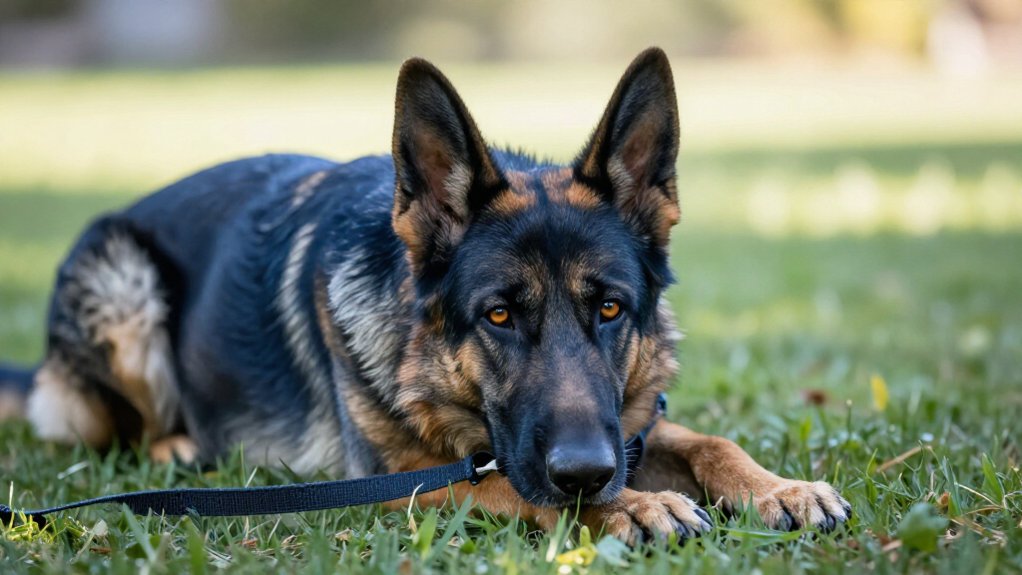
To identify a Blue German Shepherd, look for a coat that looks steel-gray or slate-blue instead of true black. You’ll notice the pigment appears washed out, with tan points showing as cream rather than rich brown.
Check the nose, skin, and paw pads; they should be slate gray or blue-gray, not jet black or warm brown. While eyes often remain brown, many display lighter amber or pale blue shades.
Examine newborns too—they’re born gray or silver, not black. Remember, this is just diluted black, not a separate breed.
To confirm, you should use genetic testing for the d/d genotype at the D locus. This guarantees you distinguish true blues from standard grays or liver coats when advising others seeking responsible, ethical care for these unique dogs. If your Blue German Shepherd tends to wander, a GPS dog collar can help you monitor its location.
Breeding Blue German Shepherds Responsibly
When you breed Blue German Shepherds, prioritize health and temperament over coat color to guarantee responsible outcomes. You must test breeding stock for hips, elbows, and systemic health before considering dilute color.
Avoid color‑only matings and lines with documented color dilution alopecia to reduce dermatologic risks. Your work serves the community when you maintain standard functional traits and longevity goals in every litter.
Monitor breeding dogs routinely for skin and coat issues before planning repeat matings. Ensure selection emphasizes stable temperament and working ability, treating blue as a secondary trait.
By avoiding repeated blue‑to‑blue pairings, you help preserve the breed’s welfare. Your decisions impact future generations, so choose health‑focused strategies that protect these animals.
You can support responsible ownership by providing transparent health records and educating buyers on care needs for dilute coats. When transporting breeding dogs to shows or trials, bring portable dog beds so they can rest comfortably and safely away from home.
Frequently Asked Questions
Do Blue German Shepherds Have Blue Eyes?
Yes, blue German Shepherds can have blue eyes. While most display brown or amber, you might find rare light blue ones. Serve others by sharing that these traits stem from a dilute gene, so check pedigrees carefully before adopting.
Are Blue German Shepherds Considered Purebred Dogs?
Yes, you’ll find blue German Shepherds are purebred dogs. Their color stems from a natural dilution gene within the breed. This variation doesn’t compromise their lineage or pedigree status in any way.
Is the Blue Coat Color Genetic or Due to Dye?
It’s genetic, not dye. The recessive dilute gene turns black pigment into a steel-gray shade. As a servant, you’ll serve best by knowing this fact to accurately inform those seeking truth about these beautiful, naturally colored companions.
Do Blue German Shepherds Shed More Than Standard Coats?
You see blue German Shepherds shed the same amount as standard coats because the dilute gene affects color, not undercoat density. Brush them regularly to manage their heavy seasonal blowouts and keep your home tidy for others.
Can a Blue German Shepherd Show in Conformation Events?
You can enter conformation, but you’ll face serious faults for the blue coat and light eyes under AKC or UKC rules, making winning nearly impossible while still allowing you to serve in other working or companion roles.