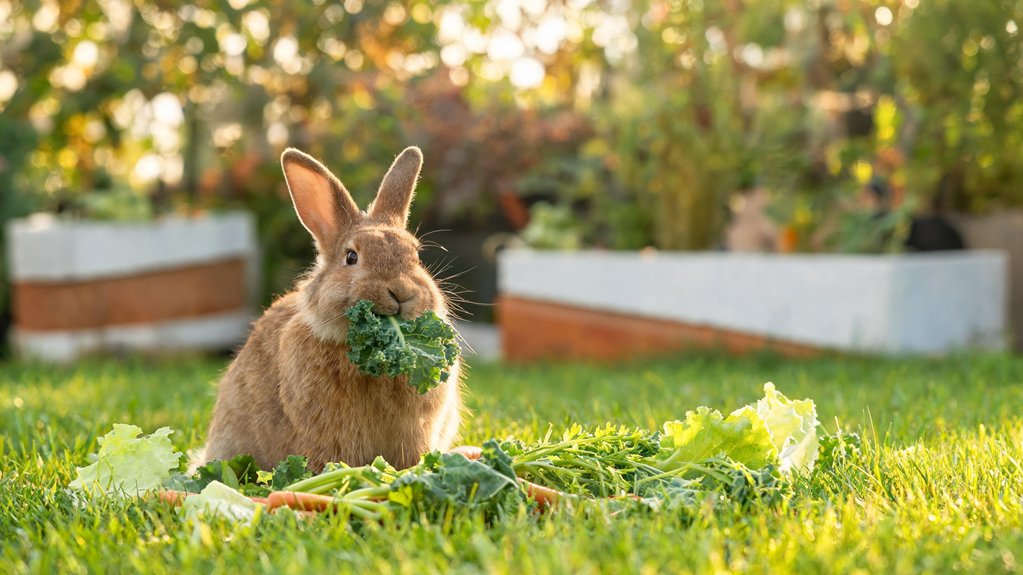
You’ve got this. From birth to day 15–21, feed milk-only, keeping solids tiny as snacks. Set a warm nest at 65–72°F, use 0.5–1 in pine shavings plus a hay dip, and warm only part with a low pad. Orphan kits get rabbit-safe milk replacer (Wombaroo/Beaphar), about every 12 hours, no more than twice daily, and weigh daily. Week 2, don’t disturb cecotroph “poop clusters.” Free-choice hay/pellets 3–7 weeks, wean low-stress near 8 weeks, and shift alfalfa to timothy by 8–12 weeks—keep going for the next steps and fixes.
Swift Summary
- Feed milk only for 0–2 weeks, then add tiny hay/grass/pellet bites around days 15–21.
- Introduce hay (dry alfalfa) around day 18, keep greens later, and rely on hay/pellets to transition from milk.
- Hand-rearing formula: milk replacer is typically Wombaroo or Beaphar; feed about twice daily and avoid cow’s milk.
- Use a warm, safe nest (65–72°F/18–22°C), with shallow pine shavings, hay for comfort, and a partial low heating pad.
- Wean gently near 8 weeks (earlier 4–6 weeks only in emergencies), taper milk while monitoring stools and daily weights.
Baby Rabbit Care Timeline by Age (Quick Guide)
When you’re caring for a newborn bunny, think of it like a simple age-by-age roadmap, because baby rabbits develop in a pretty predictable timeline.
During 0–2 weeks, you feed milk only, usually through day 15–21. Most baby rabbits die from accidental milk inhalation during feeding.
During 0–2 weeks, newborn bunnies get milk only, typically continuing until day 15–21 for steady growth.
By 10 days, their eyes open, and their ears start to unfold.
At 15–21 days, you gently offer tiny bites of hay, grass, or pellets, but milk stays the main fuel.
Around 3–4 weeks, you practice when to wean rabbit kits: alfalfa hay and pellets stay available, while nursing gradually fades after about 21 days.
Most finish weaning by 4–6 weeks, often by 5–6.
Set Up Warmth, Bedding, and a Nest
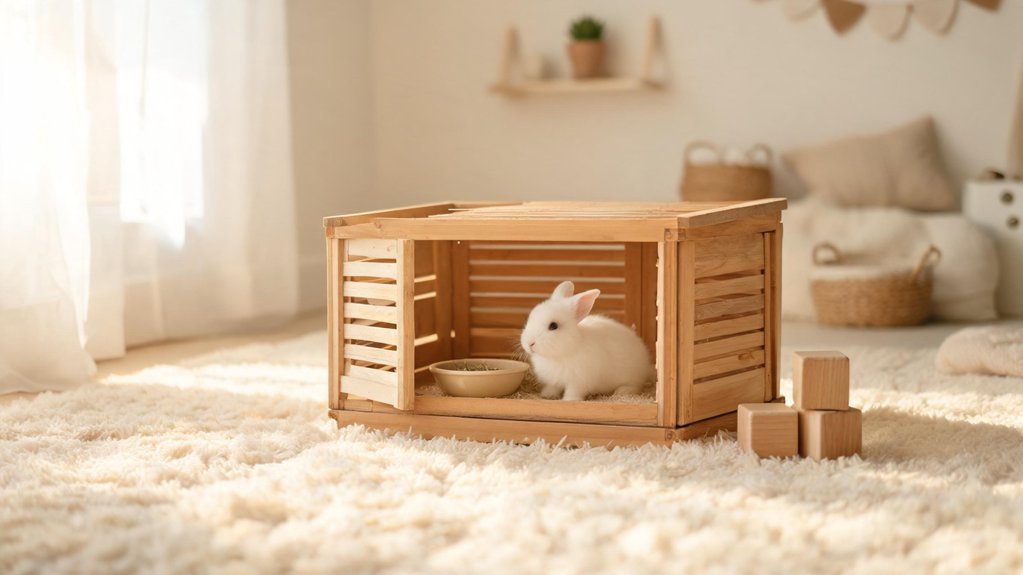
Start by getting the nest box warm, safe, and cozy, because newborn kits can’t regulate their own body temperature yet. Aim for general warmth management around 65–72°F (18–22°C) with their nursing doe. high pregnancy rate can make it especially important to monitor kits closely once they are born. Use a box about 18×10×10 in, slightly larger than mom, with high sides, and a 1–6 in front lip. Make the floor comfy, line the base with 0.5–1 in kiln-dried pine shavings, then add soft timothy or oat hay to form a dip. Set a heating pad on low under only part of the nest, leaving a cooler escape zone. Keep ventilation gentle, avoid towels tangling. And clean fully in 3–7 days.

Warmth for Small Animals & Turtles: This 11.8 x 8.2-inch, 25W heating pad provides a warm resting spot for rabbits, guinea pigs, chicks and turtles. For indoor enclosures and covered outdoor use.

Warmth for Kittens & Small Animals: This 15.7 x 11-inch, 30W heating pad provides a spacious resting surface for cats, kittens, rabbits and guinea pigs. For indoor use and covered outdoor pet houses.
Feed Newborn Kits Formula Every 12 Hours
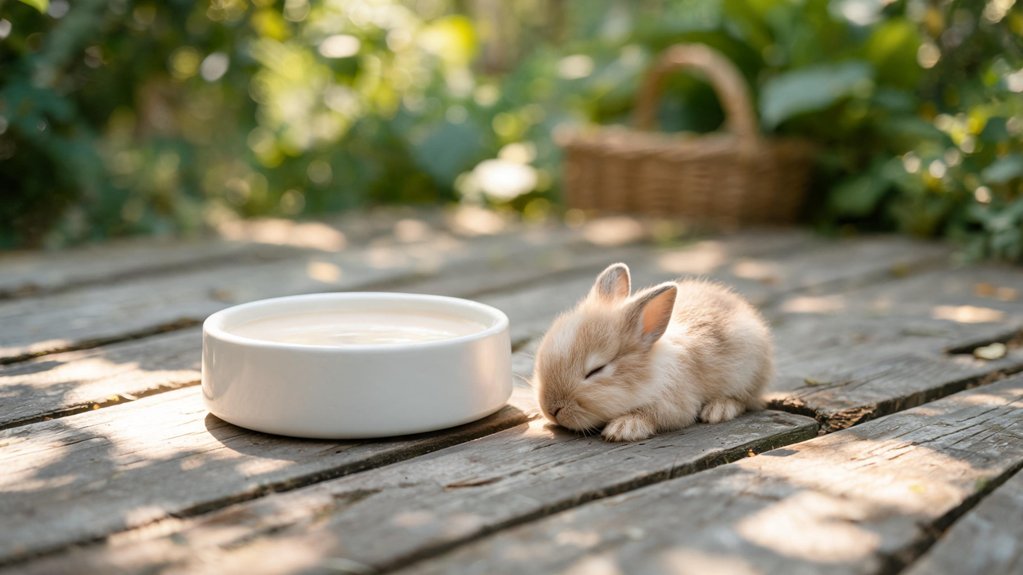
Once your newborn kits are warm and settled in their cozy nest, you’ll feed formula about every 12 hours, because that spacing matches how the doe usually nurses—just once or twice per day, for only a few minutes at a time. If you choose to feed newborn kits formula every 12 hours, offer small amounts, about 2–3 mL per feed in the first week, for 4–5 mL total each day. No more than twice a day, keep feeding sessions to a maximum of two times daily and do not extend them beyond what the babies will take comfortably. Feed at steady times, early morning and evening, and keep the syringe tip clean. Then, weigh daily, watch for steady gains, and adjust if their bellies stay flat.

SQUEEZE BOTTLE - 60ml nursing bottle for newborn kittens and puppies, 2.1 ounce capacity, small animal feeding bottle is easy to squeeze and easy to control the amount of milk.
Pick Safe Milk Replacers: No Cow’s Milk
When you’re feeding newborn kits, use a kit-approved milk replacer like Wombaroo, Beaphar rabbit milk replacer, or, if you can’t get those, kitten milk replacer (KMR) or goat’s milk.
Skip cow’s milk, because rabbit kits can’t digest it well, and it can cause diarrhea and stomach upset that slows growth.
And since you’ll also be planning weaning soon—around 3 to 4 weeks, when they’re nibbling hay—get the right formula now, so you’re not fighting gut problems later.
Use Kit-Approved Milk Replacers
If you can’t get natural mom’s milk right away, pick a rabbit-specific milk replacer (or a multi-species small-animal replacer labeled safe for rabbits).
You’ll be making a smart substitute for rabbit milk that matches the right protein and fat.
Use powdered formulas, then mix exactly by the label for safe dilution.
If you’re using a multi-species product, check the label for rabbits over the listed weight.
When rabbit-specific replacer isn’t available, some guides use KMR kitten milk replacer, but you’ll follow package directions and never guess—your goal is safe growth until weaning.
And please call your vet.
Avoid Cow’s Milk for Rabbits
Skip cow’s milk for baby rabbits—don’t even think about it. When you avoid cow’s milk for rabbits, you protect their tiny gut.
Cow’s milk has the wrong makeup, and it’s too high in lactose. That mismatch can trigger diarrhea, dehydration, and severe stomach upset, and in serious cases, it can be fatal.
And rabbits can’t vomit, so if something goes wrong, they can’t just “get it back out.” Instead, pick kit-approved milk replacers made for rabbits.
Feed small, exact amounts on schedule. For newborn bunny care, always follow a vet or trusted rescue plan.
Also, prevent accidental litters.
Start Cecotrophs at Week 2 for Gut Health
By the time your baby rabbits are about 2 weeks old, it’s time to help them get steady access to maternal cecotrophs—those soft, nutrient-rich “poop clusters” their mom makes from her cecum (part of the gut).
At about two weeks old, ensure kits have steady access to mom’s nutrient-rich cecotrophs for healthy gut seeding.
These starts matter for when to wean rabbits, because kits need a stable gut. Newborns are born with an almost sterile gut, so cecotrophs seed helpful bacteria and fungi.
During week 2, let nesting pellets and cecotroph-like material stay put, don’t wipe it away.
By around 20 days, kits begin eating their own. This supports fiber digestion, vitamins, and energy.
Also keep mom undisturbed.
Consider spay/neuter to prevent accidental litters.
Introduce Hay and Pellets Around Day 18
Many owners ask when can rabbits start eating greens. For now, stick to hay and pellets, not greens yet.
Put clean, dry alfalfa hay nearby all day. Choose long-stemmed, sweet-smelling hay that is free of dust and mould, since fresh hay supports the digestion your growing rabbits need. Offer pellets in shallow dishes, just 1–2 tablespoons total per day at first, split into two feedings.
Watch poops, appetite, and belly softness, then increase slowly.
Milk stays the main food.
Also keep mom nearby, and remember spaying and neutering to prevent accidental litters.

COMPLETE NUTRITION IN EVERY BITE: Oxbow EVERYBite foods are thoughtfully formulated to deliver balanced, complete nutrition in every serving; Each bite ensures your rabbit receives the essential nutrients needed for long-term health and daily well-being

YOUNG RABBIT FOOD: Immerse your pet in a world of nutrition with our Essentials Young Rabbit Food; Fortified with vitamins and minerals, our recipe comprises high fiber and protein-rich alfalfa hay, providing ample energy and supporting healthy digestion

SOFT TEXTURE & SWEET FLAVOR: With its soft texture and naturally sweet flavor, Alfalfa hay appeals to rabbits, guinea pigs, and small herbivores; This high-fiber hay supports healthy digestion while encouraging natural chewing behaviors
Hand-Rearing Volumes for Weeks 2 and 3
If you’re hand-rearing orphaned kits, weeks 2 and 3 are where you get the balance right, because the stomach can fill fast and overfeeding can cause serious gut problems.
When you’re learning how often to feed a baby rabbit, plan for twice daily if the kit seems healthy.
For week 2, aim for about 5–7 ml per feeding, or up to 10–15 ml if a vet guidance protocol says so.
For week 3, use about 7–13 ml per feeding, up to 15 ml.
Track weight daily, and watch for bloat, then adjust.
Also, please consider spaying/neutering to prevent accidental litters.
Plan Early Weaning at Weeks 4–5 (If Needed)
When you’re hand-rearing orphaned kits and they’re nearing week 4, you’ll want to shift from strict feeding amounts to a plan for weaning, but only if it’s truly needed.
When orphaned kits near week 4, consider shifting to weaning only if truly needed, to protect their gut from upset.
When can rabbits be weaned? For most, wait until 6–8 weeks.
If the mother dies or a welfare emergency hits at weeks 4–5, you may need early weaning, but treat it like a high-risk window for gut upset.
Keep kits with familiar cage and littermates.
Offer hay daily, plus a little alfalfa hay or nuggets.
Add greens one kind at a time.
Provide constant fresh water.
Also, plan spaying and neutering, to prevent accidental litters.
Slowly Reduce Formula to Protect Digestion
Start reducing formula slowly, because baby rabbits’ guts need time to adjust as they switch to fiber. Use a gradual weaning schedule so you don’t upset digestion.
At about 3–4 weeks, keep formula going, but offer small amounts of hay and pellets. Then, reduce formula volume and feedings as solid intake rises.
Many kits take two milk feeds a day through week 3, then shift toward once-daily or one-to-two feeds from weeks 3–6.
Try replacing one milk feed with solid access, then cut remaining milk every few days. Watch stool, too. Soft or watery? Slow down.
Keep Hay and Growth Pellets Available Free-Choice
As you taper formula, keep hay and growth pellets out at all times, so your baby rabbit can keep building gut health while it learns to eat solids.
You’ll want free-choice access to hay and growth pellets from about 3–7 weeks onward.
Offer unlimited alfalfa hay and alfalfa-based growth pellets during this fast growth phase, since constant fiber supports digestion and helps prevent stasis, a slowdown of the gut.
Provide unlimited alfalfa hay and growth pellets—constant fiber supports digestion and helps prevent gut stasis.
Place hay and pellets in heavy bowls or steady feeders to reduce spillage.
Aim for pellets made for juveniles, high in fiber (about 18%+).
Replace damp, soiled food daily.
Wean Near 8 Weeks Using a Low-Stress Method
Weaning near 8 weeks is usually the gentlest choice for newborn rabbits, because their gut has time to mature while they learn to eat solids. Aim for low-stress wean near 8 weeks, not an abrupt cut.
Start around 6 weeks, give short, calm breaks from the doe each day, then slowly stretch time away.
Keep hay and pellets ready, plus familiar greens later, so they snack confidently.
If you hand-reared with formula, gradually dilute it every few days as solids rise.
At about 8 weeks, move them to stable groups, separate sexes at 8–10 weeks, and rehome once fully settled.
Use Weight Checks to Adjust Milk and Pellets
Weigh your newborn or hand-fed kit daily, at the same time each day, using a gram scale, because steady weight gain tells you your milk plan is working.
If the next check shows your kit’s weight isn’t tracking upward, adjust the milk amount slightly (for example, 50–65 g kits often start around 10–13 cc total per day, split into 2 feedings) and re-check in a couple days.
Then calibrate pellets with growth too, using the “15 g per kg per day” starting point, and keep nudging the portion up or down based on whether their weight keeps rising.
Adjust Milk By Weight
Before you change anything, use weight checks to guide the amount of milk you give—your goal is steady, growing weight, not a guess.
Each day, weigh your newborn kit on a gram scale, then adjust milk by weight using your formula chart.
A common starting point is about 10 mL total per 100 g body weight per day, split into two feedings.
If the scale shows plateau or loss, nudge the daily total up.
If the belly looks overly full, step it down and feed less per session.
Log each feed.
Avoid accidental overfeeding, because diarrhoea and bloat can hit fast.
Calibrate Pellets With Growth
Once your kit is taking a bit of solid food, you can calibrate pellets the same way you calibrate milk—by letting the scale lead, not guesswork.
Weigh your baby rabbit at the same time each day, then adjust pellet grams per kg or ounces per lb.
Start by offering small test portions of young-rabbit pellets with alfalfa hay, especially during weeks 3–7, when young rabbit vs young hare differ in pace.
Use the baseline ~15 g per kg ideal body weight daily, then step down if weight jumps or step up if growth stalls.
When fully weaned by 7–8 weeks, ease toward grass-hay pellets gradually.
Also, spay/neuter to prevent accidental litters.
Switch From Alfalfa to Timothy (8–12 Weeks)
Between 8 and 12 weeks, you’ll usually start shifting from alfalfa toward timothy, but you won’t abruptly switch alfalfa away all at once. Keep feeding as young rabbit vs adult rabbit food by mixing hays, not flipping a switch over.
Offer unlimited alfalfa hay plus unlimited timothy, then slowly reduce alfalfa over weeks. Start with more alfalfa, like 75/25, then move toward 50/50.
Use pellets as you were, but keep grass hay available nonstop. This supports growth while protecting digestion, since timothy has more fiber. When choosing suitable grass hay for daily feeding, timothy is a dependable option that provides the long-stemmed fiber rabbits need.
Don’t rush—good transitions help you care well.

【Easy Eating】: Our hay feeder is perfect for small animals like rabbits, guinea pigs and chinchillas, making eating easy. Size:6.9 inches long x 4.7 inches wide x 6.6 inches high
Introduce Greens Carefully: Avoid Common Problem Foods
After your baby bunny is eating steady hay and pellets with firm, normal poop, you can start greens—but you’ll want to go slow and be picky.
Once your baby bunny has steady hay and firm poop, introduce greens slowly—small amounts, one new leafy food at a time.
This is how you introduce greens carefully.
Start small, under 0.5 oz per kit, with just one new leafy food at a time.
Wait at least 24 hours, watch stool, and stop if you see soft poop.
Avoid iceberg and pale lettuces, and skip onions, potatoes, corn, beans, peas, and avocado.
Go easy on brassicas like kale or broccoli, and never use rhubarb leaves.
For sensitive kits, consider holding veggies until closer to 6 months.
Fix Diarrhea, Bloat, and Lethargy Safely
If your baby rabbit gets diarrhea, looks “puffy,” or suddenly seems too tired to move, treat it like an emergency—because it can turn dangerous fast.
Fix diarrhea, bloat, and lethargy safely by calling a rabbit-savvy vet now.
If they won’t eat for 6–12 hours, have less or no poop for 6–12 hours, or you see belly swelling and pain posture, don’t wait.
Transport it warm and draft-free, support its body, and ask about fluids, temperature checks, and pain relief.
At the clinic, they may give subcutaneous fluids like lactated Ringer’s, plus shock monitoring.
Avoid antibiotics or Imodium unless your vet directs.
Frequently Asked Questions
When Can Baby Rabbits Start Eating Hay and Pellets?
Baby rabbits can start sampling hay around 3–7 weeks and pellets around 3–4 weeks, as you watch them nibble like tiny scholars—then gradually increase. Offer unlimited alfalfa hay first, small pellet amounts, always fresh water.
How Long Do Rabbit Kits Need Milk Before Weaning?
Rabbit kits need milk for about 4–6 weeks, with nursing tapering gradually during weaning. Most start relying mainly on solid food by weeks 4–5. For welfare, don’t separate from mom until around 8 weeks.
When Can Rabbit Babies Leave Their Mom Safely?
You can let rabbit babies leave mom safely at about 8 weeks; that’s the “ready to go” age. Keep kits with her until they’re fully weaned, eating well, and gaining weight. This lowers stress and accidental litter risks.
When Can Baby Rabbits Eat Greens and What Foods to Avoid?
You can start introducing greens when baby rabbits reach about 12 weeks—begin with a few safe leaves and one new green at a time. Avoid iceberg, avocado, onion-family, rhubarb, nightshades, and processed foods; skip broccoli too.
How Much Formula Should a Newborn Bunny Drink Each Day?
About 4–5 mL total milk replacer per day—split into two feeds (roughly 2–2.5 mL each). That’s your newborn’s first steady “lifeline.” Warm it, feed on schedule, and adjust only if weight gain stalls.