No—you’re not dealing with rodents. Rabbits are mammals in the order Lagomorpha, along with hares and pikas, not Rodentia (mice, rats, squirrels). Want the quick giveaway? Rabbits have four upper incisors, including a small peg tooth behind the main ones, while rodents have two. Their digestion also differs, they rely on a big cecum and cecotrophy. So you’ll care for them differently—keep going and you’ll get the practical steps.
Swift Summary
- Rabbits are not rodents; they’re mammals in the order Lagomorpha.
- Lagomorpha includes rabbits, hares, and pikas, while Rodentia includes mice, rats, and squirrels.
- Rabbit incisors differ from rodent teeth: rabbits have four upper incisors with a peg tooth behind the main ones.
- Rabbit digestion differs from many rodents: lagomorphs lack the ability to vomit and use cecotrophy for nutrient recycling.
- Genetic and paleontological evidence supports placing lagomorphs near rodents as sister groups, but in a separate order.
Are Rabbits Rodents? The Quick Answer?
So, are rabbits rodents? No. You’ll serve your rabbit well by getting this right.
Rabbits are mammals, classified in the order Lagomorpha, not Rodentia. Lagomorpha includes rabbits, hares, and pikas.
If someone asks what’re rabbits classified as, tell them Lagomorpha includes rabbits, hares, and pikas, while Rodentia includes mice, rats, squirrels.
You might also wonder when did rabbits stop being rodents. They were placed in Rodentia long ago, but reclassified into Lagomorpha in 1912.
They still share a distant link with rodents, plus gnawing incisors, but they’re not rodent pets.
Why Rabbits Aren’t in Rodentia?
Even though rabbits and rodents both gnaw and eat plants, rabbits aren’t in Rodentia because their bodies—and especially their teeth—don’t match. Rabbits (lagomorphs vs Rodentia) have four upper incisors, including a smaller peg tooth behind the main ones. Rodents have only two. Their enamel pattern also differs: rabbit incisors have a single enamel layer, rodents have double. Lagomorphs also lack the ability to vomit, which is another key digestive difference from many rodent species. You’ll also notice a gap, a diastema, then high-crowned cheek teeth built for clipping and grinding. So, are rabbits considered rodents? No.
How Taxonomy Classifies Rabbits in Lagomorpha

Now that you know rabbits aren’t rodents, you’ll probably wonder what they *are*. Here’s the taxonomic picture, so you can confidently answer “are rabbits considered to be rodents?” No—they’re are rabbits mammals.
Now that they’re mammals, you can also categorize rabbits under the kingdom Animalia.
Taxonomists place them in Kingdom Animalia, Phylum Chordata, Class Mammalia, and order Lagomorpha.
Lagomorpha includes two living families, Leporidae (rabbits and hares) and Ochotonidae (pikas).
Rabbits go in family Leporidae.
You can also remember what’re rabbits related to: hares, and more broadly other lagomorphs. They share dental traits like four upper incisors.
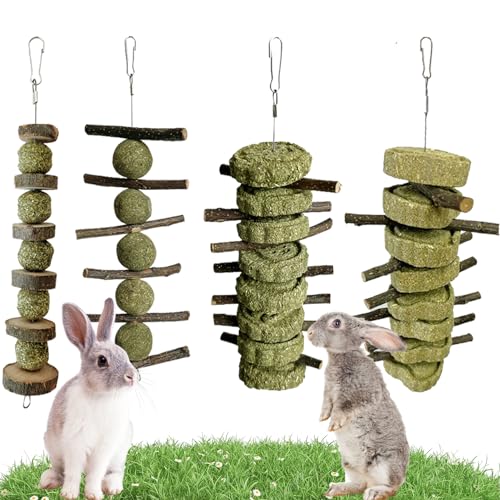
Packing List: Package weight 13.75 oz / 390 g.4 pack animals chewing toy, 1 package for each style. All chewing toys have a metal rings, you can hang chewing toys to keep them clean. This not only provides endless fun for small pets, but also strengthens the pet's body.

【20 PCS SET】1x apple wood molar string,1x timothy cake string,2x loofah toys,3x timothy grass ball with flowers, 1x rabbit shape grass cake,5x grass sticks,2x woven carrots,4x rattan balls

MULTIPLE CHEW TOYS -- Set includes 1x apple wood molar string,1x timothy cake string,2x loofah toys,3x Large timothy grass cake with flowers,1X rabbit Carrot, 2x Sweet bamboo grass rope,5x grass sticks,2x Lollipop grass ball,4x rattan balls
Rabbits vs Hares vs Pikas: Same Order?
You might wonder if rabbits, hares, and pikas are related, and they are—because they all fall under the same mammal order, Lagomorpha.
But within that order, you split them into two families: rabbits and hares share Family Leporidae, while pikas are in Family Ochotonidae, even though they look a bit “rodent-like.”
Same Order Under Lagomorpha
If you’re wondering whether rabbits, hares, and pikas are “in the same group,” the answer is yes—under the order Lagomorpha, they’re all classified together.
And if you’re asking, “are rabbits rodents,” you’ll want a clear no.
Rabbits aren’t rodents.
If rabbits aren’t rodents what’re they, a Lagomorph mammal.
Also, rabbit related to rat?
They share distant traits, but they follow separate paths.
Lagomorphs have two pairs of upper incisors, with a peglike second set.
Families Leporidae And Ochotonidae
Under the big umbrella of Lagomorpha, rabbits, hares, and pikas split into two main families—Leporidae and Ochotonidae.
Leporidae is the family that includes rabbits and hares, and field guides often describe them as long‑eared, short‑tailed mammals with strong back legs built for jumping.
Ochotonidae, on the other hand, is the family for pikas—small, egg‑shaped mammals with short, rounded ears and no visible external tail.
If you own a rabbit, remember it’s a Lagomorph, not a rodent.
Rabbits and hares both belong to Leporidae.
Pikas belong to Ochotonidae.
The 1912 Reclassification That Split Them

Around 1912, you saw a real taxonomic shift when paleontologist James W. Gidley helped move rabbits and hares out of Rodentia and into their own order, Lagomorpha.
It’s basically the “new label” stage—Lagomorpha got raised from a rodent sub-group to a full order, with pikas included too.
1912 Taxonomic Shift
Even though rabbits were long treated as rodents, taxonomists made a big correction in 1912.
You might ask, “why is rabbit not a rodent,” and the answer starts with a taxonomic shift.
In 1912, James W. Gidley elevated Lagomorpha to full order rank, so rabbits aren’t rodents they’re lagomorph mammals.
Before then, Linnaean rules lumped rabbits with Rodentia, even though lagomorphs have distinctive dental and skeletal traits, like four incisors in the upper jaw.
New Order Lagomorpha
In 1912, the way scientists ranked rabbits finally got a big, clear fix.
You might ask, is a rabbit a rodent? Before then, some catalogs lumped what’re rabbits into broader “rodent” groups.
But James W. Gidley argued for a separate Lagomorpha order for rabbits, hares, and pikas.
In plain terms, you can think “Rodentia” and “Lagomorpha order” as neighbors, not twins.
The key clue is dental: rabbits have a second small pair of upper incisors behind the main ones, unlike true rodents.
Rodent Classification Reversed
By 1912, scientists stopped lumping rabbits in with “true rodents,” and that change really mattered if you’re trying to understand what rabbits are classified as today.
You might ask, are rabbits the same as rats? No.
You’re also probably wondering what’s rabbit, and whether rabbits are considered rodents.
In 1912, paleontologist James W. Gidley argued lagomorphs, the group that includes rabbits, hares, and pikas, deserved their own order.
Dentists’ clue: rabbits have four upper incisors, not one pair.
That’s the difference between rabbit and squirrel, and it helps you serve accurate care.
How DNA Studies Support Glires Relationships
DNA studies help clear up the “are rabbits rodents?” confusion, and they do it in a pretty convincing, science-y way.
When you look at nuclear genes—DNA in the cell nucleus—you see patterns that group rodents and lagomorphs (rabbits and hares) together as Glires.
Multiple genes, like housekeeping and protein-coding markers, recover rodents and lagomorphs as close sister groups.
Mitochondrial DNA sometimes confused early researchers, but later multi-gene and genome work aligns better.
You’ll also see conserved protein signatures and shared retrotransposon patterns, which act like inherited genomic fingerprints.
How Rabbit Incisors Differ From Rodents
You might think “incisors are incisors,” but rabbit incisors give you a big clue: in the upper jaw, you’ve got two large primary incisors plus two smaller “peg teeth” (secondary incisors) right behind them.
Rodents usually max out at only two upper incisors, not four, and rabbits even arrange these upper teeth in two rows, which is a standout lagomorph trait.
Because they also keep growing continuously, those white, chisel-shaped edges wear down and stay useful for chewing tough plant food.
Two Pairs Of Upper Incisors
One of the biggest clues that rabbits aren’t rodents lives right in their mouths: rabbits have two pairs of upper incisors, not one.
When you look at the jaw, you’ll see four upper teeth in the maxilla, arranged left and right in two rows.
Rodents only have one pair up top, so they show just two upper incisors.
This isn’t a small detail.
That extra upper incisor pair is a key reason scientists classify rabbits as lagomorphs, not rodents.
Peg-Like Second Incisors Behind
After you spot the extra upper incisors in rabbits, the next mouth clue is what sits right behind the big ones.
Look for small, tube-shaped peg-like auxiliary incisors.
They sit on the tongue side of the main upper incisors, usually smaller and staggered, making three contact levels.
When your rabbit closes its mouth, the lower incisors rest just behind the larger uppers, in front of the peg teeth, or into a notch.
Those pegs help with the “snip” and slice, even as all incisors grow continuously.
If peg teeth overgrow, you’ll see wear problems, drooling, or less eating.
Why Rabbit Cheeks Form a Bone Lattice
Rabbit cheeks aren’t a solid, smooth wall—they’re built like a lightweight honeycomb.
You can see it in the fenestrated lateral maxilla, the maxilla being an upper jaw bone, full of small openings.
Those tiny bony struts form a lattice instead of a continuous plate.
That design helps you keep the skull strong for chewing and normal movement, while saving weight.
Less mass means less strain during biting, because the force still travels along the key bone pathways.
It’s a distinct leporid trait, so rabbits and their relatives stand apart from typical rodent skulls.
Rabbit Body Shape and Movement vs Rodents
When you watch rabbits move, you can see why they don’t “feel” like rodents, even if people often lump them together.
Rabbits wear an egg-shaped, full-bodied frame, with long, powerful hind legs for explosive hopping.
Their mass sits mostly in the back, so they launch fast from a standstill.
You’ll also notice big feet for leaping, and toes-first “digitigrade” walking, with ground contact mainly on the toe area.
Rodents usually spread mass more evenly and use more varied walk-trot patterns.
Rabbits often half-bound, hind legs thrust together, forelegs land in sequence.
Are Rabbits Omnivores Like Many Rodents?
Most rabbits don’t eat like many rodents, because rabbits are strict herbivores—not omnivores.
If you care for a pet rabbit, treat meals as plant-only. Rabbits eat hay, greens, and limited pellets, and they avoid animal food completely.
Rodents, in contrast, often eat plants but may also snack on insects or other animals, since they’re more flexible.
You should follow rabbit diet basics: offer 75–80% high-fiber grass hay daily, 10–15% leafy greens and veggies, and only about 5–10% pellets.
Keep treats plant-based, and limit fruit.
The Cecum Factor: Fermenting Plant Fiber
When you wonder “are rabbits rodents,” it helps to look at how they digest plant fiber.
Your rabbit has a big cecum, a fermentation chamber, where gut microbes break down cellulose into energy-rich “volatile fatty acids,” and it all depends on a specialized microbiota working in there.
Then, about every ~8 hours, your rabbit makes soft cecotrophs and eats them (cecotrophy), so those vitamins, protein, and fatty acids get reused instead of wasted.
Large Cecum Ferments Cellulose
Inside your rabbit’s back end, the big cecum (a pouch at the start of the colon) acts like a fermentation chamber, and that’s the “cecum factor” that helps digest plant fiber.
Rabbits are hindgut-fermenting herbivores, so you rely on this cecum to break down cellulose.
Small particles and soluble material get moved into the cecum, where microorganisms ferment cellulose and other plant sugars.
This makes short-chain fatty acids, which become a main energy source, plus ammonia, gases, and nutrient-rich compounds.
When you feed enough fiber, you support steady fermentation, keeping digestion on track and helping prevent gut troubles.
Specialized Gut Microbiota Breakdown
After you’ve learned how your rabbit’s cecum acts like a fermentation chamber, the next piece is what’s happening inside it.
You rely on a specialized gut microbiota, a community of microbes.
In the cecum, bacteria mainly come from Firmicutes, Tenericutes, and Bacteroidetes.
Families like Ruminococcaceae and Lachnospiraceae break down cellulose and hemicellulose, plant fiber.
Then fermentation makes short-chain fatty acids, like acetic, propionic, and butyric acids.
You absorb these through the cecal and colon walls for energy.
Depending on age and diet, Proteobacteria may appear.
A plant-rich diet also supports tannase enzymes for polyphenols.
Cecotrophs Enable Nutrient Reuse
Cecotrophs are how your rabbit “recycles” nutrients, and it starts in the cecum—an extra pouch in the rabbit’s gut that acts like a fermentation chamber.
When your rabbit eats plants, the cecum holds fine fiber and fluid longer, so gut microbes break it down into sugars and volatile fatty acids, which are energy molecules.
Then your rabbit forms soft, nutrient-rich cecotrophs, usually a few hours after a meal.
You’ll often see them at rest, sometimes at night.
Cecotrophy means your rabbit re-eats them, and the mucus coating helps protect contents as they travel through the stomach for better absorption.
What Is Coprophagy and Is It Normal?
Coprophagy is the scientific word for eating feces, and in rabbits it’s not only normal—it’s a key part of digestion.
You’ll often see it at night, or when your rabbit is alone.
In rabbits, it mainly means cecotrophy, re-ingesting soft “night feces” called cecotropes.
These form in the cecum, then your rabbit eats them right from the anus as they’re made.
This second pass helps a hindgut-fermenting herbivore pull more nutrients, including B vitamins and protein.
If you block cecotropes, your rabbit can fail to thrive, so don’t interfere.
Rabbit” Covers Many Species in Leporidae
You might think “rabbit” means one animal, but in fact it covers many species inside the family Leporidae, which is separate from rodents (order Rodentia).
When you meet a “rabbit,” you could be looking at different genera—like Oryctolagus, the true rabbit with most domestic pet rabbits, or Sylvilagus, the cottontails with lots of species.
And those long-eared look-alikes show up across genera too, so comparing the ears, body shape, and where your rabbit comes from helps you identify which rabbit type you’ve got.
Multiple Genera Under Leporidae
“Rabbit” isn’t one single, neat type of animal. If you’re wondering whether rabbits are rodents, you can relax: rabbits aren’t in Rodentia.
You’ll classify them in order Lagomorpha, family Leporidae. That family includes both rabbits and hares, spread across 11 genera.
In everyday speech, you lump multiple genus groups under one “rabbit” label. For example, Oryctolagus holds the European rabbit, and Sylvilagus includes many cottontails.
Other genera—like Bunolagus or Romerolagus—stay in smaller, specialized ranges. So when you say “rabbit,” you’re really covering many distinct lineages.
Several Rabbit Species Compared
Once you know rabbits aren’t rodents, it helps to picture the bigger group they belong to.
Rabbits are in order Lagomorpha and family Leporidae, so you’ll meet several kinds.
The European rabbit builds deep warrens, with linked tunnels, and lives in social colonies.
The Eastern cottontail is common in US fields and brush, about 15–18 inches long and roughly 2–3 pounds, but many live only around 11 months after leaving the nest.
The snowshoe hare reaches 16–20 inches and 3–5 pounds, and its “snowshoes” let it move on deep snow.
The volcano rabbit is smaller, high-altitude, and lives in scattered patches.
Long-Eared Members Across Genera
Even though people lump “rabbits” together, the word actually covers many long-eared species spread across different genera in the family Leporidae.
And that matters, because you can’t call all of them rodents.
Rabbits belong to order Lagomorpha, not Rodentia, and they share elongated ears, strong hind legs, and ever-growing incisors.
In Leporidae, “rabbit” spans roughly 8–10 genera worldwide, while Lepus holds the larger hares.
You’ll also see ear variation: cottontails in Sylvilagus have classic upright ears, while Romerolagus has much shorter ones.
True Rabbits: Oryctolagus Cuniculus and Kin
If you’re trying to understand what makes a “true rabbit” different, start with the scientific name Oryctolagus cuniculus—the European rabbit.
You’ll find it in phylum Chordata, class Mammalia, order Lagomorpha, family Leporidae.
That family includes true rabbits, hares, and American cottontails, so rabbits are mammals, not rodents.
In fact, Oryctolagus is its own genus, separate from the rodent order Rodentia, and from hares like *Lepus*.
True rabbits live in warrens with complex burrows, and they usually have 28–33 day gestation.
Edge Myths: Guinea Pigs, Capybaras, and “Rodents
You already know rabbits and hares aren’t rodents, because they belong to a whole different order, Lagomorpha. But the edge myths stick, especially with guinea pigs and capybaras.
Guinea pigs are true rodents, in Rodentia, because they’ve a single pair of continuously growing upper incisors.
Capybaras are also rodents, and they’re the largest living rodents, yet people still call them “pig-like.”
Why the mix-up? Shared “small-mammal” looks and gnawing incisors, plus pet-store categories.
If you’re helping others, remember: rodents have one upper incisor pair, lagomorphs have four.
Pet Care: What Changes When You’re Not Rodent-Care?
Once you accept that rabbits aren’t rodents, everything about daily care changes. You stop treating your rabbit like a “big hamster.”
Once you accept rabbits aren’t rodents, you stop treating your rabbit like a “big hamster”—and your care approach shifts completely.
Provide a sheltered hide area, then a secure exercise run with free access, not a hutch-only setup.
Plan for continuous floor space, about 3m x 2m x 1m for two medium rabbits, and more is better.
Keep them paired with a compatible rabbit, ideally a neutered male–female, because social life is core welfare.
Handle gently, supporting the spine and hindquarters, and avoid frequent lifting.
Use hides, tunnels, quiet routines, and duplicate resources to reduce stress.

Spacious Space: Overall size is 48"L x 48"W x 24"H. Provides 16 square feet of living area for guinea pigs as recommended by vets. Ideal extension of our rabbit cage or independent use. Give small pets freedom to frolic indoors or outdoors
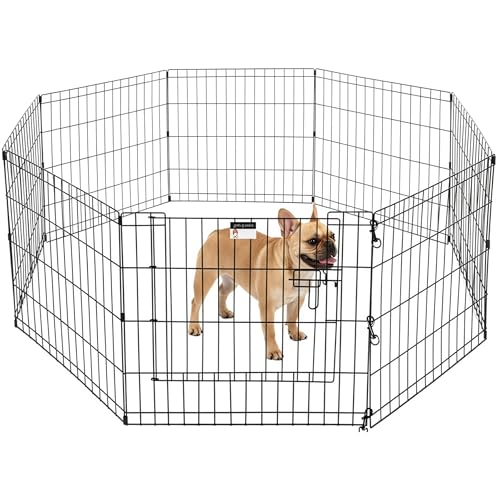
PET PLAYPEN - A great alternative to other dog fences for the yard, this play pen lets you create a spacious play area for puppies, small dogs, cats, rabbits, or any appropriately sized pet up to 25lbs. Assemble pieces of this playpen to make a dog cage.

【 BREATHABLE 360° VIEW FOR SMALL PETS 】:Designed with breathable mesh panels on every side, this small animal playpen promotes airflow while giving you a clear view of your pet during playtime. The enclosed space is ideal for rabbits, guinea pigs, hamsters, hedgehogs, chicks, kittens and other gentle small animals, helping them explore, rest and play comfortably under supervision.
Feeding Rabbits Safely (Not Like Rodents)
Now that you know rabbits aren’t rodents, feeding them takes a totally different approach—because their stomachs are built for fiber, not seeds.
Aim for hay and grass first. Give unlimited high-quality grass hay like timothy, plus fresh grass daily, and skip lawn clippings.
Add leafy greens next, about 10–15% by volume, like romaine or kale, introduced slowly. Wash greens well, soak 2 minutes, then change water.
Use plain, uniform rabbit pellets as a small supplement, not a rodent-style staple. Avoid muesli mixes.
Limit treats, and steer clear of seed-and-nut rodent snacks.

HAND-SELECTED TIMOTHY HAY FOR RABBITS, GUINEA PIGS, CHINCHILLAS, & SMALL ANIMALS to ensure long fiber strands and proper leaf to stem ratio

PROUDLY GROWN IN THE USA: Harvested fresh from Oxbow?s family of farms by our expert hay growers˜

PEELS OFF IN LAYERS Wafer Cut Timothy Hay reduces mess and makes feeding easier
Housing a Rabbit: Space, Litter, and Setup
Housing a rabbit well starts with one simple idea: give them enough space to move, stretch, and hop, every day.
For a pair of average-size rabbits, plan at least 3m x 2m x 1m high, and go bigger if you can. Aim for about 2m in one direction so they can complete at least three hops, indoors too.
Next, set up “zones” in one continuous pen, resting, feeding, toileting, and hiding. Place a low-sided litter box where droppings collect, and watch, then adjust.
Use dust-minimizing, paper or plant-based litter.
Block hazards with pens, and protect outdoors from predators.

Spacious Comfortable: This large rabbit litter box offers ample space with dimensions of 16.9" long x 11.8" wide x 6.3" high, making it ideal for adult rabbits, guinea pigs, ferrets and chinchillas.The litter box rabbit, say goodbye to cramped corners

Portable Cat Playpen with Litter Box: This 2-in-1 cat playpen with litter box features a dedicated separate litter area that completely solves odor and hygiene issues, keeping playtime and toileting fully separated for a clean and comfortable indoor space.

Material: This rabbit litter box is made of very thick plastic, so it doesn't bend. The build is solid enough to handle some chewing. The rabbits are adverse to chewing on this particular plastic. It's safe for pets
When to Call a Vet: Common Rabbit Signs
Even with a great setup and clean, comfy space, rabbits can still get sick fast, and that’s when you need to move quickly.
Even in a comfy, clean setup, rabbits can fall ill quickly—so respond fast when something seems off.
If your rabbit stops eating for over 6 hours, call a rabbit-savvy vet.
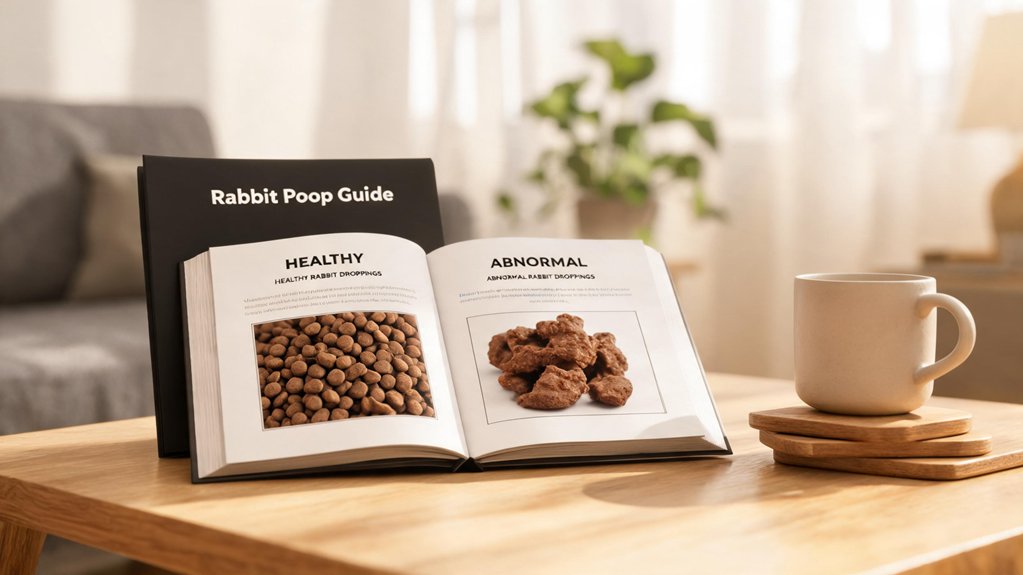
Also act fast if droppings drop sharply, or you see no poops, because gut stasis can become life-threatening in hours.
Watch for a tight, swollen belly, hunching, and tooth grinding.
Sudden lethargy, pale gums, cold ears, weak pulse, or labored breathing mean emergency care.
If you notice head tilt, falling, rolling, seizures, diarrhea, or any trauma, don’t wait—transport right away.
Quick FAQ: Are Rabbits Rodents, Really?
Do rabbits count as rodents, really? No, they don’t. You may hear it because rabbits look like “small chew-everything” animals.
But in modern pet care, rabbits are small mammals in the family Leporidae, order Lagomorpha.
Rodents are in order Rodentia, think mice and squirrels.
Rabbits once sat in Rodentia historically, but experts moved them in 1912 after clear differences.
For example, rabbits have four upper incisors, including extra peg teeth. They also lack canine teeth, and their feet are fully furred.
Frequently Asked Questions
Are Rabbits Rodents, or Are They Their Own Group?
No, rabbits aren’t rodents—they’re their own group. You’ll find rabbits classified as mammals in the order Lagomorpha (family Leporidae), which separates them from rodents’ order Rodentia, even though both belong to Glires.
What Are Rabbits Classified as in Modern Taxonomy?
In modern taxonomy, you classify rabbits as mammals in the order Lagomorpha, family Leporidae. Your rabbit pet usually belongs to Oryctolagus cuniculus, separate from the rodent order Rodentia.
Do Rabbits Have the Same Teeth Pattern as Rodents?
No—you don’t find the same teeth pattern. Rabbits have 28 teeth with peg-like extra upper incisors, plus continuously growing cheek teeth. Rodents usually have only two incisors and different cheek-tooth layouts. This matters for care.
Are Rabbits Mammals, and What Makes Them Mammals?
Yes, rabbits are mammals. You can tell because they grow fur, stay warm-blooded, give live birth, feed babies with milk, and develop complex organs, including a well-developed brain and nervous system. They’re in class Mammalia.
Why Does Rabbit Coprophagy Seem Different From Rodent Digestion?
🌀 Rabbit coprophagy looks different because you’re not “recycling” one feces type like many rodents. You reingest nutrient-rich cecotropes from hindgut fermentation, then reject hard pellets—two distinct droppings, made for a second pass.